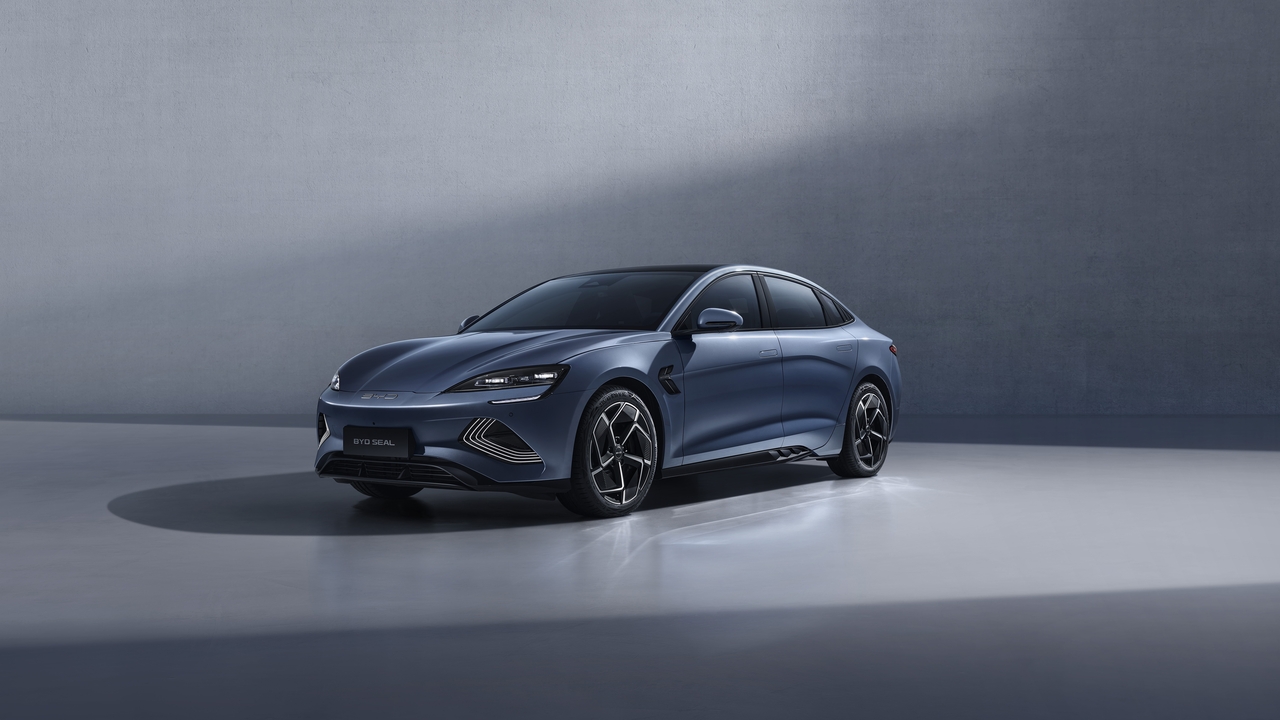
Chinese electric vehicle giant BYD is set to debut its second model in Korea, the electric sedan Seal, in August.
Since entering the Korean market in January, the brand has maintained a relatively modest presence, selling 1,286 units in the first half of this year. However, the Seal is expected to give fresh momentum to BYD’s expansion in Korea, with its smooth driving experience, comprehensive driver-assistance suite and affordable price.
On Thursday and Saturday, the Korea Herald test-drove the Seal Dynamic AWD on a motorway connecting Yongin, Gyeonggi Province, and Yongsan-gu, central Seoul, as well as through congested rush-hour roads in Suwon, Gyeonggi Province.
The sedan features a sports car-inspired exterior, with a low-slung front end, a height of 1,460 millimeters, and a fastback-style rear that flows smoothly into the overall body. The sleek silhouette contributes to an aerodynamic design with a drag coefficient of 0.219, among the lowest for electric vehicles worldwide.
Its 19-inch wheels -- large relative to the car’s low stance -- further emphasize its sporty profile. According to BYD, the Seal’s wheel-arch-to-height ratio stands at 1:2, giving it proportions closer to those of a coupe or sports car than a typical sedan.
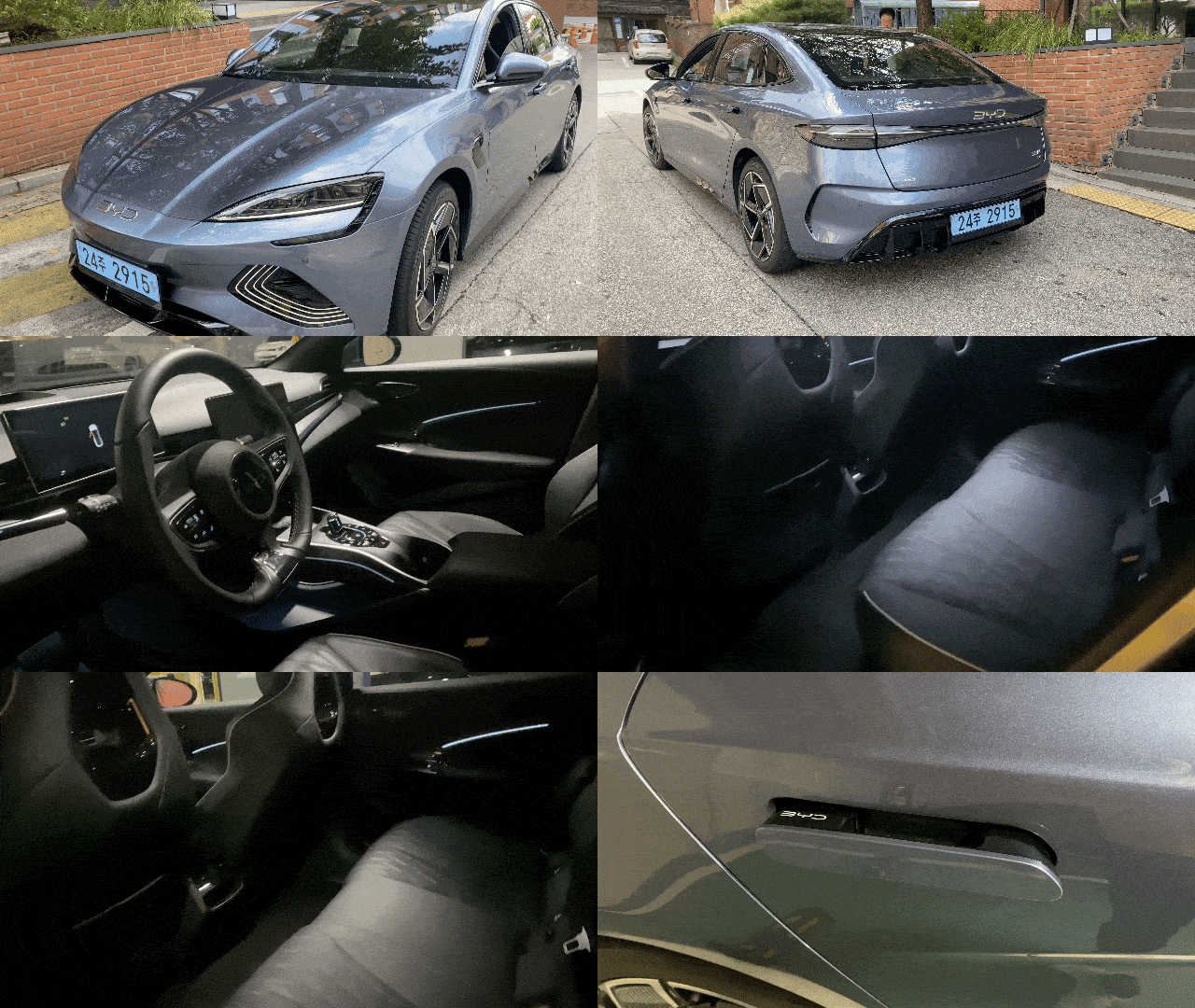
The car’s ride was comfortable, while the suspension leaned toward the firmer side rather than fully absorbing road impacts. The panoramic sunroof provided a sense of openness, allowing occupants to refresh themselves by looking up at the sky from the cabin. Noise was minimal, partly due to double-glazed windows that reduce exterior sound.
Acceleration and braking were smooth, with minimal pitch and roll, and the dual-motor 390-kilowatt powertrain propels the vehicle from 0 to 100 kilometers per hour in 3.8 seconds.
On Suwon’s heavily congested roads, with roadworks creating uneven lane markings in the center of the boulevards, the driver frequently had to change lanes, yet both driver and passenger felt minimal body roll or disturbance.
Powered by BYD’s 82.56-kilowatt-hour lithium iron phosphate battery, the Seal has a certified range of 407 kilometers. During a 52-kilometer drive between Yongin and Seoul, however, the battery charge dropped by only 11 percent, suggesting that the vehicle could travel over 450 kilometers on a full charge.
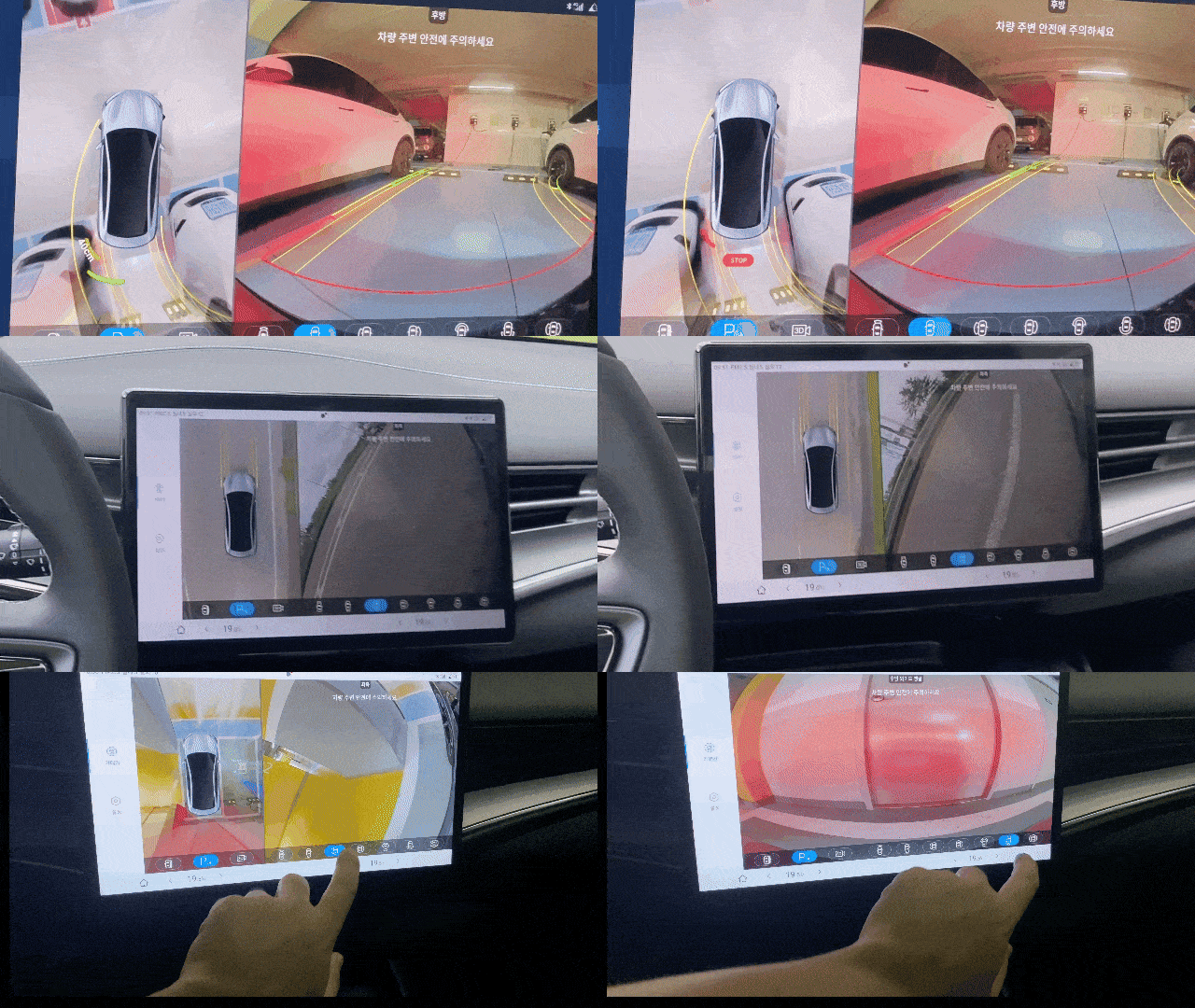
The Seal’s 12.8-inch central display plays a major role during driving, supporting almost all necessary functions, including driving assistance, infotainment features such as Apple CarPlay and climate control. The wide screen also provides multidimensional views of the surrounding environment, including the direction of the vehicle relative to the current steering angle.
Physical buttons are minimized, with most functions integrated into the infotainment system, which supports both touchscreen and voice commands via the “BYD Assistant” voice recognition system.
However, the system remains limited. It requires the driver to issue commands with precise wording and specific instructions, and it may not understand indirect or loosely phrased requests, sometimes forcing the driver to use the touchscreen while driving.
The efforts to enhance driver safety were evident in multiple features.
While driving, the approach of nearby vehicles was simultaneously displayed on the head-up display, center console screen and side mirrors. During slow driving or parking, the system provided precise distance readings to surrounding objects and even issued visual alerts when it determined that advancing further was unsafe.
The Seal was launched in the Korean market in a single, fully equipped trim, priced at 46.9 million won ($33,741).
Its price is similar to the entry-level models of European EVs and those from Hyundai Motor Group, prompting claims that the brand is abandoning its low-price strategy. Still, the Seal’s comprehensive suite of options and strong performance may help it maintain a foothold in the EV market.
forestjs@heraldcorp.com

![[Test Drive] SsangYong’s New Rexton Sports Khan proves pickups can go smart, too](https://wimg.heraldcorp.com/content/default/2022/01/21/20220121000670_0.jpg?type=h&h=240)