Automated urban warehouses reinforce Olive Young’s grip on omni-channel retail
The country that gave the world K-beauty is not only a leading beauty maker but also a master of delivery, reaching customers within hours, often within just one.
At the forefront of this delivery revolution is CJ Olive Young, Korea’s largest beauty platform, whose online marketplace, connected to a nationwide network of 1,300 stores, is powered by a same-day delivery service, Oneul Deurim. This reads as both “today’s delivery” and “today’s dream,” as “derium” sounds similar to “dream” in English.
The engine behind that dream sits in micro fulfillment centers tucked between Korea’s city blocks. These compact and automated warehouses are designed for one purpose: speed.
Flagship fulfillment hub
Launched in 2018, the same-day delivery service shifted from novelty to necessity during the pandemic’s online sales boom, spurring a wave of urban logistics centers.
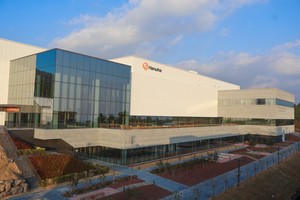
Olive Young opened its first MFC in 2021 and now operates 18 nationwide. Among them, the Songpa hub in southeast Seoul is the beauty retailer’s most lucrative in the capital.
"The Songpa center is the expanded version of our very first MFC, where Olive Young’s fulfillment journey began,” a company official said during a press tour of the center on Wednesday.
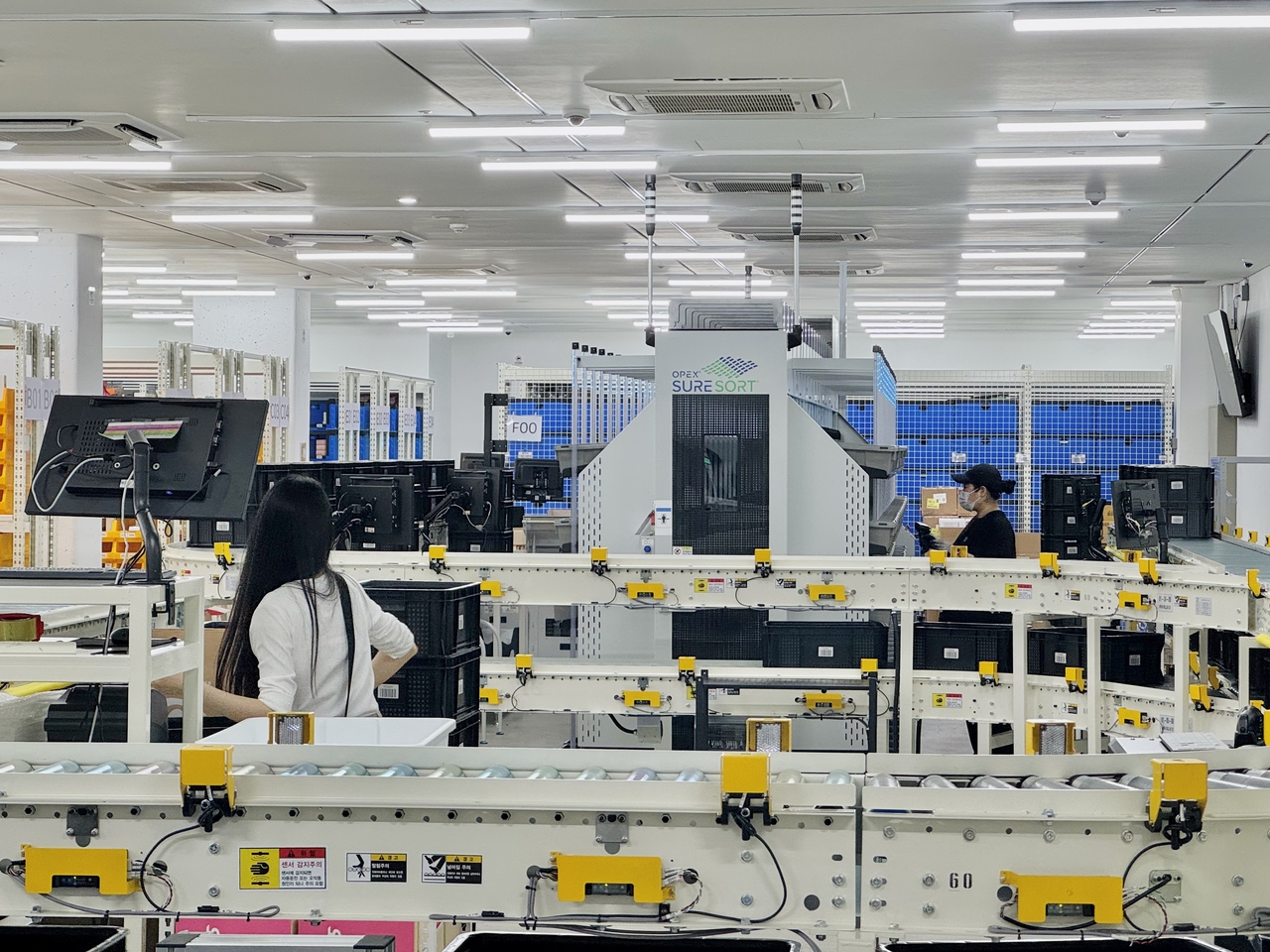
Compact at 991 square meters yet highly efficient, the center processes more than 7,000 orders a day and stocks nearly 19,000 items, covering deliveries across Gangnam-gu, Seocho-gu, Songpa-gu and parts of southern Gyeonggi Province.
“From inbound to storage, picking, sorting and packing, every step is measured in seconds,” explained Chang Min-hyoung, who oversees Olive Young’s fulfillment centers. “Here in Songpa, about 70 percent of operations are automated, with the rest kept manual to balance efficiency and flexibility.”
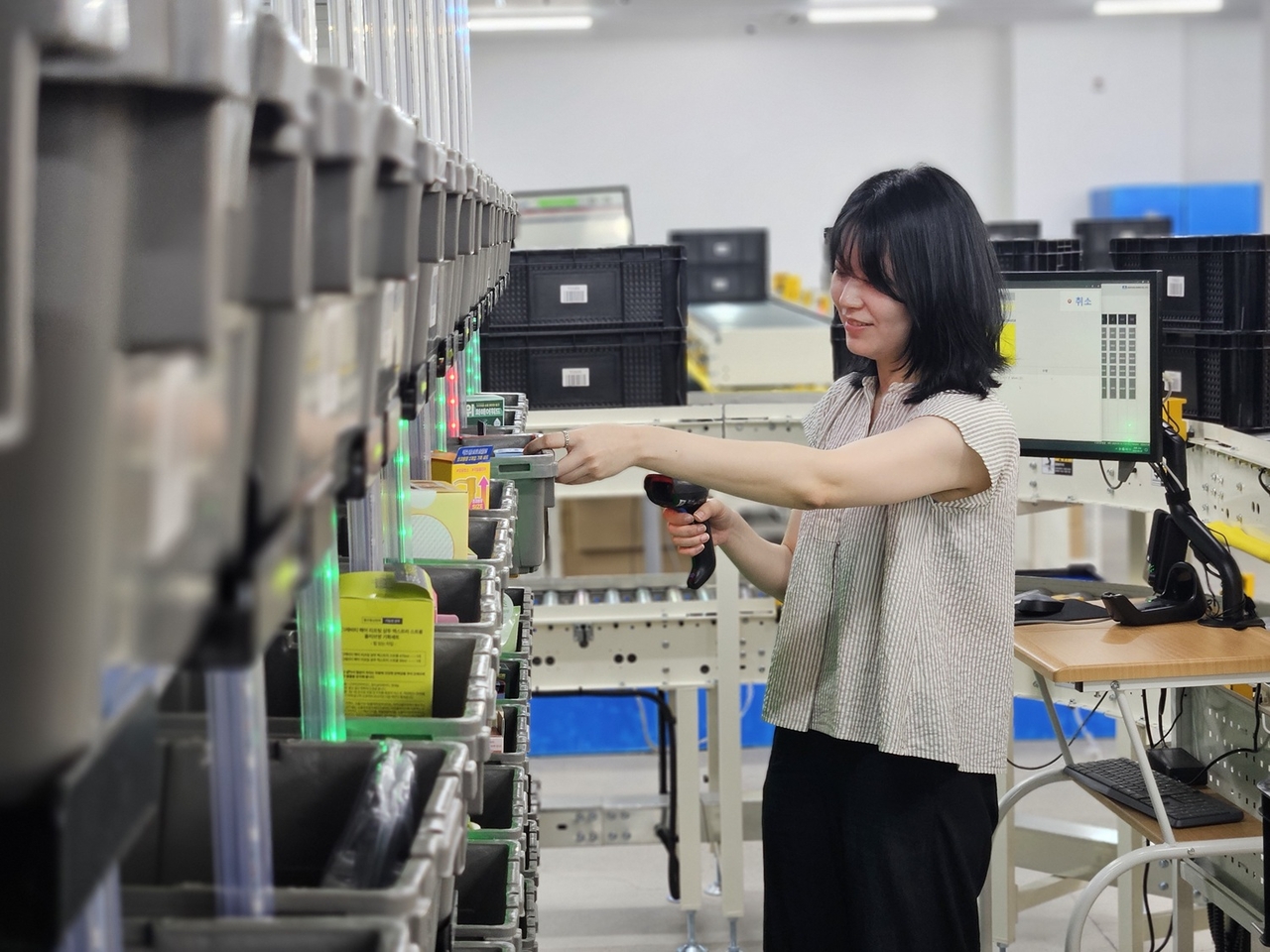
Workers scan incoming goods into a proprietary inbound sorter, sending smaller products into yellow crates and bulkier ones into blue. Picked items are then fed into a vertical sorter that breaks them down into individual orders at speeds of up to 600 an hour. From there, an auto bagger seals and readies them for dispatch.
The entire cycle, from order to departure, averages under 40 minutes.
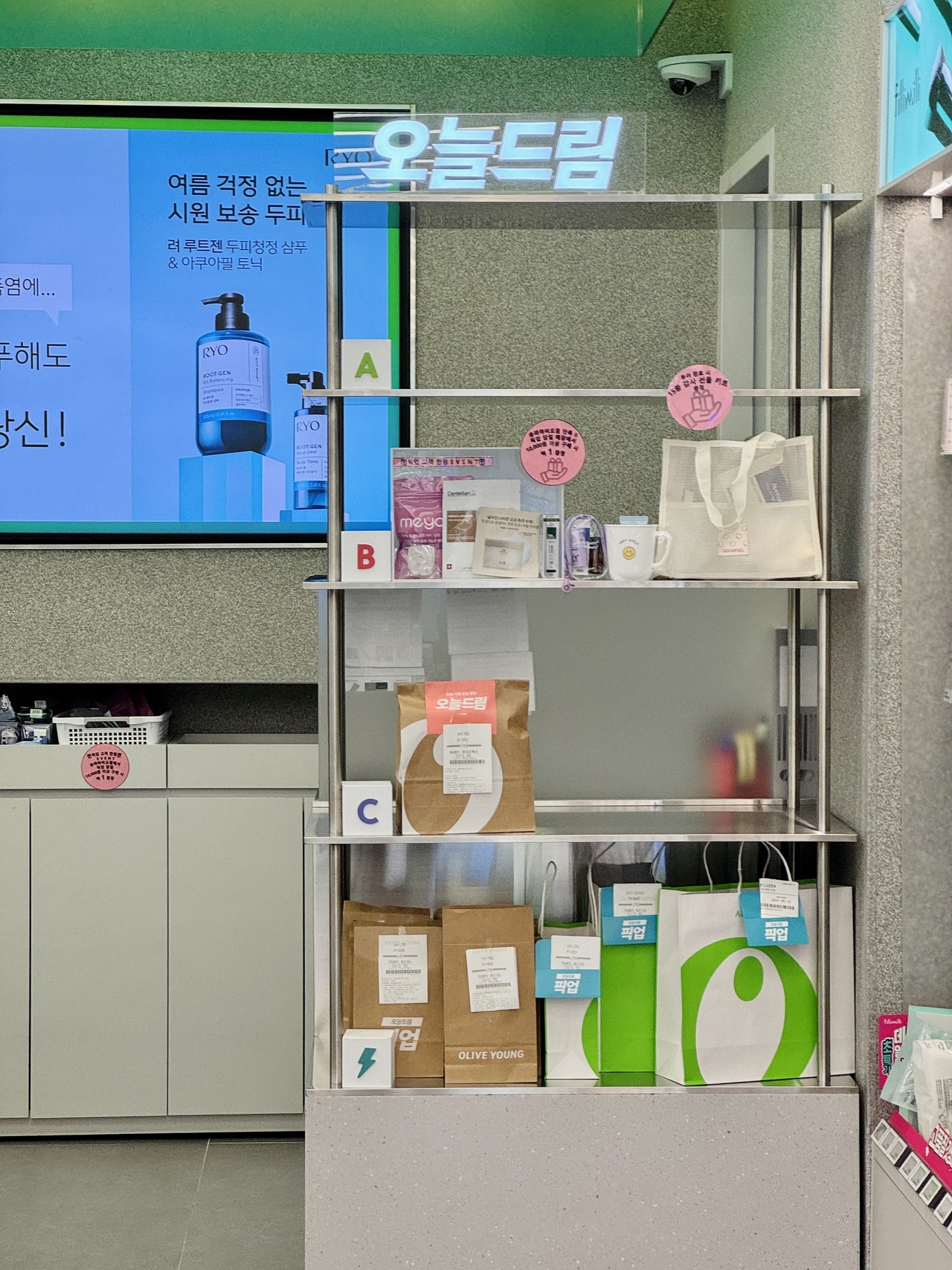
The final bags are sorted onto racks by order time — before 1 p.m., 8 p.m. and midnight — where they await pickup by drivers. On average, the same-day service reaches a customer’s doorstep in 55 minutes, and no later than two to three hours. Customers can also collect their orders in person at a store.
With MFC capabilities as its cornerstone, Olive Young has staked its future on a fully synchronized network linking stores, the app and fulfillment centers — all designed to create a seamless shopping experience across channels tailored to customer needs and preferences.
To that end, Olive Young said it has internalized its tech capabilities, developing warehouse management and order management systems that transmit data in real time and cut logistics processing time by more than 50 percent.
“Without MFCs, Olive Young could not claim leadership in fast delivery or omni-channel retail,” said Chang, noting that the company plans to expand its network from 18 to 22 MFCs nationwide by year-end.
minmin@heraldcorp.com