Korea’s growing pet population is shaping a new farewell culture, but steep prices, limited access still hurdles to many
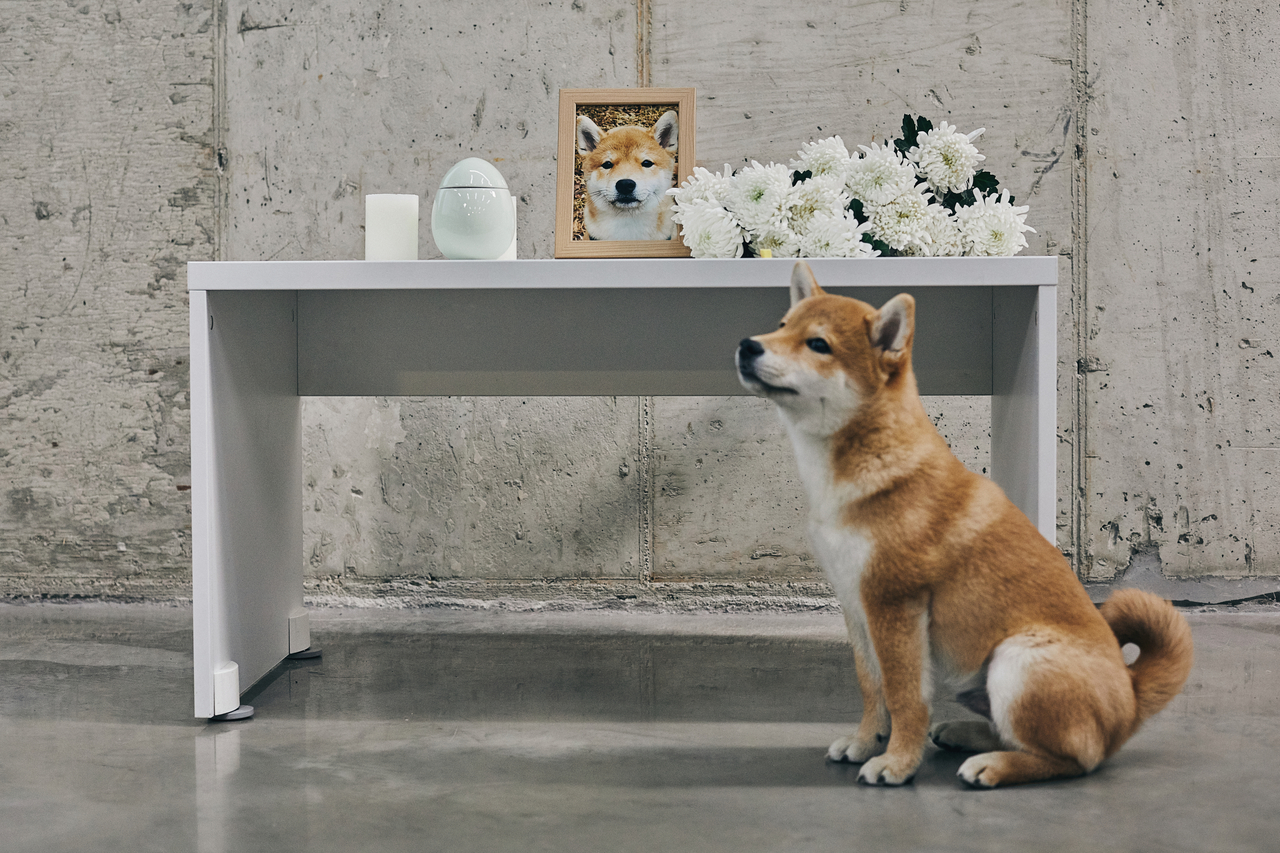
Kim Ji-hyun, a woman in her 30s from Yongin, Gyeonggi Province, said goodbye last year to Kong, her 17-year-old Maltese. She visited a pet funeral home in a nearby city, equipped with a crematorium, to hold a final farewell for her longtime companion.
The ceremony for Kong closely resembled a typical Korean funeral for a person. The dog was gently washed, wrapped in hemp cloth and placed in a wooden coffin by a funeral home staff member dressed in black mourning attire.
Kim’s family gathered in a private room, where the coffin was laid on an altar and a large screen displayed photos of Kong. Cremation began about half an hour later, after which the remains were placed in an urn.
Pet funerals are becoming common, supported by a pet-owning population that has grown to 15.46 million, representing 29.9 percent of the country. The practice now covers a wide range of animals, from dogs and cats to turtles, parrots and even goldfish.
Rising demand has invigorated the industry, drawing in new providers and expanding available services. Yet calls for better accessibility remain strong, as many owners still struggle to find nearby facilities to bid farewell to their closest companions.

Regulatory push
A study by the KB Financial Research Institute in June found that 64.6 percent of Koreans who had lost pets held a funeral — either through a funeral home or a veterinarian — up sharply from 38.7 percent in 2023.
The share opting for cremation, which costs at least 150,000 won ($108) and is pricier than veterinary disposal, also rose from 29.5 percent to 49.5 percent.
The surge is partly explained by legal restrictions.
Under Korean law, animal bodies are classified as waste, which makes unauthorized burials illegal. For those who do not choose a funeral, the only legal option is to dispose of the remains in a designated garbage bag, an idea that many pet owners find unthinkable.
To some, the emotional relief that funerals provide is a stronger reason.
“Of course, there were no other legal options. But a much bigger reason was that I could be with her sincerely until the very end, even if it meant spending hundreds of thousands of won,” Kim said.
“The feeling of ‘this is really our farewell’ gave me a chance to settle my heart.”
Lee Woong-jong, an animal welfare professor at Yonam College, noted that the rise in pet funerals reflects a shift in public perception in Korea, as pets in the past were often treated like “toys.”
“For current Koreans, pets carry deep meaning. Losing them can cause serious emotional distress, sometimes leading to what is known as pet loss syndrome. Funerals help families bring a beautiful closure to their bond with their pets.”
With these circumstances, demand for pet funerals is expected to continue rising.
The KB study showed that 31.6 percent of respondents still buried their pets themselves, down from 58.7 percent two years earlier. A separate survey of pet owners found that 84 percent would choose a funeral for their pet in the future, up from 64.6 percent.

Market surges, services evolve
The industry’s growth has attracted new businesses, which now offer pet owners ways to mourn and remember their pets.
Boram Sangjo, Korea’s second-largest afterlife service provider for humans, launched its pet funeral brand, Sky Pet, in 2023.
It offers comprehensive funeral packages, including venue reservations, coffins, urns and the dispatch of professional funeral directors, with prices ranging from 1.8 million won to 4.8 million won.
Other funeral companies, including Kyowon Life, have also entered the market. Telecommunications giant KT launched a subscription plan for pet funeral services, with the fees added to customers’ monthly phone bills.
The range of items and services offered by pet funeral providers has also diversified, mirroring trends in human funerals.
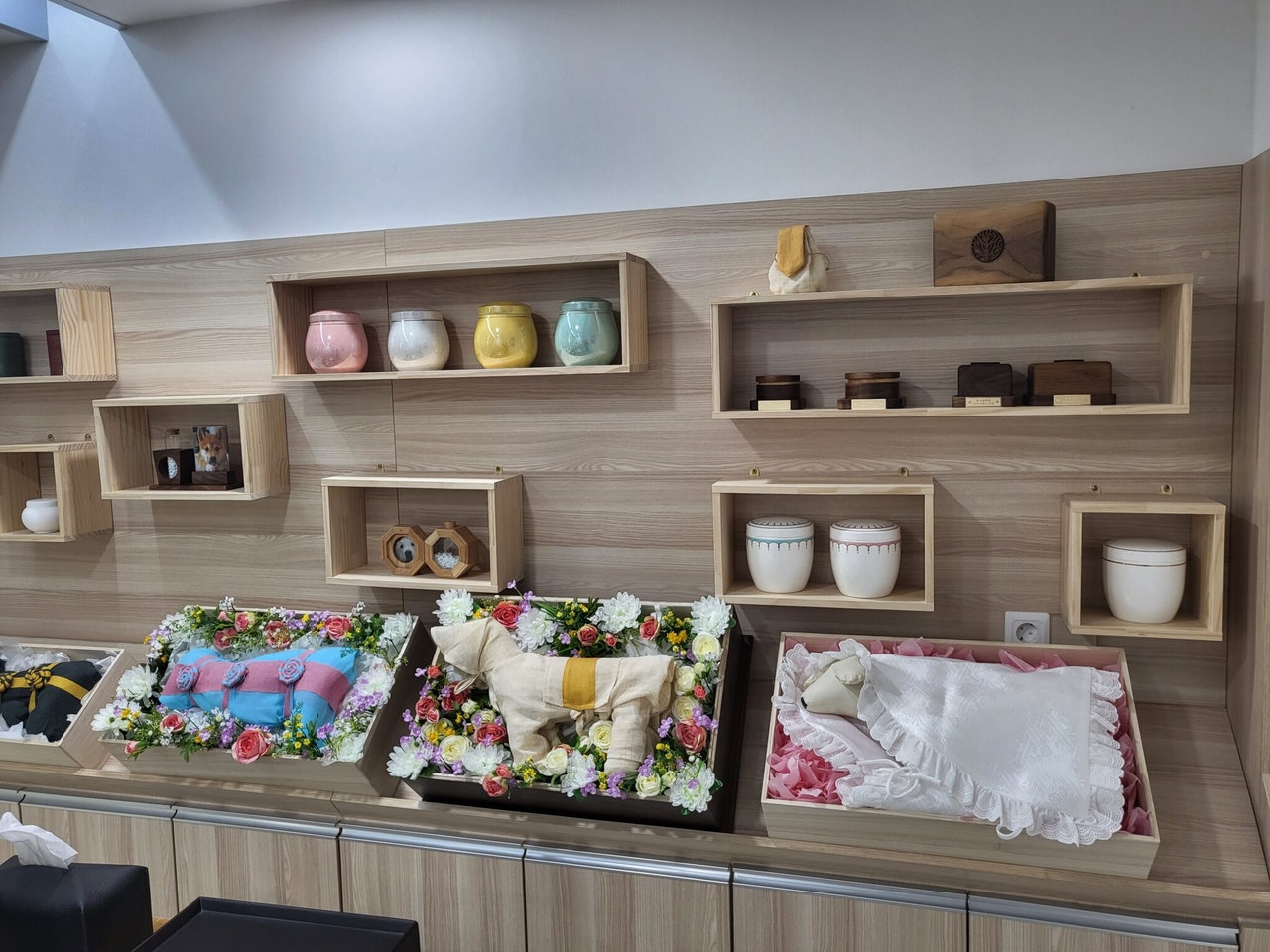
Coffins now range from cardboard boxes to those made of paulownia or walnut, and shrouds are crafted from materials such as hemp, silk or hanji, traditional Korean paper, creating a wide spectrum of price options.
Some services even offer keepsakes made from pets’ remains, such as glass, stone or jewelry crafted from the bones, as well as figurines and framed paw prints, for those who wish to create a lasting monument to their pets.
Although some say the industry is taking advantage of grieving owners, others argue that these choices help ease the sorrow of saying goodbye to a pet.
“At the funeral home I visited, the staff tried to steer us toward more expensive options, but we only chose a few of their suggestions,” said a woman surnamed Lee, whose dog passed away in 2024.
“Another family there, however, selected a high-cost package without hesitation. Their dog was only 5 years old, and they seemed deeply heartbroken.”
Essential, but out of reach
The boom in the industry has led to an increase in pet funeral facilities. The number, which stood at 44 in 2019, has nearly doubled to 83 this year, according to the Ministry of Agriculture, Food and Rural Affairs.
Despite this growth, experts note that many regions still lack facilities.
“Korean law provides the institutional foundation for the pet funeral business, but such facilities are often regarded as ‘not in my backyard’ projects in many areas, triggering opposition to their construction,” said Jo Hee-kyung, CEO of the Korea Animal Welfare Association.
On Jeju Island, where no animal funeral facilities exist, pet owners must travel to the mainland. A lawsuit is underway over local authorities’ refusal to permit a private facility, reportedly due to repeated protests from nearby residents.
Similar disputes between local governments and funeral operators are also unfolding on the mainland.
As a result, large parts of Korea still lack nearby options for pet funerals. Of the 79 funeral facilities with crematoria nationwide, 31 are located in Gyeonggi Province, with most of the others concentrated around major cities such as Busan and Daegu.
Jo noted that this forces many owners to bury pets in arbitrary locations, even if they do not want to, risking harm to themselves and the environment.

The cost of services also limits access.
According to pet funeral provider 21 Gram, funerals arranged after a pet’s death cost an average of 680,000 won, while those planned more than a month in advance still average around 500,000 won.
These fees can be burdensome for owners who have already spent heavily on veterinary care for senior pets, whose medical care costs average over 1 million won per year, experts say.
To improve access, some local authorities are opening public funeral facilities and providing financial support to low-income households. Still, experts call for more efforts to bridge the gap between the de facto obligation to arrange pet funerals and the realities that hamper their use.
“With demographic changes, including the rise of single-person households, pets have a greater impact on people’s lives than ever. Policy support must keep pace, as gaps can lead to risks ranging from environmental issues to psychological distress,” said Professor Lee.
“A nationwide system is needed to ensure pet owners can carry out funerals smoothly, without confusion or extra suffering.”
forestjs@heraldcorp.com






![[Weekender] Are men with type B blood really womanizers?](https://wimg.heraldcorp.com/content/default/2018/07/26/20180726000649_0.jpg?type=h&h=240)

![[Weekender] [K-School] From lobster to rose tteokbokki, Korean school food continues to evolve](https://wimg.heraldcorp.com/content/default/2023/12/07/20231207000820_0.jpg?type=h&h=240)