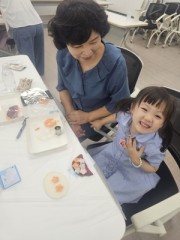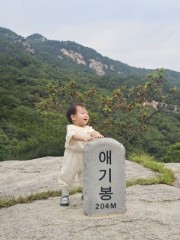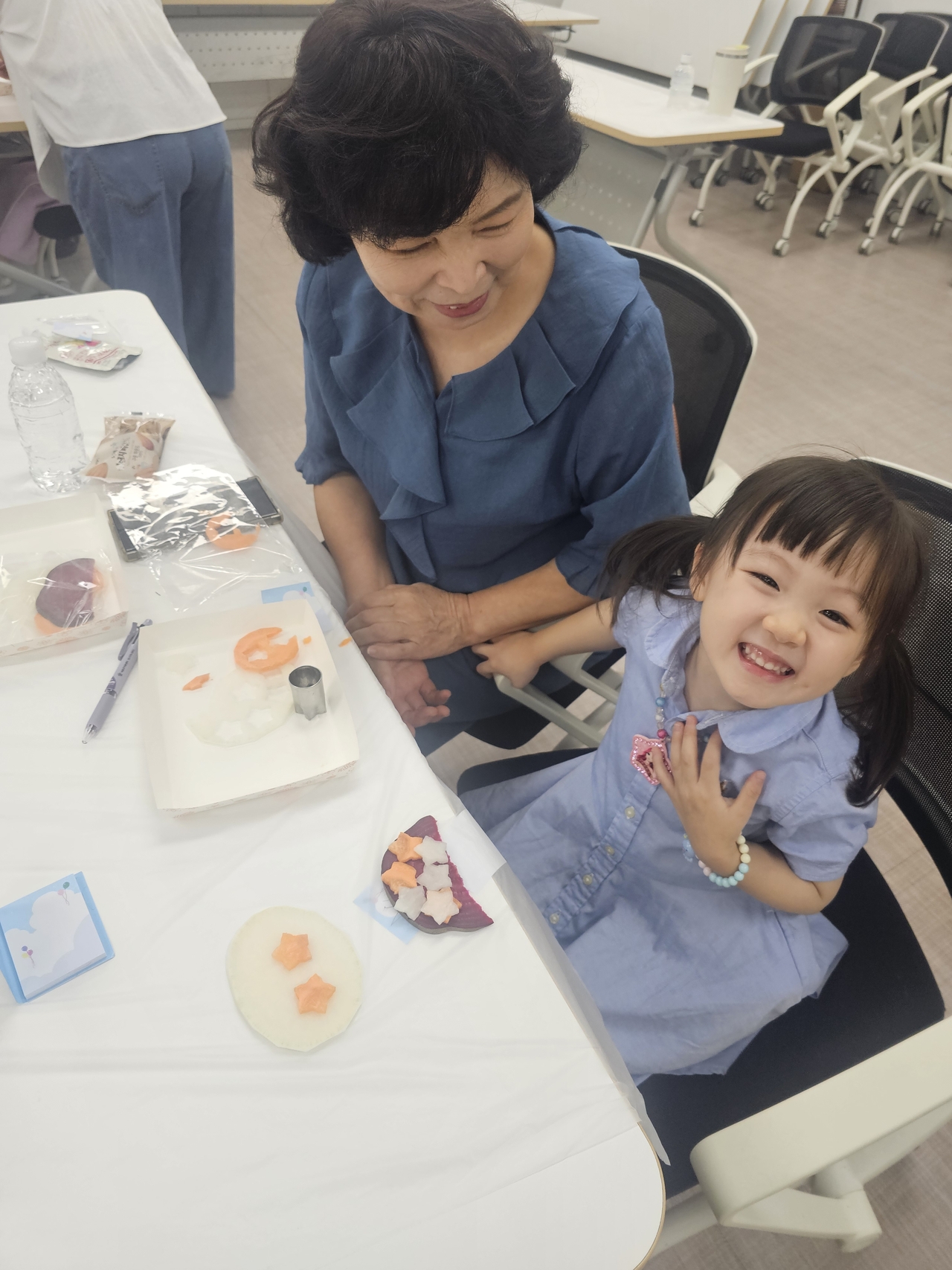
Five days a week for the past two years, Koo Jung-soo, 66, has made her way to her daughter’s home with her husband by 7:40 a.m., to be greeted by her 6-year-old grandson, ready for breakfast.
Koo barely has time to sit down, and time flies as she cooks breakfast for her grandson, reads him stories and helps with kindergarten assignments. Before she knows it, it’s 9 a.m., time for him to catch the school bus. Once her grandson leaves, Koo and her husband spend the rest of the morning doing the dishes and laundry, tidying up toys and completing other household chores.
Following lunch and a quick rest, the time is suddenly 4 p.m., when her grandson returns home. Until her daughter and son-in-law arrive at 8 p.m., every hour is spent with her grandson, from playing together at the playground and bath time to dinner.
“Even if we’re sick, unless it’s bad enough to be in the hospital, we look after our grandson. If he’s too sick to go to kindergarten, we cancel all our personal plans to take care of him all day," she told The Korea Herald. In her own time, Koo works as a senior model and shares her grandparenting days on Instagram.
Koo is one of many grandparents in Korea who spend most of the day caring for their grandchildren so their sons and daughters can pursue their careers.
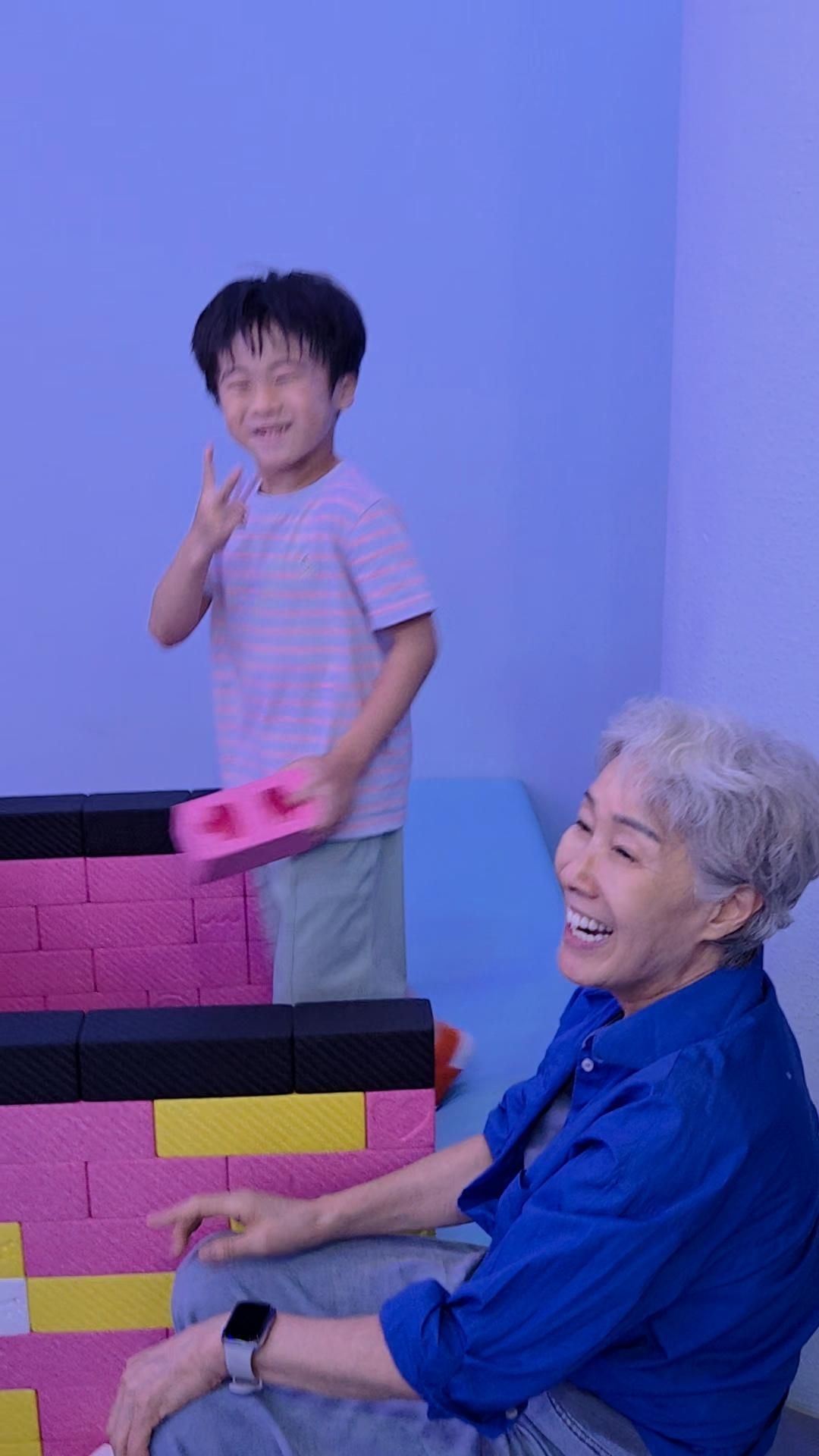
In a country with one of the world’s lowest birth rates, and where young couples often cite the burdens of child care as a major obstacle to having children, the baby boomer generation, now in retirement, is increasingly becoming a primary source of child care support.
As of June this year, nearly half of Korea’s 12.67 million married-couple households, about 6.08 million, were dual-income, and about 65 percent of those families have children under the age of 18, according to Statistics Korea.
Although there is no official data, in South Korea many children in these families are cared for primarily or partially by their grandparents, especially during the early years when child care needs are greatest.
Hwang Ji-mi, 43, who runs a class for 1-year-olds at a day care center in Heukseok-dong in Dongjak-gu, Seoul, can attest to that personally.
“All of the parents of the (four) children in my class work, and except those currently on child care leave, it’s the grandparents who handle drop-off and pickup."
She added that either a grandmother, with the help of a hired babysitter, or both the grandparents care for their grandchild together while the child's parents are at work.
From parenting to grandparenting
For 65-year-old Park Jeong-mi, grandparenting has opened up a new world -- one filled with joy and happiness, but also anxieties and concerns.
Living with her married daughter’s family, Park has been caring for her granddaughter, now 6, since infancy. Despite having raised a daughter and a son herself, she feels at a loss sometimes as to how to care for her grandchild.
Her biggest concern these days is finding the right way to speak to the grandchild.
“It’s different from when she was a baby. She has her own sense of self now. I’m always unsure how to express my emotions and how to discipline her,” she told The Korea Herald.
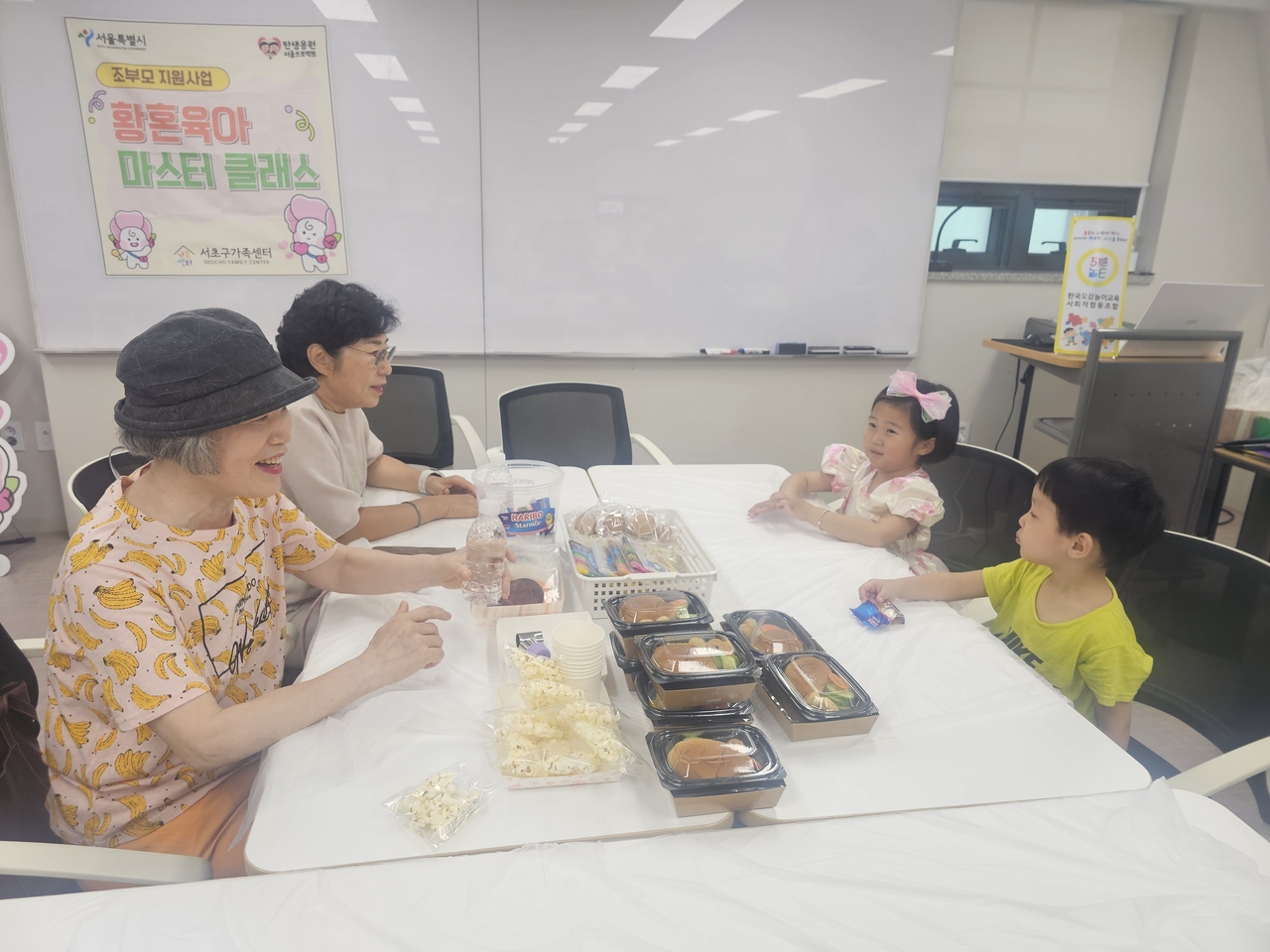
That's why Park attended a grandparenting class at the Seocho-gu Family Center, hosted by Seoul's Seocho-gu District Office in southern Seoul, on Sept. 8.
First launched in June, the program aims to support the increasing number of grandparents caring for grandchildren, both with practical parenting tips and sensory play sessions for children, a Seocho-gu official explained.
Aside from such classes and programs, the city offers cash allowances to families that rely on grandparental support. Dual-income, single-parent or multichild households with infants aged 24 to 36 months are eligible to receive 7,500 won per hour for up to four hours a day, amounting to between 150,000 and 300,000 won per month. To qualify, the household’s combined income must be below 150 percent of the standard median income. Recipients can be either the parents or the grandparents.
In June, a bill to provide monetary support at the national level for grandparents raising their grandchildren was introduced by Rep. Kim Jang-kyeom of the People Power Party.
Physically demanding yet deeply rewarding
The cash subsidy, however, has little impact for most grandparents, who either voluntarily step in or feel they have no choice but to help their children struggling with the burdens of child care.
“While there are allowances for seniors like me, I’ve been ineligible because I’m lower on the priority list based on income, family size and other criteria," Koo said.
She understands why young couples find the idea of having a second child daunting. 'With many relying on their parents to care for their child, having another child is realistically difficult,' she said.
The hardest part of raising a grandchild is the lack of physical strength.
Han Song-hee, 72, who looks after her 4-year-old grandson while her son and daughter-in-law both work, usually spends an hour at the playground with her grandson after preschool before heading home -- a routine that leaves her worn out.
“Since he’s a boy and quite active, outdoor play is a must. Even though it’s exhausting, we always go outside. Playgrounds these days seem to have far more climbing structures than before, and constantly going up and down the stairs with him really puts a strain on my legs," she said.
Koo shared a similar struggle, saying it was especially tough during the kindergarten break this summer.
“No matter how adorable my grandson is, it’s physically exhausting. I especially felt my limits at the end of July during the break, when I had to care for him all day,” she said. "Now that he’s older, he doesn’t nap anymore, which means I barely get a break."
She also finds it mentally taxing at times, especially when she and her daughter, or the grandchild’s mother, clash over child care.
“When it comes to child care methods, I fully follow my daughter and son-in-law’s opinions, and I only give them updates about my grandson’s condition. But sometimes my daughter, maybe because I’m her mom, feels comfortable enough to nag me about how I take care of him, and when that happens, it really hurts,” she said.
Despite various challenges, she feels a kind of happiness different from when she was raising her own daughter.
“Watching my grandson grow, and seeing him learn new things one by one makes me proud and happy. Even though it can be challenging and exhausting, you can still find satisfaction and a sense of accomplishment in watching your grandchildren grow," she said.