Number of Koryo Saram politicians in Uzbekistan has risen recently, reflecting broader community trust
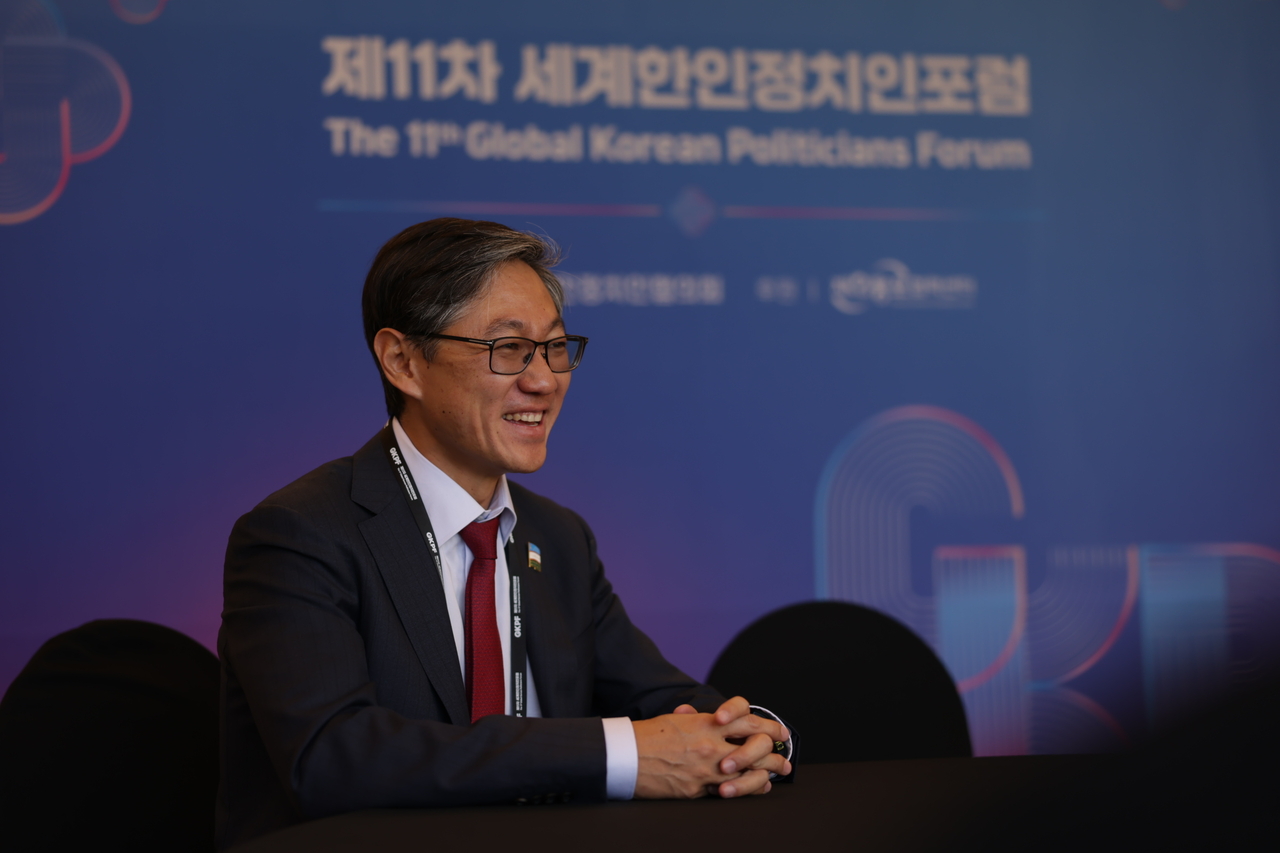
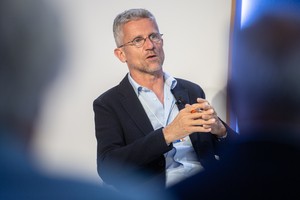
Igor Lee has built a reputation as a successful telecoms entrepreneur, but these days he spends most of his time as a mediator, neighbor and mobilizer.
As a member of the Tashkent City Council of People’s Deputies, he holds weekly in-person office hours and manages an open Telegram group where residents can post questions, photos and complaints.
“Our main role is to be the bridge between citizens and the government,” Lee said in an interview with The Korea Herald during the 11th Global Korean Politicians Forum in Seoul.
“People always have problems," he said. "Sometimes the government cannot hear them. So we help them communicate and get support."
Lee’s path to politics began not with a campaign, but with a question about who he is. Born in Uzbekistan to a Koryo Saram family — Lee's grandparents were some of the many ethnic Koreans living in Russia’s Far East who were forcibly relocated from to Central Asia in 1937 — he says he didn’t think much about identity until his 30s.
“I knew I was Korean, but I didn’t feel it,” he recalled. “When I joined the Korean association, I suddenly saw many Koreans together. I started asking my parents about our grandparents, where they came from, why we are here. Understanding history helped me understand myself. Who I am, where I’m from and what I should do.”
What he decided to do was work with young people. For more than a decade, Lee has led youth programs under the Uzbek Korean Cultural Centers, focusing on language, history and cultural education.
“If we want a strong community, we must start with the young generation,” he said. “It’s hard to change adults. But in school, you can motivate children to learn Korean and know their history.”
That conviction turned into a concrete experiment: Persuading a friend who runs a private school in Tashkent to add three required subjects: Korean language, history and culture.
“The school has about 500 students; roughly 90 percent are Korean,” Lee said. “If we open at least 20 such schools, we could reach 10,000 young people. That would give us a real future.”
Lee’s idea of Koryo Saram is both simple and layered.
“We are Korean people who speak Russian and live in countries such as Uzbekistan and Kazakhstan,” he said. “On one side, it’s sad we lost the Korean language in some families. From another, we are well integrated and live like locals but with a native connection to Korea. We can be a bridge.”
He says that the bridge has stood on goodwill.
When his grandparents arrived with nothing during the Stalin-era deportations, “Uzbek people welcomed Koreans,” he said. “They gave land to farm, and our grandparents worked very hard and showed great results. Because of that, Koreans were respected.”
He adds that he has not experienced discrimination in Uzbekistan, and says local society embraces Korean culture.
In city politics, Lee’s focus is pragmatic.
“I don’t change the constitution,” he said with a laugh. “I try to make life a little better: roads, water, paperwork for school, legal help.”
He works with staff from his company who volunteer after hours, and company lawyers who sometimes take cases pro bono.
“I can’t solve every problem,” he added. “Some issues take a year, and people don’t always understand that. But if for one person life becomes better, it’s worth it.”
Part of his mission, he says, is political representation for the Koryo Saram community. The number of ethnic Koreans in Uzbek politics has risen sharply in recent years.
“Before, there were only a few — maybe four to six in Tashkent and two in parliament,” he said. “Now, after the latest elections, around 60 people from our community hold political positions at various levels.”
He attributes the growth not to formal programs but to a shared sense of purpose. “People saw results that helped not only Koreans but others too, and decided to join,” he said.
Lee’s philosophy has shifted as he’s grown from businessman to public servant.
“When you are young, you think only about yourself,” he said. “Then you think about your colleagues and partners. Later, you think about your community. It’s not only money in this life. If you can improve the quality of life for others, you grow too.”
Asked to define success for the diaspora, Lee returns to first principles.
“We should unite around our language, culture and history,” he said. “If we do that, we will be strong like a stone.” The work is slow and often unglamorous — weekly meetings, class timetables, fixing potholes.
But Lee believes those small steps build a larger bridge: between citizens and the state, between Uzbekistan and Korea, and between a dispersed past and a more anchored future.
“As Koryo Saram, we feel like a bridge,” he said. “My job is to make that bridge stronger for the next generation.”
jychoi@heraldcorp.com


![[Exclusive] SK On fast-tracks pilot output in all-solid-state battery race](https://wimg.heraldcorp.com/news/cms/2025/11/18/news-p.v1.20251117.611a51c182b546348b32ccc3233f6193_T1.png?type=h&h=240)