Autonomous shuttles offer glimpse into future of public transportation, yet a bit slow
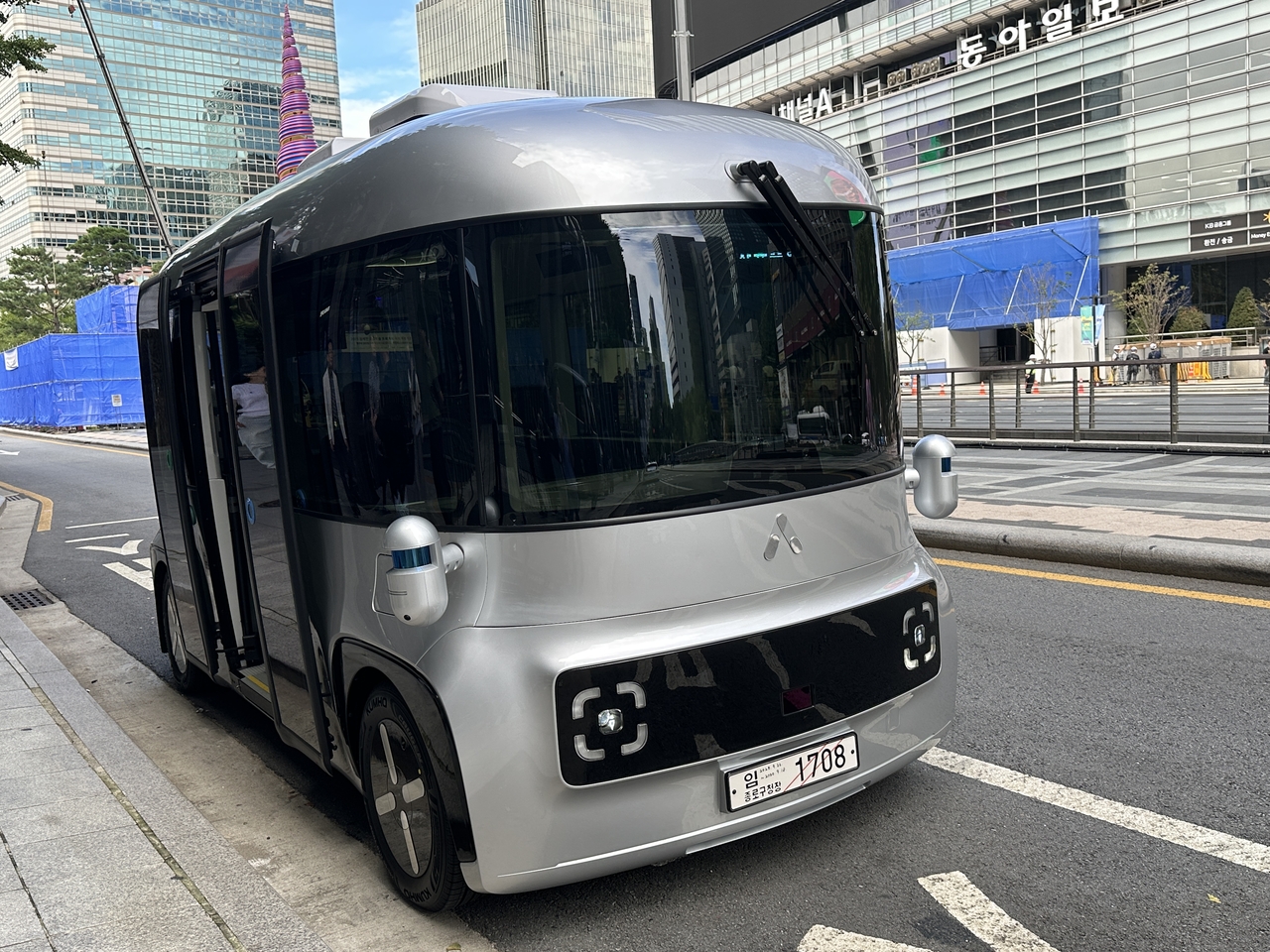
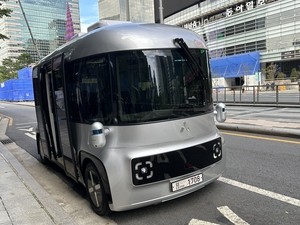
On a street near Cheonggyecheon — a stream in central Seoul — a slick and shiny nine-seater bus moved toward the Cheonggye Plaza bus stop near Gwanghwamun Station on Subway Line No. 5 in central Seoul.
However, this wasn’t just any regular bus.
Named “Cheonggye A01,” the bus is the country’s first driverless, self-driving shuttle, which began its operations to the public Tuesday. While the city had introduced self-driving buses in the past, all of those buses were equipped with a steering wheel and had a driver sitting in the driver’s seat in case of an emergency. The Cheonggye A01, however, did not.
Seven passengers, including a reporter from The Korea Herald, as well as one safety staff member, boarded.
The vehicle, capable of transporting eight passengers excluding the safety staff member, was relatively cool inside, with full-size windows on all sides of the bus.
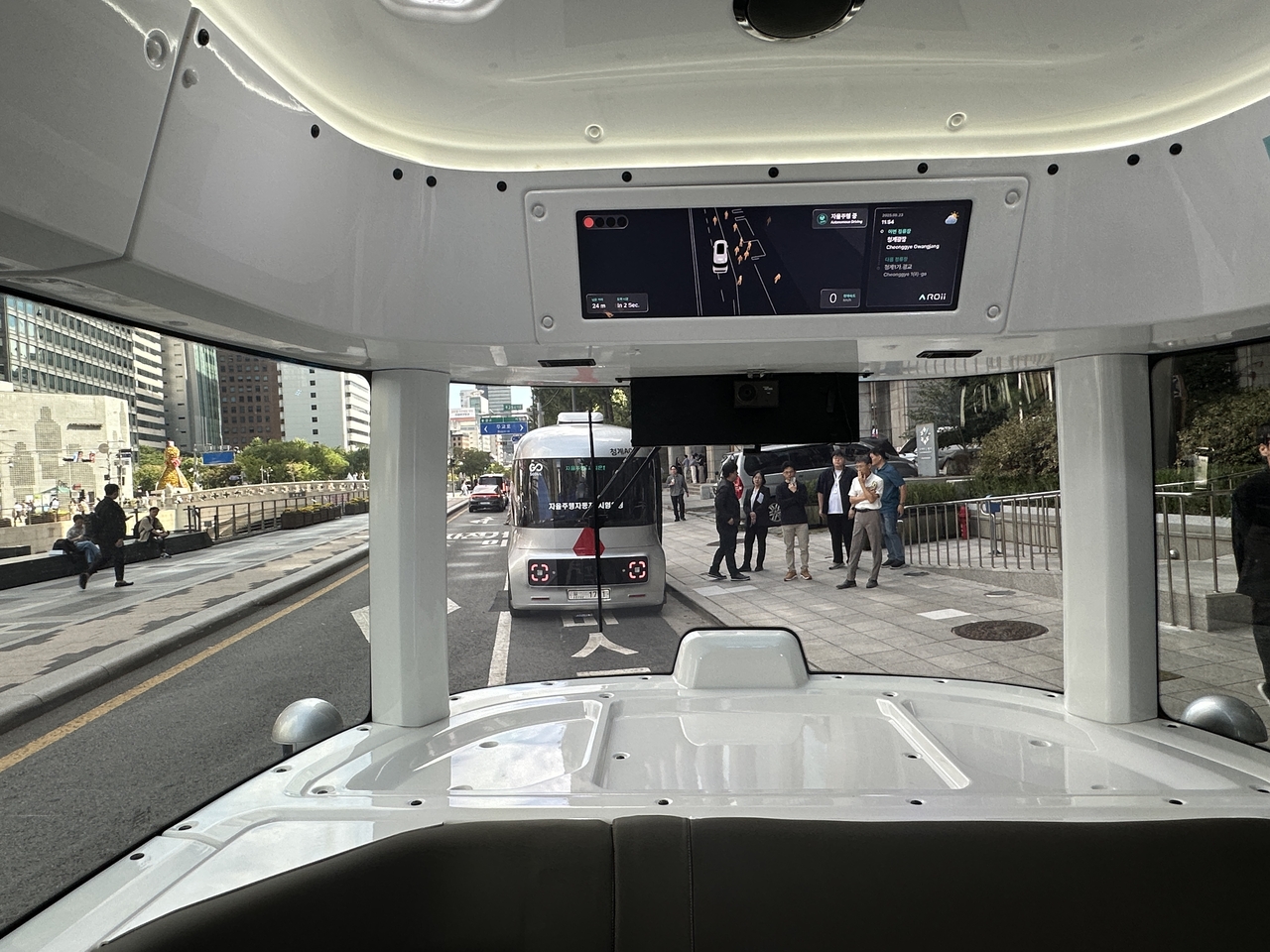
The bus was equipped with U-shaped seats, a large screen displaying information about the vehicle's surroundings, such as the locations of nearby pedestrians and cars. Seoul’s autonomous buses detect their surroundings using cameras and LiDAR sensors — which measure distances and help with orientation and identifying obstacles — to identify potential hazards and control their routes, enabling safe operation.
Each bus also had one wheelchair lift, as well as three seats that could be folded upward once passengers with wheelchairs boarded.
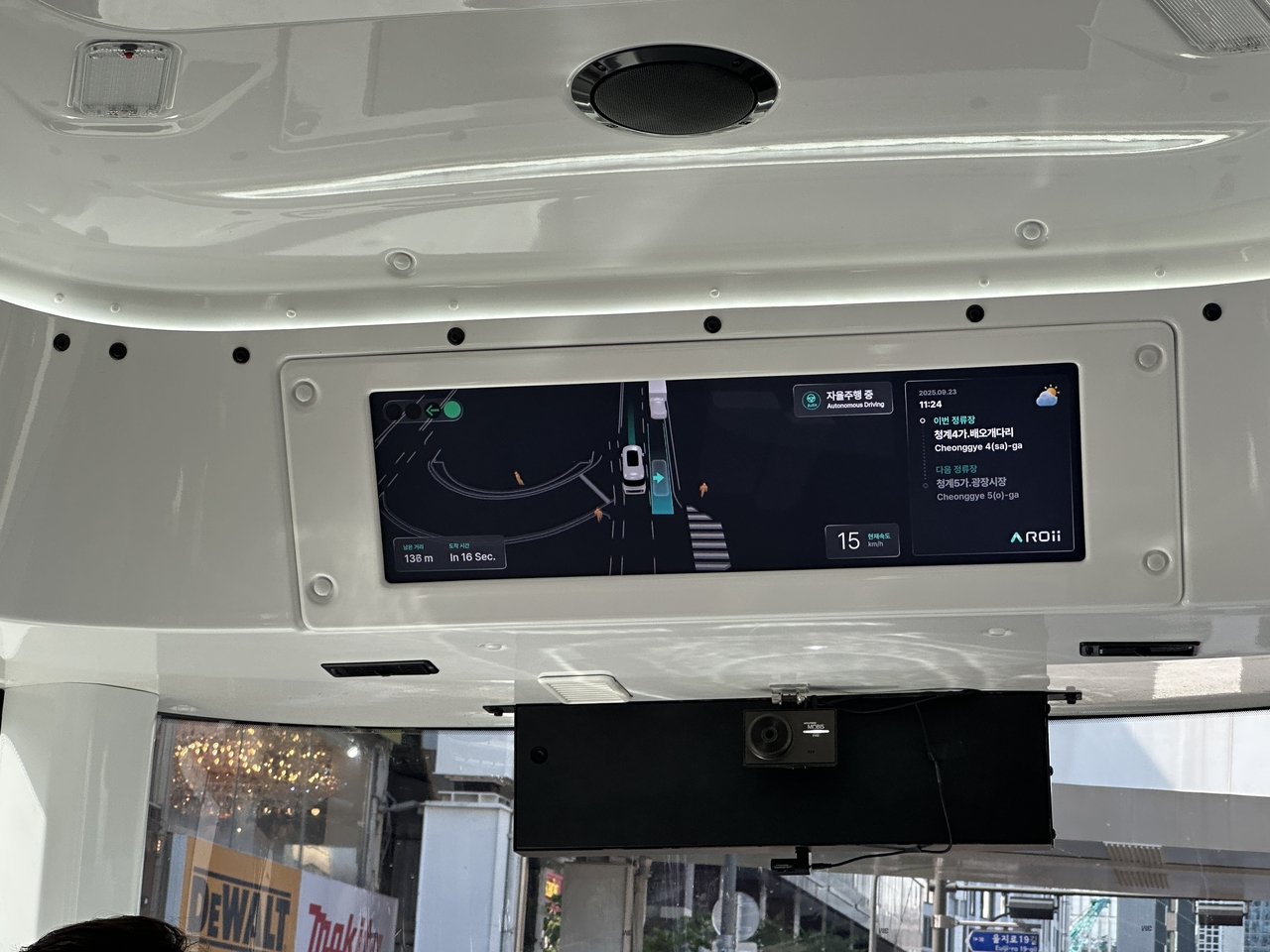
The bus drove along a 4.8-kilometer circular route around Cheonggyecheon, starting from Cheonggye Plaza, stopping at Cheonggye 5-ga, a street near one of Seoul’s iconic tourist destinations, and Gwangjang Market.
According to the shuttle bus' operator company, Autonomos A2Z, the bus runs at a speed of 20 to 25 kilometers per hour, relatively similar to the average speed of regional buses in the city, when traffic conditions are ideal.
However, as the road designated for the driverless bus was narrower than normal bus routes, with motorcycles and other vehicles attempting to run along the same road, the bus felt relatively slower as it frequently stopped.
While the bus moved along the circular route mostly on its own throughout the 1-hour ride, the safety staff member had to intervene when traffic became tangled, such as when cars blocked the bus by stopping in the middle of an intersection. The safety officer mostly controlled the bus in this situation using a wireless controller and was able to observe traffic conditions surrounding both the front and rear of the bus through camera footage shown on a tablet near their seat.
According to the city government, the bus runs fully on electricity, with a battery pack installed on the bottom of the bus.
The ride itself was relatively smooth, except when pedestrians or small vehicles such as motorcycles suddenly emerged from the side of the road, prompting the bus to make a sudden stop.
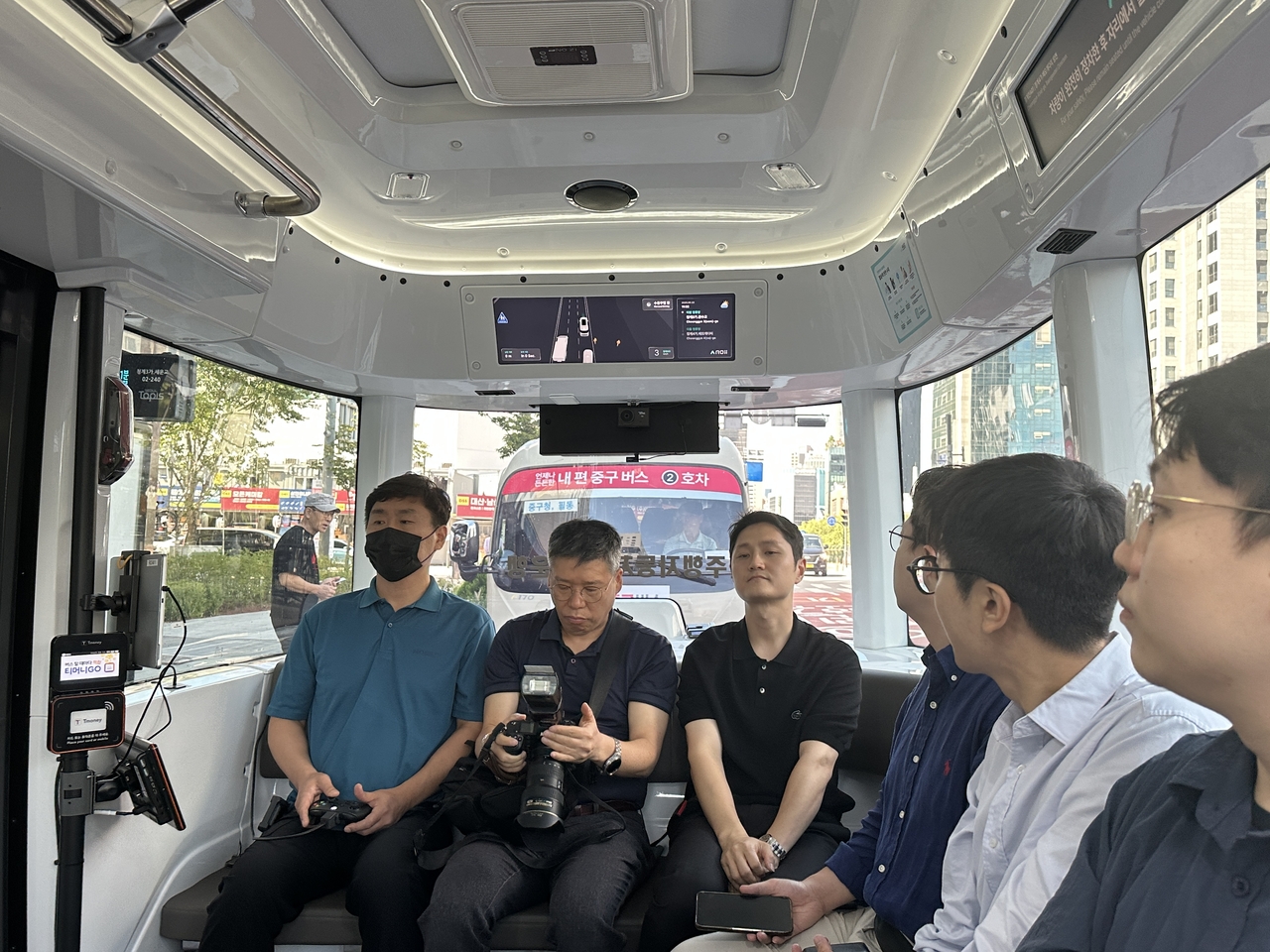
Everyone was seated with seatbelts fastened throughout the entire ride. A safety officer on board told reporters that, for safety, passengers are not allowed to ride the bus while standing.
According to the city government, two self-driving buses will be available on weekdays from 10 a.m. to 4:50 p.m., operating in 30-minute intervals throughout the day, excluding a lunch hour from 12 p.m. to 1 p.m. The buses will not operate on weekends and public holidays, when the Cheonggyecheon roads are designated as car-free.
While the Seoul Metropolitan Government has yet to announce a specific date for full operation, it has said that the self-driving shuttle bus will initially be free of charge, though passengers will be required to tap their transit cards upon boarding. The city government plans to introduce fares in late 2026 and will include transfer discounts to other forms of public transport, like regular buses and subways.
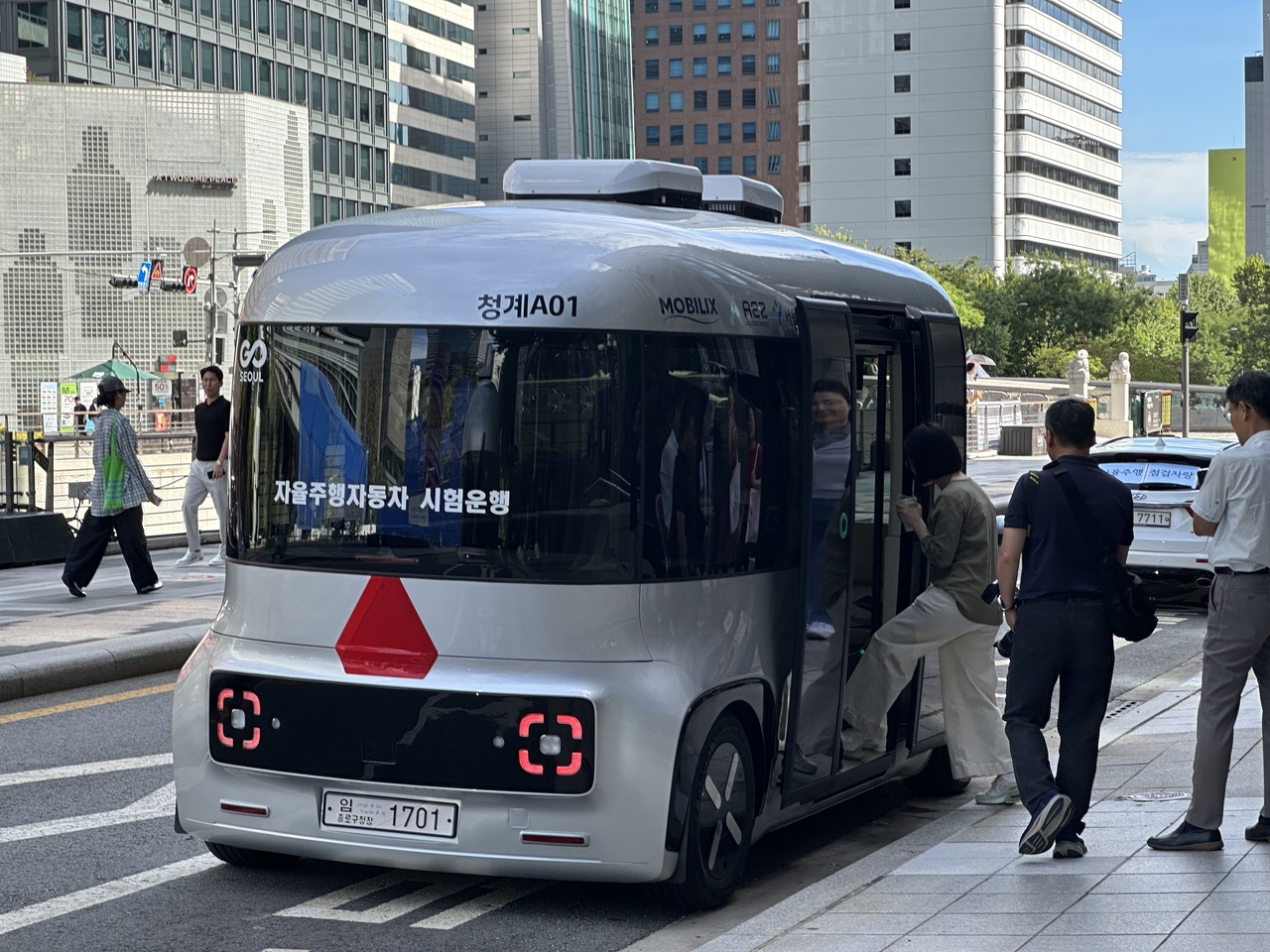
The city government stated that it hopes the shuttles will become an opportunity for commuters to experience the future of public transportation, and that the self-driving buses will “boost tourism around Cheonggyecheon and revitalize the local economy.”
It added that it would continue to refine the service throughout its trial period until next year, with plans to extend its operating hours into the evening, expanding self-driving routes throughout the city and eventually transitioning to fully autonomous operations.
lee.jungjoo@heraldcorp.com