By the Korean Food Promotion Institute
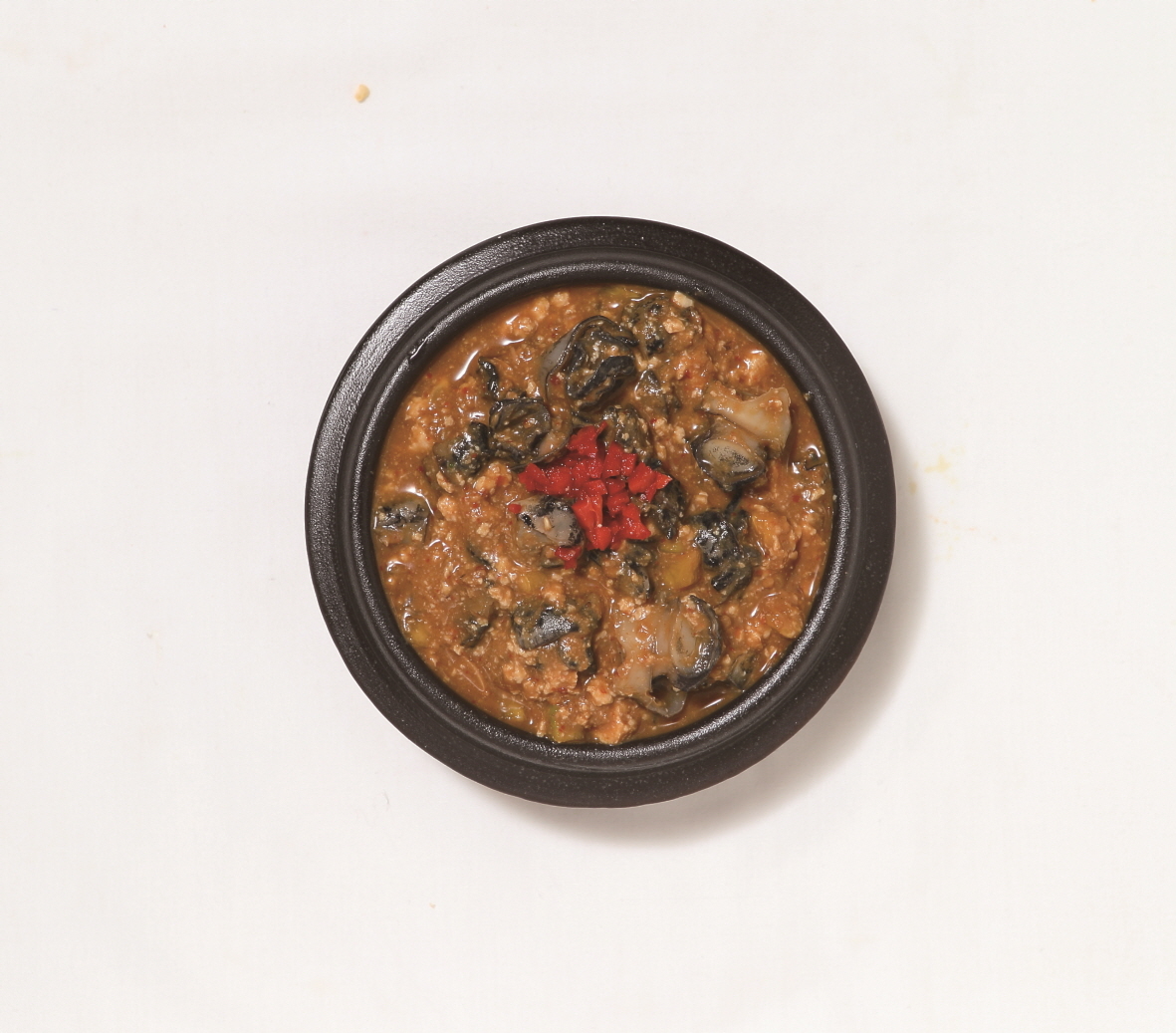
Ureongdoenjang bibimbap is a uniquely flavorful Korean dish that combines the earthy richness of doenjang (fermented soybean paste) with the delicate taste of freshwater snails. The dish offers a bold, umami-packed experience, thanks to the snail stew simmered with vegetables, tofu and mushrooms, all served over a bed of perfectly cooked rice and barley. Korean chives add a fresh, herbal note that balances the depth of the stew. This bibimbap variant is an excellent choice for adventurous eaters looking to explore traditional Korean flavors and textures. With its hearty mix of ingredients, it’s a nourishing and satisfying meal that’s perfect for those who enjoy savory, comforting dishes.
Ingredients
- 450 grams short-grain rice
- 1/2 cup barley
- 3 1/2 cups water
- 100 grams Korean chives
- Ssamjang (spicy soybean paste)
- 150 grams freshwater snail
- 1 tablespoon all-purpose flour
- 1 tablespoon rice wine
- 4 tablespoons doenjang (soybean paste)
- 50 grams dubu (tofu)
- 2 pyogo (shiitake) mushrooms
- 50 grams onion
- 50 grams young squash
- 1 green chile pepper
- 30 grams large green onion
- 1 tablespoon minced garlic
- 1 teaspoon gochugaru (red chile pepper powder)
- 1 tablespoon sesame oil
- 1 cup water
Preparation
Soak the short-grain rice and barley in cold water for 30 minutes and drain. In a large saucepan, combine the short-grain rice and barley and mix well. Pour 3 1/2 cups of water into the saucepan and cover with a lid. Bring to a boil over high heat. When it boils, reduce the heat to medium-low. Simmer for 20 minutes. When the rice is tender but firm, reduce the heat to very low and cook for 10 more minutes. Remove the pot from the heat and gently stir the rice with a wooden spoon.
Wash the Korean chives and cut into 5-centimeter-long segments.
Rub the freshwater snail with 1 tablespoon of flour and then wash with cold water. Marinate in 1 tablespoon rice wine for 30 minutes.
Mash the dubu with a knife.
Cut the pyogo mushrooms, onion and young squash into 1-cm cube pieces. Cut the green chile pepper into thin shreds.
Cooking
Heat a ttukbaegi (earthen pot), add sesame oil and stir-fry the minced garlic and freshwater snail for 5 minutes over high heat. Pour 1 cup of water and boil over medium heat.
When it boils, dissolve 4 tablespoons doenjang and add dubu, pyogo mushrooms, onion, chile pepper and young squash and then cook for 5 minutes over low heat. Add 1 teaspoon of gochugaru and minced green onion. Turn off the heat.
Place a scoop of cooked rice in an earthen bowl. Serve with Korean chives on top.
Tip
To remove the snail's slippery membrane and sediment, wash them, and then stir-fry with garlic. To reduce the saltiness of ssamjang, add crushed dubu and other ingredients.
Serves 4.
yoohong@heraldcorp.com