By Hansik Promotion Institute
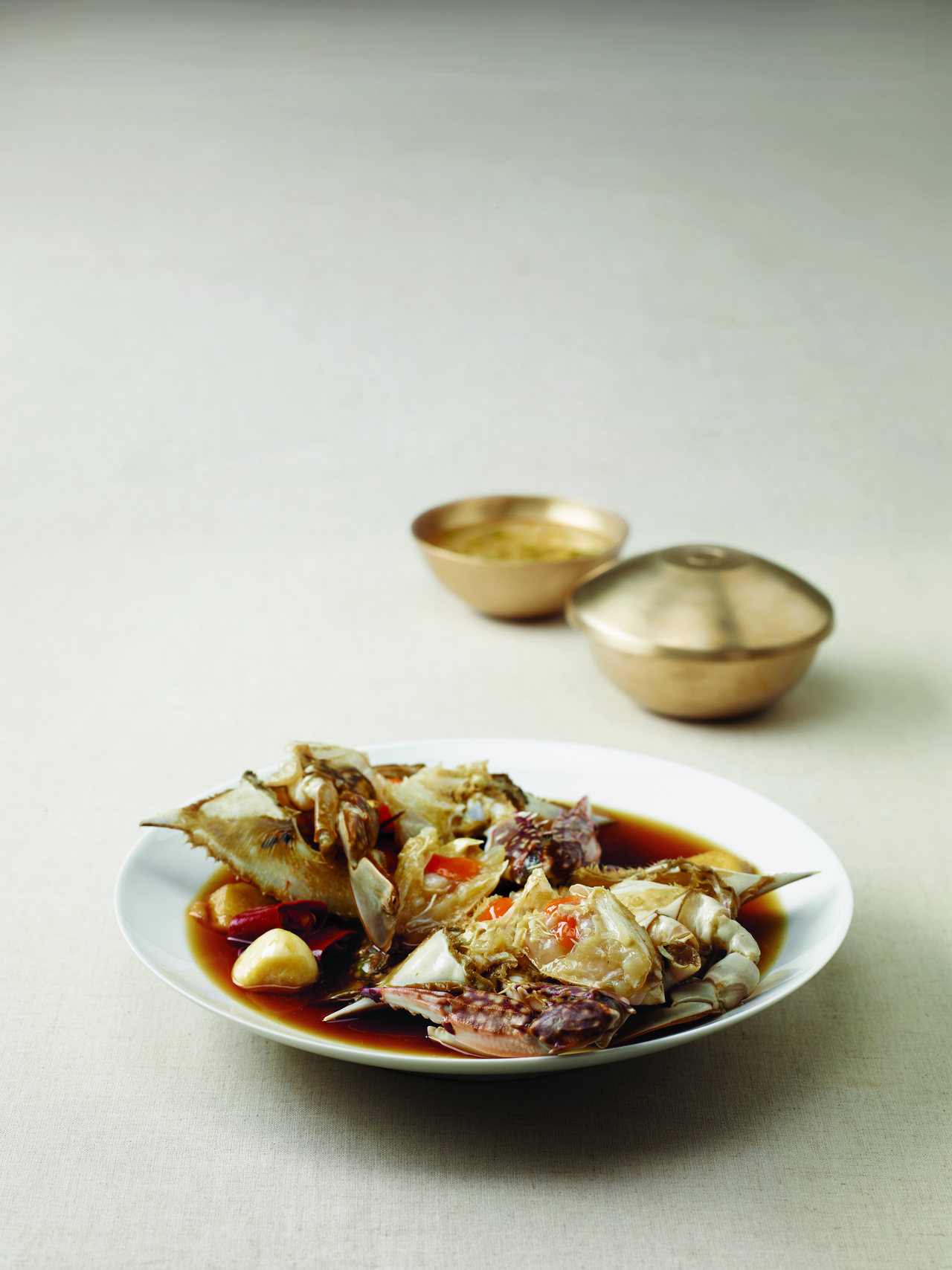
A beloved Korean delicacy, ganjanggejang is often called the "rice thief" for good reason. It’s so flavorful that it turns plain rice into a feast. May is the perfect time to make this dish, as female blue crabs are full of roe and at their most succulent. This traditional recipe involves marinating raw, fresh crabs in a fragrant soy-based brine that’s rich with garlic, ginger and a hint of spice. Though the process takes a couple of days, the result is a deeply savory, umami-rich dish that captures the essence of the sea. Store portions in the freezer to enjoy the taste of spring crabs any time.
Ingredients
- 4 fresh blue crabs
Soy sauce marinade
- 2 cups soy sauce for soup
- 4 cups soy sauce
- 12 cups water
- 1/3 cup rice wine
- 25 grams ginger
- 2 dried red chile peppers
- 10 cloves garlic
- 2 cups water
Preparation
Scrub the fresh blue crab with a brush. Drain in a colander.
Place blue crabs stomach side up in a large container.
Cut the dried peppers in half lengthwise, and cut garlic and ginger into thin slices.
Cooking
Add the dried pepper, garlic and ginger to the container of blue crabs. Weigh the crabs down with a heavy plate to prevent them from floating. Pour in the soy sauce marinade and let it stand for 1 day.
Strain the marinade from the crabs into a large saucepan, and add 2 cups of water. Heat the saucepan over medium-high heat and bring to boil while mixing. Remove from the heat and let it cool to room temperature.
Pour the cooled soy sauce marinade into the container of blue crab again. Let it stand for 1 day before serving.
Tip
Leftover gejang can be kept in the freezer. Whenever someone wants to eat it, a portion can be thawed and served with the refrigerated soy sauce. In this way, the gejang can be kept fresh for longer and will not become too salty.
Serves 4.
yoohong@heraldcorp.com