Conspiracy theories, rumors surround 'crucifixion' of Easter 2011
A man is dead, nailed to a cross.
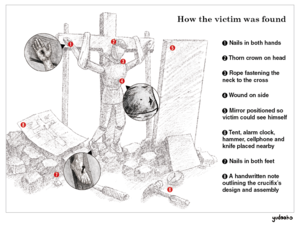
Barely clothed, with both hands and feet pierced by nails, he has a deep wound in his side and a crown of thorns pressed onto his head.
But this is not the crucifixion of Jesus of Nazareth. It’s a crime scene in South Korea, around the time of Easter 2011.
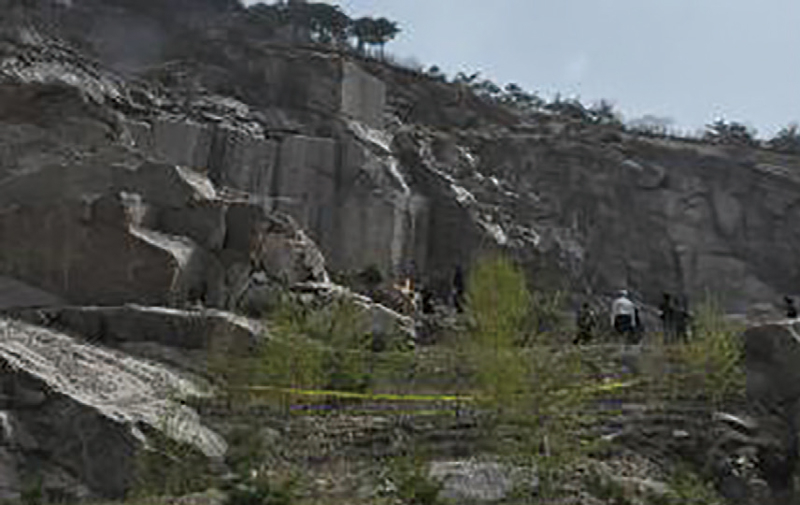
On an abandoned quarry hillside in Mungyeong, North Gyeongsang Province, a 57-year-old man was found dead on a cross, in a haunting tableau that eerily mirrored the Passion of Christ.
Fourteen years later, the man’s death remains a mystery. Authorities ruled it a suicide, claiming he meticulously planned and executed his own crucifixion — alone. But many still struggle with that explanation.
In this episode, we revisit a case that blurs the line between faith and delusion, devotion and despair — and ask what really happened on that hillside in late April 2011.
A difficult way to die
On May 17, 2011, about two weeks after the bizarre case first made headlines across the country, South Korea’s National Forensic Service announced the autopsy results. We only know the deceased by his surname, Kim.
"The cause of death appears to be blood loss from the penetrating wound on the victim’s side, combined with asphyxiation resulting from strangling himself,” it said.
So, loss of blood and oxygen from re-creating the Passion of Christ caused his death. But a more pressing question was who put him on the cross?
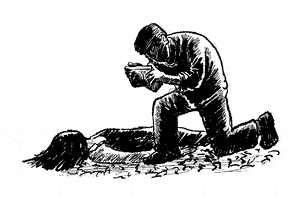
Notes found in Kim's residence near where he died contained the blueprints to make a cross and how to hang a person on one. Based on an on-site inspection and Kim's notes, the NFS envisioned their version of what happened, and concluded that he could theoretically have done it to himself.
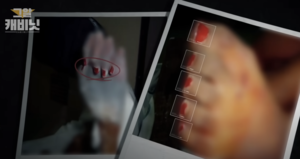
The holes in Kim's hand were found to have been made by a small drill found near the cross. Officials said the punctures were through the flesh, not the bone, and could therefore have been made using the tool. The nails for his hands were already hammered into the cross, before he was hung.
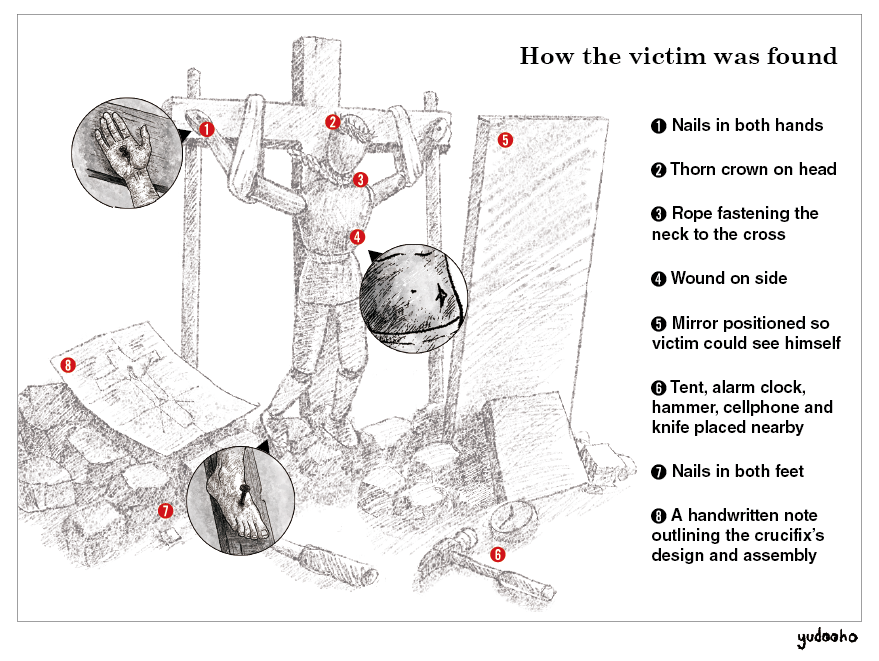
Based on the official report, the following is what happened.
Kim erected the cross and hung two loops of bandages to support his arms, with a structure near the bottom to support his feet to prevent him from falling. He donned the crown of thorns and got on the cross, after which he bent his body to nail both his feet to the cross.
He then strapped his waist, neck and shoulders to the cross, using a mirror that had been set up on a smaller separate cross next to him to check the location of where he needed to stab himself in the side of his torso. He drilled holes in both hands and pushed them onto the nails. The loss of blood made him dizzy and he fell forward while strapped tightly to the cross. The cords binding his neck to the cross then slowly strangled him until he died.
This would align with speculation that the man was alive when he was nailed to the cross, and likely not even subdued.
Minimal traces of drugs were found in his body, although pills used as sedatives in traditional Korean medicine were found nearby. Medical books were found at his home, along with tools matching those found at the site of his death, presumably used by Kim in preparation.
No evidence was found to indicate the presence of a third party at the scene. The victim had purchased the wood for the cross himself. He had disconnected his cellphone service and closed his bank accounts beforehand.
Many people raised questions about the conclusion reached by state forensic authorities, but police closed the case in a fortnight. They said there was no choice but to regard the case as suicide, although the National Forensic Service did say it could not rule out the possibility the man had help.
Why?
Let’s go back to the basics: Who was Kim?
Kim was a taxi driver and a religious zealot. While his presumed death around Easter suggests a probable link to Christianity, colleagues said his beliefs did not align with mainstream teachings. Instead, his faith appeared to be a blend of Christianity, folk religion and elements of Buddhism.
A former pastor living near Kim, who was also one of the last people to see him alive, told police that they had talked mostly about everyday issues and refrained from discussing Christianity.
Kim's body was found on May 1, 2011, exactly a week after Easter Sunday. Based on consistent testimonies about Kim's obsession with Christianity and church, police estimate he died on April 21.
But April 21 was Holy Thursday, not Good Friday, when Jesus' crucifixion is traditionally remembered.
Easter, the first Sunday after the Paschal full moon, is the celebration of Jesus' resurrection in Christianity. The bible says he came back from the dead two days after his crucifixion — on the third day — but it has been misunderstood among many Koreans as three days after the death, due to translation issues.
The location of Kim's death, at an abandoned stone mine on a mountain, also parallels what is thought to be the rocky hills of Mount Calvary where Jesus is said to have been crucified.
Days before his death, Kim bought a brand-new car and told his younger brother to cover the seats with a towel, after which he prayed inside the car, according to the police investigation from the time.
Tak Ji-il, a professor at Busan Presbyterian University, said this appears to reflect Kim's intent to mirror Jesus' actions in Luke 19:29-30, where he tells his disciples, "Go to the village ahead of you, and as you enter it, you will find a colt tied there, which no one has ever ridden. Untie it and bring it here."
The dealer who sold Kim his car said he told the dealer that he wanted to be the first person to drive the car out of the factory, an apparent parallel to Jesus riding the colt that had never been ridden before.
It is possible that Kim, even if he did this to himself, might have had help from others, or was the victim of some strange plot.
Crucifixion was reserved only for the most heinous crimes in ancient times, such as treason, and even back then, many voiced their disgust at its cruelty.
In modern days, the act of graphically re-creating crucifixion is only observed in some parts of the Philippines as a devotional practice in honor of Jesus' suffering, although the Catholic Church now opposes it. This practice does not extend to death, as it lasts only a short time, but it does involve driving nails into the participant’s limbs and flagellation, and entails a great deal of physical pain.
A person surnamed Joo, one of the people who first found Kim's body, told local media about an odd conversation he had with him two years before the incident. He said that Kim suspected he was the "reincarnation of Jesus."
Joo was a beekeeper and a former pastor of the Manmin Central Church, which has been deemed as a cult by mainstream Christian churches in South Korea. He ran a website that discussed his ideas about Christ, centered on the belief that anyone could become Christ and the validity of the reincarnation of souls.
Joo said he was not comfortable with Kim's misunderstanding of his ideas, which in themselves are very different from traditional Christian beliefs.
It is unclear when Kim may have started developing his ideas, but it is possible his personal life may have played a part.
Kim received a liver transplant from his son, who later died at the age of 22. He and his wife divorced some time after that.
The premature death of his son hit Kim hard, which may have led him to become obsessed with religion. The producer of an SBS show visited Kim's friend from childhood, who told them Kim was devastated over his son's passing.
"(He told me) it was agonizing, and that he couldn't go home. That his child is gone like that, it was so hard for him," the friend said. "So I told him, 'What better friend could there be then your wife in our age?' And he told me that maybe he can visit her later, but not now."
Leading up to his death, Kim was estranged from most of his family. His older sister said he grew apart from his siblings for religious reasons.
Lingering questions
The unclear situation surrounding Kim's death notwithstanding, it is widely believed that Kim at least died of his own will. But whether he had truly acted alone as police concluded, without anyone assisting him in his elaborate death, remains a mystery.
In a 2011 interview, Kim Yong-tae, then head of the investigative division at the Mungyeong Police Station, told local media outlets that all surveillance footage that had images of Kim from April 9-14 showed him to be alone. But a considerable gap remains between Kim's public sightings and when he went into the abandoned quarry to face the horrible fate he is believed to have brought upon himself.
Dying the way he did, all by himself, may be theoretically possible, as police explained, but it would require superhuman will to execute the plan while withstanding the pain without help.
The aforementioned crucifixion ceremony in the Philippines, for example, is conducted with the help of several other people and lasts for only a few minutes. Footage shows that the tied-up participants scream in agony as nails go through their bodies.
This is why some think that there could have been a helper — someone playing the role of the Roman soldiers who nailed Jesus to the cross at Golgotha.
Go Do-hyeon, a reporter of local daily Maeil Shinmun who first covered the incident, has outright said that he and other reporters thought that the police conclusion "makes no sense.”
While no evidence was found of others being present at the death site, many thought it was possible that torrential rain in the area at the time may have washed away DNA or other evidence of anyone else who may have been there.
There has been speculation that the aforementioned beekeeper Joo, as well as another beekeeper surnamed Kim, could be related to the strange death. The beekeepers themselves said they suspected murder, but the police investigation concluded that neither had been involved in any way.
The witnesses have remained reserved on what they thought of Kim's death, or the intentions behind the deceased's peculiar actions in the final moments of his life.
A decade removed from the incident and several investigations from the public and civilian sectors later, the “Mungyeong Crucifixion Incident” still remains a mystery. What exactly happened as the tortured man drew his agonizing final breath in the remote hills will perhaps never be fully understood.
This article is a written adaptation of The Korea Herald's podcast True Crime. You can listen to the full episode on Spotify and Podbbang. ― Ed.