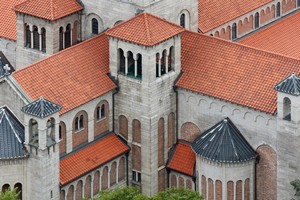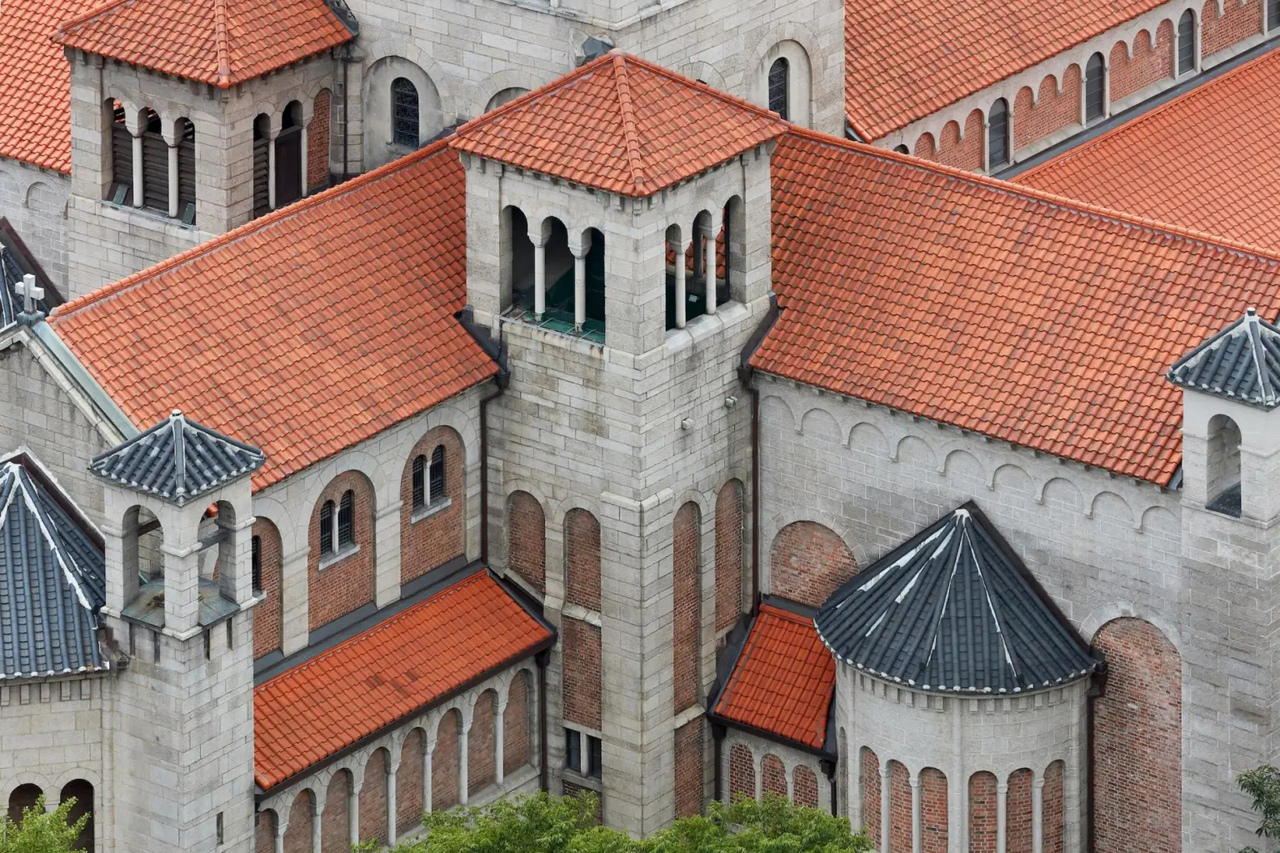
Between the sleek glass facade of Seoul City Hall and the quiet eaves of Deoksugung, a Romanesque tower rises, with its bright orange tiles glowing under the sun and its arches framing a slice of Seoul’s blue sky.
This is the Cathedral Church of Saint Mary the Virgin and Saint Nicholas, more commonly known as the Seoul Anglican Cathedral. Since 1922, it has stood in the heart of the capital: a striking, almost otherworldly presence that seems transported from a European city of another era.
The cathedral’s distinctive towers were designed by Arthur Stansfield Dixon, an English architect who believed that architecture should blend naturally with its surroundings. Before Dixon’s project took shape, the site was home to a small church built in the Korean traditional hanok style, with the British Embassy just behind it. As Anglican missionary work in Seoul grew, church leaders decided to construct the country’s first cathedral.
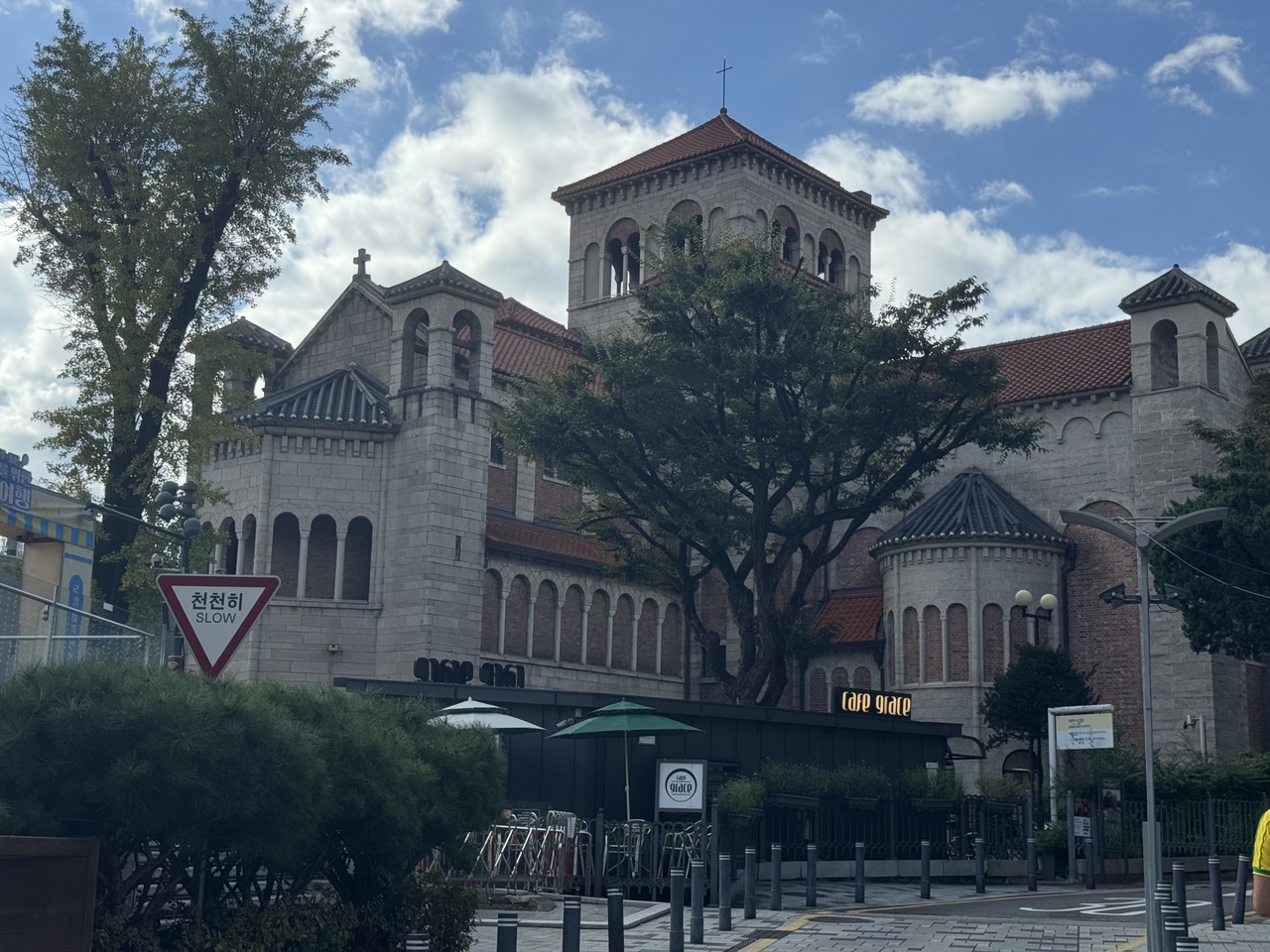
Initially, planners considered the Gothic style, inspired by the nearby Catholic cathedral in Myeong-dong. But Dixon thought otherwise. To him, Gothic architecture, with its ornate spires and upward thrust, felt out of place in Seoul’s low-lying hanok skyline. He instead chose the Romanesque style, whose simple and horizontal geometry, he thought, better harmonized with the city’s traditional landscape.
Construction began in 1922 but was halted four years later due to financial constraints. The incomplete building stood for decades until Korean architect Kim Won completed it in 1996, faithfully adhering to Dixon’s original designs.
In the decades between, the cathedral was a silent witness to Korea’s turbulent modern history.
The Cecil Theater, part of the church complex, hosted Seoul’s first theater festival in the 1970s. Its adjoining restaurant, which closed in 2009, became a quiet gathering spot for democracy activists in the 1980s, including future Presidents Kim Dae-jung and Kim Young-sam. In 1987, the sound of the cathedral’s bells often marked the start of pro-democracy rallies in central Seoul.
Inside, the church follows a cruciform layout, with seven rows of pews leading to a golden altar. Dixon infused Korean elements into the design: stained glass windows inspired by "changho" lattice patterns and a roof layered with "giwa," the curved clay tiles typical of hanok.
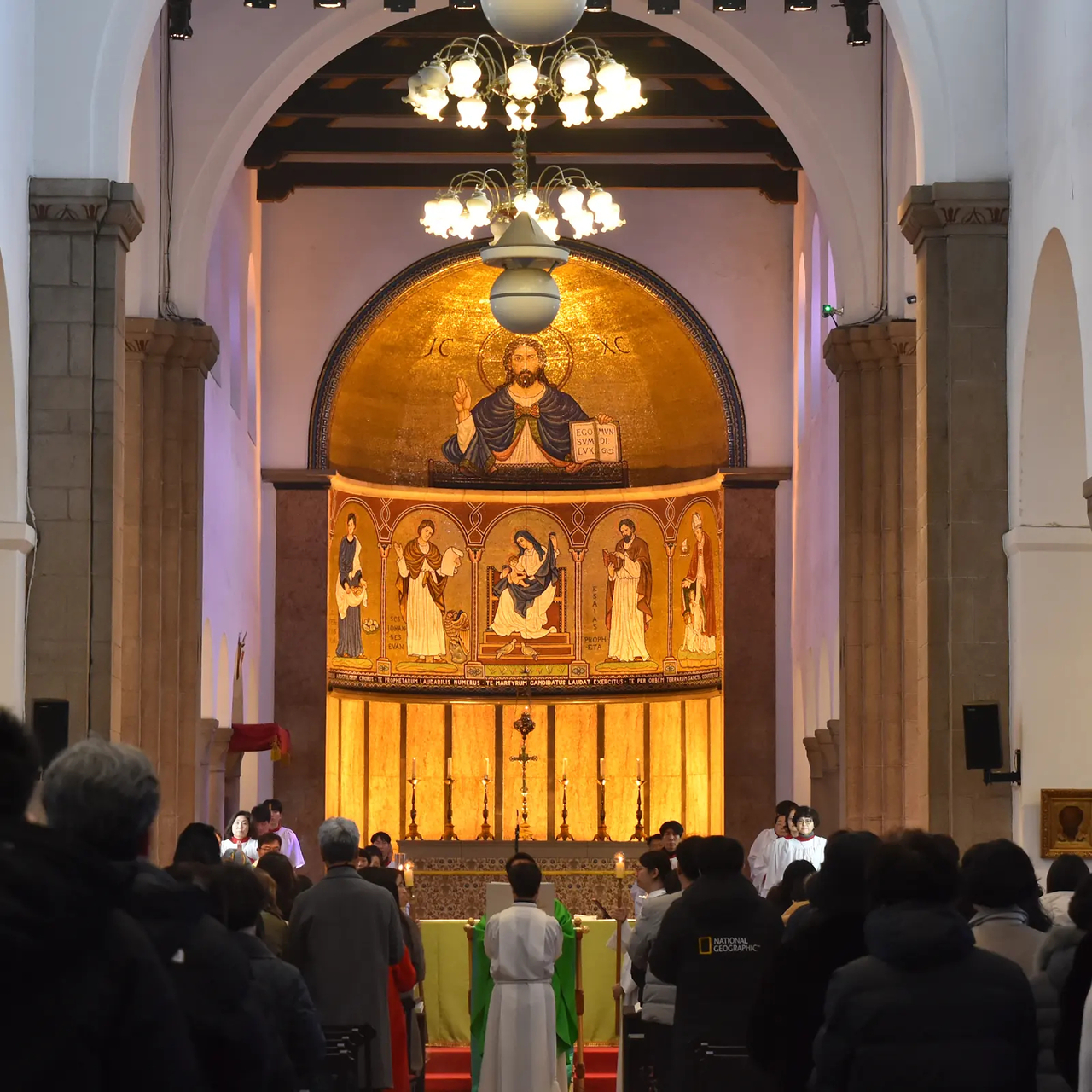
Designated a Tangible Cultural Heritage site by the Seoul Metropolitan Government in 1978, the cathedral remains open to visitors seeking a quiet moment of reflection amid the bustle of downtown — and a glimpse of Seoul’s architectural dialogue between East and West.
The cathedral is open to the public from 11 a.m. to 4 p.m. on weekdays, and 11:20 a.m. to 6 p.m. on Sundays.