Know-how and tips on surviving work drinks in Korea without causing offense
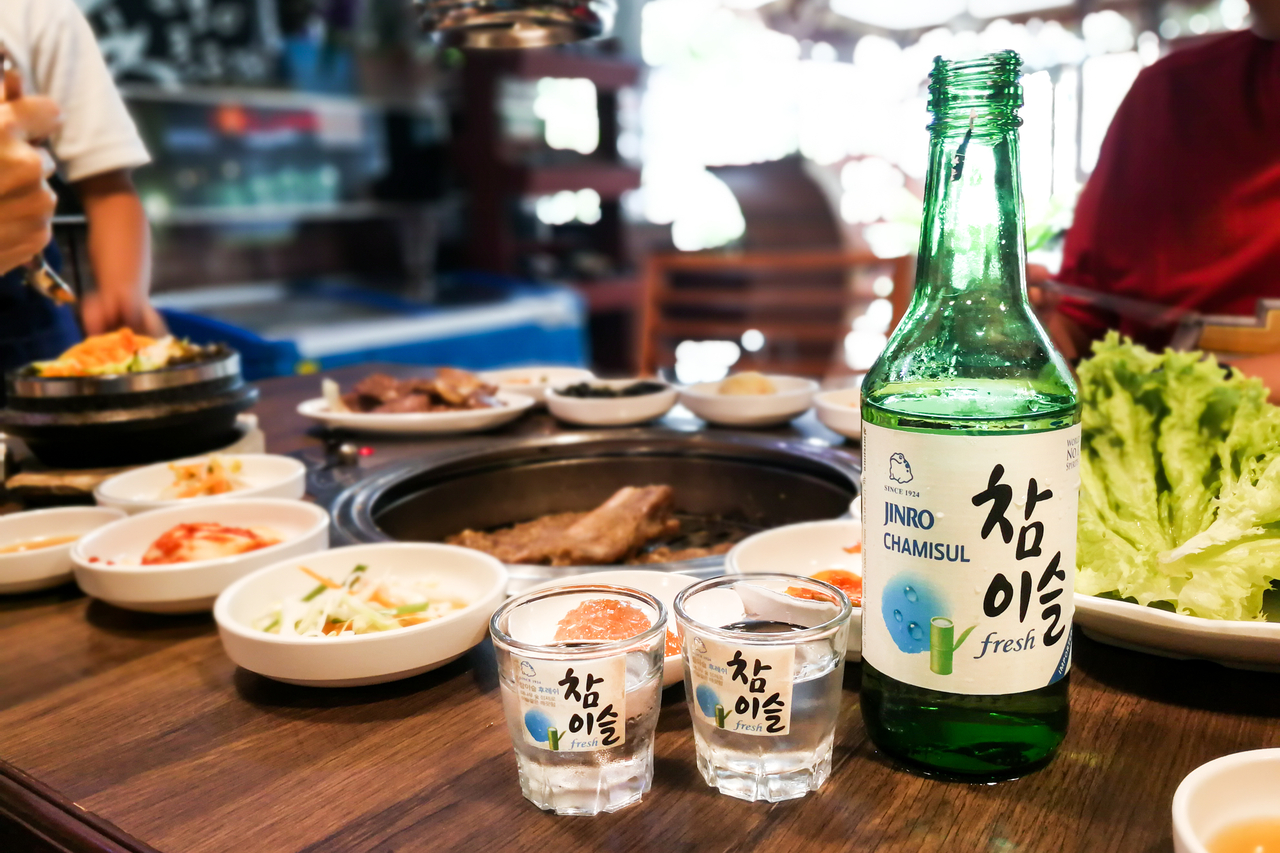
"Let's go out for some soju next time," or "Let's grab a meal sometime," are often considered synonymous to an invitation for a semiformal meeting among Koreans with professional relationships.
While not nearly as prominent in the 2020s as decades before, many Koreans still tend to get acquainted with each other through knocking back a few drinks, often in the form of "hoesik" — literally "work dining," typically meaning a meal after the workday officially ends — with the accompaniment of substantial sums of alcohol.
Back when I started work in the early 2010s, practically every reporter in the country ranged from a social to binge drinker. One reporter my age told me of how he drank his way into getting a permanent seat in the media room of a major government branch.
With social drinking being a significant element of the work culture here, there are some unspoken rules and etiquette involving alcohol. One should take note that some Korean hoesik can stretch over several hours and multiple "rounds," starting with dinner, followed by a visit to the bar, then to another bar or karaoke.
As the night progresses and drinks flow, people may loosen up considerably and some superiors might insist on being called "hyeong," the term by which a younger brother would address an older brother. But don’t be fooled by the relaxed atmosphere: Hoesik is an extension of work and the office hierarchy and expectations do not disappear. They just take on a very different form.
Finding 'premium seats'

As mentioned in previous editions of this series, respect toward those with superior social status is one of the most important aspects of Korean culture. This rule shall not be forgotten when dining or drinking with those you work with — sometimes from the moment you walk into a restaurant or bar.
"Sangseok," directly translated as "premium seat," refers to the spot where the person of the highest social status should be seated. When sitting at a table, the seat that is farthest from the entrance and against the wall is considered primo.
When three or more people sit together in the same row, the most important person would likely sit in the middle.
The seat closest to the entrance is usually taken by the person with the lowest status, while the spot right next to the sangseok would be taken by the person with the second- or third-lowest status.
Of course, this is not always the case. If the seat closest to the entrance has the best view — such as facing a large window — surely that becomes the premium seat.
It is not always clear where the sangseok is, but it is likely a Korean colleague with more knowledge of local culture would direct his or her superiors to the "good seats." It is better for you to hang back, because sitting down before your superiors or elders is also considered bad manners.
The sangseok system is applied in many other arenas as well, such as inside a taxi. The passenger side in the back, which is closest to the sidewalk, is the best seat. In an elevator, the spot diagonally across from the control panel is the best and the closest to the buttons is the worst.
Most Koreans are not complete snobs and generally won't mind if a foreigner is not familiar with every aspect of their customs. The drinking manners mentioned in this article mainly apply to formal business dinners, so you can relax in casual outings with close colleagues.
But it does help to be informed in order to avoid making the situation awkward in some cases.
Pouring drinks
Sometimes the person in the highest position may fill the glass of everyone else, and other times you would have to offer to fill their glass.
But never should the person of lower position take it upon themselves to fill the glass of every superior without asking. The only time he or she is allowed to do that is by request of a person of authority, for example the boss putting them in charge of mixing and serving somaek — a mixture of soju and beer — for everyone.
You should be mindful to ensure that your neighbors' glasses — not everyone, just one or two in proximity — are not left empty for a very long time. But also don't pounce immediately, as that could be interpreted as forcing the other person to drink. Just wait a while, ask, "Would you like more?" then refill the glass.
There are myriad details related to pouring the drink, such as using both hands, the angle of the body, how the glass is held and the amount of alcohol to pour, but even Koreans find these rules cumbersome to remember. The key is to avoid looking too casual, bow just a little bit and to not fill the glass to the brim, as topping off a drink completely can come across as intimidating or a challenge to drink it all.
Also, when alcohol still remains in another person's glass, you should not refill it. This is called "cheomjan" — adding alcohol to the remaining alcohol — and is generally avoided except in rituals for one's ancestors in Korea.
Keeping up with the drinking
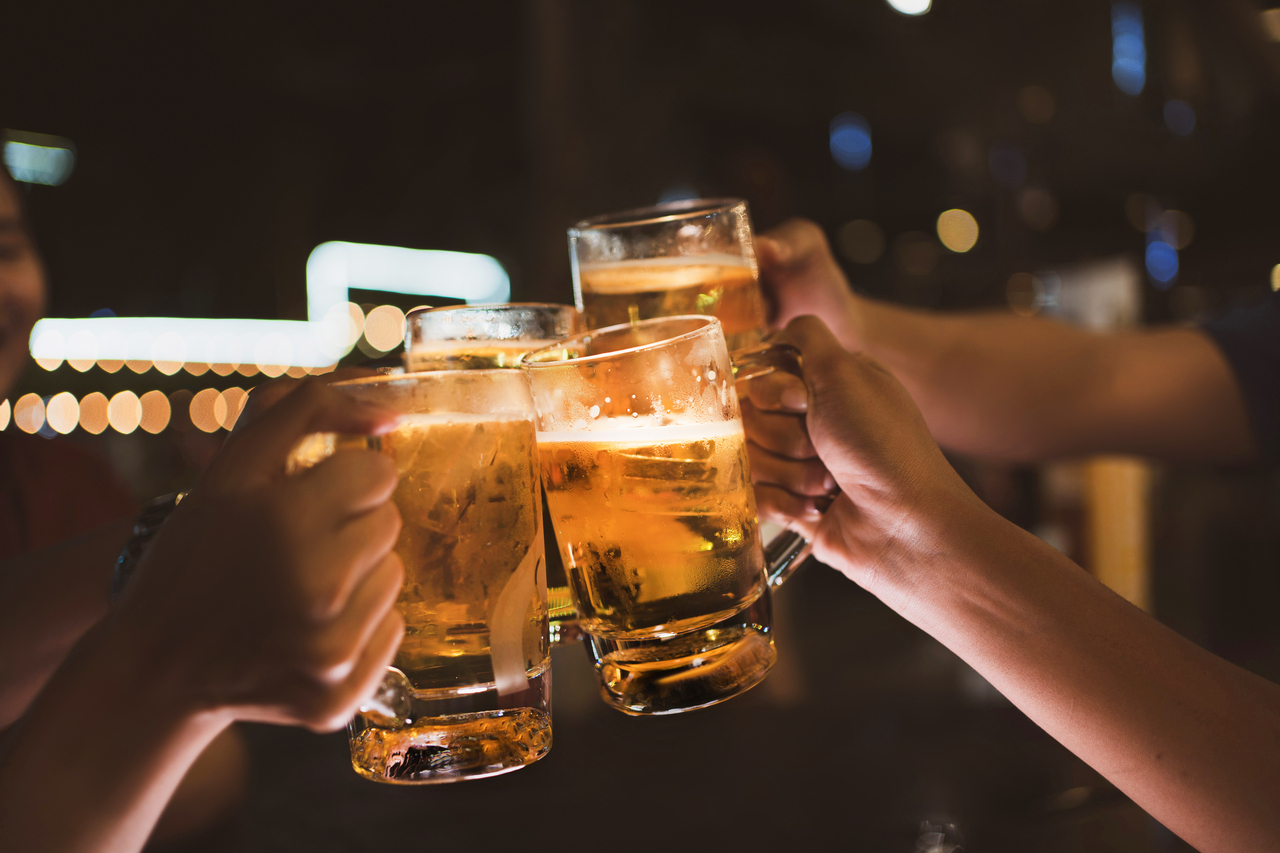
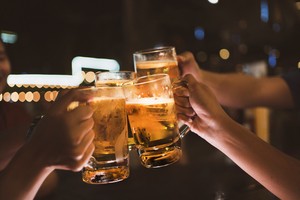
A growing trend here is not to force others to drink during hoesik, and most companies and business partners would understand if you do not want to drink a lot. But it is considered good manners to keep up with the drinking at least a little bit, or to just put the glass to your mouth the first time that everyone clinks their glasses together.
When you touch glasses with the person of higher status, you should put your glass slightly below the other person's to show respect. You should also look away when drinking in front of a superior.
If you do not have clear reason not to drink, such as health issues or having to drive later, people would appreciate it if you kept up with the group. You can drink at your own pace, but downing too much, too rapidly would likely also make others uncomfortable.
Colleagues and counterparts would not engage in shop talk immediately at business drinking in Korea — wait at least until thirst has been sufficiently quenched. Jumping right into business talk can seem rude, so engage in friendly conversation for a while until the actually important topics come up naturally.
Why so many rules?
Not every one of the aforementioned rules are closely kept for work drinks, and the drinking culture may vary by company or group. But the basic premise of drinking or dining among people with whom you have a professional relationship is mutual respect: You have to ensure the other person that you respect them, thereby convincing them that you are a person worth doing business with.
Koreans are not actually the heaviest drinkers in terms of quantity, as their annual alcohol consumption of 7.7 liters in 2021 was below the Organization for Economic Development and Cooperation average of 8.6 liters. Alcohol consumption has been decreasing here since peaking at a whopping 16.8 liters a year in 1973.
But pairing social meetings with alcohol is still a common practice in Korea, as is getting acquainted professionally over a few drinks.
"The phrase 'Let's go for a drink' holds more than the physiological meaning of pouring alcohol into one's body. It has social meanings of communication, networking and fraternization, and alcohol is an important medium of unspoken communication in our society," wrote Chun Sung-soo, professor of health management department at Sahmyook University, in his article "Social Meaning of Alcohol Consumption in Korea."
Chun noted that a person accompanying others for drinks is used as an important indicator of whether the individual belongs or is excluded from the communication network. "Drinking in Korea is considered a method of rallying within a community, much more than enjoyment of alcohol itself," he wrote.
There is a saying, "You should learn how to drink from an adult," which refers to the custom of learning the drinking manners from one's parent or mentor as a coming-of-age ritual. This shows how much importance Koreans have placed on drinking culture and related manners.
But Korea's drinking culture as a whole has undergone significant change in the past few decades. While binge-drinking with colleagues was a widespread custom in the '90s and well into the 2000s, forcing other people to drink is considered a form of workplace abuse today.
Rather than getting hammered in an all-night soju drinking session, a growing portion of workers are opting to use hoesik as an opportunity to enjoy various types of alcohol through moderate drinking.
The customs involved with drinking with colleagues in Korea will likely continue to transform, but the underlying idea of mutual respect in nearly all aspects of Korean society remains. And while the specific practice of business drinking may differ depending on the group or field you are in, breaking the ice with a round of drinks is still a good way to get acquainted with the people you work with.