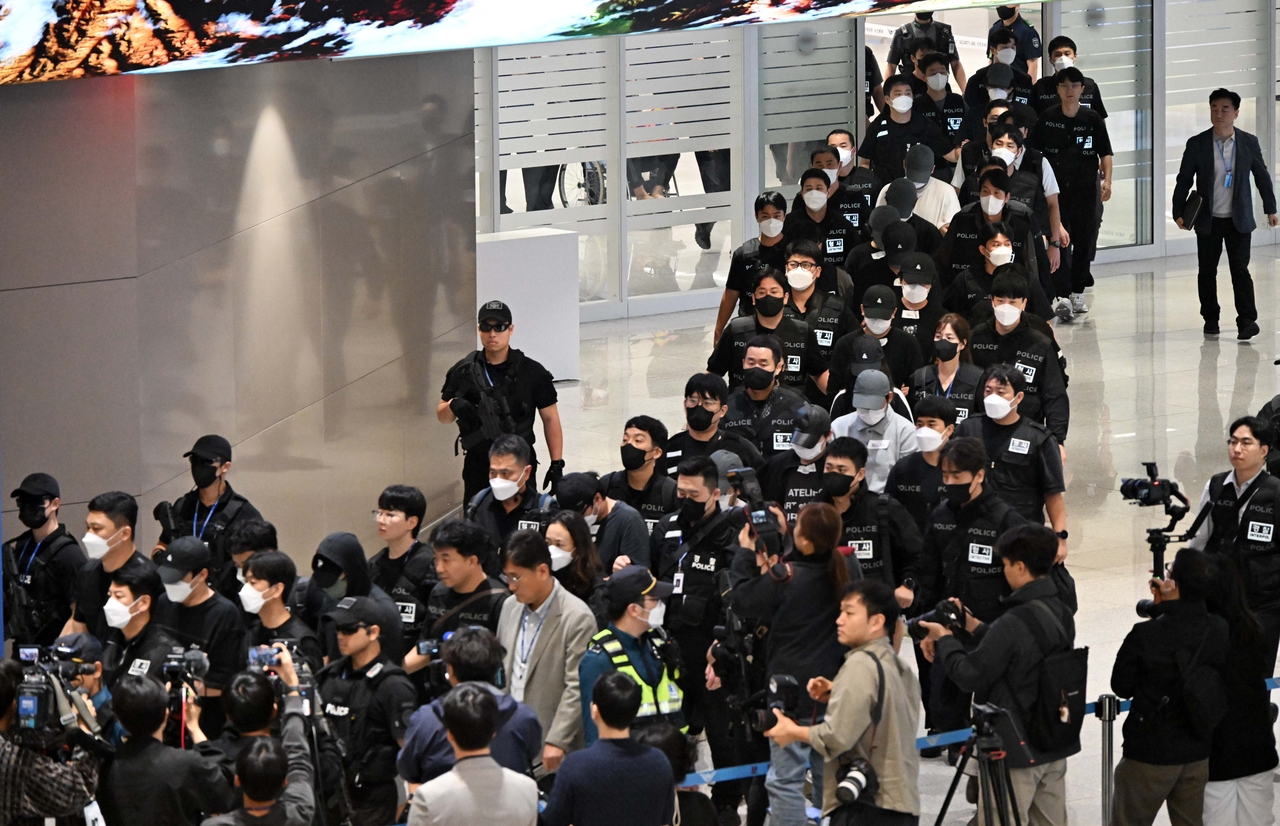
When 64 young South Koreans arrived at Incheon Airport in handcuffs on Saturday, the scene looked less like a crime roundup than a mirror held up to the nation’s quiet tragedy.
지난 토요일, 수갑을 찬 채 인천국제공항에 도착한 64명의 한국 청년들을 본 사람들은 그것이 단순한 범죄자 송환이 아니라, 이 시대 한국 사회의 조용한 비극을 비추는 거울임을 직감했을 것이다.
They were not hardened criminals, but victims of a cruel equation: despair multiplied by debt, driven by the promise of “10 million won ($7,030) a month.” Their return from Cambodia, where they were detained for online scams, exposed not only the brutality of foreign criminal networks, but structural neglect that has left an entire generation cornered.
그들은 흉악범이 아니었다. “월 1,000만 원을 벌 수 있다”는 달콤한 유혹이 만들어낸 절망과 빚의 등식 속에서 희생된 젊은이들이었다. 캄보디아에서 온라인 사기 조직에 가담했다가 체포되어 돌아온 그들의 모습은 해외 범죄조직의 잔혹함뿐 아니라, 한 세대를 벼랑 끝으로 내몬 구조적 방임을 여실히 드러냈다.
The immediate cause of their ordeal is clear enough. Criminal rings in Cambodia, Thailand and elsewhere in Southeast Asia have built sprawling cyber scam operations, preying on young people lured by fantastical job ads, who are then trapped, beaten and forced to defraud others.
사건의 직접적인 원인은 분명하다. 캄보디아와 태국 등 동남아 각국에는 이미 거대한 사이버 범죄 네트워크가 형성돼 있다. 이들은 ‘고수입 일자리’라는 허위 구인광고로 청년들을 현지로 유인한 뒤, 폭행과 감금으로 협박하며 또 다른 피해자들을 속이게 만든다.
The death of a South Korean university student in August, tortured after being lured by such a job offer, galvanized public outrage and forced the government’s hand. But the moral reckoning should not end with the victims’ repatriation. What drove so many young people to seek fortune in places they barely knew?
지난 8월, 이런 수법에 속아 캄보디아로 향했다가 고문 끝에 숨진 한국 대학생 사건은 국민적 공분을 불러일으켰고, 정부로 하여금 뒤늦게 대응에 나서게 했다. 그러나 피해자들의 이번 귀국으로 도덕적 책임이 끝나는 것은 아니다. 애초에 왜 이렇게 많은 청년들이 낯선 땅으로 향해야 했는가.
Behind the sensational headlines lies an unspoken domestic failure. South Korea’s youth employment rate has fallen for 17 consecutive months to 45.1 percent, its lowest in years. Stable, high-quality jobs in manufacturing and construction, a traditional springboard for upward mobility, are shrinking, replaced by short-term contracts and internships that pay little and offer even less security. The country’s job market, once an engine of aspiration, now feels like a rigged lottery.
자극적인 헤드라인 뒤에는 조명 받지 않는 국내의 실패가 있다. 한국의 청년 고용률은 17개월 연속 하락해 45.1%를 기록했으며, 최근 수년 새 최저 수준이다. 한때 계층 상승의 디딤돌이었던 제조업과 건설업의 안정적 일자리는 빠르게 줄고, 그 자리를 단기 계약직과 실습형 인턴이 대신하고 있다. 한때 열망의 엔진이었던 한국의 고용시장은 이제 불공정한 복권처럼 느껴진다.
Debt compounds the despair.
빚은 이 절망을 더욱 깊게 만든다.
The delinquency rate for borrowers in their 20s at major banks stands at 0.41 percent, the highest among all age groups. More than 60,000 young people have already fallen into the status of “credit defaulters,” locking them out of finance and driving some toward predatory lenders. The online promise of quick wealth or even debt cancellation through “overseas jobs” can feel like deliverance. In reality, it often leads to another form of bondage.
주요 시중은행에서 20대 청년의 가계대출 연체율은 0.41%로 전 연령대 중 가장 높다. 이미 6만 명이 넘는 청년들이 신용불량자로 전락해 금융 접근이 차단된 상태다. 그 사이 일부는 불법 대부업체로 내몰리고 있다. 이런 상황에서 “해외 일자리로 부채를 탕감할 수 있다”거나 “거액을 빠르게 벌 수 있다”는 온라인 광고는 일종의 구원처럼 보인다. 하지만 현실은 또 다른 형태의 구속으로 이어질 뿐이다.
handcuff: 수갑
tragedy: 비극
debt: 빚
brutality: 잔혹함
neglect: 방임
scam: 사기
torture: 고문하다
outrage: 분노
moral: 도덕적인, 윤리적인
repatriation: 송환
sensational: 자극적인
employment: 고용
stable: 안정적인
manufacturing: 제조업
short-term: 단기
aspiration: 열망
despair: 절망
deliverance: 구원
khnews@heraldcorp.com