GYEONGJU, North Gyeongsang Province — On a weekday afternoon, Hwangnidan-gil in Gyeongju hums with energy. Despite a steady drizzle, tourists crowd the narrow street, umbrellas bumping lightly as they pause at food stalls and boutique shops.
Once a quiet neighborhood surrounding the historic Hwangnam-dong area, Hwangnidan-gil has transformed into Gyeongju’s liveliest culinary corridor. The street is lined with renovated hanok buildings, blending old-world charm with contemporary flavors, and during APEC 2025 week, it welcomes the world one bite at a time.
Gimbap with a twist
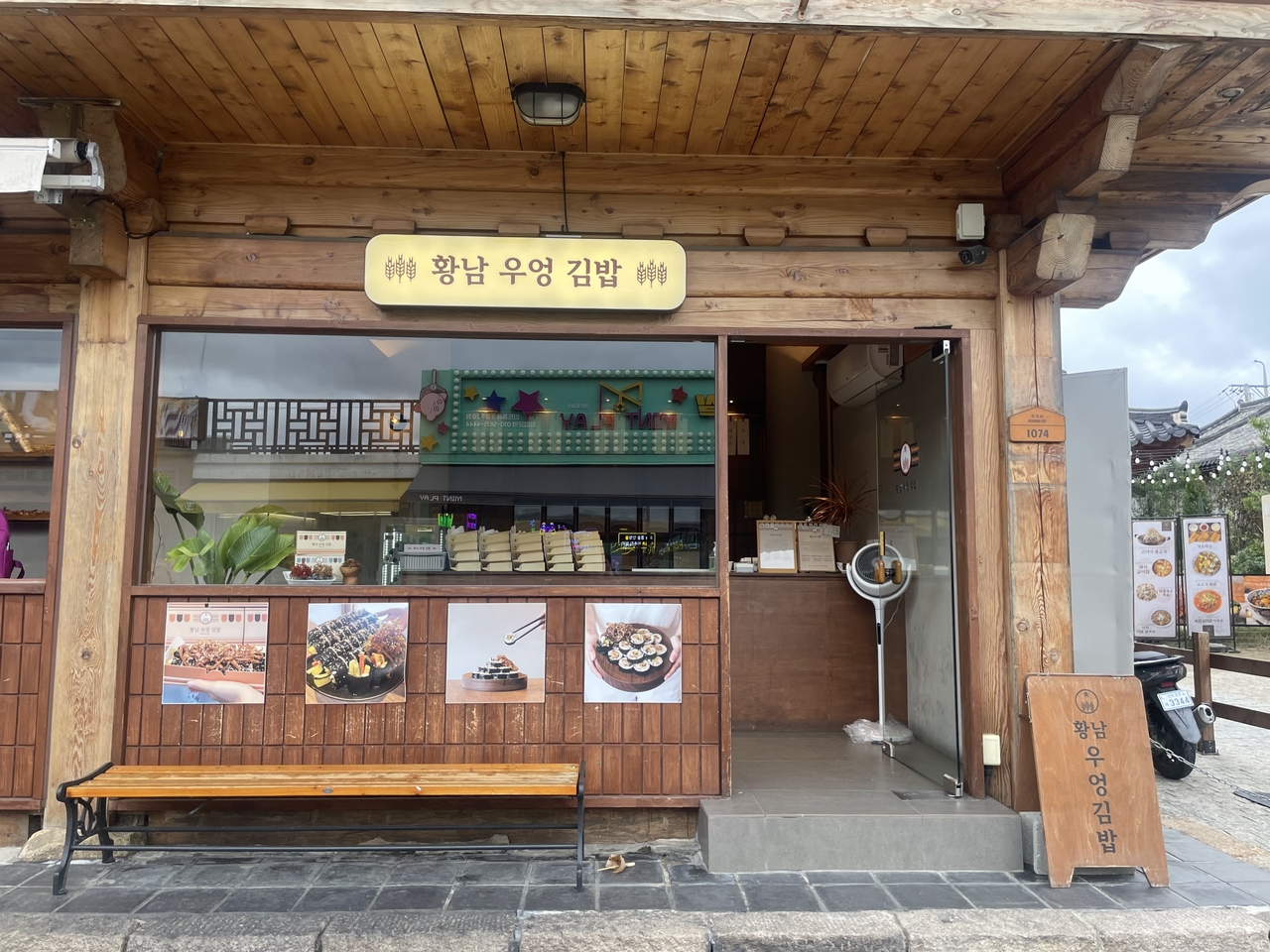
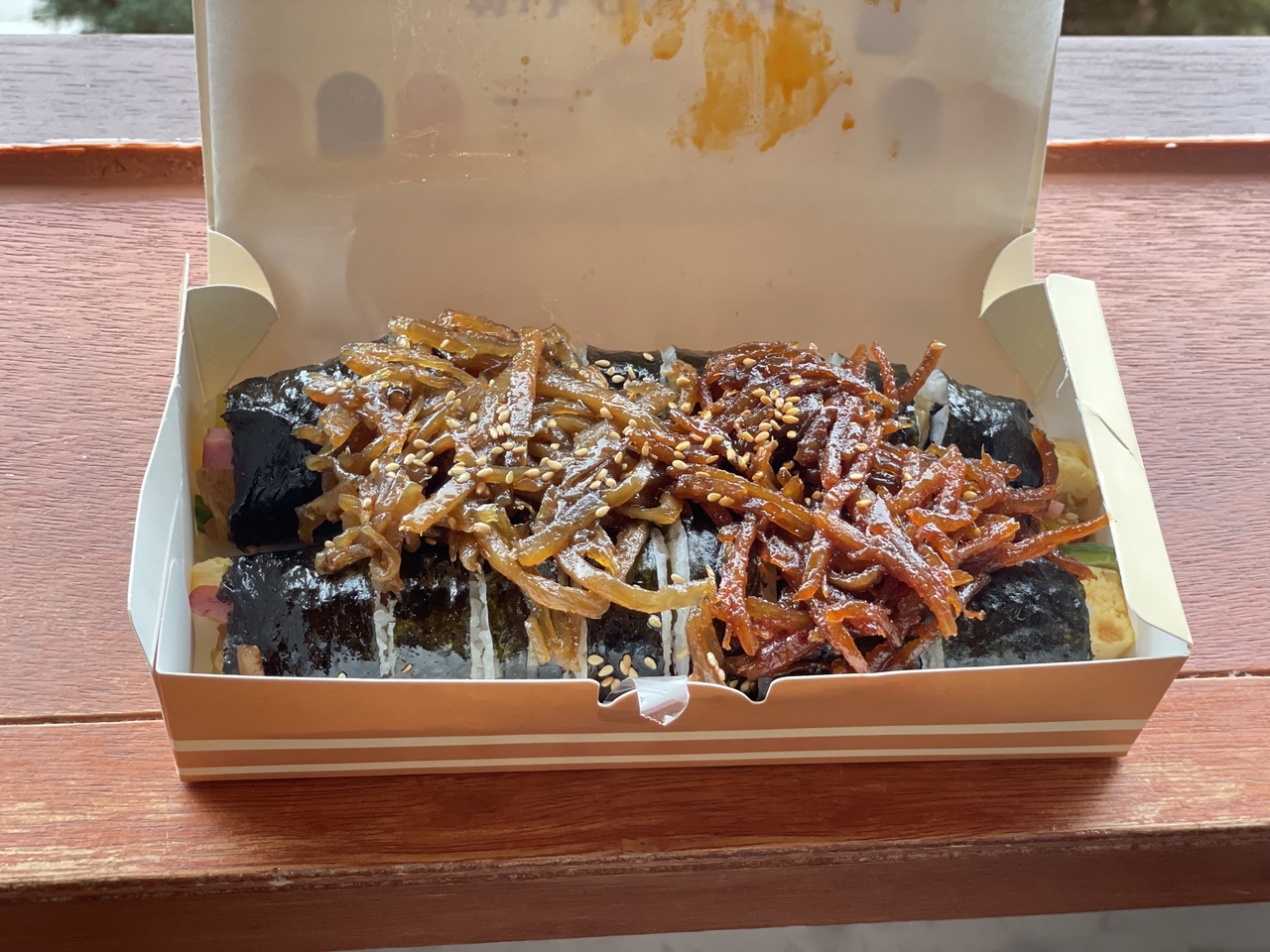
Among the crowd favorites is Hwangnam Wooeong Gimbap, a hanok-style eatery at the heart of the main strip. Its popularity is clear from the queue — mostly visitors from abroad eager to try the house specialty: gimbap topped with sweetly braised burdock root.
The gimbap glistens with a generous brush of sesame oil, and the combination of chewy rice, crisp vegetables and caramelized burdock — at once earthy and sweet — delivers a deeply comforting bite. Regulars recommend ordering two rolls: half with the original sweet burdock and half with the spicy version (10,000 won). Alternating between the two keeps the palate refreshed and the chopsticks in motion.
Inside, the minimalist standing bar setup encourages quick bites.
Serene pause at Cheongsudang
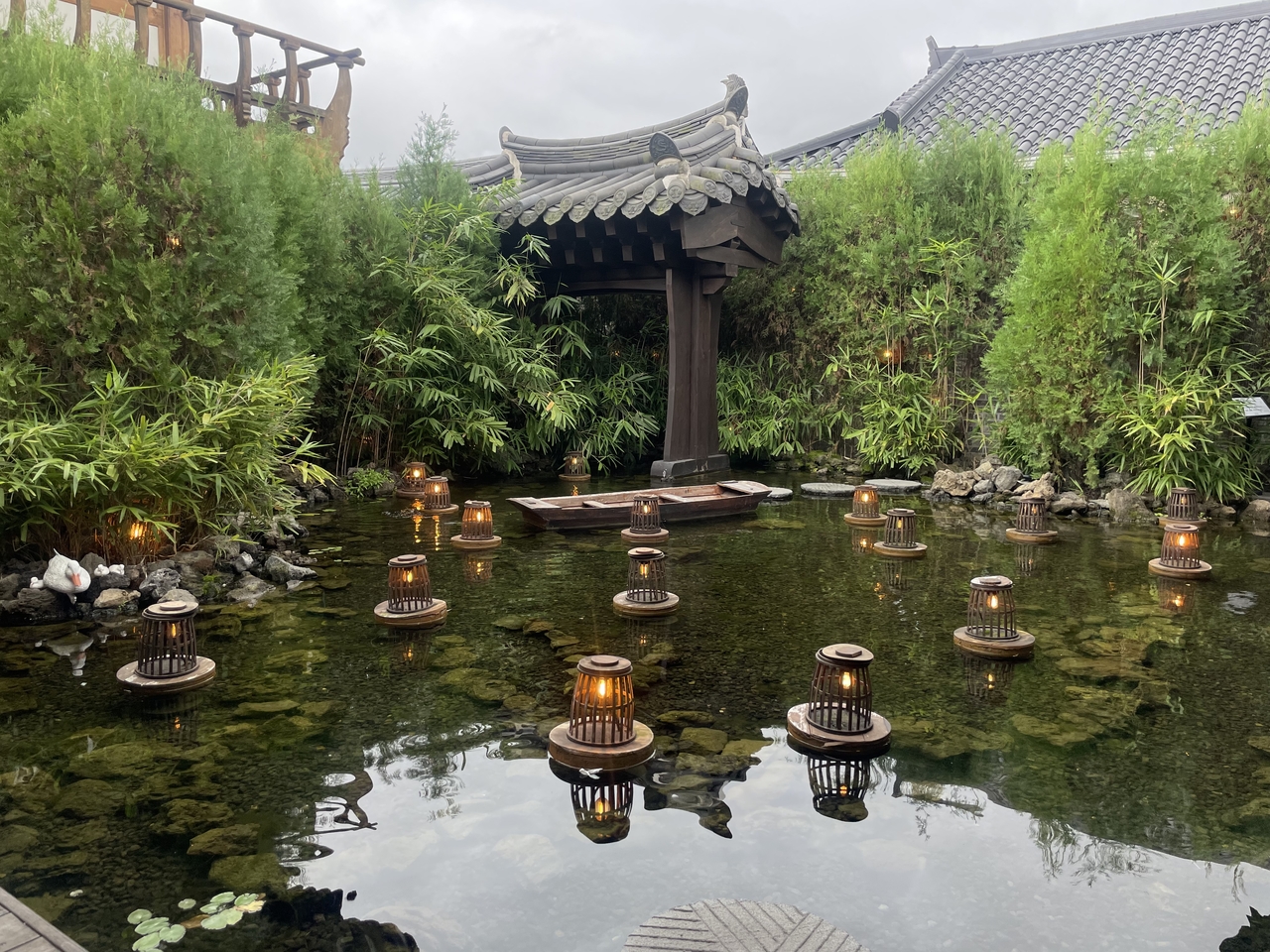
Just a few steps away, Cheongsudang offers a tranquil escape from the bustle outside. The cafe occupies a restored traditional house centered around a pond, complete with bamboo groves, floating lanterns and a small wooden boat. It’s the kind of place where visitors instinctively lower their voices.
Cheongsudang is known for its matcha-based drinks, such as the signature matcha cream milk and a sweet, velvety matcha latte that leans more toward dessert than tea. Though seating is limited, the experience feels almost meditative — a moment of calm within Gyeongju’s vibrant rhythm.
Tradition meets innovation at Yangweoldaeg
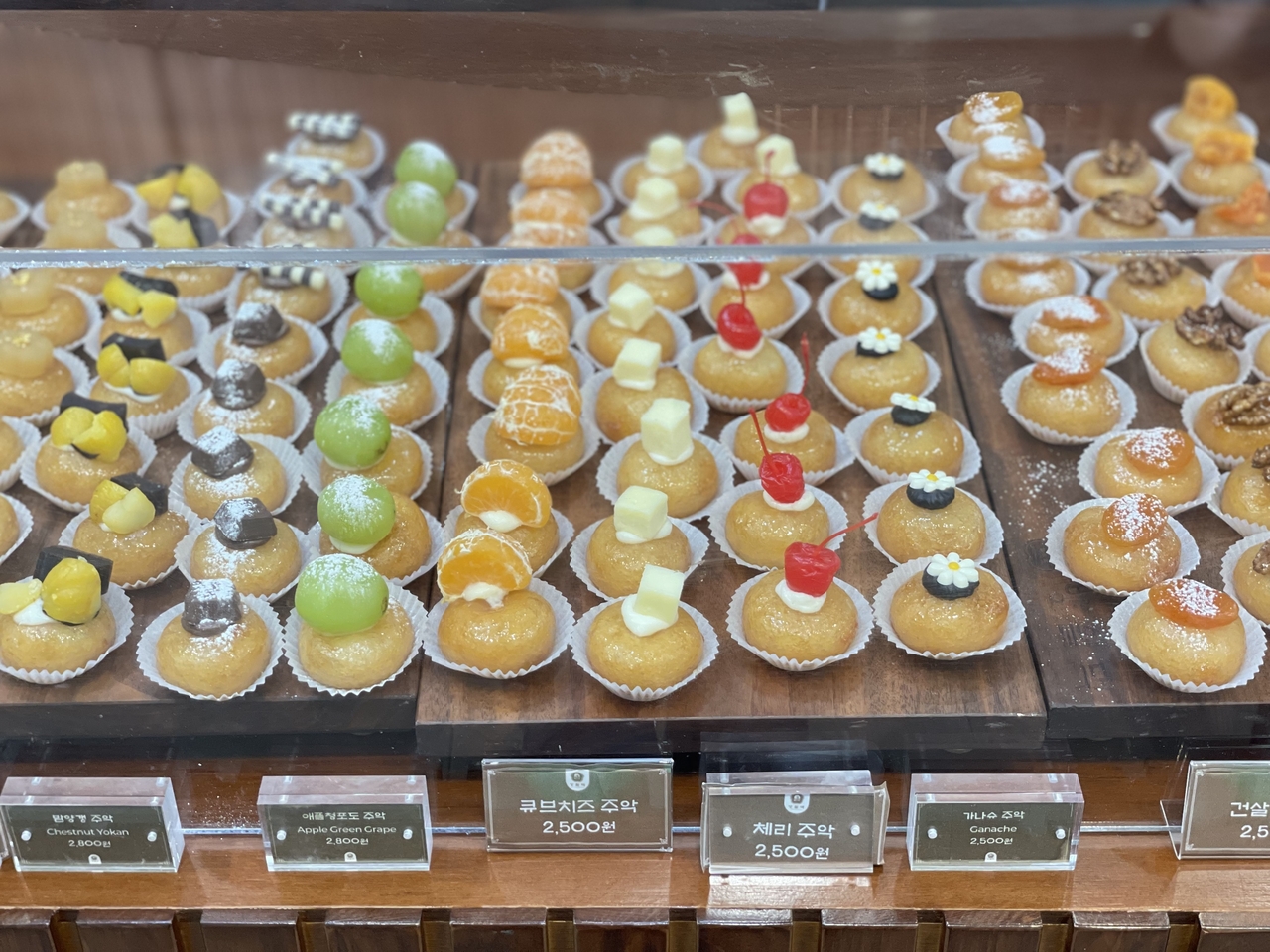
Nestled inside Hwangnam Market, Yangweoldaeg bridges generations of Korean confectionery. Now run by the second generation of owners, the shop specializes in Gyeongju-style juak: small, chewy doughnut-like rice cakes fried to perfection. Each juak (2,500-3,800 won) is topped with inventive ingredients — from seasonal fruits like kumquat preserves to walnut confections and even vanilla-cherry cream.
The juak’s pleasant chewiness recalls Korea's street doughnuts, but the flavors are delicate and balanced — never cloying. A seasonal offering, the kumquat-topped version has a zesty lift that keeps the traditional sweet feeling fresh.
Yangweoldaeg also sells yakgwa, honey-glazed wheat cakes made just once a week. These sell out fast, especially among visitors seeking refined, gift-worthy souvenirs. Presented in boxes wrapped with a traditional bojagi wrapping cloth, the sweets reflect the grace of Korean hospitality — a thoughtful taste of Gyeongju to take home.
Nostalgia in a bite
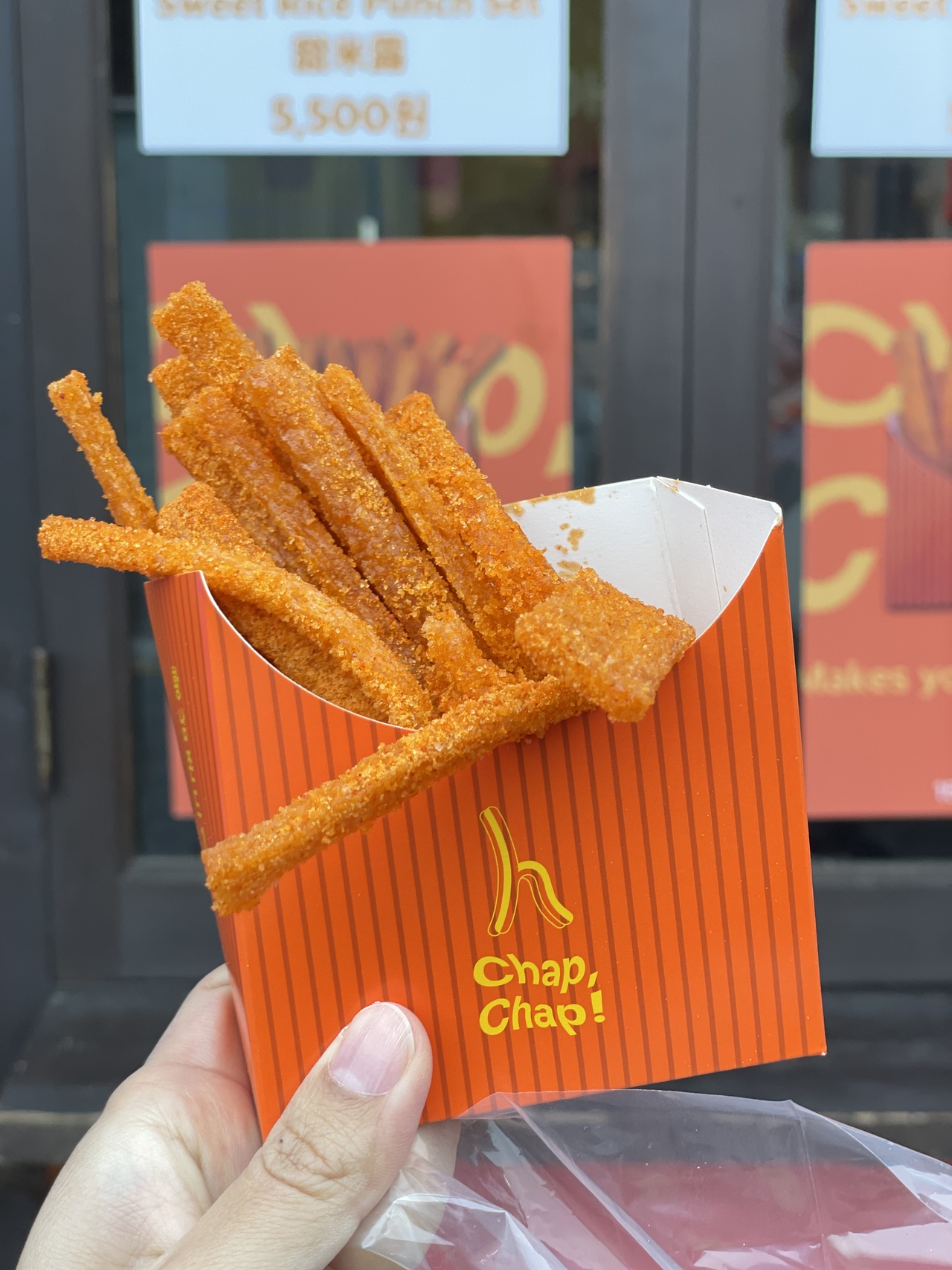
A few steps down, a bright red sign with a yellow logo marks the original Hwangnam Jjondeugi, a shop whose name translates loosely as “chewy treat.” When it first opened, the store sparked a sensation, spawning numerous imitators along the street.
The snack (3,000 won) itself is a reimagined version of Korea’s nostalgic jjondeugi — once a staple of schoolyard snack stands. Made with flour, corn powder and sugar, the dough is fried and dusted with a savory-sweet seasoning reminiscent of instant noodle soup powder. Each chewy strip offers a playful crunch and a hint of spice, making it dangerously addictive. The shop even sells combo sets with beer or cola, a clever pairing for this modernized retro snack.
Popcorn, Korean style
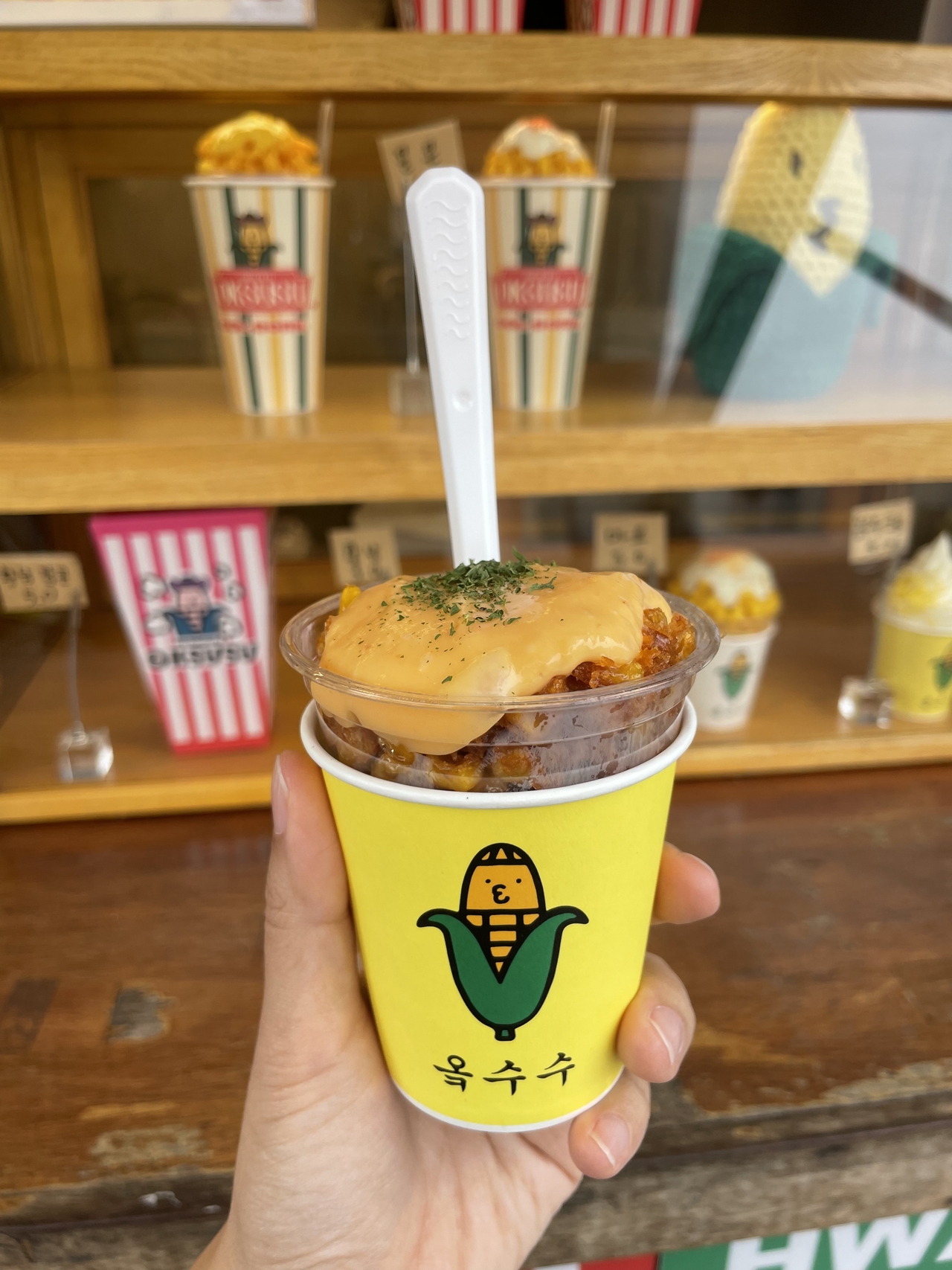
Another hit in town is Hwangnam Oksusu, where corn takes center stage. Its signature corn fritters (3,000 won) are made by deep-frying kernels and coating them with a choice of spicy chili or creamy mayo sauce. Served in cups for easy snacking, the dish balances salty, sweet and tangy notes — each bite popping with flavor.
The shop’s latest creation, corn cream ice cream (5,000 won), transforms sweet corn into a silky, pale-yellow dessert with a gentle aroma and mellow sweetness. As autumn fades into winter, locals recommend enjoying it while the weather still allows.
Whether it’s the nostalgic chew of fried jjondeugi, the refined sweetness of juak or the aroma of sesame oil rising from freshly sliced gimbap, Hwangnidan-gil captures Gyeongju’s evolving food culture: rooted in history yet eager to experiment.
As the city hosts APEC 2025, Hwangnidan-gil stands ready to greet visitors not just with its thousand-year heritage but through the simple, universal joy of good food.
yoohong@heraldcorp.com