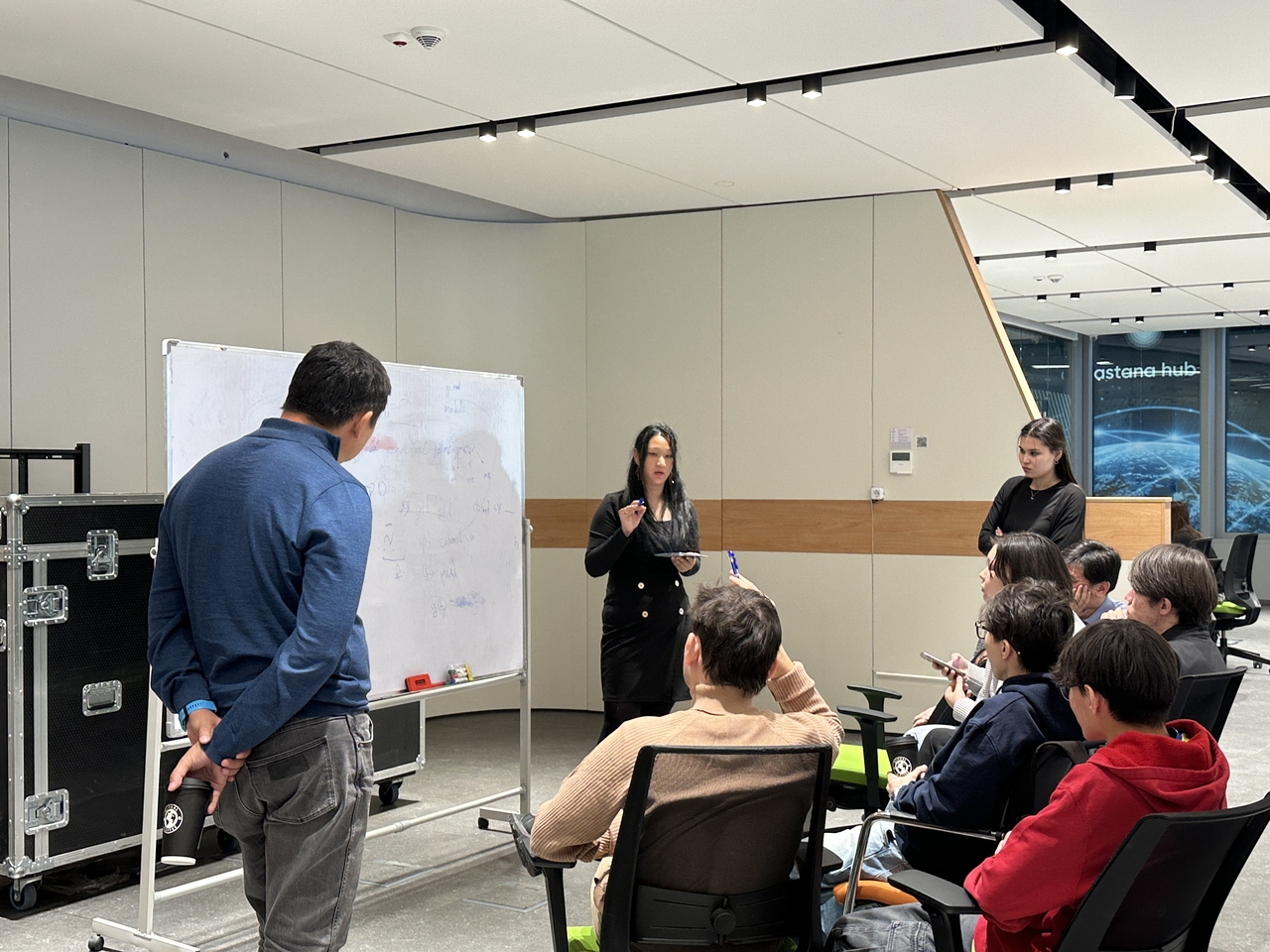
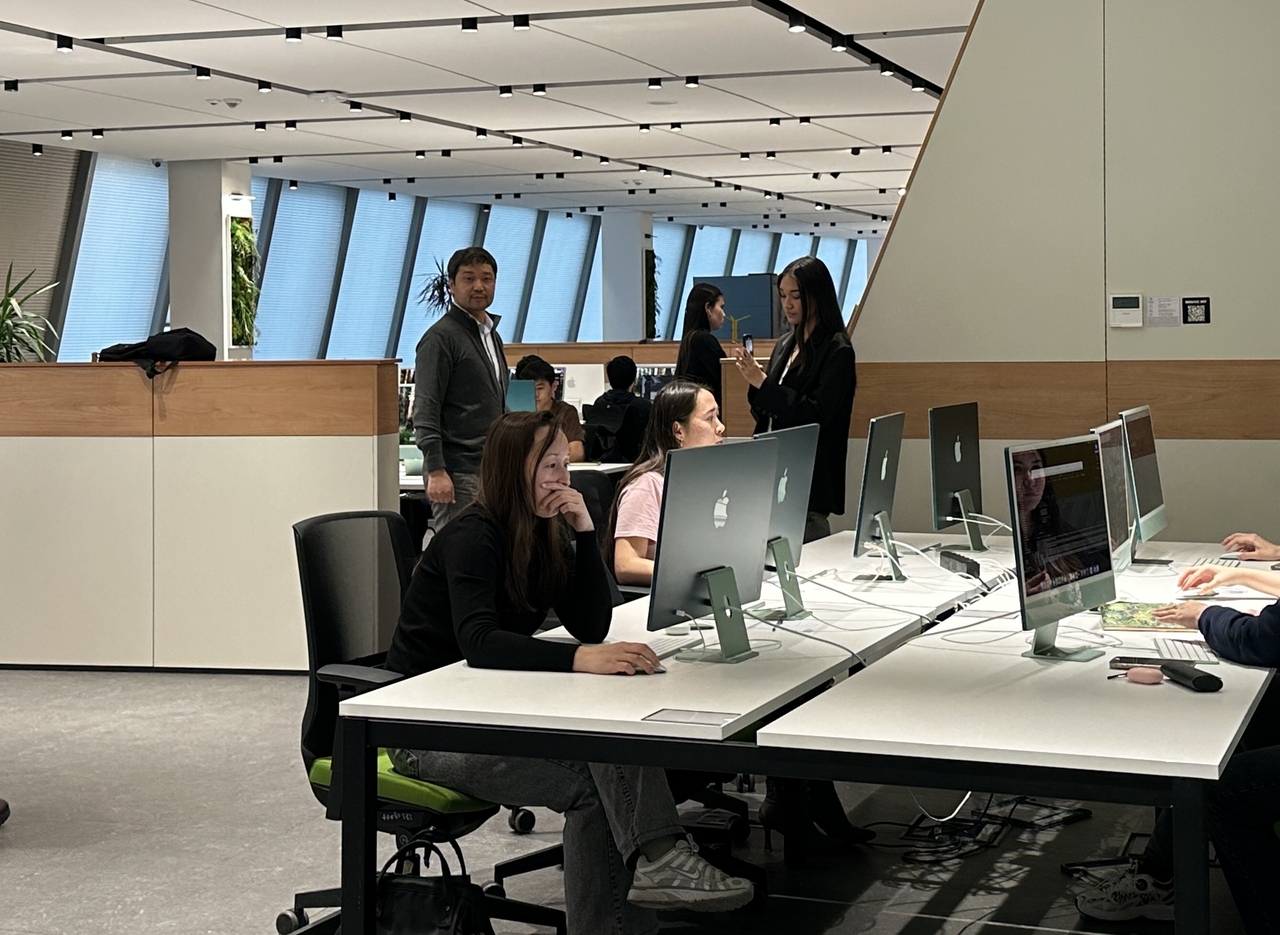
ASTANA, Kazakhstan — Inside a brightly lit classroom filled with rows of iMacs, students hunch over their keyboards, with code flashing across their screens. On the other side of the room, another group of students gathers around a whiteboard, sketching innovative ideas and plans for their next AI project.
The classroom is part of Tomorrow School, an education program focused on artificial intelligence housed within Astana Hub, the country’s flagship technopark for IT startups.
Here, young programmers and wannabe AI experts are not just training to enter the workforce or start an IT business of their own, they are working to shape Kazakhstan’s digital future.
Tomorrow School is just one part of Astana Hub’s ecosystem — a state-supported technopark that now houses more than 500 startups, fostering next-generation companies in future-oriented sectors such as AI, the blockchain and financial technology.
Founded in 2018, Astana Hub places itself at the center of Kazakhstan’s plan to transform itself into a tech powerhouse. The hub offers a wide range of benefits, such as corporate income tax exemptions for resident IT startups, coworking spaces, startup acceleration programs and visa assistance for foreign entrepreneurs — designed to nurture a new generation of innovation-driven businesses.
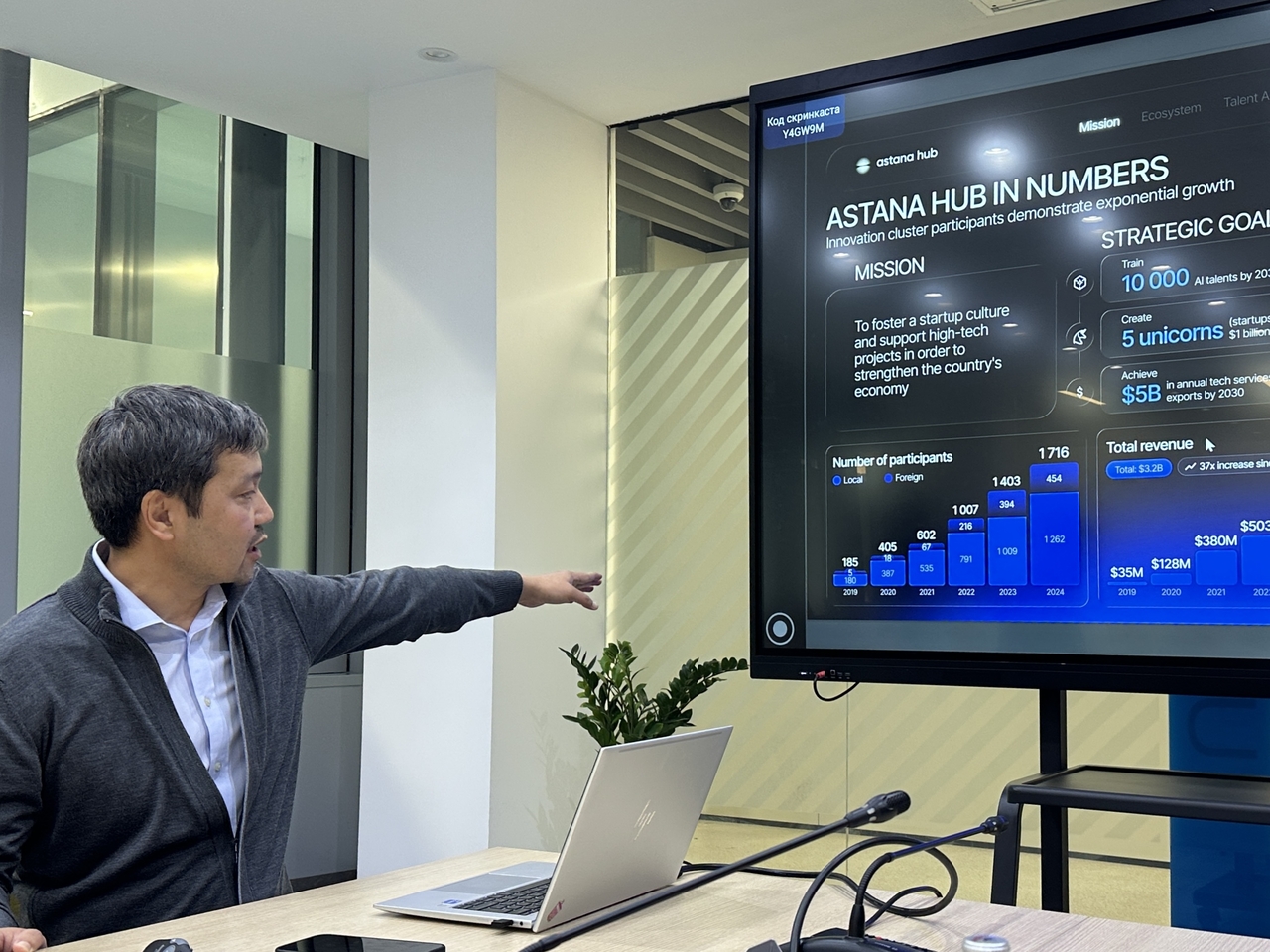
The hub has seen great success since its launch. According to Daniyar Zhumagulov, director of international relations and investments office at Astana Hub, its startups have generated over $3.2 billion in revenue and attracted more than $700 million in investments.
“We have already produced one unicorn startup (with a valuation over $1 billion), but by 2030, we aim to create four more unicorns, train up to 10,000 AI talents and achieve $5 billion in annual tech services and product exports,” Zhumagulov said during a multinational press tour on Oct. 16.
Astana Hub is more than a business incubator — it is a signal of Kazakhstan’s broader shift in wanting to promote tech exports and talents trained in using future technologies.
Kazakhstan’s President Kassym-Jomart Tokayev has been quoted several times throughout the years since 2023 voicing interest in investing in AI technologies and talent.
In January, as the Kazakhstan government launched an international advisory council on AI, Tokayev stated that the goal was to “train 100,000 skilled IT professionals” by 2030.
When asked about the possible reason behind the government’s shift in focus toward technology-driven industries from its previous focus on oil, gas and raw materials, Zhumagulov told The Korea Herald that it could be defined as the government’s attempt to “diversify the economy.”
“We’re just a country of 20 million, like one large city,” the director said. “That’s why we need to create value through industries like IT and AI, which are scalable and forward-looking, rather than relying solely on oil and gas. I think it reflects the government’s effort to diversify the economy and position Kazakhstan in the global tech space.”
Window into Central Asia
While Kazakhstan’s digital transformation is largely focused on local growth, Astana Hub is also open for international startups seeking a gateway into Central Asia — one of the fastest-growing regions in Europe and Asia — with economies projected to grow by nearly 6 percent annually.
Kazakhstan plays a central role in this region, accounting for over 80 percent of intraregional trade and offering early entry into emerging sectors like fintech and digital services.
With the level of significance Kazakhstan holds in the region, South Korean startups and investors looking beyond saturated markets like China or Southeast Asia have previously shown interest in exploring Central Asia in the past, with Astana Hub being the region’s key entry point.
In 2022, 11 Korean startup entrepreneurs pitched their business ideas at Astana Hub, in sectors including women’s health, agriculture and e-commerce, where many explained their detailed plans to enter Kazakhstan’s market. In 2024, Kazakhstan’s government also designated Korea as a strategic partner in digital development, signaling a desire to deepen cooperation in areas such as artificial intelligence, startup scaling and IT talent exchange.
Zhumagulov explained that there have not been any Korean participants in its main program since then, but they are “always welcome, as are startups from any other country.”
lee.jungjoo@heraldcorp.com