Efficiency rules — even on the most important day of your life
The Korea Herald is launching a new season of "A to Z into the Korean Mind." In the previous series, we explored keywords selected by our staff to delve into the Korean psyche and its cultural nuances. For this second season, we're turning to our readers and answering the questions you've submitted. The first installment begins with a question from @0214sam on Instagram: "Why are Korean weddings so fast?" — Ed.
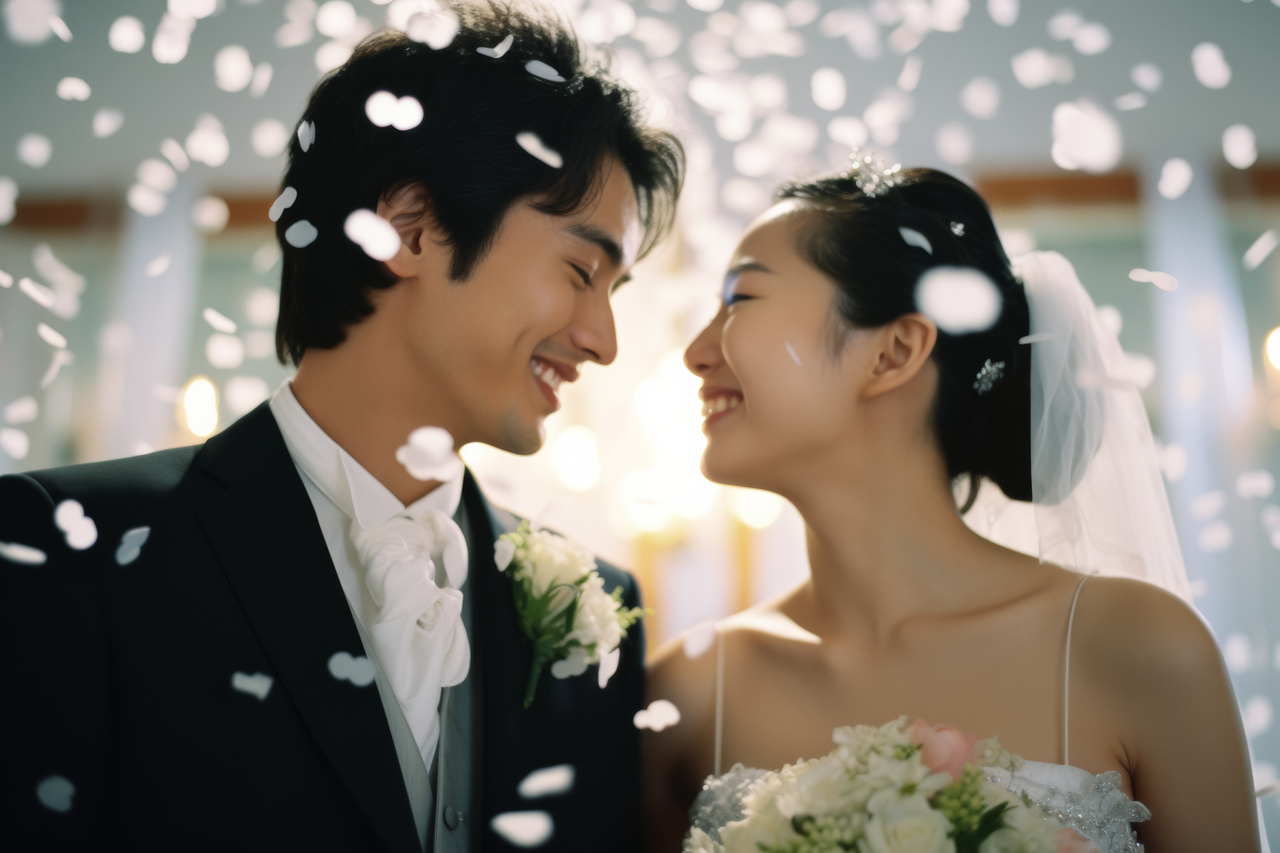
In Korea, speed and efficiency define almost every aspect of life, and weddings are no exception.
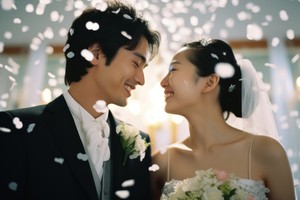
At most wedding halls in Seoul, ceremonies are scheduled every 60 to 90 minutes, from morning until evening, to accommodate as many couples as possible. If you arrive early and stay late for your friend’s wedding, you might see up to three different brides: your friend, the bride before her and the one after.
But how did weddings — often a once-in-a-lifetime event — become such a streamlined process?
As we explored through interviews with various people, the answer to this seemingly simple question involves a range of factors. While some are deeply cultural, others are purely practical, such as Seoul’s limited wedding venues, the family- and guest-centered nature of Korean ceremonies, and the reality that marriage in Korea often centers more on practicality than romance.
Limited venues and tight schedules
Professor Seol Dong-hoon of Jeonbuk National University said the brevity of nuptials here is an adaptation to Seoul's physical constraints: a densely populated city, with a limited number of venues for weddings.
While wedding venues require ample space and sufficient parking, preferably in easily accessible locations in city centers, they typically operate only on weekends. To remain profitable in such conditions, wedding halls must maximize efficiency.
"If you want a longer ceremony, you often have to pay double,” said Professor Seol. “That's why those with strong finances, or a desire to show off, opt for hotel or outdoor weddings. Most couples who prioritize cost-effectiveness follow the standard schedule at wedding halls.”
Yoo Young-eun, 34, who married a year ago at a wedding hall in Seoul, was given a total of 90 minutes for her wedding.
“Every venue I visited in Seoul had fixed time slots. Between the rehearsal, ceremony, photo time and meal, everything was rushed. I heard that in cities outside Seoul, ceremonies have longer intervals, but here, wedding halls try to fit in as many couples as possible to maximize profit.”
“For most of us, there aren’t many options,” she added. “If you want a slower, more relaxed ceremony, you have to pay much more for extra time. Most brides just choose what’s affordable and practical.”
Family and guests come before the couple
Lee Eun-hee, honorary professor of consumer studies at Inha University, adds another dimension to the explanation: Weddings in Korea aren’t centered on the bride and groom — they’re centered on their parents.
“It’s not just about two people getting married; it’s a union of two families. That’s why guests are mostly the parents’ acquaintances, their colleagues and distant relatives whom the couple often doesn’t even know. Weddings are also a chance for parents to ‘recoup’ the cash gifts they’ve given over the years, so the more guests, the better.”
Because many guests don’t have a close relationship with either the bride or groom, they often show up to give the cash gift and head straight to the banquet hall without watching the ceremony. For them, attending a wedding feels more like fulfilling a social obligation than sharing joy.
As a result, the bride and groom often feel that ending the ceremony quickly is a courtesy to attendees, said Yoo, who now lives in the United States.
“Many Koreans think guests are investing their precious weekend time in the wedding,” Yoo said. “But here in the US, people feel honored to be invited. They don’t mind whether the ceremony is long or short.”
Heo Young-joo, a pop culture critic who married a Korean American in the US, agreed.
“My husband once attended a Korean wedding and was shocked. Even during the ceremony, people were chatting, greeting each other and leaving early for the meal,” she said.
“In the US, a wedding is centered on a bride and a groom. Only close friends and loved ones of (the couple) are invited. Parents’ friends and colleagues usually aren’t. So the guest list is usually just 50 to 80 people. Because only those truly close to the couple are there, the event feels deeply personal and emotional. When the bride walks in or gives a speech, everyone pays attention. After the ceremony, everyone joins the party. It’s about celebration, not obligation.”
More like business deal than love
Jung Young-sik, 34, who is preparing for his wedding in April next year, wanted something different. He wasn't really fond of the big, rushed weddings he had attended.
“I wanted to have a small wedding with only close friends,” he said. “But both of our parents strongly opposed it, so we ended up choosing a regular wedding hall. Our parents helped us with more than half of our rent deposit, so we couldn’t really go against their wishes.”
Professor Lee said that while couples may see their wedding ceremony as a declaration of love and a sacred vow, the reality is that marriage in Korea is often more about formality than love, and that’s reflected in the ceremony itself.
“The sequence — the procession, the officiant’s address, the bowing — is nearly identical at every ceremony,” she said. “The form itself carries meaning, rather than personal expression. Some young couples try to hold smaller, more customized weddings these days, but many can’t because their parents insist on inviting a large number of guests to recoup gift money. Unless the couple is financially independent from their parents, it’s difficult to break away from the conventional wedding format.”
Critic Heo added that not only the wedding ceremony, but Korean marriages today feel more like a business transaction than romantic unions.
“I think marriage is often seen less as a romantic choice and more as a practical decision,” she said. “A person’s job, wealth and neighborhood seem to matter more than how much the couple loves each other.”
However, Korean weddings are not without their merits.
From a practical standpoint, they are remarkably efficient, Heo said. “Everything, from makeup and studio photos to floral arrangements and wedding assistants, comes as a package, making the process seamless and convenient.”
Yoo, who got married in Seoul and moved to the US, said she never found the short schedule particularly uncomfortable.
“It just felt normal because that’s how everyone does it,” she said. “But after attending a wedding in the US, I started to wonder if we’re missing something — maybe the time to really savor the moment.”
shinjh@heraldcorp.com