Culture of brushing three times a day, along with strong flavors of Korean food, gives rise to 'toothbrushing-friendly' subway stations, cafes, and malls in Korea that may puzzle some visitors
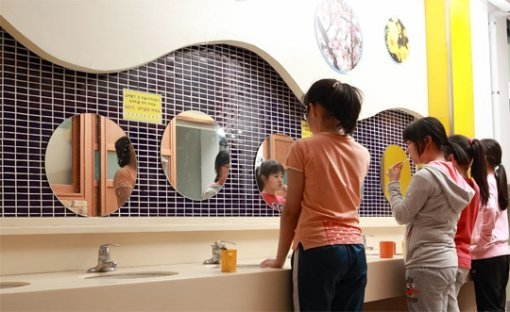
Even after two years of teaching English at an elementary school in Seoul, Clare Mitchell from Canada still finds herself surprised by her students’ after-lunch ritual of brushing their teeth together in the restroom.
“When you brush your teeth, you spit and sometimes bits of food come out. It’s not exactly something you want to show others. Watching kids do it so casually, even from such a young age, was a bit of a shock,” she told The Korea Herald.
Back in her country, personal grooming rituals, from brushing teeth and washing one’s face to trimming nails or applying makeup, are considered private acts meant to be done in one’s own space, or maybe around family or a few close friends.
In Korea, by contrast, children are taught from an early age to brush their teeth openly at school.
Effect of early education?
As soon as Korean children begin education or institutional care, such as kindergarten or day care, they take part in group toothbrushing sessions.
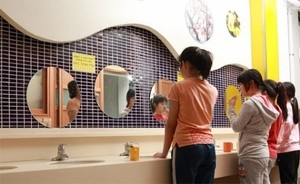
Guided by their teachers, they brush their teeth together in restrooms often equipped with long sinks designed specifically for this activity.
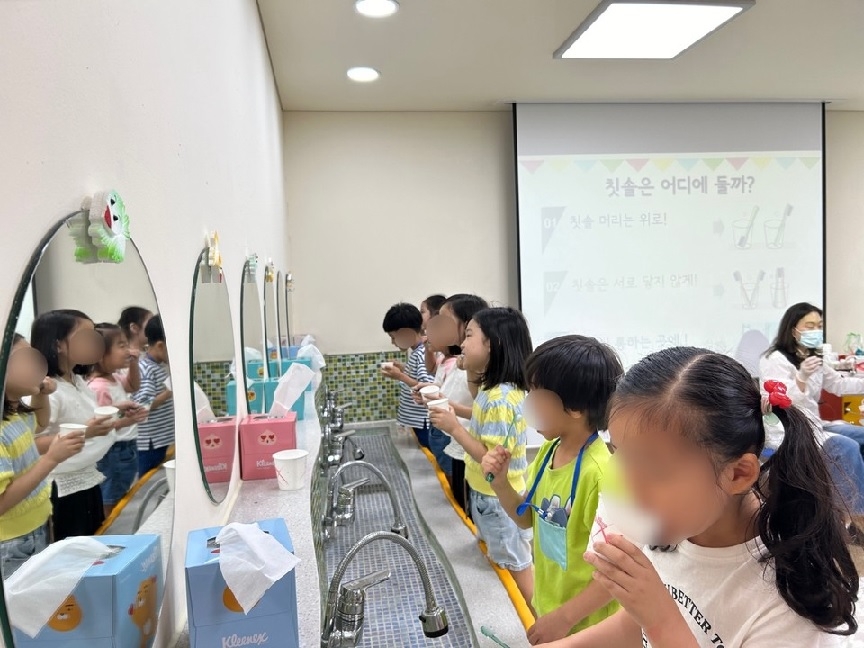
This daily routine continues throughout their school years.
In 2016, more than 100 elementary, middle and high schools across Seoul installed designated toothbrushing stations, featuring long sinks with several individual faucets. Previously, after lunch, students with toothbrushes in hand would crowd into regular restrooms.
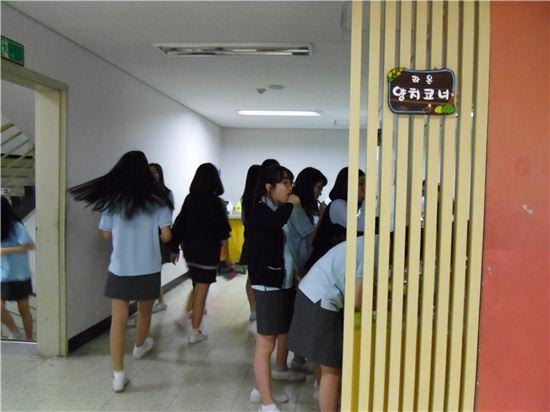
The habit of brushing in public continues into adulthood.
In many Korean offices, it is common to see employees lining up to brush their teeth about 10 to 15 minutes before the end of the lunch break, which usually runs from noon to 1 p.m.
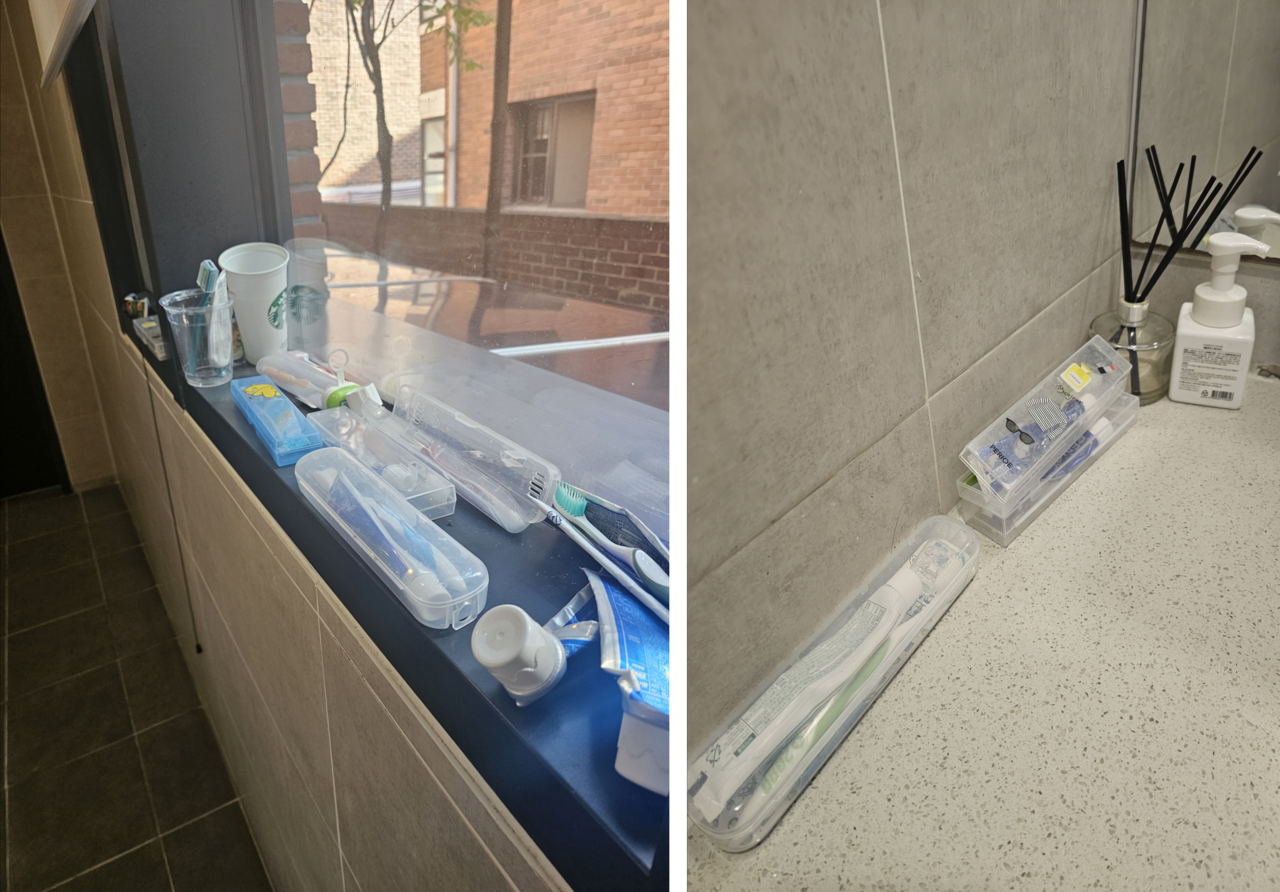
Toothbrushes and toothpaste are often left in random corners of restrooms, left by employees who find it easier to keep them there than on their desks.
Just like in their school days, some coworkers go to the restroom in twos or threes after lunch, toothbrushes in hand, catching up on small talk before heading back to work.
“Since we eat lunch and grab coffee together, brushing our teeth together just feels natural. We don’t really talk about anything serious, but we’ll chat a bit while brushing,” said Jeon Ga-jung, 28, who works at an office in Seoul.
Even outside the office, Koreans appear to have no trouble revealing the insides of their mouths in front of total strangers.
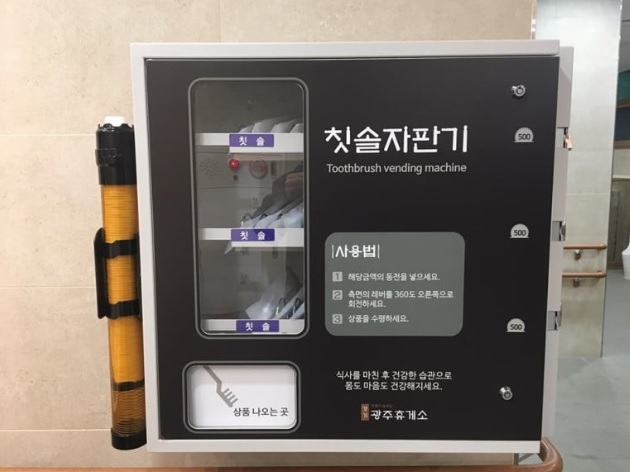
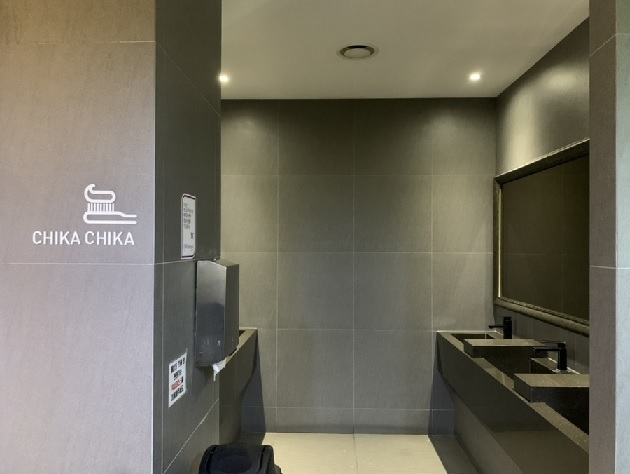
Travelers passing through airports or intercity terminals often wash up or brush their teeth in restrooms after long trips, with some highway rest areas even equipped with toothbrush vending machines.
In Noryangjin, an area packed with private academies preparing students for national exams, a rising number of study cafes have introduced “toothbrushing zones” in restrooms for those who spend extended hours studying.
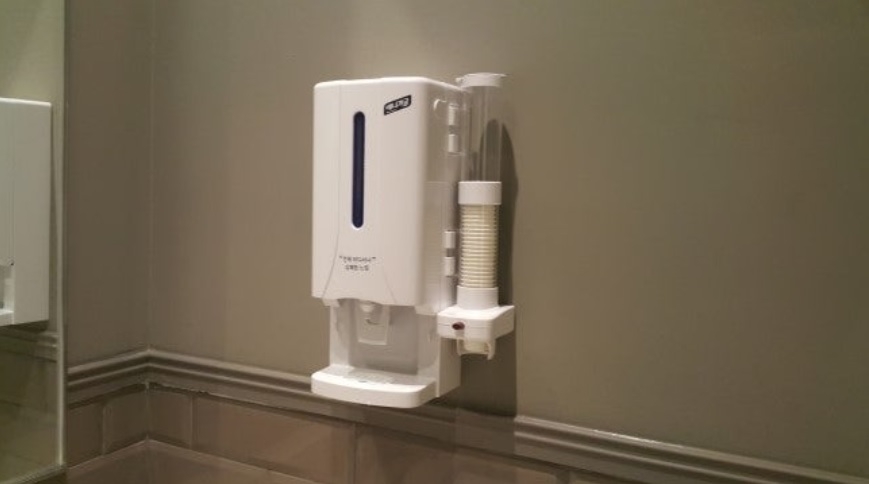
Some department stores have mouthwash dispensers built into the walls above restroom sinks, allowing shoppers to freshen up without brushing.
Why do Koreans brush everywhere?
Some experts say Koreans’ comfort with brushing in public stems from a widely followed rule that one should brush three times a day, after meals.
The Korean Dental Association launched a nationwide oral health campaign in the late 1980s promoting the so-called “3-3-3 rule," brushing three times a day, within three minutes after eating, for three minutes each time.

By encouraging children to brush their teeth after every meal at home and in school, Korea has come to view toothbrushing as not only a matter of hygiene, but also an act of "social etiquette," according to Cho Hyun-jae, professor of dentistry at Seoul National University.
“Because there’s a shared understanding that brushing after meals is part of the daily routine, I think Koreans feel less uncomfortable seeing others brush their teeth in public,” Cho said.
The bold, lingering flavors of Korean cuisine may also help explain why they don’t hesitate to brush their teeth, he added.
“Korean food often contains ingredients that easily stick to the teeth like chili powder, or have strong odors like garlic. Given that schools and workplaces in Korea tend to emphasize group activities more than in Western countries, brushing openly is seen as part of maintaining a good impression,” Cho said.
For people in the service industry, the public toothbrushing isn’t just about hygiene. It's part of the job.
“Taxi drivers don’t have offices. We have no choice but to brush our teeth in public places like restaurants, train stations, or rest stops,” said Park Sang-jin, a taxi driver in his 70s who has worked in Gyeongju for more than 15 years.
“Even though I mostly drive with a mask on after COVID-19, I still look for places to brush. It's a gesture of respect toward my passengers."
cjh@heraldcorp.com