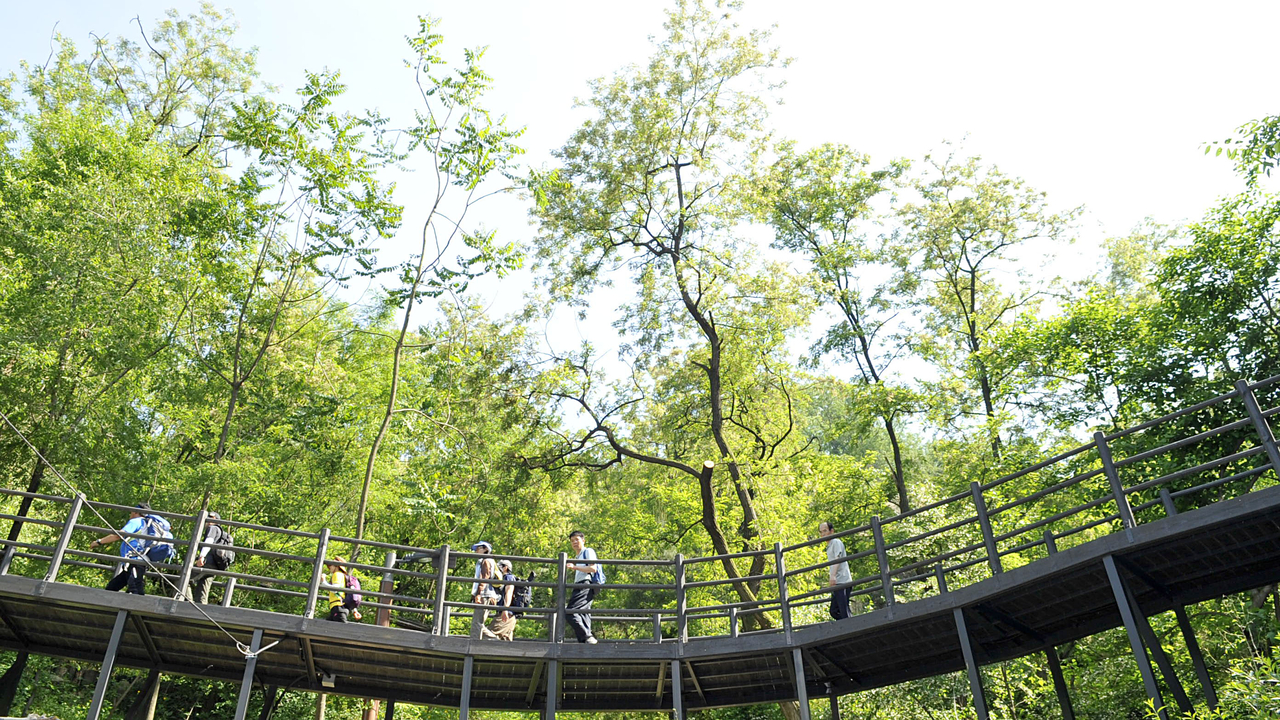
Seoul’s barrier-free trails are opening up the city’s green spaces for everyone — from wheelchair users and older adults to parents with strollers.
Designed with gentle slopes, wide wooden decks and resting areas along the way, these trails allow people of all mobilities to enjoy the calm and beauty of nature without worrying about steep climbs.
As part of the city’s ongoing efforts to promote a healthier lifestyle and provide greater access to green spaces, the trails encourage residents to embrace nature and stay active in accessible, sustainable ways.
Here are some of the most scenic barrier-free trails in Seoul where everyone can experience the joy of walking in nature.
Namsan Haneulsup-gil
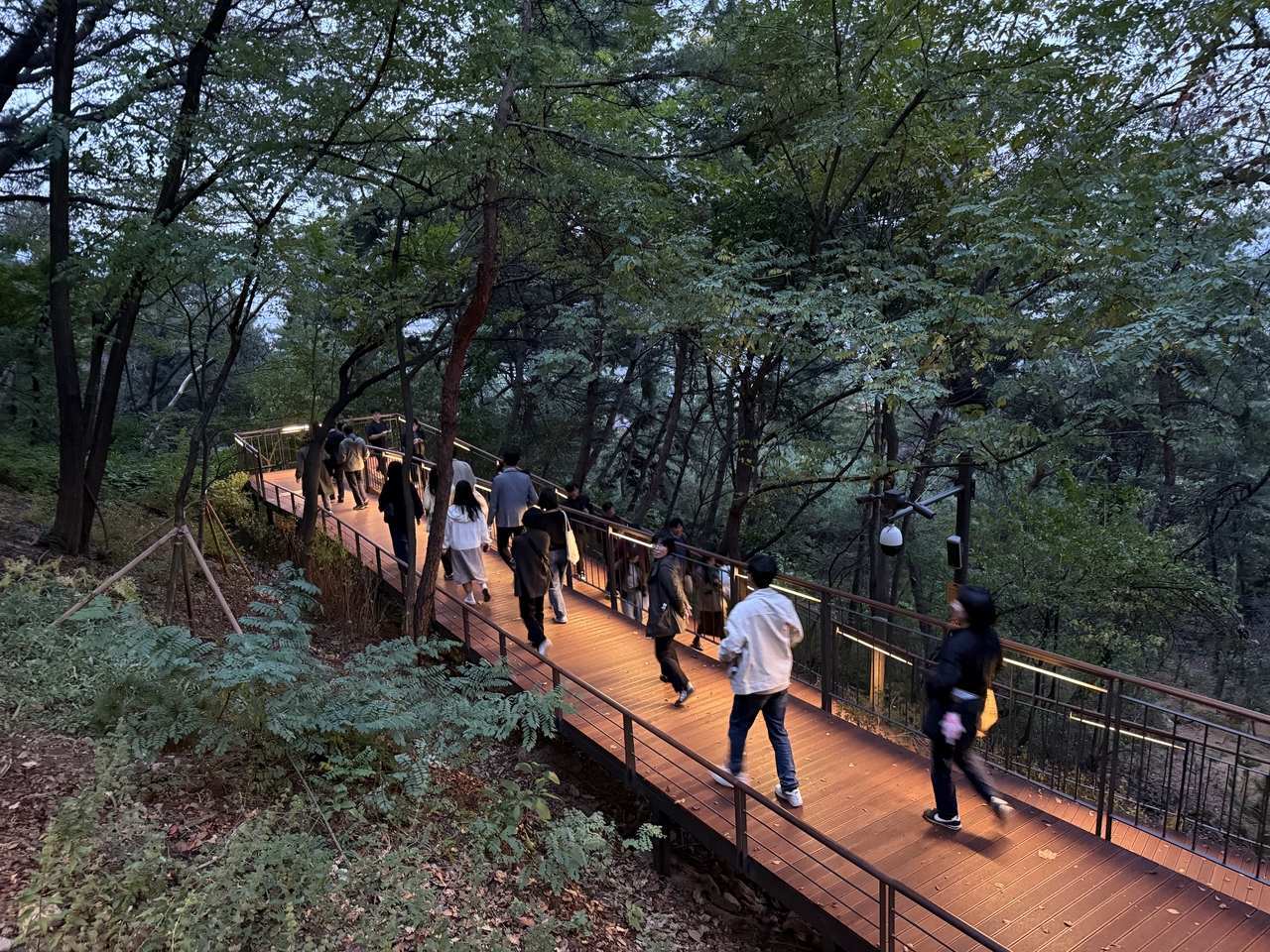
This barrier-free trail is one of the most recently opened trails in the city, located on Namsan in Yongsan-gu, central Seoul.
Stretching for 1.45 kilometers, the trail connects the Namsan Fitness Center in Huam-dong to the Namsan Public Library, with gentle slopes and consistent elevation that allow those with limited mobility to comfortably access the trail.
According to the Seoul Metropolitan Government, the trail was built to offer sweeping views of the Han River as well as Gwanaksan, as visitors will be able to encounter eight observation decks overlooking the city.
One of its highlights is the Sunset Observation Deck, designed with a large, glass barrier that allows visitors to feel like they are floating in the air. At the Wind Observation Bridge, visitors can enjoy an immersive forest experience surrounded by metasequoia trees, and the Pine Tree Shelter and Healing Garden offer meditation-friendly landscapes for those who wish to unwind and relax after their walk.
The city government added that the trail follows along natural terrain and avoids areas with large trees to ensure the safety of its visitors.
Gwanaksan Barrier-Free Forest Trail
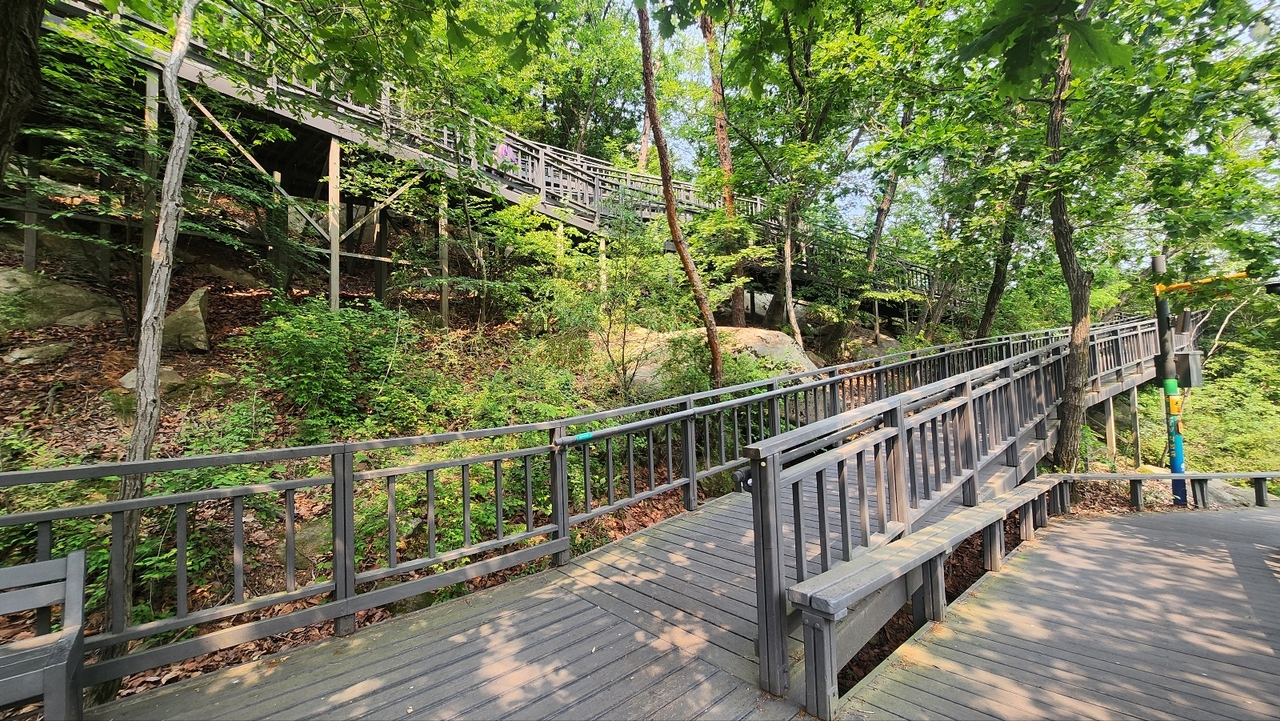
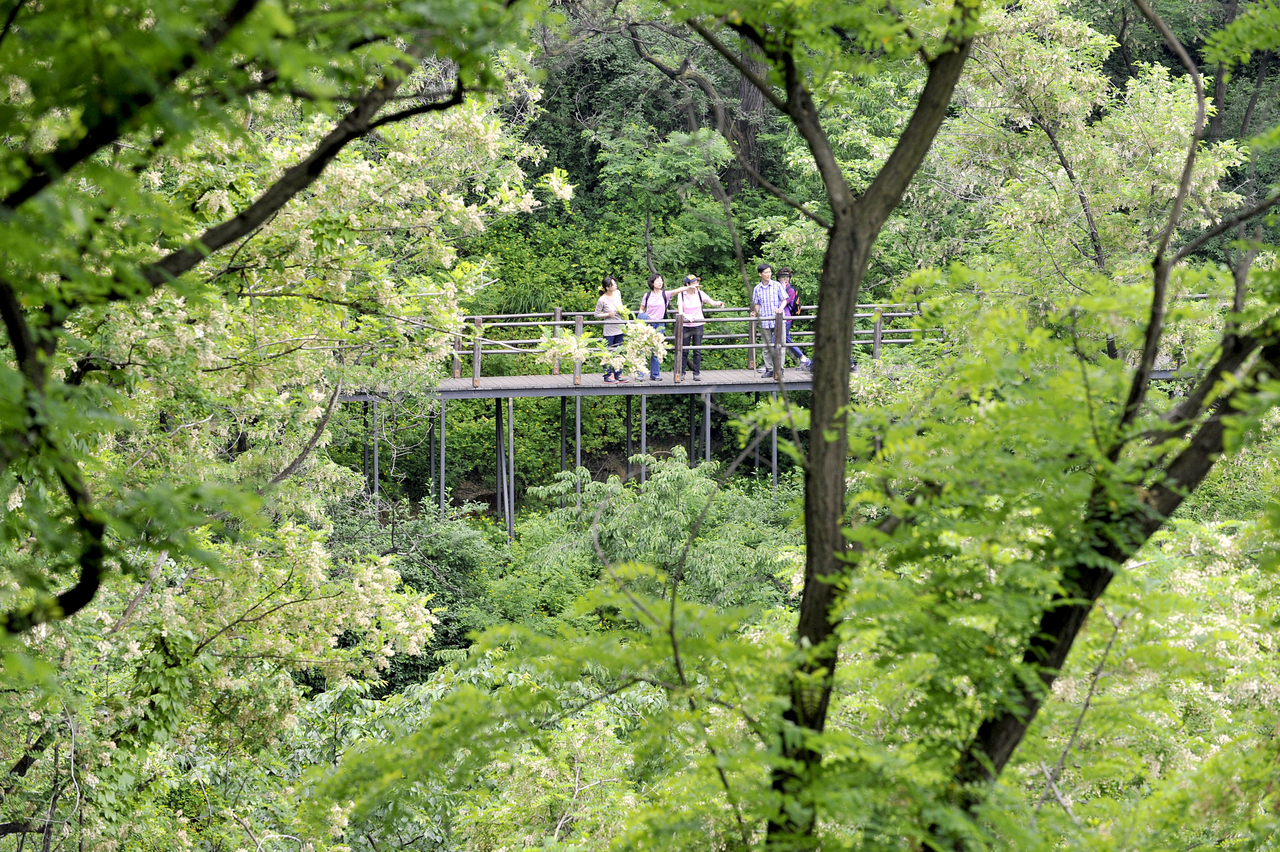
Located near Seoul National University, the Gwanaksan Barrier-Free Forest Trail in Gwanak-gu, southern Seoul, offers an easy, accessible way to enjoy one of the most iconic mountains frequently visited by hikers.
While the trail is located 1.5 km away from the Gwanaksan Park entrance, the path leading there is mostly flat, making it easy for those with mobility challenges to reach.
Stretching 1.3 km in total, the trail also consists of a 2-meter-wide wooden deck with gentle slopes, ensuring a safe and comfortable walk for everyone. Visitors to the trail can choose between two courses — one that is 750 meters long and another that is 550 meters. While both trails take visitors to the observation deck, the shorter route is slightly steeper. The entire walk takes around an hour and a half.
Due to its inclusive design, the trail was also awarded the Minister of Land, Infrastructure and Transport Award at the Korea Urban Design Awards in 2013, for allowing everyone of all abilities to safely explore the mountain’s natural landscape.
Ansan Jarak-gil
In Seodaemun-gu, western Seoul, Ansan Jarak-gil holds the distinction of being the nation’s first circular barrier-free trail. Starting near Seodaemun District Office, the 7-kilometer loop passes through some of Ansan’s most scenic areas, including the Metasequoia Path, lined with tall metasequoia trees, and the Pine Tree Path, surrounded by fragrant pine forests. The full course takes about three hours and twenty minutes to complete.
The path, made of flat wooden decks and coarse sand, ensures stability and comfort for all visitors. Wheelchair rental services are available near the trail’s starting point, and two electric wheelchair charging stations are installed along the route, making it one of the most accessible forest walks in the capital.
Midway through the trail, visitors will find the Outdoor Book Cafe, complete with benches, gazebos, and bookshelves stocked with a variety of reading materials for anyone to enjoy on the spot. The trail also welcomes dog owners — there’s a separate walking path for pets and two dog playgrounds, one for large dogs and another for smaller breeds.
Bongsan Barrier-Free Forest Trail
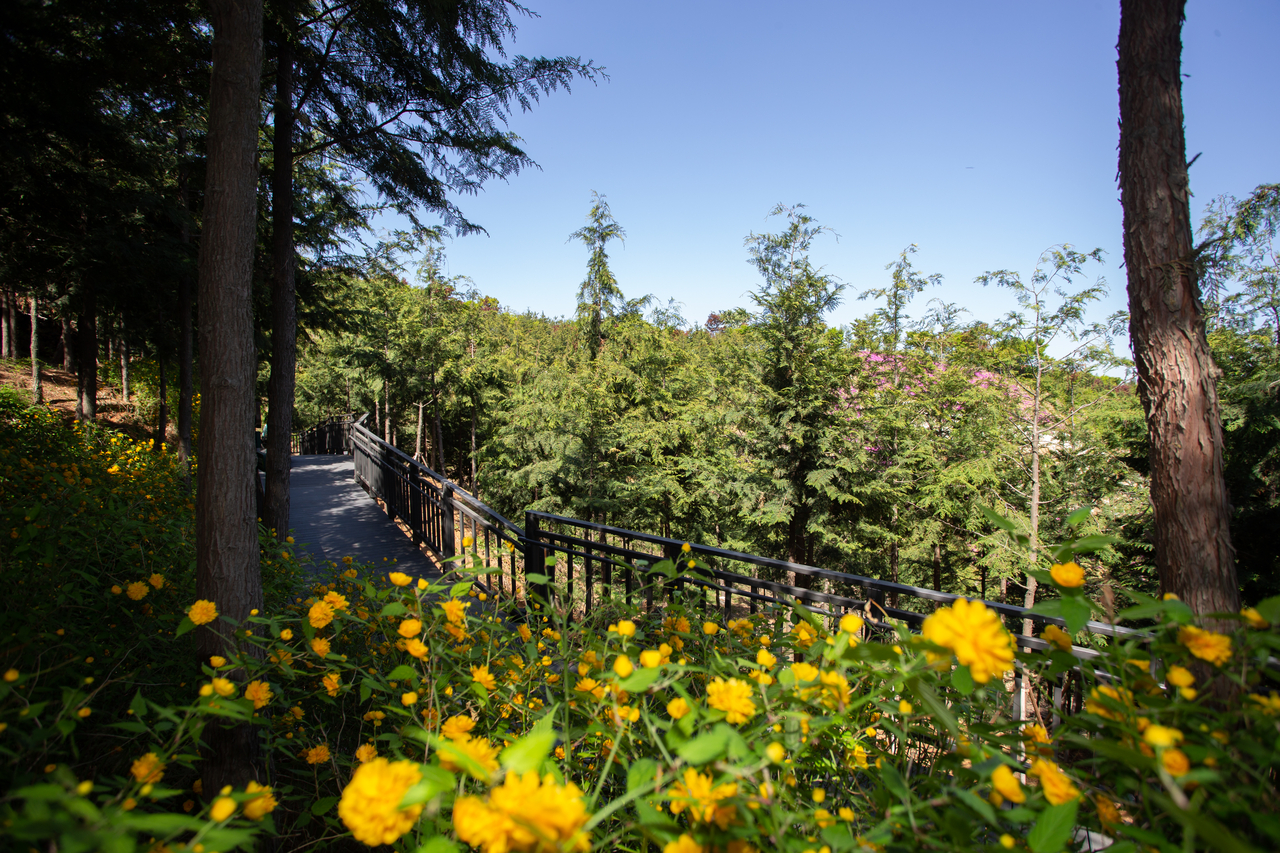
In Eunpyeong-gu, northern Seoul, a 5.2 kilometer forest trail winds around Bongsan.
This barrier-free trail is characterized by the cypress trees planted alongside it. Cypress trees produce up to three times more phytoncides than pine trees. These chemicals give off a pleasant aroma and are believed to have health benefits while also making the air cleaner.
Eunpyeong-gu is currently the only district in Seoul that has a forest trail with cypress trees, as the trees normally grow in the southern parts of the country. So far, more than 13,400 cypress trees have been planted across 6.5 hectares of Bongsan and along the trail, making up what’s known as the Bongsan Mountain Cypress Healing Forest.
The forest trail is also expected to expand next year, to stretch across 9.8 kilometers in 2026.
lee.jungjoo@heraldcorp.com



![[Weekender] Are men with type B blood really womanizers?](https://wimg.heraldcorp.com/content/default/2018/07/26/20180726000649_0.jpg?type=h&h=240)

![[Weekender] [K-School] From lobster to rose tteokbokki, Korean school food continues to evolve](https://wimg.heraldcorp.com/content/default/2023/12/07/20231207000820_0.jpg?type=h&h=240)