

On Korea’s west coast, Taean in South Chungcheong Province promotes a pace distinct from city life. With more than 120 islands, a coastal national park and a designation as an international "Slow City," the county emphasizes quiet nature, local tradition and community-driven tourism.
Taean has long been associated with mild weather, abundant seafood and a relaxed coastal lifestyle. Three sides of the county face the Yellow Sea, and its economy and identity remain connected to fishing communities and tidal landscapes.
Slow City approach
The Slow City movement, which began in Italy in 1999, champions local food culture, sustainable development and protection of natural and cultural heritage. Taean joined the movement to promote resident-first development and preserve its shoreline.
Local authorities emphasize maintaining a balance between tourism and quality of life. The county’s focus includes supporting small producers, preserving salt-making traditions and encouraging experiences rooted in history and ecology rather than rapid commercial growth.
Taeanhaean National Park
Designated in 1978, Taeanhaean National Park covers 377 square kilometers and includes 230 kilometers of coastline on the Taean mainland and its island of Anmyeondo. It features beaches, rock formations, sand dunes and tidal flats, along with more than 250 plant species.
The area also endured the country’s worst marine pollution disaster, an oil spill in 2007. The collision between a barge carrying a Samsung Heavy Industries crane and the anchored oil tanker Hebei Spirit spilled a massive amount of crude oil into Taean’s coastal waters, causing severe environmental damage and long-lasting social and economic losses for local residents.
Hakampo Beach, known for its wide sandy stretches and rocks visible at low tide, has drawn additional interest since appearing in the drama series “Tale of the Nine Tailed 1938.”
The nearby Padori sea caves, highlighted in “Alchemy of Souls,” provide sunset views from inside the stone chambers. The caves are shallow and can be visited only during low tide. Visitors are advised to check the tide schedules.
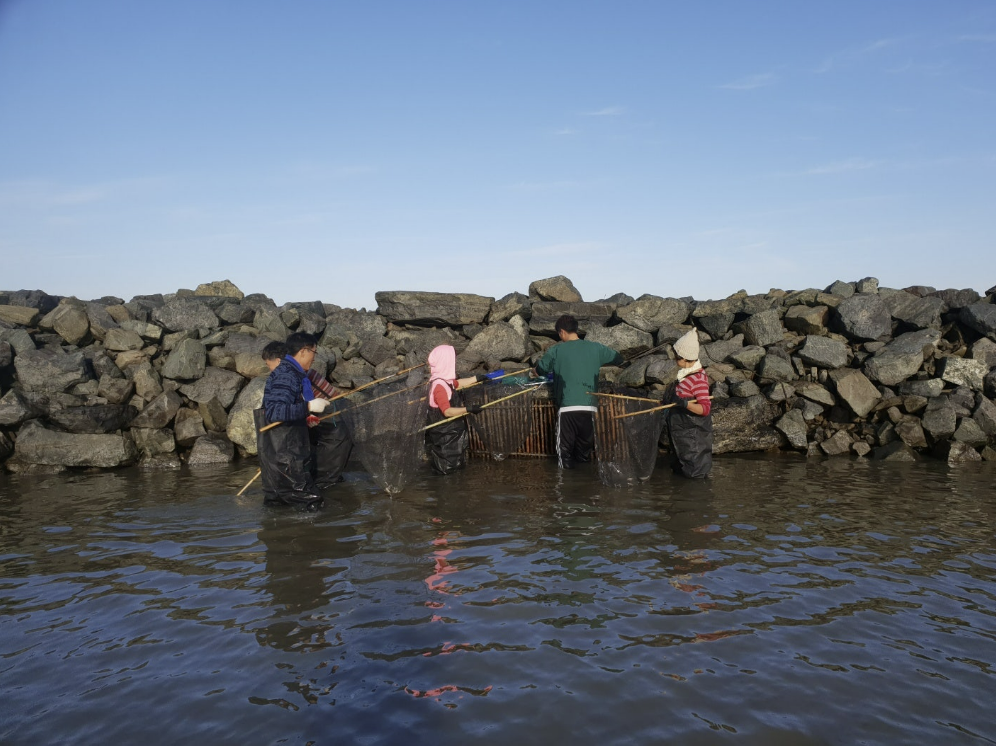
Traditional tidal-flat fishing
Taean’s tidal flats form one of the world’s major mudflat systems, supporting shellfish gathering and traditional fishing culture.
One prominent tradition is "doksal," a tidal-weir fishing technique that uses stone walls to trap fish as the tide recedes. According to the county, “Doksal is a traditional fishing method that uses stone structures and the difference between high and low tide to naturally catch fish.”
Historically, Taean had nearly 200 stone weirs. Since 2005, restoration efforts have rebuilt 27, and several are now open to visitors who can participate in hands-on fishing activities and learn about coastal ecosystems.
Gaemok Harbor is a key area for experiencing tidal-weir culture. A county official noted that the site had been redeveloped to maintain identity and serve residents as well as travelers, saying, “We focused on preserving the identity of Gaemok Harbor and creating a comfortable environment for residents.”

Pine pollen salt
Taean also promotes songhwa salt, or pine pollen salt, a specialty product made during a short period in spring when pollen from local pine trees can be harvested. The pollen is mixed with the locally produced sea salt, known for its low salinity and mineral balance.
The salt is sold online and through regional food markets and is often purchased as a gift due to its limited production and distinctive flavor.
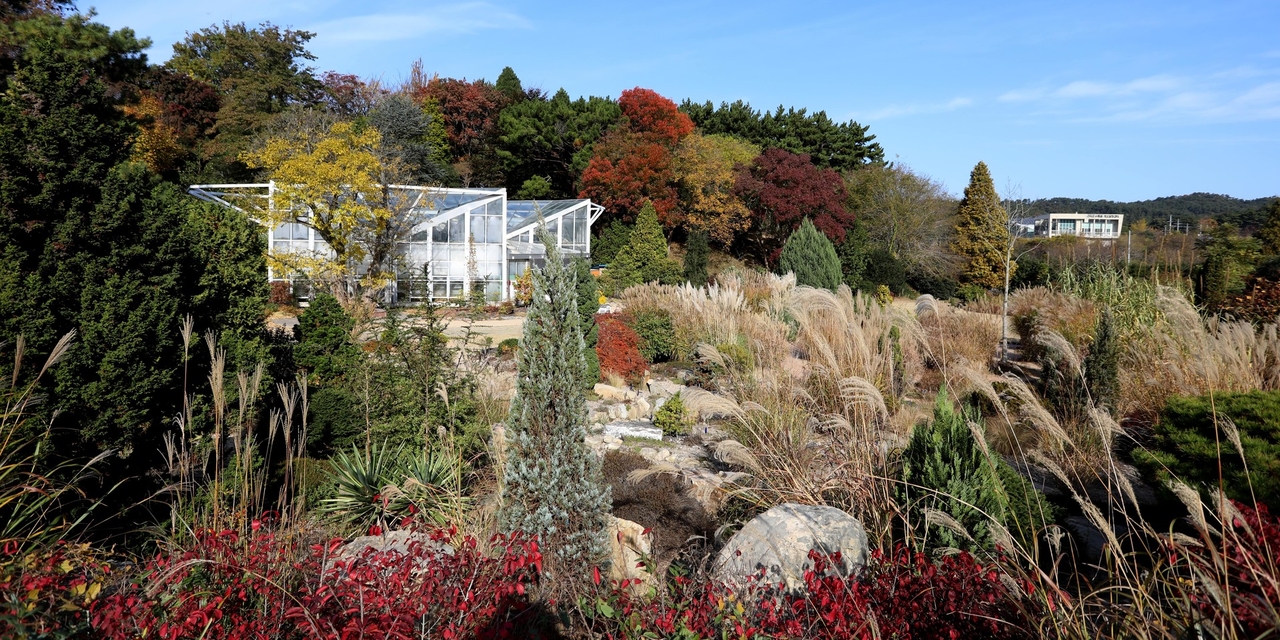
Cheollipo Arboretum
Cheollipo Arboretum is one of Taean’s most visited sites, known for scenic coastal gardens. The arboretum was founded by American-born investor and arborist Carl Ferris Miller, who purchased 1 hectare of land on the site in 1962. He began cultivating trees in the early 1970s on what was then barren coastal terrain. Miller became a Korean citizen in 1979 under the name Min Byong-gal and spent more than half his life developing the arboretum.
Through plant exchanges with 315 botanical institutions across 36 countries and additional land purchases, he expanded the grounds to 58 hectares. Today, the arboretum houses more than 16,800 varieties of trees, shrubs and herbaceous plants and has been recognized by international horticultural societies for its collections, particularly magnolias and evergreen species. It also features seasonal gardens, woodland trails and a tidal path that appears at low tide.
Visitors can explore the arboretum year-round. It is open daily from 9 a.m. to 5 p.m. during the winter months (November through February). A visit typically takes about 90 minutes.
The site offers a one-hour guided program, available twice daily at 10 a.m. and 2 p.m., by reservation through Naver, with a participation fee of 50,000 won (admission not included). Entrance fees are 12,000 won for adults aged 20 to 70, 9,000 won for middle and high school students and visitors over 70, and 6,000 won for children from 36 months to elementary age.
yoohong@heraldcorp.com