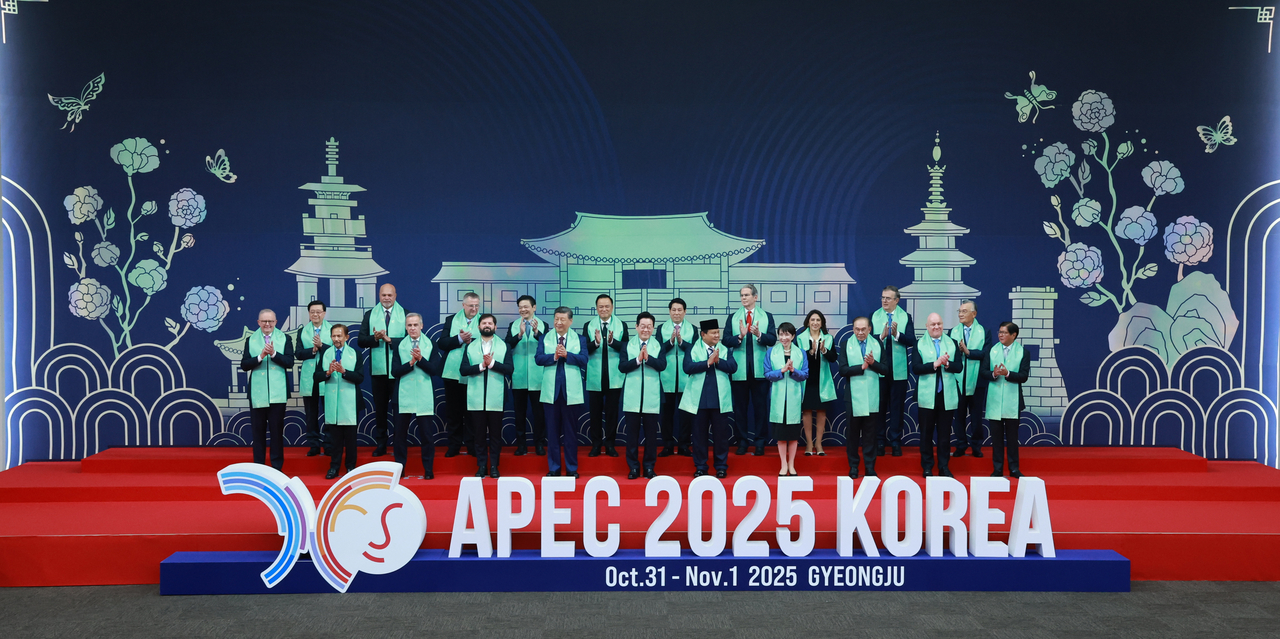
The world rarely pauses for ceremony these days. Trade wars, transactional alliances and strategic supply chains define the fractured global backdrop. The APEC summit in Gyeongju, North Gyeongsang Province, could easily have been a polite gathering with little substance. Instead, it showed that diplomacy can still bend history’s trajectory, offering a critical counternarrative to global pessimism.
요즘 세상은 더 이상 의례적 외교에 멈춰 서지 않는다. 무역전쟁, 이해득실로 얽힌 동맹, 그리고 전략적 공급망이 국제사회를 갈라놓고 있다. 경북 경주에서 열린 아시아태평양경제협력체(APEC) 정상회의도 큰 의미 없는 형식적인 외교 행사가 될 수 있었다. 그러나 이번 정상회의는 여전히 외교가 역사의 흐름을 바꿀 수 있음을 보여주며, 세계적 비관론에 맞서는 중요한 반전 서사를 만들어냈다.
South Korea’s ancient capital Gyeongju hosted a summit aimed squarely at the future. The theme, “Building a Sustainable Tomorrow,” delivered both vision and results. The event reaffirmed open markets and multilateral cooperation, positioning the country as a credible platform capable of convening rivals and driving a constructive agenda.
한반도의 고도(古都) 경주는 이번 정상회의에서 ‘미래’를 주제로 한 외교의 중심 무대가 됐다. ‘우리가 만들어 가는 지속가능한 내일’이라는 주제 아래, 이번 회의는 비전과 실질적 성과를 모두 담아냈다. 시장 개방과 다자협력의 중요성을 재확인하며, 한국이 경쟁국들을 한자리에 모아 건설적 의제를 주도할 수 있는 신뢰받는 플랫폼임을 입증했다.
The diplomatic gains were substantive, culminating in the formal conclusion of the APEC Economic Leaders’ Meeting on Saturday, where all 21 member economies successfully adopted the “Gyeongju Declaration.” The event concluded with President Lee Jae Myung officially handing over the APEC chairship for the following year to Chinese President Xi Jinping.
외교 성과도 구체적이었다. 토요일 열린 APEC 정상회의에서 21개 회원국이 모두 ‘경주 선언문’을 채택하며 공식 일정을 마무리했다. 폐막식에서 이재명 대통령은 내년도 APEC 개최를 위해 시진핑 중국 국가주석에게 의장직을 공식 이양했다.
Beyond the formal conclusion, the meeting between US President Donald Trump and Chinese President Xi Jinping yielded a ceasefire in the tariff confrontation that has unsettled markets and constrained global investment. This was not a grand reconciliation but a pragmatic pause with market implications.
공식 회담 종료 외에도 정상회의의 가장 큰 외교적 결실은 미·중 정상회담이었다. 도널드 트럼프 미국 대통령과 시진핑 주석은 최근 시장 불안을 초래하고 세계 투자를 위축시켜 온 관세 갈등에 ‘휴전’을 선언했다. 완전한 화해는 아니지만, 시장에 즉각적인 영향을 미칠 수 있는 실용적 ‘숨 고르기’였다.
South Korea also secured a framework tariff deal with Washington, including a $200 billion cash investment portion capped at $20 billion annually, as part of a broader $350 billion investment pledge, resolving months of friction. Security cooperation deepened as well, with the US approval for Korea to pursue nuclear-powered submarine construction, a move that underscores trust within the alliance.
한국도 미국과의 관세 협상에서 3,500억 달러 규모의 투자 가운데 현금 투자 2,000억 달러(연간 200억 달러 한도)를 포함하는 관세 협정의 기본 틀을 마련하며, 수개월간 이어진 갈등을 해소했다. 안보 분야에서도 미국이 한국의 핵추진 잠수함 개발을 승인하면서 동맹 간 협력과 신뢰가 한층 강화됐다.
Just as telling was the stability achieved elsewhere. President Lee’s shuttle diplomacy with Japanese Prime Minister Sanae Takaichi continued, with both leaders reaffirming future-focused cooperation while preserving a two-track approach to historical issues. The Lee-Xi meeting also restored a tone of mutual benefit, signaling Seoul’s determination to balance principled alignment with pragmatic engagement.
또 하나 주목할 점은 역내 안정의 흐름이었다. 이 대통령은 다카이치 사나에 일본 총리와의 셔틀 외교를 이어가며, 역사 문제에 대해서는 기존의 ‘투 트랙(two-track)’ 원칙을 유지하되, 미래지향적 협력 의지를 재확인했다. 이 대통령은 시진핑 주석과의 회담에서도 ‘상호이익’ 기조를 복원하며, 원칙과 실용을 병행하는 균형외교를 지속하겠다는 한국의 의지를 분명히 했다.
war: 전쟁
alliance: 동맹
diplomacy: 외교
history: 역사
critical: 핵심적인, 중요한
pessimism: 비관주의
future: 미래
sustainable: 지속 가능한
result: 결과
credible: 믿을 수 있는, 신뢰할 수 있는
substantive: 실질적인
hand over: 넘기다, 이양하다
ceasefire: 휴전
reconciliation: 화해
pragmatic: 실용적인
resolve: 해결하다
submarine: 잠수함
preserve: 보존하다, 유지하다
khnews@heraldcorp.com