From virtual monks leading online sermons to Christian pastors preaching in former nightclubs, Korea's religious communities are reinventing tradition to resonate with a generation raised on memes, K-pop and social media
A young Buddhist nun, Catholic priest and Protestant pastor recently appeared on tvN's popular variety show "You Quiz on the Block." Between laughter, filming social media challenges and dancing to the viral "KPop Demon Hunters" song “Soda Pop,” they spoke about how hard it is to avoid K-pop.
Their cheerful appearance contrasted sharply with an earlier episode, in which senior clerics discussed doctrine and inter-religious dialogue in hushed tones.
More young South Koreans are identifying as atheist or unaffiliated, prompting religious groups to reinvent themselves: from virtual Buddhist monks and K-pop-inspired rituals to churches that blend in with Seoul’s nightlife.
According to a 2024 survey by Hankook Research, 69 percent of Koreans in their 20s said they have no religious affiliation, the highest rate among any generation. Faced with shrinking congregations, many faith communities are racing to prove their relevance in a culture shaped by digital media, individualism and internet subcultures.
Faith goes virtual
“Is this a real Buddhist sermon that I can show my grandmother?” asked a comment during a livestream on Chzzk, a Korean streaming platform, on Sunday.
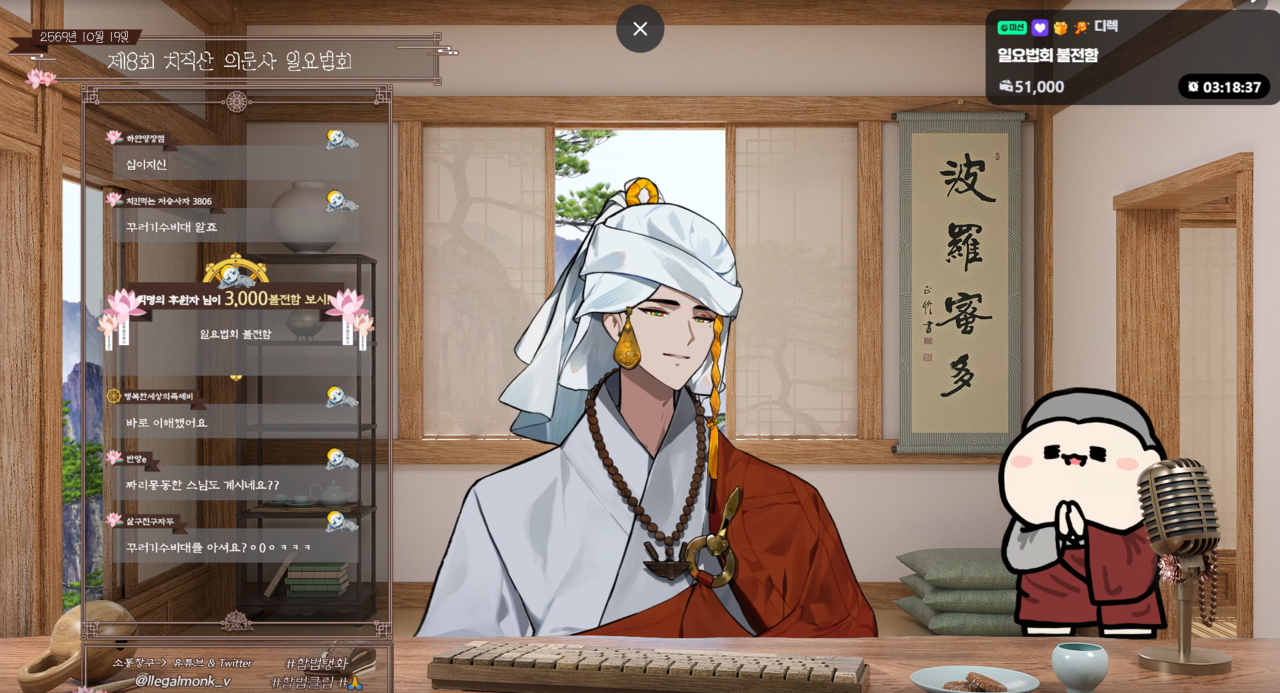
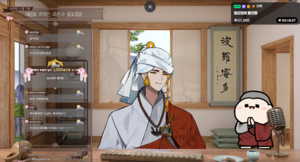
On screen, a two-dimensional, anime-like monk with soft eyes and flowing robes nodded. “Yes,” he replied.
Behind the avatar is a 31-year-old monk known as the Ven. Bulbeob, who is one of Korea’s newest “Vtubers,” or virtual streamers. He unveiled his upgraded avatar on Oct. 17, transforming from a short, cartoonish figure into a tall, handsome monk that viewers described as “too good-looking.”
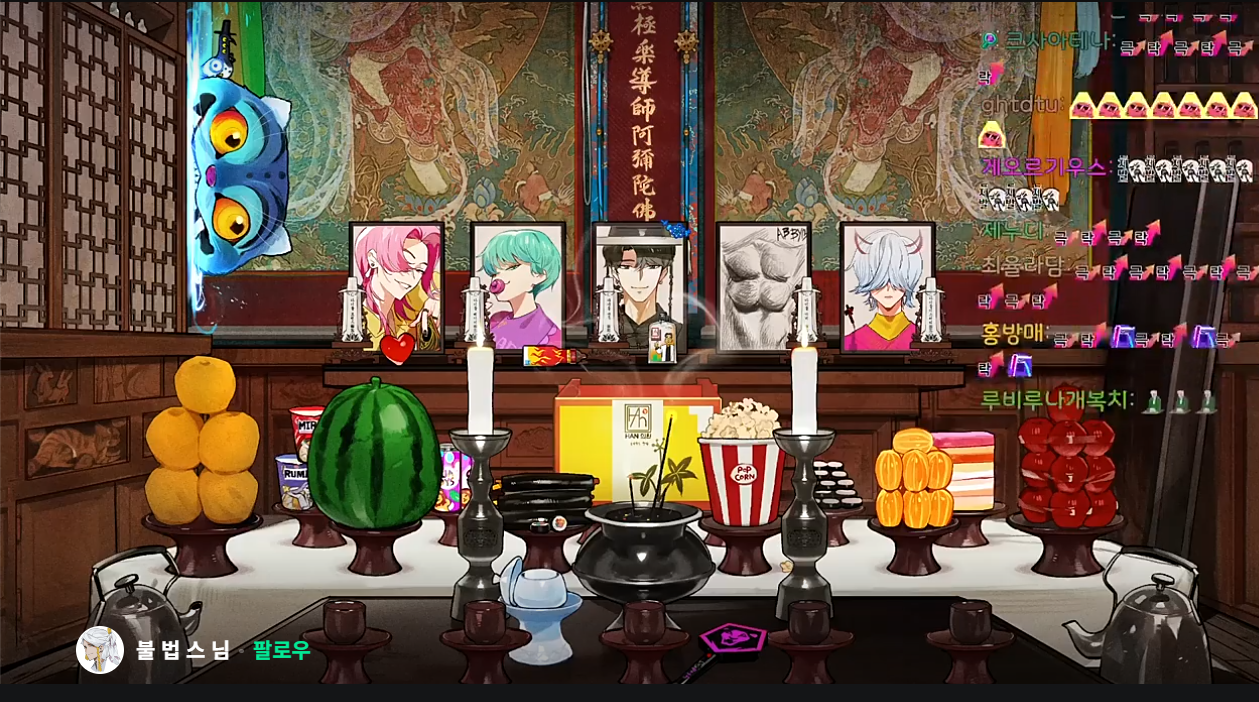
The virtual monk uses live technology that recognizes motion and facial expressions in real time. He hosts regular Sunday sermons and Thursday chat sessions online, and even organizes tongue-in-cheek ceremonies such as a “Cheondo ritual for my bias,” a Buddhist memorial service for fictional celebrity figures.
He said he first got the idea in July after watching Netflix’s animated film "KPop Demon Hunters."
“When I saw memes of a fake funeral altar for the Saja Boys online, I thought, 'Why don’t we do it too?'”
The Jogye Order, Korea’s largest Buddhist denomination, confirmed to The Korea Herald that the Ven. Bulbeob is indeed an ordained monk, but declined to comment on his livestreams.
“If I disappear, I’ve probably been dragged to the Hobeopbu,” the virtual monk joked, referring to the order’s disciplinary body.
Though unconventional, his approach reflects a broader shift in Korean Buddhism toward blending the sacred with the familiar, introducing events such as temple-stay surfing lessons or dating events hosted at temples for young singles.
In May, in observance of Buddha’s birthday, the religious community organized a “Buddha's Birthday Cafe,” drawing inspiration from K-pop fandoms that often rent out coffeehouses to fill with merchandise related to their favorite K-pop star’s birthday.
From club to church
Buddhism isn’t alone in its transformation. Across Seoul, Christian communities are also reimagining how to speak to a generation that values authenticity over authority.
In 2017, the Rev. Nam Been opened Newsong Church in Hongdae, one of Seoul’s busiest nightlife districts. The building was once a club complete with neon lights, a sound system and a bar counter before Nam turned it into a place of worship.
“The area is just inside the commercial zone of the city. It’s not even a residential area,” Nam told The Korea Herald.
“I wanted to build my church in a place that could reach the next generation, and Hongdae came to mind. Amid the hundreds of bars here, we exist as a church that not many people know about.”
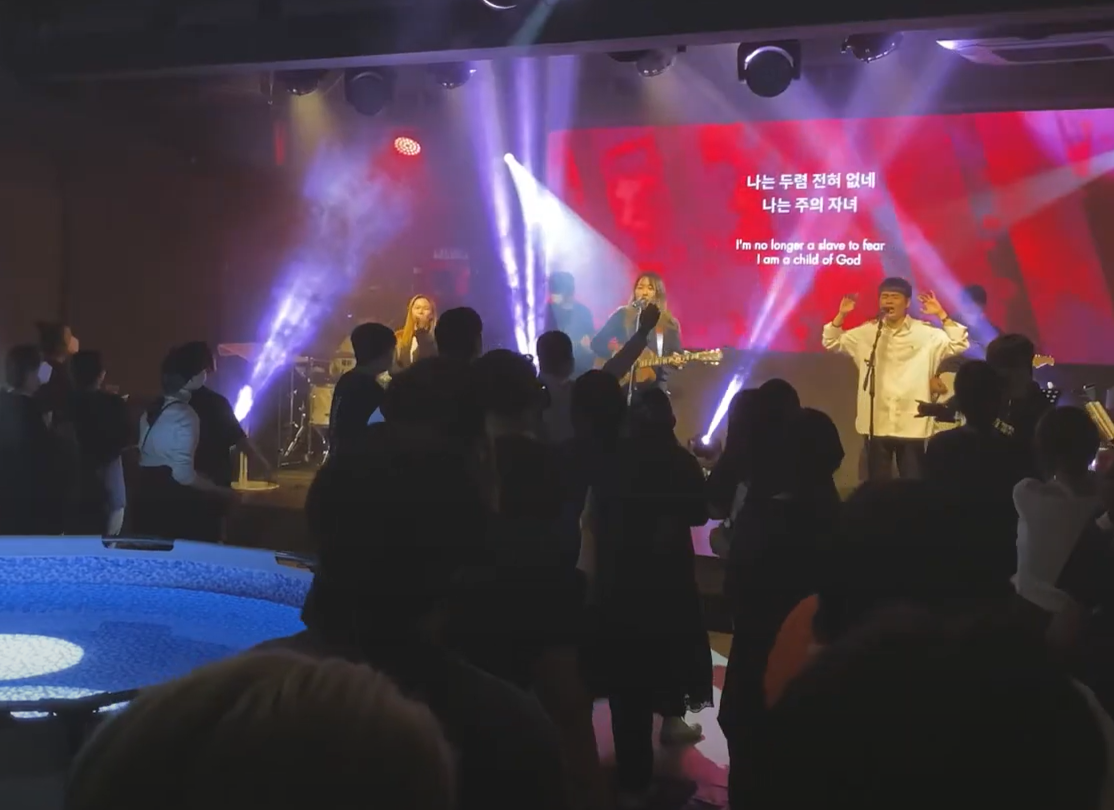
His congregation, almost entirely composed of those in their 20s and 30s, gathers every Sunday evening. Just before service, the streets outside are crowded with buskers and bar hoppers. Inside, the atmosphere feels less like a sermon and more like a live show with acoustic music, strobe lights and a standing audience.
“It feels like a ‘rock church’ I visited in the US,” said one churchgoer.
"In Europe, we hear the news about churches being converted into nightclubs. I am very thrilled and spiritually thankful that we were able to turn this club into a church and that young people are coming here to worship."
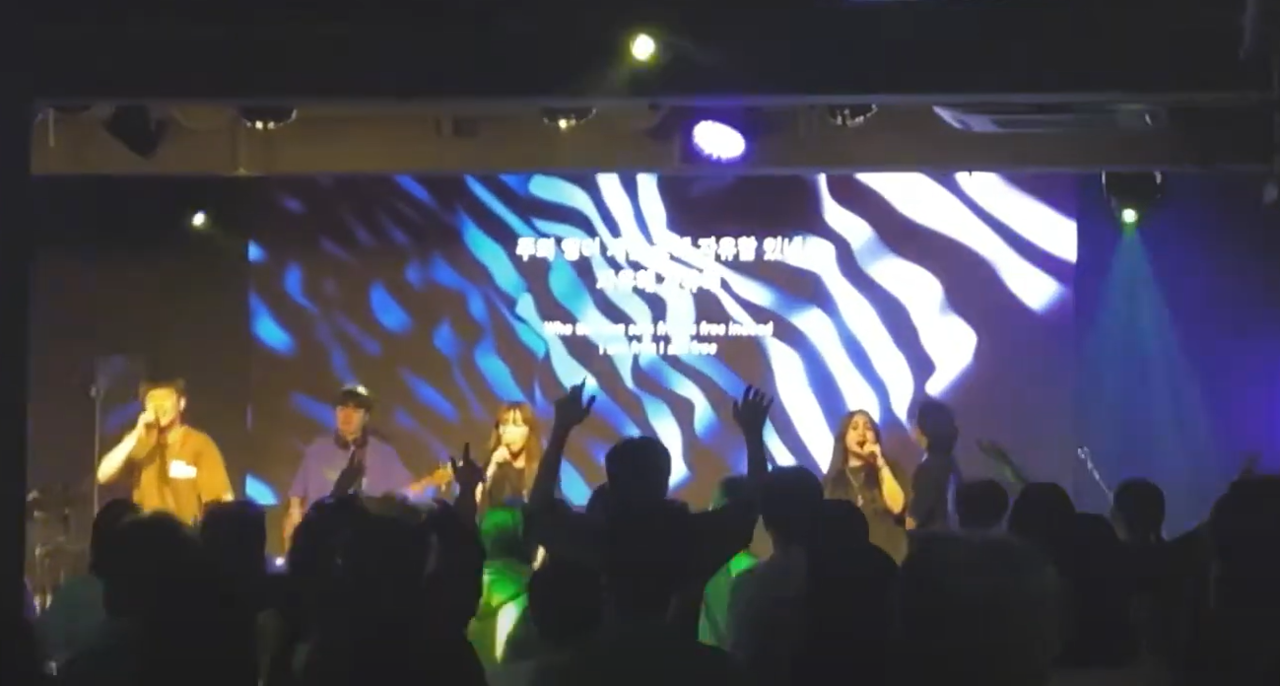
Nam said Newsong Church intentionally incorporates “cultural aspects that are less religious," such as memes and social media challenges, to connect with younger Koreans.
“Some traditional churches think our methods are dangerous and that we’re becoming too secular,” he said. “However, the fundamentals of the gospel message do not change. We don’t compromise on that.”
Nam went on to explain that they have a strict feedback loop to ensure that the message is not distorted due to the method in which they convey it.
"Using methods that all young people share and know about allows us to better invite them (to the church) and for them to become more interested."
Rebranding belief
Both the Ven. Bulbeob’s virtual sermons and Nam’s "club" church capture a growing trend in Korean religion: the effort to meet younger generations on their own terms.
Nam believes the country’s surveys overlook an important truth that, although the young may be unaffiliated, they are still interested in the spiritual.
“Many young people are interested in what is religious or spiritual,” he said.
Over eight years in Hongdae, he has watched fortune-telling stalls multiply. “That high demand shows people are still curious about their future and about the answers to the big questions in life,” he said. “They call themselves SBNR: ‘spiritual but not religious.’”
Many young Koreans, he added, have become skeptical of traditional churches that fail to answer life’s big questions. “We use cultural aspects and try to present the Bible not as a set of rules but as something that can relieve fatigue and guide us in life.”
The Ven. Bulbeob shares a similar goal.
“I started this livestream because I wanted to spread Buddhism in a way people can actually relate to,” he said. “I hope people feel that monks and Buddhism itself can be approachable."
"It’s enough for me to play the role of pushing you from the shadows into the light," he added.
seungku99@heraldcorp.com

![[Weekender] Are men with type B blood really womanizers?](https://wimg.heraldcorp.com/content/default/2018/07/26/20180726000649_0.jpg?type=h&h=240)
![[Weekender] [K-School] From lobster to rose tteokbokki, Korean school food continues to evolve](https://wimg.heraldcorp.com/content/default/2023/12/07/20231207000820_0.jpg?type=h&h=240)