Mirror of modern Korean work life, K-dramas turn daily office rituals into rich storytelling codes
Like much of workplace television around the world, K-dramas often unfold within the office walls, where ambition, romance and rivalry are part of the daily grind.
Yet Korea’s office dramas carry a distinctly local flavor. They follow a social choreography unique to Korean work culture — from hoesik (after-work gatherings) to the tradition of addressing colleagues by title rather than by name.
To international viewers, these customs may seem both fascinating and foreign. But within K-dramas, they serve as essential storytelling tools — subtle markers of power, intimacy and respect that ground the genre in realism.
Here, we explore how K-dramas embed these everyday customs into their narratives, turning office life into a microcosm of the country’s social order.
Speaking in titles

In Korean workplaces, titles take precedence over names. Instead of first names, employees call each other “Kim daeri” (Assistant Manager Kim) or “Park gwajang” (Manager Park). In K-dramas, these titles often aren’t just job labels but linguistic markers that map relationships and boundaries, with age, experience and position dictating how people speak and behave.
Take "Itaewon Class," where Park Seo-jun’s character earns the title Park Daepyo-nim (CEO Park), a transformation as much linguistic as professional. Each title, from daeri (assistant manager) to bujang (department head) to daepyo (CEO), carries symbolic heft. K-dramas often use the labels to track power shifts, emotional distance and even romance that crosses corporate boundaries.
Hoesik

Probably among the most emblematic rituals of Korean office life is hoesik, or the after-hours gathering centered on food and drinks. More than a casual night out, hoesiks are treated both as a team-bonding rite and a social extension of professional life.
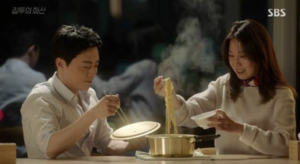
Office K-dramas frequently stage critical moments within these scenes: in "Misaeng," the hoesik exposes the hidden office politics of survival for junior staff, while in "What’s Wrong With Secretary Kim," it becomes a romantic catalyst that blurs the line between professionalism and personal feelings.
The small customs commonly depicted in K-dramas' hoesik scenes include drinking etiquette — for instance, juniors politely turning away when drinking in front of a superior and offering the first drink to the most senior person as a sign of respect. These moments are less about alcohol than about hierarchy and deference — tests of emotional intelligence that reveal character and order alike. For K-drama writers, they serve as compact stages for tension, loyalty and vulnerability to unfold in real time.
From desk to chats
Modern K-dramas also capture how these hierarchies spill into the digital world. Much of workplace communication now flows through KakaoTalk, Korea’s omnipresent messaging app. Employees may maintain multiple profiles — one for colleagues, one for friends — and office chats mix business with banter. Conversations about projects, hoesik plans, or birthday gifts coexist in the same thread, extending Korea’s office etiquette into the virtual realm.
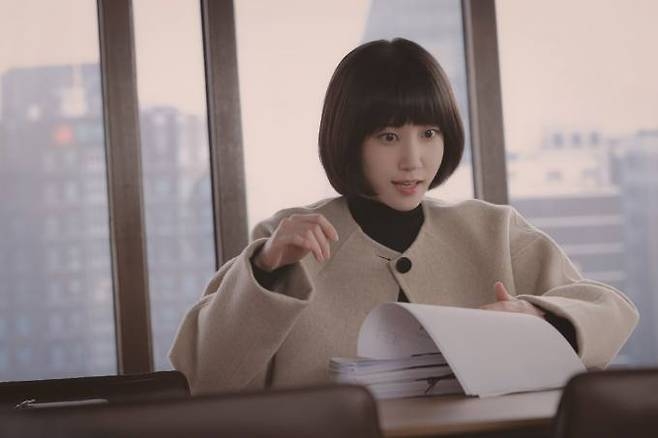
Shows like "Extraordinary Attorney Woo" and "What’s Wrong With Secretary Kim" reflect this digital extension of workplace culture, where KakaoTalk notifications replace watercooler talk. The app’s built-in “gifticon" function, often used for birthdays presents or gifts to mark small celebrations, also appears commonly in office K-dramas, serving as an impetus for building relationships and surviving the office life.
"K-Drama Survival Guide" series is your passport to decoding the language quirks and social cues of K-dramas. Each installment unpacks the nuances often lost in translation, offering a deeper look into the subcontexts of K-drama. — Ed.