From attendance rolls to lunch lines, student numbers shape early habits of order
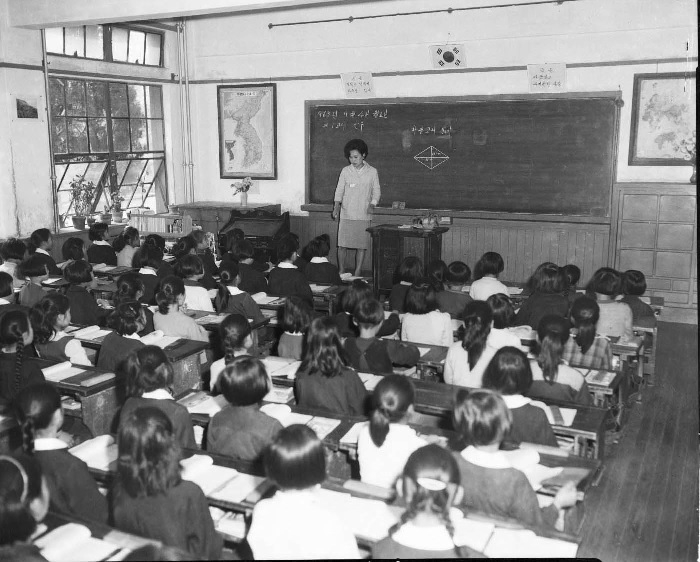
In the 1970s and '80s, when as many as 60 to 70 students were packed into a single classroom at school, students’ height served as a key barometer of order.
At the start of each semester, students were given numbers for checking attendance based on their height and seated accordingly, from the front to the back of the classroom. Records from the Seoul Archives show that in some schools, seating arrangements were adjusted midsemester to reflect growth spurts.
For teachers, it was more than a seating rule. It doubled as a quiet but powerful system of order, dictating how students lined up for assemblies, stretched in unison during morning exercises and smiled in perfect rows for class photos on field trips.
Fast forward to 2025, students are still numbered, though no longer by height.
For teachers, numbers bring efficiency
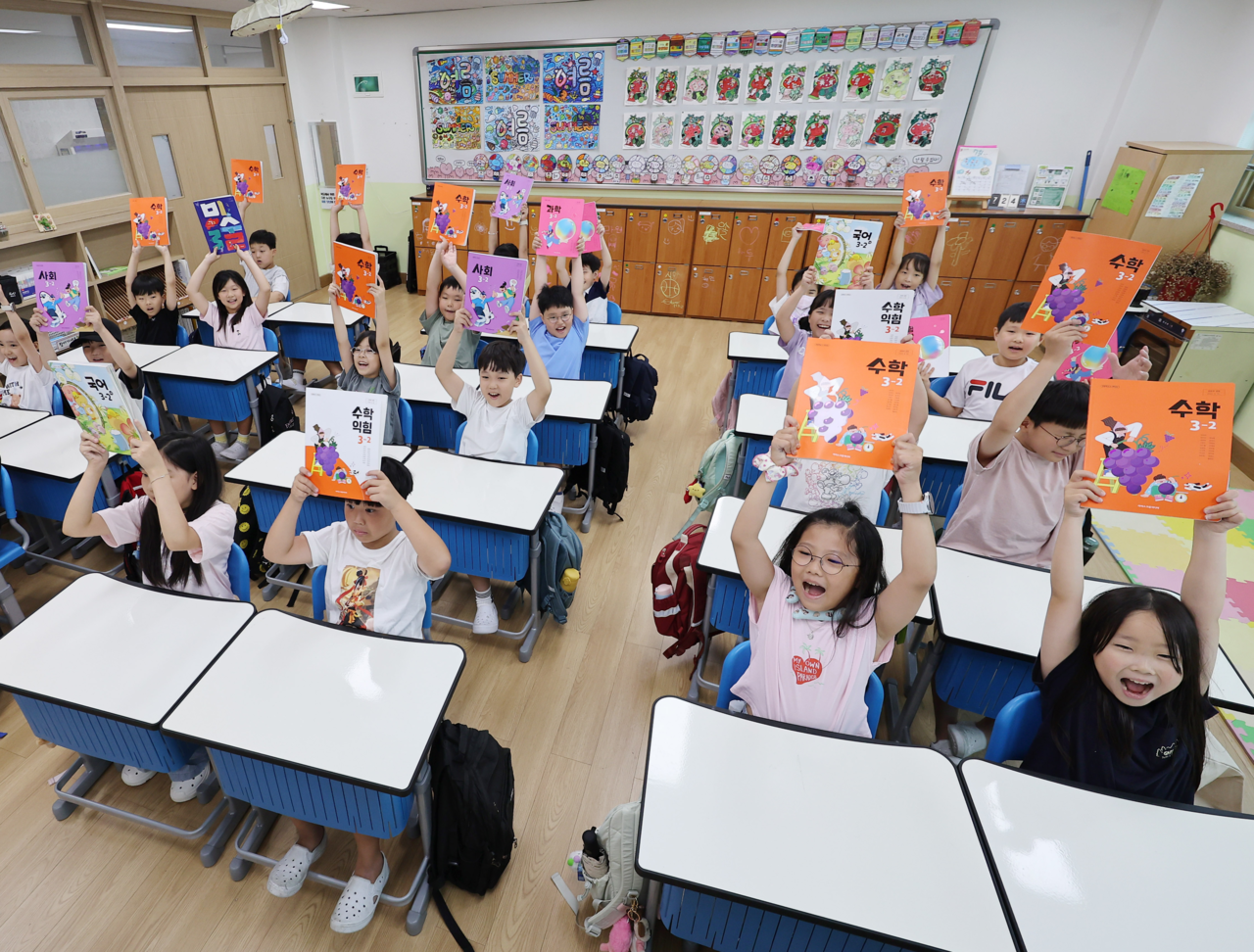
Today, classrooms are far less crowded, with an average of 21 to 26 students per class in Seoul. Still, every new school year begins with a familiar ritual of assigning student numbers.
“Some schools assign numbers based on the alphabetical order of names but divide the list by gender, with either boys or girls coming first, while others make no gender distinction at all,” said Kim Gi-hyun, a teacher in her 20s who teaches third grade at a public elementary school in Gunpo, Gyeonggi Province.
Assigning student numbers based on height or date of birth became a thing of the past in 2003, when the Education Ministry advised schools to end the practice to prevent teasing among students.
For teachers, despite changes in how the numbers are assigned, the system remains a time-honored tool for managing busy classrooms.
Calling out numbers instead of names allows teachers to identify absentees at a glance, which saves time when things get hectic, said Lee Hyun-ji, 33, who teaches fifth graders at a public elementary school in Osan, Gyeonggi Province.
“When I tell my students, ‘One to 10, hands up!' — I can quickly see who’s missing,” she said. It also helps distinguish students who have the same name. During field trips or outdoor activities, lining up students by number makes checking attendance much faster."
She noted that numbers are also useful for organizing student records beyond attendance, including grades, behavioral notes and teacher feedback.
“In computer programs, names often can’t be arranged correctly in alphabetical order because of differences in final consonants and vowels. By managing attendance sheets and test scores by number, teachers can calculate averages and attendance rates easily," she said.
In group-oriented Korean classrooms, the number assignment often serves to promote orderly behavior.
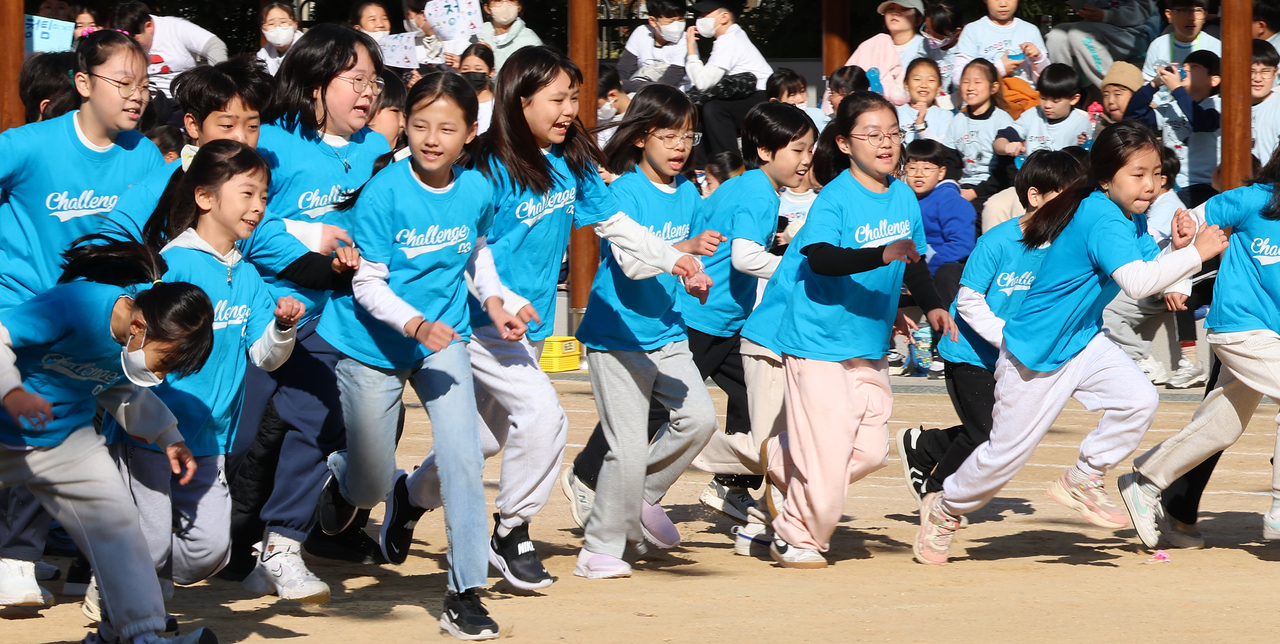
"Students in the same class usually move together to the cafeteria or line up in numerical order during school events like sports days. We also use the numbers to form small groups for class activities,” said Ahn Sang-hyun, 37, an elementary school teacher in Seoul who teaches fifth grade.
Attendance numbers are also used when students give individual presentations. “In my class, we present either from the beginning or the end of the attendance roll," she added.
For parents, a small, but important detail
For parents of school-age children, it is no exaggeration to say that remembering the simple digits of the attendance roll has become part of child care, along with school pickups and packing supplies.
Most school paperwork requires the child’s name, class and number, along with a parent’s signature. Be it for an absence, an early dismissal or a school event permission slip tucked into a backpack, parents write out these details each time.

Those whose children often forget their numbers early in the semester sometimes find themselves in trouble the night before a form is due, scrambling to fill it out or leaving that section blank.
Beyond paperwork, parents tend to mark their child’s number on almost everything — from notebooks and shoe bags to water bottles and toothbrush cups.
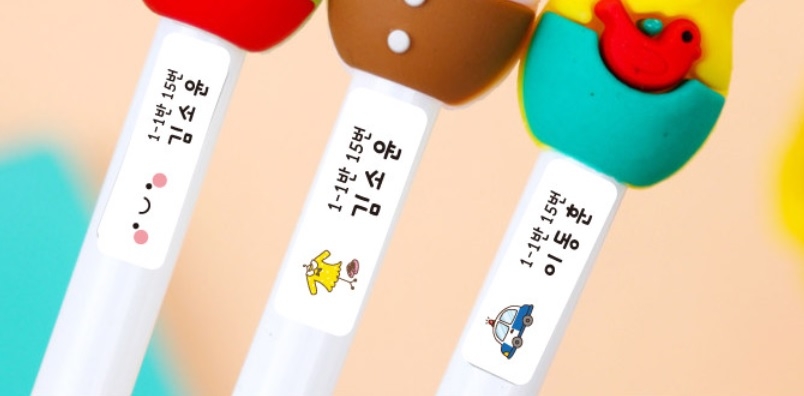
“There’s another girl in my daughter’s class with the same name, so I always make sure to write her number. You can easily find cute personalized stickers with blanks for class, number and name these days. When I forget her number for a second while doing school paperwork, I just look at the sticker on her shoe bag,” said Ryu, a 38-year-old mother living in Seongdong-gu, Seoul.
Old habits don’t just die hard — sometimes they birth new ones
Experts say that while numbering systems for identifying students are common not only in Korea, but also in other Asian countries and even in some Western schools, few integrate them into daily classroom life as deeply as Korea does.
“In Confucian-influenced East Asian societies like Korea, Japan and China, student numbers are more widely used to uphold collectivist values and social harmony. Through these numbers, students come to recognize their individual identity within the group," said Kim Kyung-geun, a professor of education sociology at Korea University.
“Even though Korean society has become more individualistic over time, it still values fast, efficient and orderly collective systems that have long driven the nation’s progress. As long as that mindset persists, schools, as small mirrors of society, are unlikely to abandon student numbering anytime soon, even if some view it as old-fashioned.”
Some say that at many schools the attendance numbering system reinforces gender bias by assigning boys the first numbers in class.
For example, in a hypothetical class of 50 students with 25 boys and 25 girls, boys may be assigned Nos. 1 through 25 based on alphabetical order, while girls receive Nos. 26 through 50.
The practice was identified as “gender-discriminatory” by the National Human Rights Commission of Korea in 2005 for promoting the idea that “men take precedence over women.” The commission reiterated in 2018 that assigning numbers by gender constitutes discrimination.
Still, the practice largely remains.
As of September last year, 454 elementary, middle and high schools in Gyeonggi Province still followed this practice, according to data from the Gyeonggi Provincial Office of Education.
“Numbers may seem trivial, but the fact that boys are given the first numbers places them at the center of leadership and can unconsciously reinforce gender stereotypes among children,” commented Cho Hyun-sun, a 35-year-old mother raising a 7-year-old daughter in Seoul.
“Society is still largely male-dominated, and I believe schools should start breaking that pattern early on.”
cjh@heraldcorp.com