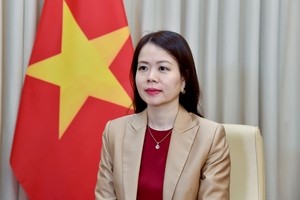
Vietnam is deepening its regional and bilateral engagement within the Asia-Pacific Economic Cooperation forum, identifying South Korea as a crucial partner amid global supply chain disruptions, said Deputy Foreign Minister Nguyen Minh Hang in a written interview with The Korea Herald.
Reflecting on Vietnam’s past roles as APEC summit host in 2006 and 2017, Hang emphasized Hanoi’s ongoing “substantive contributions” to the APEC 2025 process through its active participation in ministerial meetings, committees and working groups.
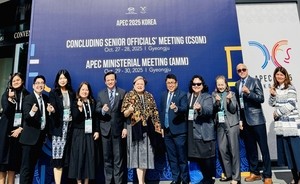
“Through these mechanisms, Vietnam has proposed and implemented initiatives to support SMEs, advance digital and green transitions, promote the circular economy, and respond to climate change,” she said. The deputy foreign minister was in South Korea to attend the 2025 APEC summit held in Gyeongju, North Gyeongsang Province.
In July, Vietnam successfully hosted the 3rd APEC Business Advisory Council meeting in Hai Phong, which she said helped “strengthen public-private partnerships and innovation across the region.”
Calling South Korea “one of our key partners,” Hang highlighted Vietnam’s readiness to work closely with Seoul in fostering sustainable and resilient supply chains.
South Korea, for its part, regards Vietnam as a strategic economic hub, leveraging the ASEAN member nation’s location, young workforce and strong manufacturing base in electronics, semiconductors and rare earths to diversify its supply chains and reduce reliance on China.
This year marks the 10th anniversary of the Vietnam-Korea Free Trade Agreement. Both nations have pledged to expand collaboration in nuclear power, high-speed rail, artificial intelligence and biotechnology.
Hang described Vietnam as a “dynamic and fast-growing economy” preparing to host APEC 2027, pledging close coordination with Korea and other members to ensure the success of the APEC 2025 process and the APEC Economic Leaders’ Week in Busan.
“APEC has always been one of the key priorities in Vietnam’s multilateral diplomacy,” she said, noting that the Vietnam-Korea strategic vision focuses on diversifying supply chains, ensuring energy security and driving innovation amid global uncertainty.
Korean conglomerates such as Samsung and SK Group continue to anchor major operations in Vietnam, reflecting Seoul’s broader New Southern Policy and its deepening engagement with ASEAN economies.
“Given the complementary nature of our economies, Vietnam and the Republic of Korea have every reason to work closely together to ensure sustainability and resilience in supply chains,” Hang emphasized.
She also praised Korea’s preparations as this year’s APEC host, citing its initiatives on AI cooperation, demographic adaptation and creative industries. “With such careful preparation and the positive results achieved since the start of the year, the 32nd APEC Economic Leaders’ Week in Busan will be a resounding success,” she added.
As of September 2025, Korea remains Vietnam’s largest foreign investor, with $94.2 billion in registered capital across more than 10,300 projects, accounting for 18 percent of Vietnam’s total FDI. Bilateral trade reached $81.5 billion in 2024, supported by the free trade pact and an “Action Plan toward a More Balanced $150 Billion Trade Target by 2030.”
“Vietnam stands ready to support and work alongside Korean enterprises in developing diversified and high-value supply chains,” Hang said.
Looking ahead, Hang expressed optimism about the future of the Vietnam-Korea Comprehensive Strategic Partnership, established in 2022.
“With strong political resolve from our leaders and the creativity of our business communities, this partnership will continue to flourish,” she said. “Vietnam and Korea will continue walking together toward shared prosperity — for peace and development in the region and beyond.”
sanjaykumar@heraldcorp.com
![[Contribution] Central Asia, on threshold of a new era](https://wimg.heraldcorp.com/news/cms/2025/11/16/news-p.v1.20251115.e2da24d2ca524b7eae970f781f1be542_T1.png?type=h&h=240)