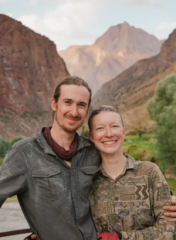
Philipp Springsguth and Maria West say traveling world taught them 'just how connected everything really is'
When Philipp Springsguth and Maria West set out from their home in Saxony, Germany, in March, they packed lightly but purposefully: five water bottles, two bikes, a tent and the conviction that they could do anything.
Eight months and 8,000 kilometers later, the German couple arrived in Busan after cycling through 16 countries, passing through stunning landscapes, including arid plains of Kazakhstan, desert dunes of Afghanistan and bustling cities of China. Speaking to The Korea Herald shortly after their arrival, neither showed a trace of fatigue.
“We will not be the same people moving forward,” said Springsguth, 26, who left his job in Germany’s chemical industry to travel the world. “You start to realize how small the world really is. South Korea, China, Afghanistan — they all feel far away when you live in Europe. You just don’t realize just how connected everything really is.”
A dream come true
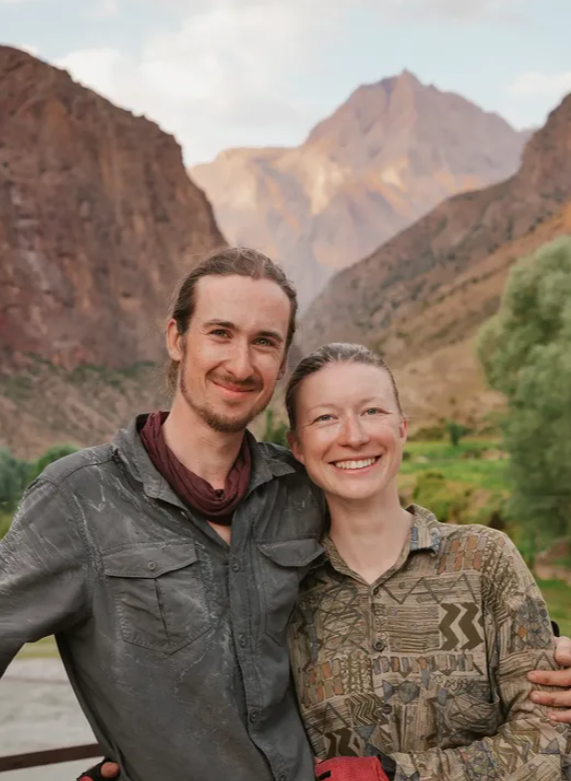
Both in their late 20s, Springsguth and West met in 2019 through West’s brother, also an avid cyclist.
“He was cycling a lot with my brother, always hanging out near my place,” recalled West, 28, a baker. “I thought he was cute. So, I took my chance.”
They soon discovered a shared dream of seeing the world and decided there was no better time. “We independently thought about doing this trip because we both like learning new cultures,” said Springsguth. “And we chose the bike because it allows us to better connect with people we meet across our trip.”
They spent 10 months saving and researching logistics, gear and routes, even practicing with a 250-kilometer ride through the Czech Republic. What began as a hobby evolved into an experiment in minimal living — to travel sustainably, rely on strangers and live only on what they could carry.
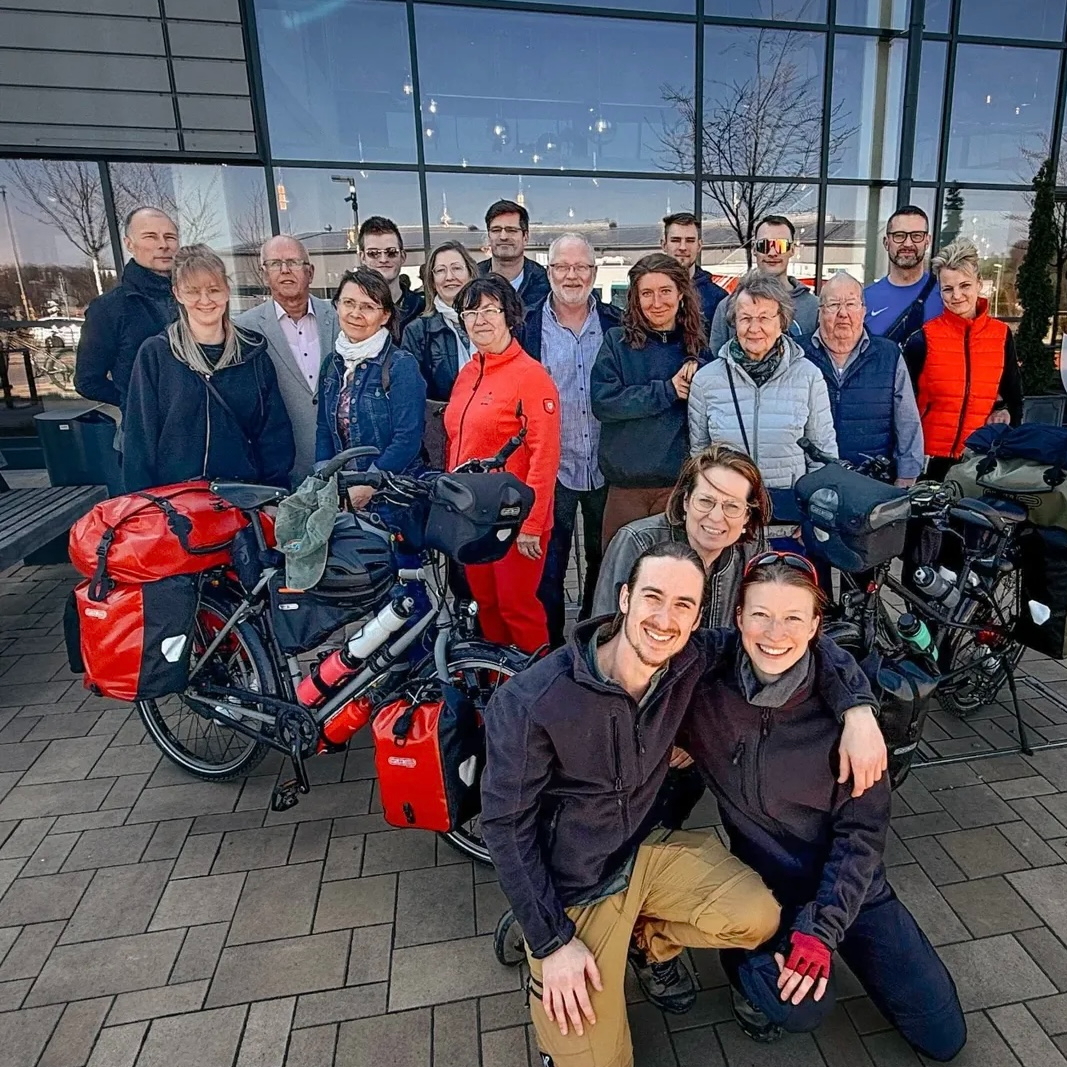
On March 23, Springsguth and West met family and friends at a local neighborhood bakery to say their goodbyes. They enjoyed a meal and rode together for a whole day.
“(Springsguth's) grandfather downloaded Instagram just to see our journey,” West said with a laugh. “We are not homesick, but we do miss our family.”
Across continents, one pedal at a time
Their route traced rivers, deserts and ancient cities: across the Danube in Hungary, the Black Sea coast of Georgia and the Silk Road towns of Uzbekistan.
They also had their fair share of challenges. Bumpy roads and sleeping on the floor became new norms. West was bitten twice by dogs in Central Asia, and struggled to locate a rabies vaccine. She had to cover up and wear long sleeves in the heat when traveling through predominantly Muslim countries.
"The heat," West answered briefly with a grin when asked about the most difficult part of their trip.
In Afghanistan, they were invited into the home of locals after a long day of cycling. “A local studying English saw that we were tired cycling in the streets and asked if we wanted to stay at his place,” West said.
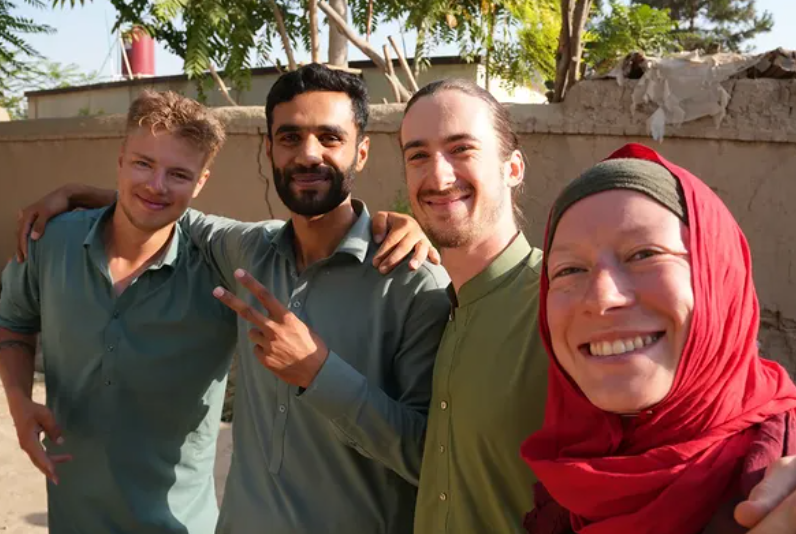
At their home, she and Springsguth dined separately. He with the men, she with the women. “It was such a nice experience, because in day-to-day life in Afghanistan, you don’t come into contact with many women,” West said. “They didn’t speak a word of English, so we had to speak with our hands and feet, but they were welcoming and it was very heartwarming.”
Springsguth said the journey across Central Asia “was most memorable because it was so different to our lives in Europe.” He recalled meeting an Afghan driver who once worked for the government before the Taliban takeover and had been repatriated after trying to flee. “He told us he still wanted to leave in search for a better life, but felt lost,” Springsguth added.
“When we were young, we always heard about what happened there. But being there in person, seeing the people, learning what they had to go through and had to witness, those are things that we are still processing.”
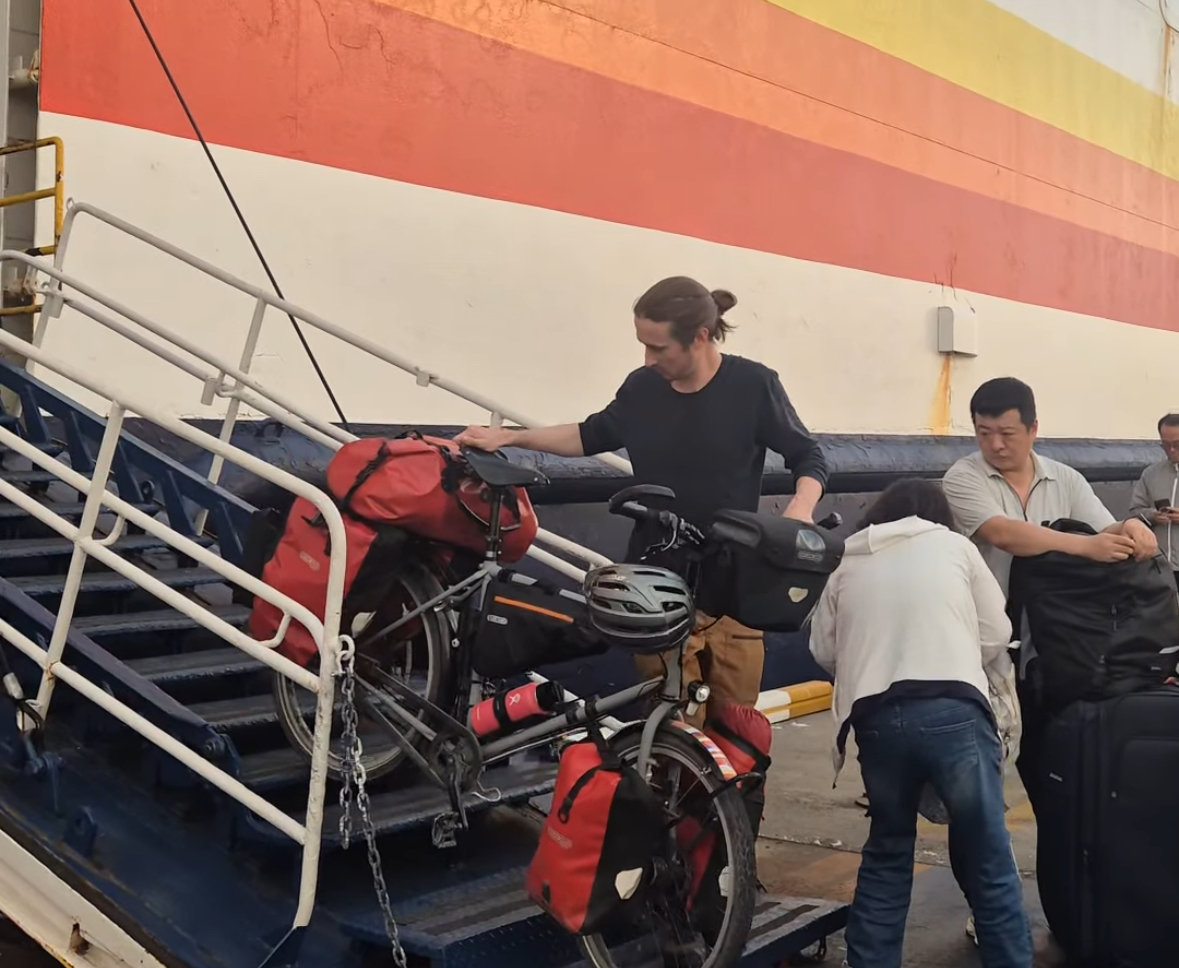
Cycling into Korea
After entering China, their original plan was to head toward Southeast Asia and end their Asian journey in Singapore. But a friend’s recommendation convinced them to spontaneously add South Korea to the route — a decision that took them even farther from home.
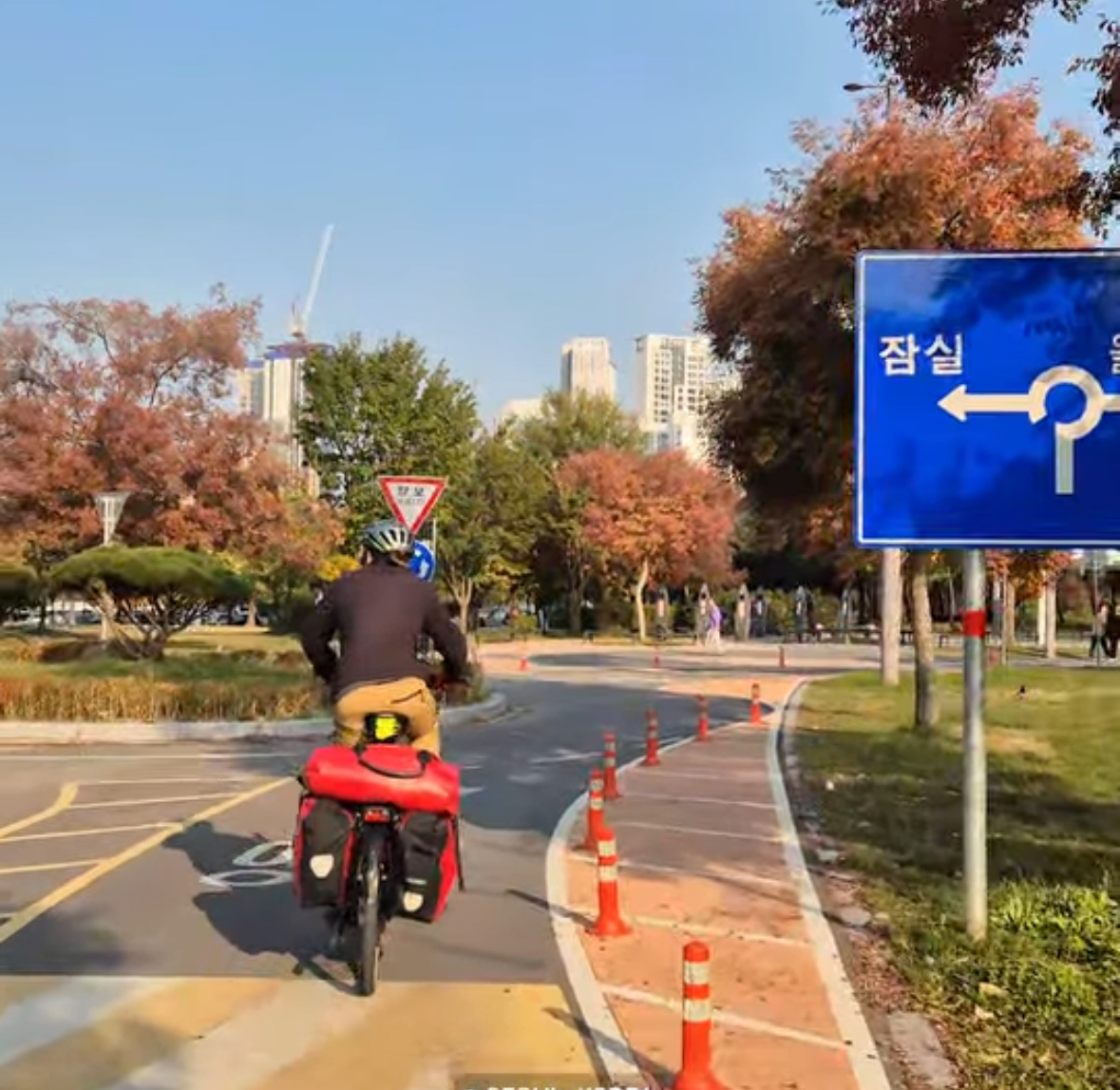
“The only thing I knew about Korea before this trip was Samsung,” Springsguth said with a laugh. “We think Europe is advanced sometimes, but the infrastructure, especially the bicycle infrastructure in Korea, is so advanced.”
When they arrived in Incheon, they were stunned by what they saw. “It’s heaven,” West said, smiling. “We didn’t know cycling would be such a big thing here.”
From riverside bike paths to free public toilets and late-night convenience stores, the couple called Korea’s cycling system “the best we’ve seen.”
“Even in the cities, there are roundabouts for bicycles! I’ve never seen anything like that,” Springsguth said.
“What I will remember the most when I leave South Korea are the people,” said Springsguth. “South Koreans are always so happy and energetic. Even the old people are always smiling and doing sports outside.”
West added, “They always greet us when we pass by on our bikes. They seem happy to see foreigners, especially bicycle travelers.”
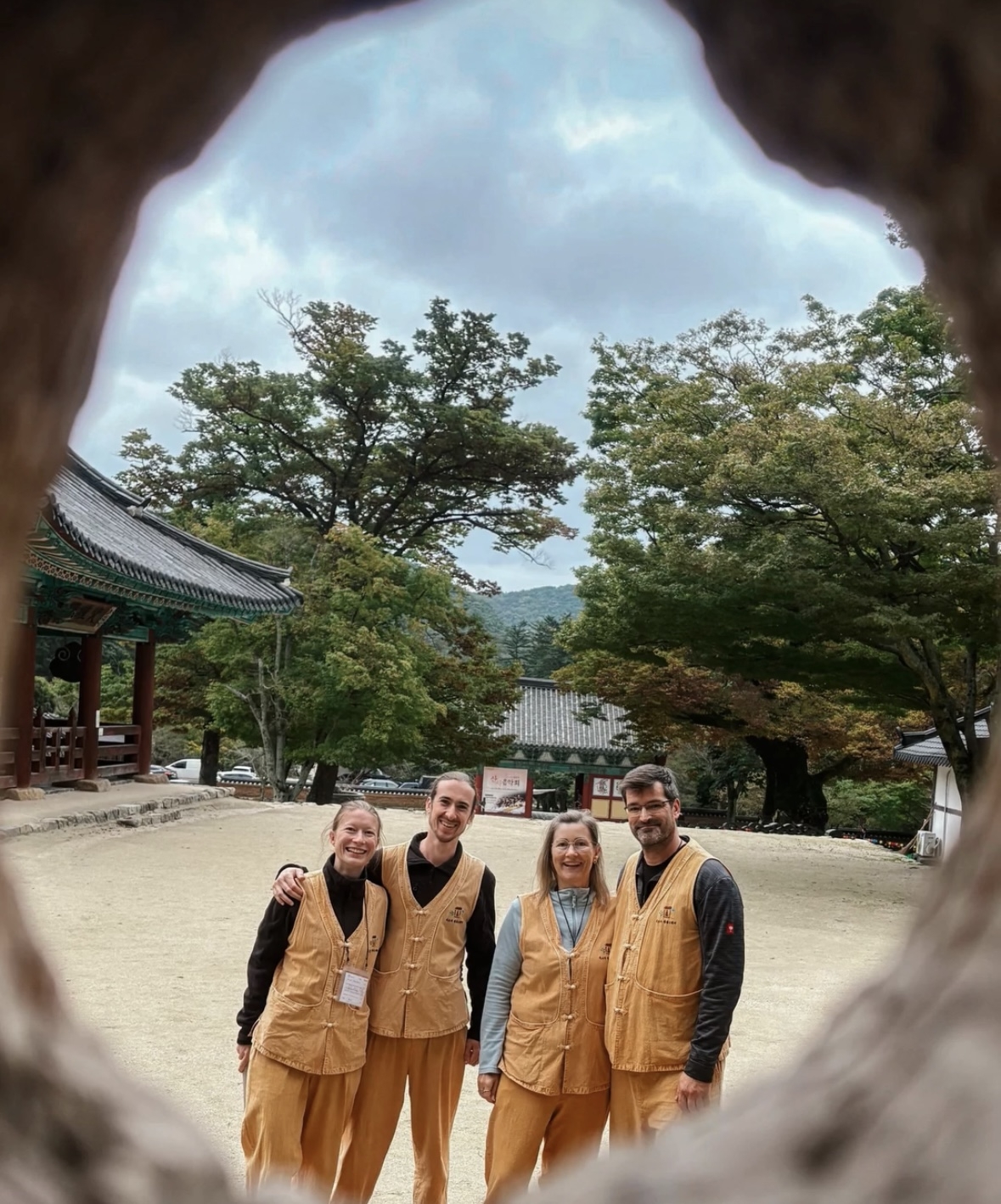
The couple paused their journey for a reunion with West’s visiting family, exploring Seoul, Sokcho in Gangwon Province and Busan together. “It was amazing to get a glimpse of Korea’s rich history while doing a templestay program,” West said. Her favorite city, she added, was Gyeongju, North Gyeongsang Province. “The cities in Korea are very busy, but also quiet, sorted and have cute signs and lights.”
Road as mirror
The trip, they said, deepened their relationship, both with each other and with the world.
“We are both stubborn people. But we realized we make a great team,” said West. “Philipp is more fit than I am. Sometimes I can only ride 70 kilometers and Philipp wants to go further. But we figured out a common ground.”
They also became more aware of their privilege. “We realized we were privileged to have the German passport, allowing us to travel to most places,” said West.
“We have been taking our home and our health for granted,” added Springsguth. “When I go back to Germany, I want to give to more people, maybe give our home as a space to bikers.”
“If you want to do something, just start,” said West. “Opportunities don’t come knocking on your door saying, ‘hey, the time is now.’”
“Another key takeaway is that if you need help, just ask. People are more willing to help than you usually realize,” she added.
Springsguth nodded. “Getting to know other cultures also lets us appreciate home,” he said. “I always wanted to leave Germany to experience the bigger world, but I realized I have been taking our home and our health for granted. But at the same time, I feel at home, wherever I am.”
The couple will end their six-week stay in Korea and take the ferry from Busan to Fukuoka on Friday, continuing their journey along Japan’s east coast. From there, they plan to cycle through Taiwan, mainland China, Southeast Asia and eventually across the Americas.
For followers of their YouTube channel, their videos offer a quiet antidote to a world obsessed with speed. It acts as a reminder of endurance, empathy and the beauty of slowness.
“It’s about learning to understand other people,” Maria said. “Some in Germany don’t really know about Korea or what is going on in other places of the world. But, I think we can now better understand the different people because we have gotten a glimpse of different countries and people, though we stay only for a few weeks.”
seungku99@heraldcorp.com