Director Ha Myung-mi revisits Jeju's buried history in 'Hallan,' a survival drama about South Korea's darkest massacre
Jeju Island draws millions of tourists each year. They come for the cherry blossoms and volcanic beaches, the UNESCO-designated heritage sites and swanky honeymoon resorts. What most visitors don't know is that the island's soil holds the remains of over 30,000 people killed between 1947 and 1954 — by some estimates, roughly 10 percent of the island's population at the time.
The Jeju 4.3 Incident — the term used to describe this period of violence — started as an uprising against plans to hold separate elections in the US-occupied South. Many feared the elections would permanently divide the Korean Peninsula, and when protesters took up arms, the state's response was brutal.
Government forces, backed by right-wing paramilitary troops, swept through villages, burning homes and summarily executing anyone suspected of leftist sympathies. Under the country's military dictatorships through the 1960s and 80s, even mentioning what happened could land locals in prison.
It wasn't until South Korea's democratization in the late 1980s that artists began picking up the thread. Recent decades have brought a steady trickle of works revisiting the massacre — O Muel's 2012 film "Jiseul," shot in stark black-and-white with local non-actors, won the World Cinema Grand Jury Prize at Sundance. Zainichi filmmaker Yang Yonghi's 2022 documentary "Soup and Ideology" traced her mother's escape from Jeju during the incident, connecting family trauma to the broader story of Japan's Korean diaspora.
Then there is Han Kang's 2021 novel "We Do Not Part" — a meditation on inherited grief that traces a woman's journey through snow-covered Jeju. After Han won the Nobel Prize in literature last year, the once-suppressed narrative found a global audience.
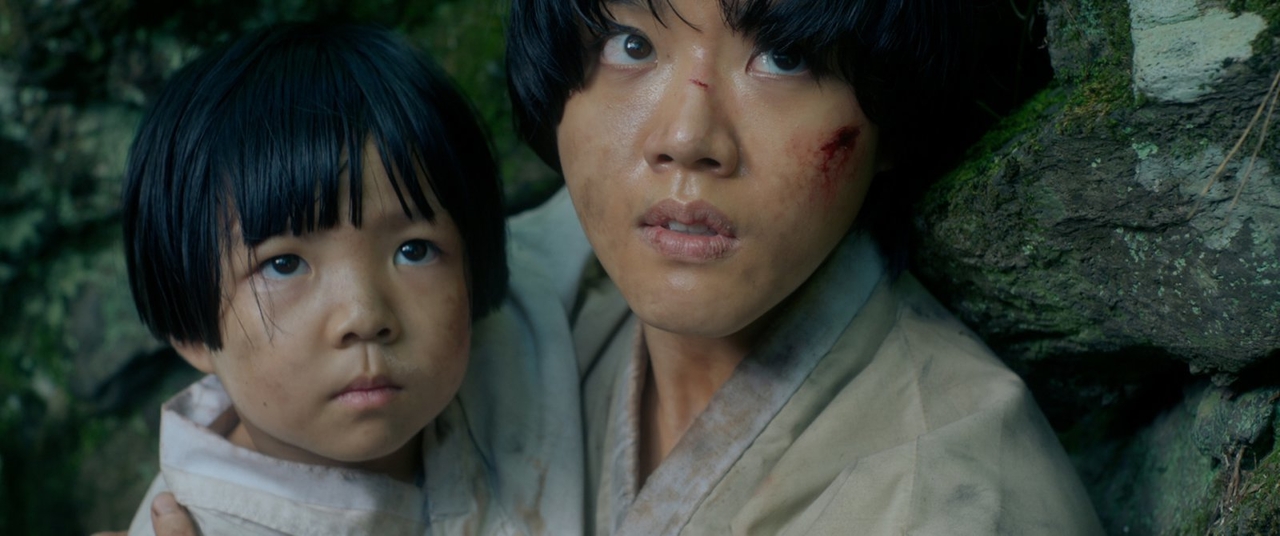
Now comes Ha Myung-mi's "Hallan," opening Nov. 26. Kim Hyang-gi — who broke through as a child actor and has since appeared in hits like "Along with the Gods" and "Hansan" — stars as a young mother fighting to survive. The title, rather fittingly, refers to an orchid that blooms on Hallasan even in winter, a stubborn flower that refuses to die in the cold.
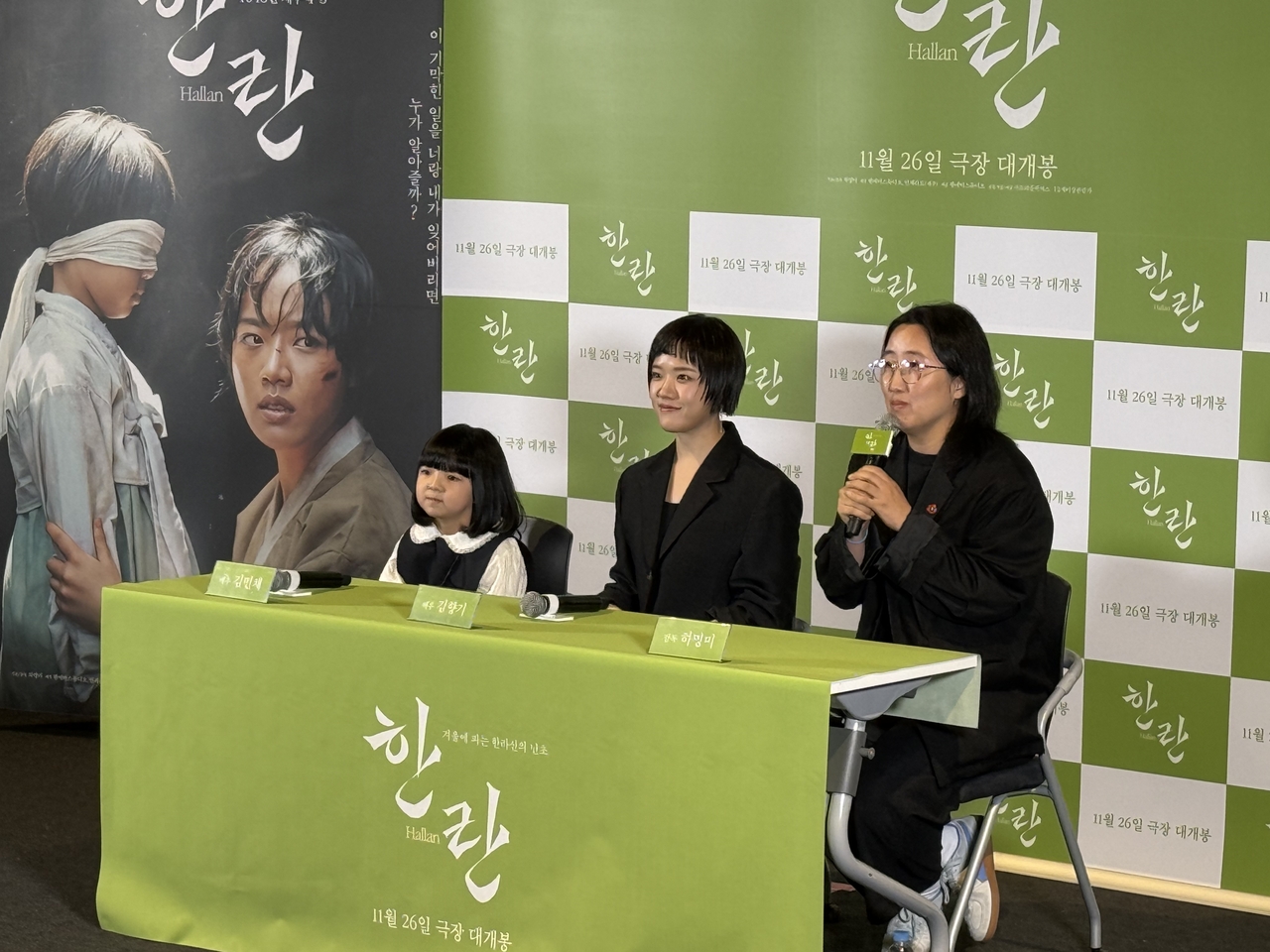
At Wednesday's press conference at CGV Yongsan in Seoul, director Ha explained how she landed on the subject. Having lived on Jeju Island for 13 years, she attends the April 3 memorial every year. But something about it gnawed at her. "I kept feeling like just showing up to grieve wasn't enough," she said. "I wanted to understand the people who went through this, to really know them. That felt like the only honest way to share in their pain."
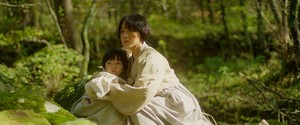
The film centers on Ah-jin (Kim Hyang-gi), a young mother married to a schoolteacher who has joined the guerrillas hiding in the mountains. When government troops descend on her coastal village, she flees to a cave with other townspeople, leaving behind her young daughter Hae-saeng (Kim Min-chae) and mother-in-law. The soldiers shoot down anyone who stays, but Hae-saeng somehow manages to escape, and mother and daughter reunite. What follows is their desperate scramble across the mountains and ocean, trying to outlast the troops hunting them.
In what feels like a long, plodding journey, "Hallan" narrows its lens to something more personal and stripped-down. After the political context gets laid out in opening title cards, dry as a textbook, the film settles into the mother-daughter's solitary ordeal. We see the violence almost entirely through their eyes, with little attention paid to the larger battles or the politics driving them, and experience the constant threat closing in from all sides. Even the leftist insurgents aren't spared criticism here — the film suggests they are more or less complicit in the island's spiral of violence.
It's an interesting approach, one that pulls the work away from historical documentation, whether by design or the constraints of a modest indie budget. By sidestepping ideology and focusing on maternal instinct, Ha at times risks turning a historically specific atrocity into a generic disaster story, basically the kind that could unfold anywhere, anytime.
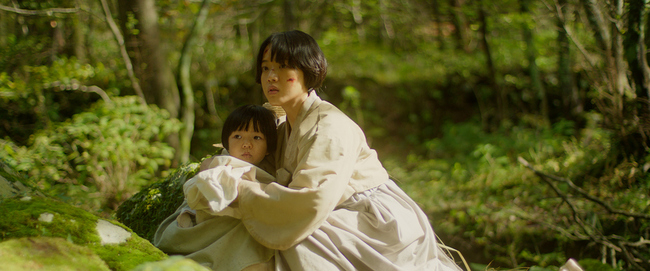
But there's also power in this retreat to the intimate. The film's most memorable moments come when it simply watches Ah-jin and Hae-saeng navigate the wilderness with raw determination and their will to survive laid bare against Jeju's scenic sprawl. Ha shoots the island's natural spectacle with a painterly eye, framing her characters against vast stretches of the wilderness. These compositions carry an elemental force that imbues the mother and daughter's struggle with a kind of primal grandeur.
The film's other strength is its unique commitment to linguistic authenticity. Nearly every line of dialogue is in Jeju dialect, thick and archaic enough to require Korean subtitles. The director revealed how she worked with five dialect coaches to nail even the slightest regional variations. "Each part of the island speaks differently," she explained. "We matched actors with coaches from their characters' home villages."
Kim Hyang-gi, who started as a child actor two decades ago, spent months preparing for the role. "Mastering the dialect was everything," she said. "We did one-on-one coaching in Seoul, then scouted locations so I could walk through the actual terrain. ... Filming on Jeju helped with the immersion. The environment does half the work for you."
Kim admitted she knew little about the massacre before taking on the project. "A lot of people don't," she said. "It's been hard to talk about this history. I learned most of it while we were making the film." She mentioned visiting dark tour sites around Jeju, places where the massacres occurred. "Walking through those locations helped me understand what we were trying to show."
Four-year-old Kim Min-chae stole the show at the press conference, stepping up to the microphone when asked if she had anything to say. "Thanks for coming to see 'Hallan,'" she said in Jeju dialect, then switched to standard Korean. "Please write good things about it and help spread the word."
"Hallan" premiered at the Aichi International Women's Film Festival in September before screening for Jeju locals last month. Before heading to Japan, Ha had worried the film might be too rooted in Korean history to connect elsewhere. That wasn't the case.
"People connected it to their own histories," she said. "They'd ask about the March First Movement against Japanese rule, then talk about traumas in their own countries. One person said the film made them want to learn more about what happened on Jeju — that it gave them a way in," she said. "Their reaction meant so much to us."
moonkihoon@heraldcorp.com