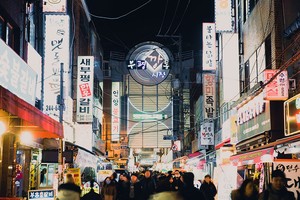
BUSAN — In the narrow alleys of Bupyeong Kkangtong Market in Jung-gu, Busan, fluorescent lights hum above metal stalls, steam clouds rise from simmering pots and the scent of frying batter mingles with the salty ocean breeze. For decades, this market — known affectionately as “Kkangtong,” meaning “tin can” — has been a gathering point for locals and travelers hungry for both flavor and nostalgia.
A market born from history
The curious nickname dates back to the 1950-1953 Korean War, when American canned goods flooded the port city. Traders at Bupyeong Market became the first to sell imported items such as corned beef, condensed milk and canned fruit, earning the market its “tin can” moniker. It was once also called Dottegi Market (“bustling plea”) for the constant negotiation between sellers and buyers, and even Gukje Market (international market) for its imported goods. Though free trade has made imported goods common today, Bupyeong Market retains the charm of that era — a vibrant blend of voices, smells and the unhurried rhythm of daily life.
Warm broth and chewy fish cakes
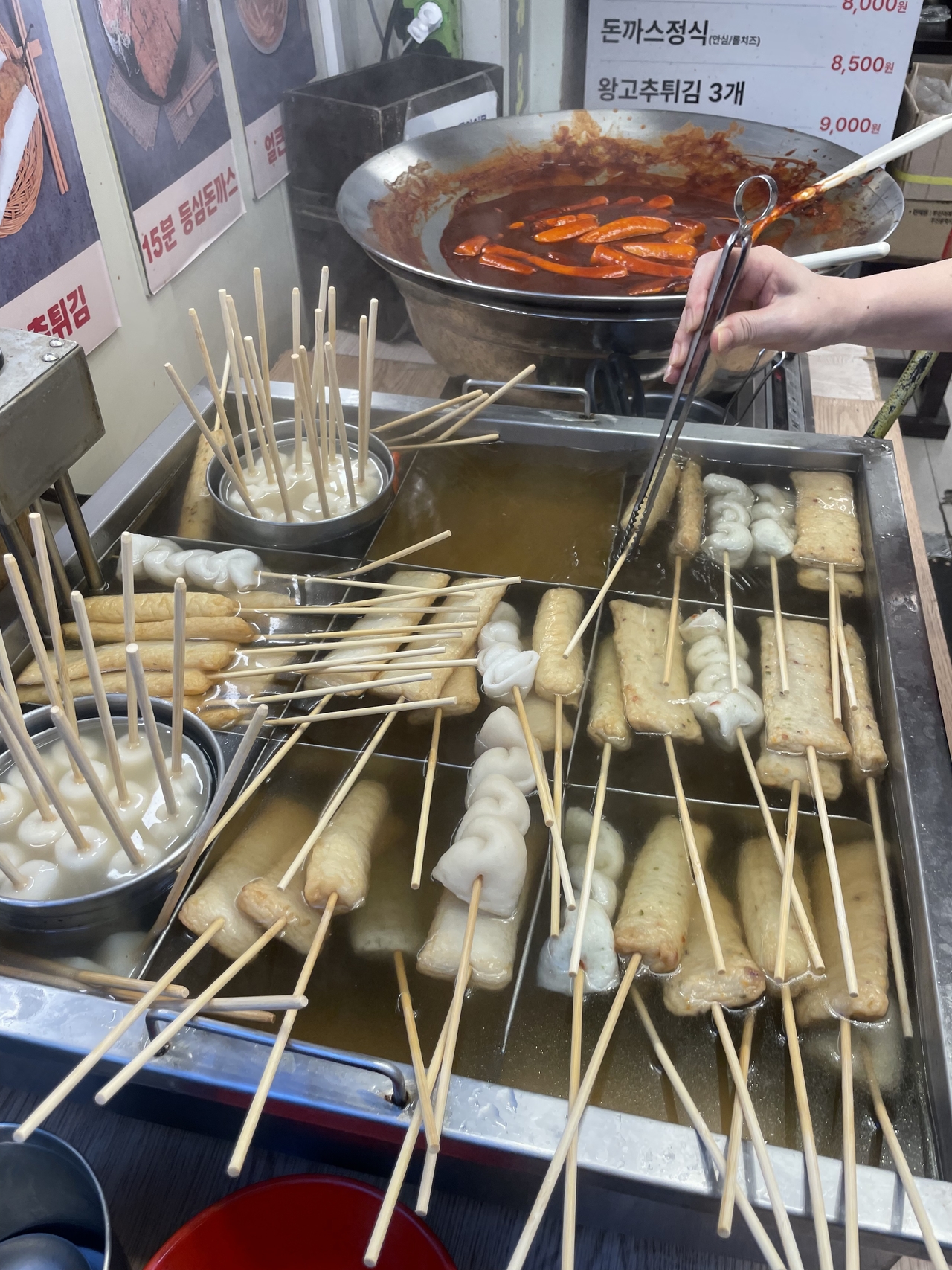
One of the busiest corners belongs to Jang Woo-son Busan Eomuk, a beloved fish cake shop that gained even more fame after Samsung’s Lee Jae-yong stopped by in 2023. The shop’s signature skewered eomuk (1,500 won) comes in two flavors: the classic mild version and a fiery green chili version that’s not for the faint of heart. Unlike typical fish cakes, Jang Woo-son’s are pleasantly firm — almost al dente in their chewiness. Don’t miss the multteok (1,000 won), rice cake sticks simmered in the same savory broth until soft and silky. The spacious interior allows diners to enjoy steaming skewers indoors, accompanied by comforting bowls of udon or crispy donkatsu.
Sweet kick at Igane Tteokbokki
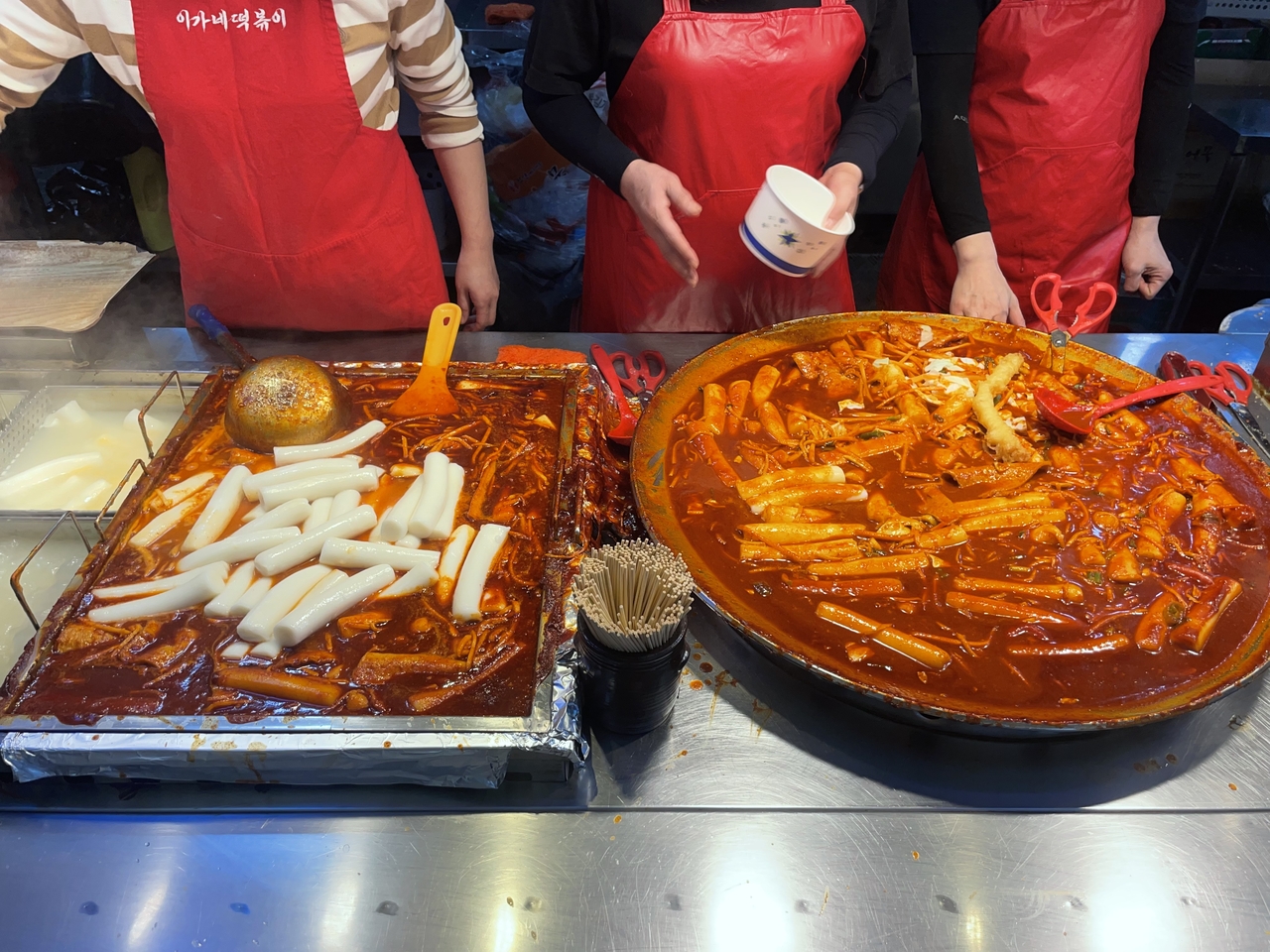
Follow the trail of red sauce and chatter, and you’ll find Igane Tteokbokki, famous after being featured on SBS’ food competition show “Paik Jong-won's Top 3 Chef King.” Here, the cook swirls long white rice cakes in a vivid red sauce, but without using sugar. Instead, the sweetness comes naturally from boiled radish. The result is a mild, gentle tteokbokki, soft and chewy, perfect for those who prefer balance over heat. The tteokbokki and fritters set (5,000 won) is a crowd favorite, especially the crisp fried chili pepper and fried squid dipped into the mellow sauce.

Beyond the classics
Bupyeong Market isn’t just about traditional bites. At Milgot Bakery, you will find modern twists on Korean comfort flavors. The shelves brim with glutinous rice and mugwort breads, what locals fondly call “grandma flavors.” Their signature meossuk meossuk (6,000 won) combines Jeju mugwort dough with sweet red bean and injeolmi cream, and each bite is just chewy, nutty and sweet enough. Another favorite, ssuk beomuri (6,000 won), wraps fresh whipped cream in tender rice bread, perfumed with earthy mugwort. The bakery’s popularity extends even to overseas visitors, many drawn in by the mix of familiar Western textures and Korean nostalgia.
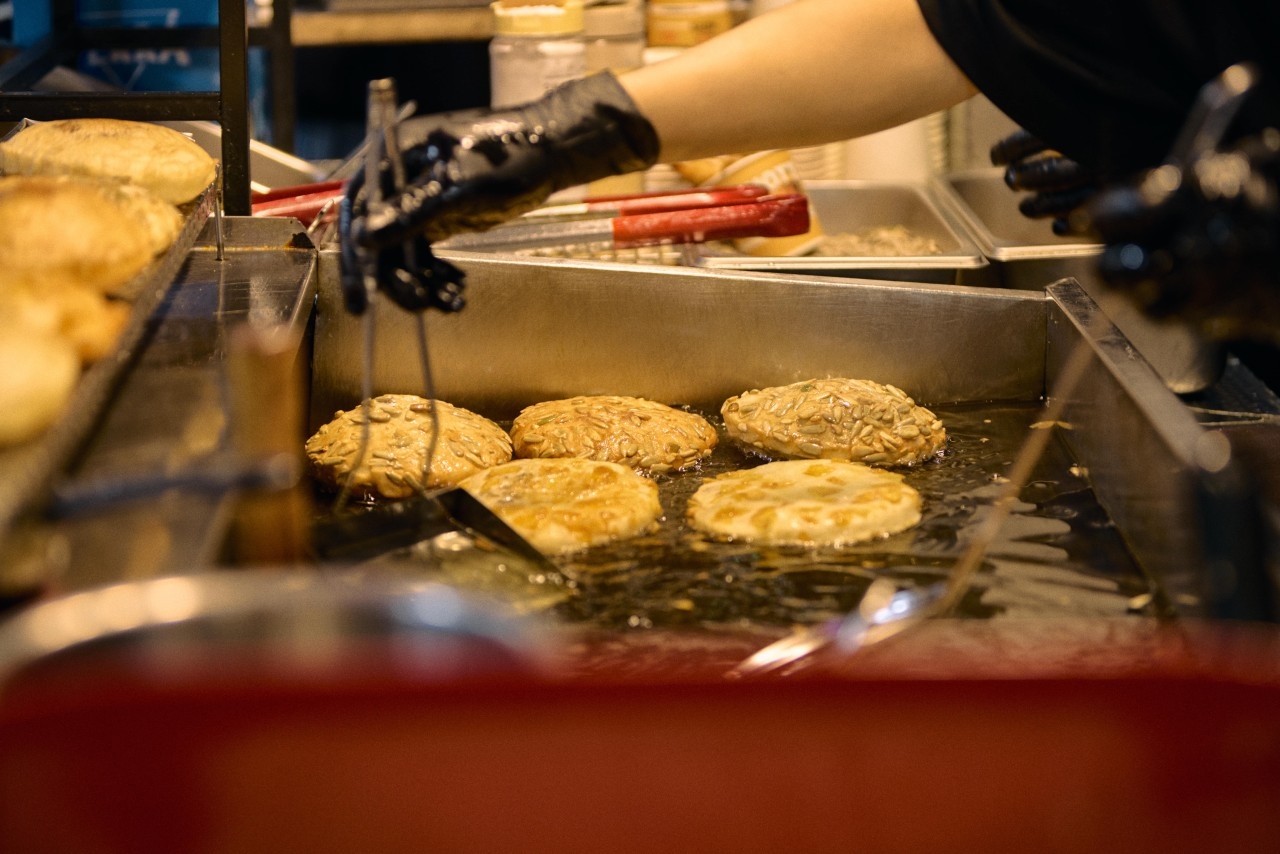
No trip to Kkangtong Market is complete without Busan’s legendary ssiat hotteok, the city’s proud winter treat. Traditionally, hotteok is a golden, syrup-filled pancake, its molten sugar core oozing with cinnamon. Busan’s version adds a local twist: cracked open and stuffed with peanuts and sunflower seeds for an irresistible crunch.
Among the many stalls, Hotti stands out for its inventive take. Instead of slicing the pancake open, Hotti presses nuts directly onto the dough’s exterior before frying, creating a caramelized crust that crackles with every bite. The original ssiat hotteok (2,500 won) is dense with honey-like syrup inside, while playful versions like the Honey Crunch Hotteok (coated in cornflakes) and Injeolmi Hotteok (dusted in roasted soybean powder) draw long queues of curious eaters.
Taste of time and transformation
Bupyeong Kkangtong Market is more than a food stop. It’s a living timeline of Busan’s past and present. The canned goods that once symbolized foreign luxury have given way to artisanal bakeries and Instagram-famous street stalls, yet the market’s pulse remains unchanged: a celebration of ingenuity, resilience and appetite.
As you wander past stalls sizzling with oil and laughter, a single skewer of eomuk or a warm hotteok in hand, you’ll understand why Busan’s oldest market feels eternally young.
--
"Market Hopping" takes you to markets around Korea where you can sample regional delicacies as well as favorite local street food. — Ed.