Korean officials temper hope for lifting of Hallyu ban in China, but insiders see signs of signs of thaw
K-pop idols have been notably active in mainland China, even as South Korea's Presidential Committee on Popular Culture Exchange appears to downplay the possibility of Beijing lifting its unofficial Hallyu ban following South Korean President Lee Jae Myung and Chinese President Xi Jinping's summit meeting early this month.
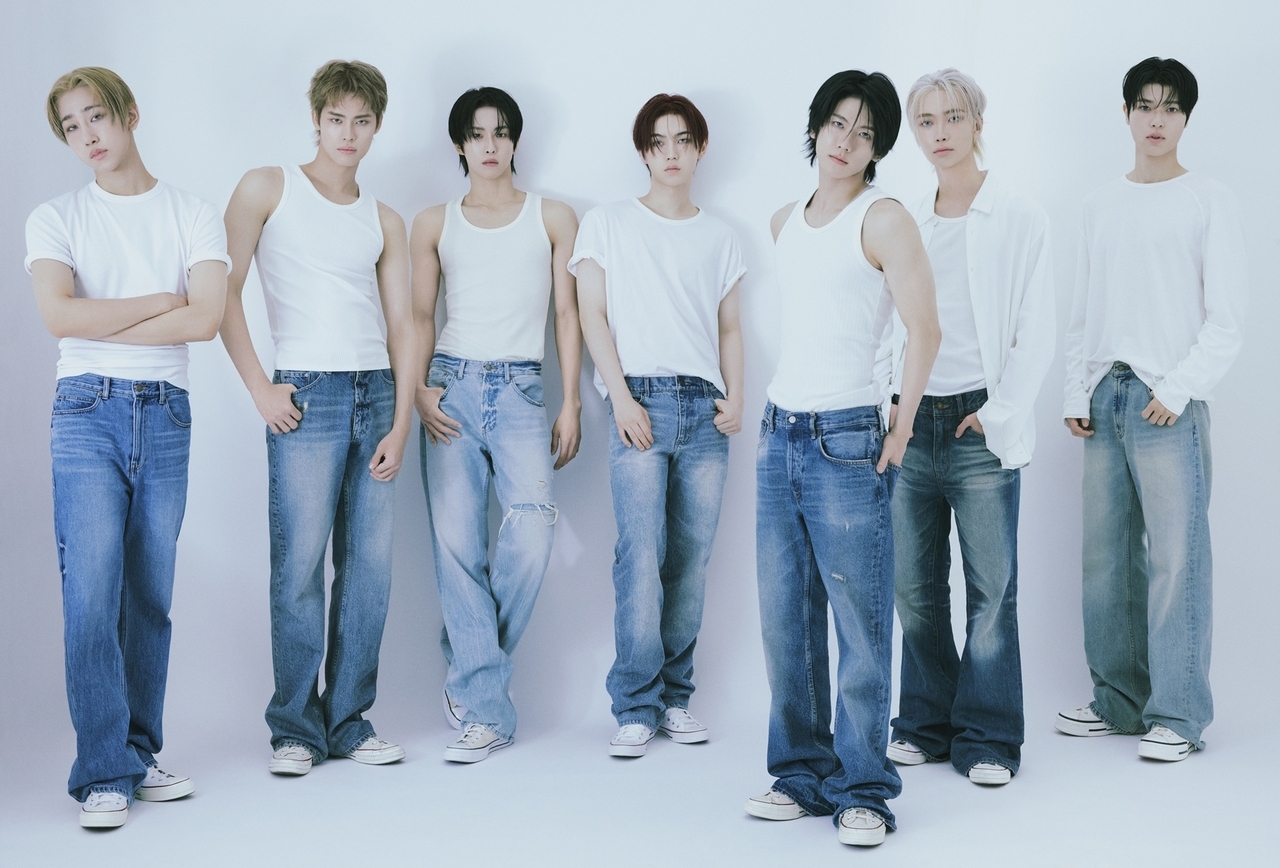
Newbeat, a K-pop rookie group under Beat Interactive, recently signed a management deal with Modern Sky, a leading music label in China with some 160 artists and operations spanning music production, publishing, artist management and concert planning.
The partnership has drawn attention from the industry, as Newbeat's latest move signals a rare and meaningful collaboration between K-pop and C-pop, bridging the two music markets. By joining forces, the group aims to expand its reach and soften cultural barriers, ushering in a new era of musical exchange between the two countries, according to its Korean management agency Beat Interactive. Newbeat also plans to release a Chinese album later this year, it added.
The news came amid rising hopes that the two leaders' meeting signaled a thaw in the diplomatic chill that followed Seoul's 2016 decision to deploy the US THAAD missile defense system. As a form of retaliation, China essentially banned Hallyu performances on its territory, including K-pop, though it has never officially acknowledged the policy.
When Park Jin-young, co-chair of the Presidential Committee on Popular Culture Exchange and the founder of JYP Entertainment, proposed holding a large concert in China during his conversation with Chinese President Xi Jinping at a banquet held on Nov. 1, speculation arose that China's unofficial Hallyu ban may be lifted.
The committee quickly noted that the conversation between Xi and Park was "simply a polite, formal greeting at an official event" and that the exchange should not be misinterpreted.
Despite the cautious statement, industry insiders see signs of easing on the Hallyu ban, citing China's growing interest in Korean culture.
"The only major restriction that remains is on concerts. Artists can visit China for activities such as fan meetings and fan sign events, and may even perform one song. But full-scale concerts are still not allowed for K-pop acts," an executive at an entertainment agency, speaking on condition of anonymity, told The Korea Herald via phone.
The senior official noted a growing sense of optimism within the industry that the Hallyu ban is gradually easing, pointing to recent signs that a shift may already be underway.
"We are hearing more from Chinese companies in areas like concert deals, management partnerships and album investments. It is difficult to predict exactly when the restrictions will be fully lifted, but given the recent surge in requests for meetings and business proposals from China, we expect it could happen as early as next year," the official said.
Despite ongoing restrictions, K-pop agencies and artists are eager to tap into the Chinese market due to its significant revenue potential, according to the official.
"China is a highly lucrative market for K-pop because performance and participation fees, for example, are much higher than in other countries. The country also has a big fanbase and international reach that allow idols to hold large-scale concerts and city-by-city tours, similar to their US tours."
Furthermore, when asked about the potential lifting of the Hallyu ban, Park Chan-wook, head of live entertainment at CJ ENM, told reporters at a press premiere of the 2025 MAMA Awards on Tuesday that there is some level of activity or interest in the Chinese market.
Amid rising expectations that the doors to the Chinese market may soon be reopened, boy band Pow released a vlog on its YouTube channel Wednesday, documenting its visit to Guangzhou and Shanghai for a fan sign event. Miyeon of I-dle's second EP, "MY, Lover," topped the daily and weekly bestseller charts on QQ Music, one of China's largest music platforms, while the title track "Say My Name" reached No. 1 on Kugou Music after its release on Nov. 3.
"Hallyu, or the Korean wave, including K-pop, is still a sensitive topic in mainland China, as the Hallyu ban hasn't been fully lifted yet. But China's continued interest in Korean culture allows K-pop idols to carry out activities there discreetly," another official at an entertainment company, who wished to remain anonymous, told The Korea Herald.
The official, however, said the industry has yet to see any tangible change.
"Several idols are engaged in activities today despite the restrictions, but the news remains low-key due to the country's sensitivity around such matters," the official said.
junheee@heraldcorp.com