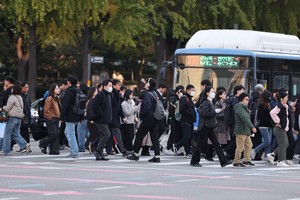
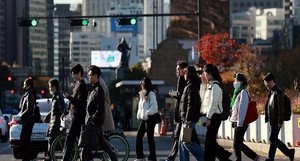
Behind Seoul’s streets awash in black, gray and white lies a quiet desire to blend in rather than stand out, a style shaped as much by practicality as by cultural psychology
The Korea Herald is launching a new season of "A to Z into the Korean Mind." In the previous series, we explored keywords selected by our staff to delve into the Korean psyche and its cultural nuances. For this second season, we're turning to our readers and answering the questions you've submitted. This installment begins with a question from @ramneeksekhon on Instagram: "Why do young people not wear colorful clothes?" — Ed.

When Isabel Smith, 32, first arrived in Seoul from the United States a year ago, she was struck by one thing — not the food or the subway system, but the colors, or rather, the lack of them.
“Everyone dresses in black, white or gray,” the English teacher said, laughing. “In the US, I used to wear bold makeup and colorful outfits. Here, I stand out everywhere I go.”
Her students often tell her, “It looks great on you, but it wouldn’t suit me.”
Once, Smith walked into a Chanel store, hoping to find a pair of vibrant orange earrings she’d seen online. The sales associate smiled politely and said, “We don’t sell that color in Korea. It doesn’t sell well here.”
Her experience is not just personal.
According to logistics giant CJ Logistics’ 2021 “Everyday Life Report,” based on parcel-delivery data, Koreans’ love of neutral fashion is measurable. Among all clothing items shipped, by color, black accounted for 38 percent, white 15 percent and gray 9 percent, meaning over 62 percent of delivered fashion items were monochromatic.
Experts say this preference reflects both cultural psychology and practicality.
Desire not to stand out
Kwon Eun-ji, 34, admits she rarely wears color.
“My closet is mostly white, black, navy — muted tones. Sometimes green, but very subdued shades,” she said. “Once, I saw a cute red striped polo online, but I ended up buying the navy one. I just thought, ‘What if it’s too flashy? What will people say?’”
One day, she wore a yellow cardigan to work. Everyone commented. “Your outfit is very bright today,” “That color suits you!” “Are you having a date tonight?” Though the comments were mostly positive, she said the attention made her uncomfortable.
“I don’t like people noticing what I wear,” she said. “I just want to blend in.”
Professor Lee Ji-kyung of Kyungsung University believes "Neutral colors convey humility and social harmony — values rooted in Korean culture. Standing out too much can feel uncomfortable in a society that values fitting in."
“Koreans were once called ‘the white-clad people’ because they traditionally favored white hanbok,” she said. “Today, that preference has expanded to other neutrals, black and gray, representing modesty, calm and refinement.”
In a small survey Lee conducted of 176 university students for The Korea Herald, 41.5 percent said they preferred neutral colors because they “didn’t want to attract attention.” Another 33.5 percent said colorful clothes were “hard to match or might look unflattering,” while 8 percent mentioned that bright clothes “stain easily or are difficult to maintain.”
Others said they simply found neutrals “comfortable” (12 respondents), reserved color for “special occasions like dates” (4 respondents) or “rarely found colorful options in stores” (6 respondents).
Practicality of monochrome
For many, neutral fashion is not just about caution but efficiency.
Park Nam-jin, a 33-year-old office worker, said his monochrome style helps cut down the time he spends choosing outfits for his hectic life. Between getting ready, commuting and working, he spends more than 12 hours a day on work-related activities and does not want another hassle like matching colors.
“Neutral clothes go with everything,” he said. “I don’t have to think about matching colors every morning. I care more about fit and texture when I shop. That way, even in gray or black, I can look effortlessly put together.”
Lee Jee-hyun, professor and director of the Fashion Design Lab at Yonsei University, says neutral tones dominate Korea’s market for practical reasons.
“Neutral colors mix easily with different fabrics and layers. It reduces the chance of styling mistakes,” she said.
Buying a few black and white pieces allows people to “reuse and recombine outfits economically” while still appearing stylish.
“That’s why black and white T-shirts are the most commonly sold and worn wardrobe staples,” she added.
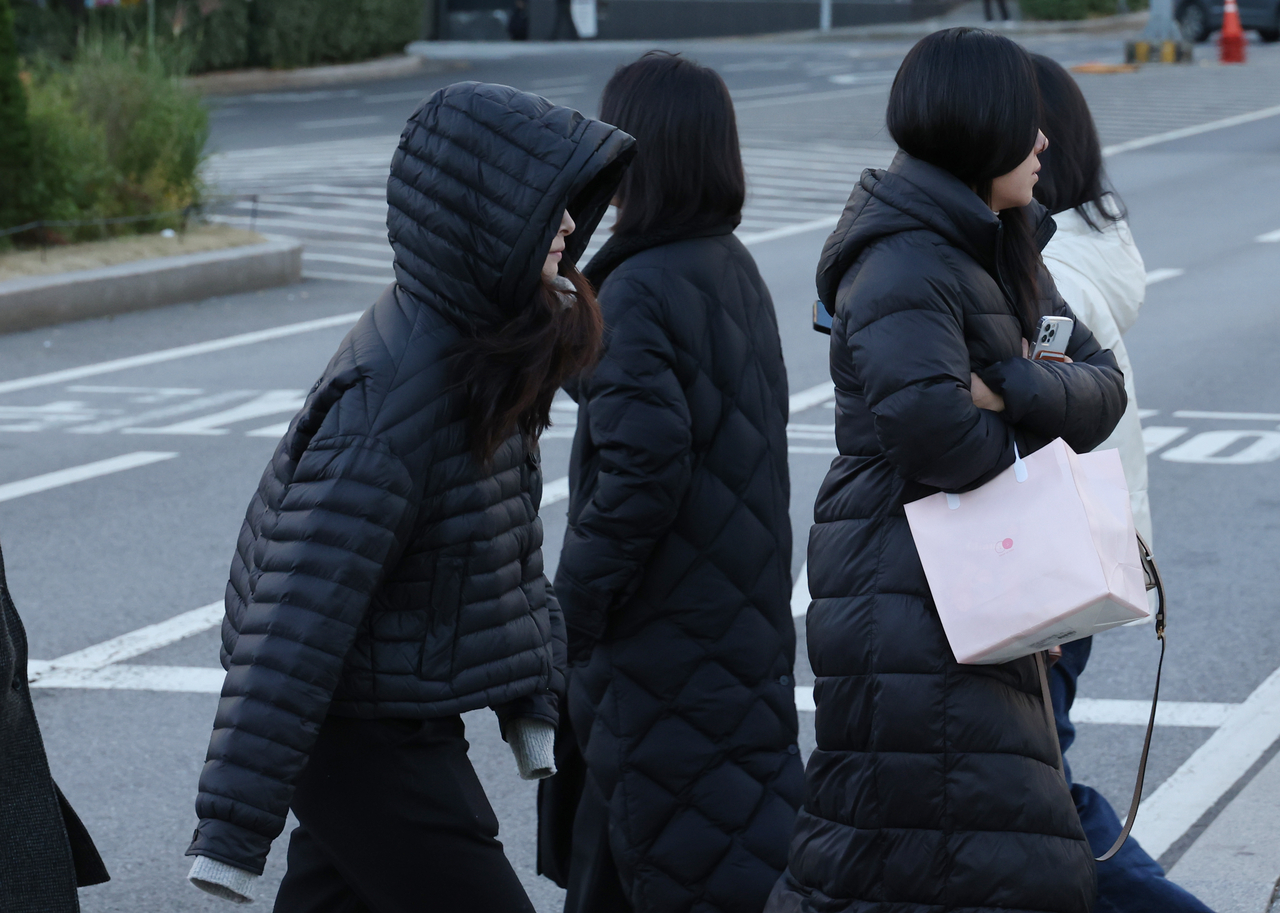
In winter, the sea of black coats and padded jackets on the streets is not accidental.
“Outerwear is expensive and not changed frequently,” she said. “Black is popular because it hides stains and matches everything inside.”
In a society where harmony often outweighs individual expression, Korea’s monochrome fashion says as much about social psychology as it does about style, she added.
For Smith, the American teacher, it’s still surprising that her love for orange and bright pink draws so many eyes. “Maybe, color here isn’t about the clothes — it’s about harmony,” she said.
shinjh@heraldcorp.com