Zainichi director Lee Sang-il's 'Kokuho' a runaway hit in Japan, but the stunning spectacle can't mask a hollowness at its core

Stories about artists willing to give up everything for their work— family, fortune, their very selves — have a peculiar hold on us. From "A Star is Born" (1937) and "The Red Shoes" (1948) to "Whiplash" (2014) and "The Brutalist" (2024), these tales keep drawing audiences back, perhaps because there's something inherently mesmerizing about watching people burn themselves out to shine their brightest.
"Kokuho" — which translates to "national treasure," the title bestowed by the Japanese government upon masters of traditional arts — has become 2025's singular phenomenon in Japan. Lee Sang-il's sprawling epic about two kabuki actors locked in lifelong rivalry has pulled in over 12 million viewers since June, making it the second-highest-grossing live-action film in Japanese history and Japan's official submission to the Oscars.
At Thursday's press conference at CGV Yongsan in Seoul, Lee seemed genuinely stunned by the numbers.
"From the first week through the fifth week, attendance kept climbing," he said. "Young people spread the word on social media, but older viewers told each other face-to-face. Some people said they hadn't been to a theater in 20 years, but they made the trip for this one," Lee said.
The film follows Kikuo (played as a teenager by Soya Kurokawa and as an adult by Ryo Yoshizawa), the son of a Nagasaki yakuza boss who witnesses his father's brutal murder in 1964.
After a failed revenge attempt, the boy gets taken under the wing of Hanjiro Hanai (Ken Watanabe), Osaka's preeminent kabuki actor. There he meets Hanjiro's son Shunsuke (Ryusei Yokohama), born into the art form's hereditary bloodlines — in kabuki, sons inherit their father's stage name and position, a closed system where family lineage determines everything and outsiders rarely break through.
Both specialize as onnagata, the male actors who play female roles in kabuki's all-male tradition. What begins as brotherhood curdles into lifelong rivalry as both men chase the same impossible standard of greatness across five decades.

Lee, a Zainichi Korean director who's lived his entire life in Japan, said his own experience as an outsider shaped how he approached the material.
"The structure of the film — bloodline versus outsider — overlaps with elements I've carried since birth," he explained. "I hope Korean audiences might feel that connection more deeply than viewers elsewhere."
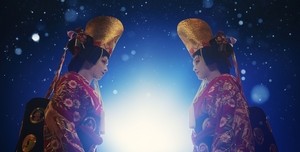
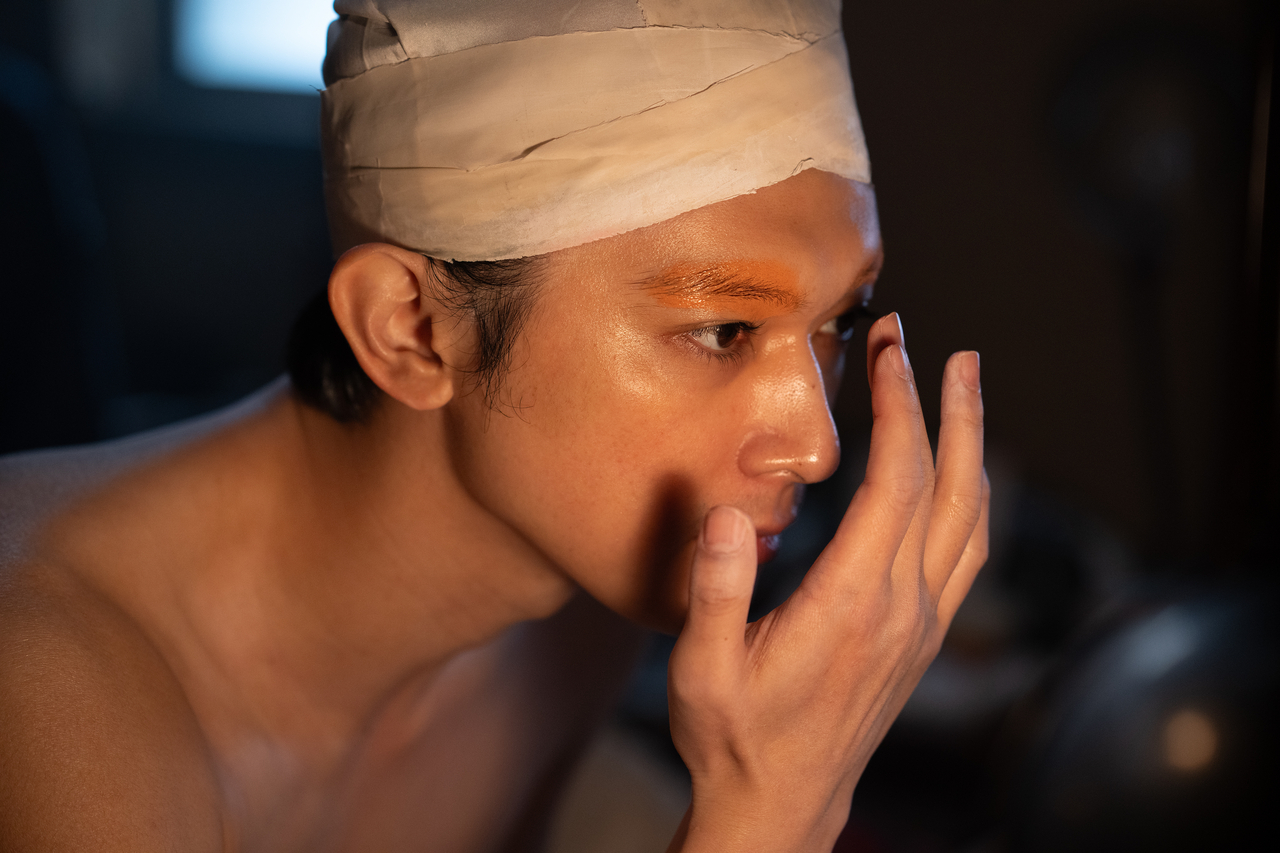
As spectacle, "Kokuho" delivers on its grand ambitions. Cinematographer Sofian El Fani captures the kabuki performances with breathtaking finesse — the elaborate costumes, the ornate sets, the heavily stylized makeup that transforms faces into living masks.
The film provides title cards with plot descriptions for each performance, making the esoteric art form accessible to those unfamiliar with its conventions. Lee shoots these sequences in extended takes, alternating between tight closeups that linger on the actors' painted faces and wide shots that take in the full sweep of the stage.
Then there's the acting itself, which is almost uncanny in its vitality. Yoshizawa and Yokohama embody the onnagata's stylized gestures and falsetto vocals with spellbinding conviction — the delicate hand movements, the mincing steps, the highly controlled vocal registers. That they pull this off despite having no professional background in kabuki is remarkable.
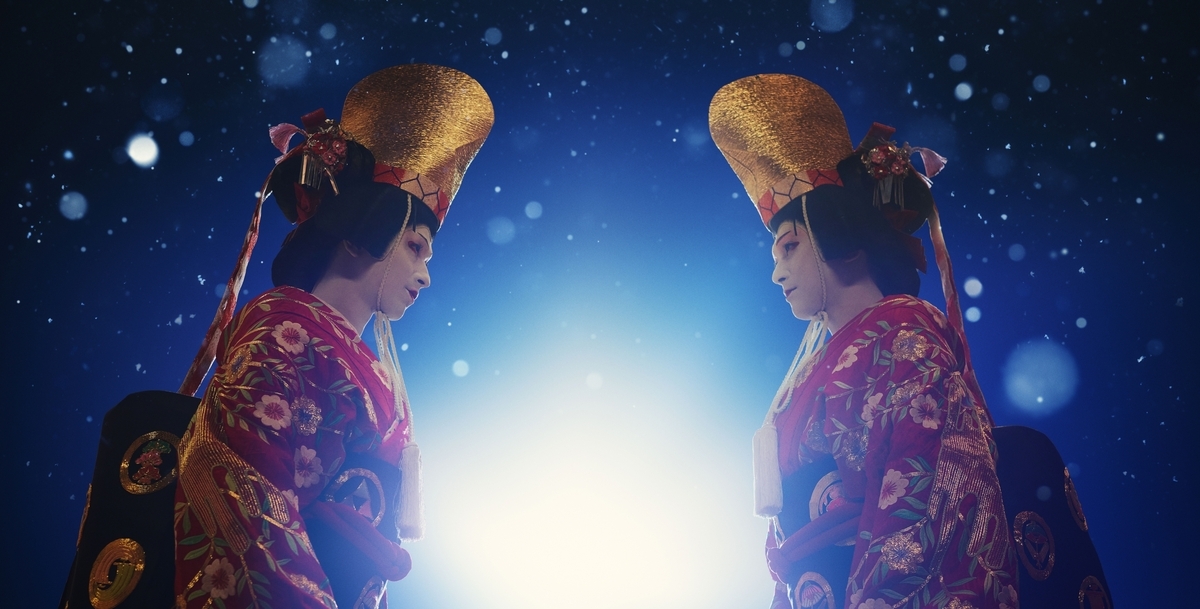
Both actors spent months training to deliver stage performances that feel authentic, according to the director.
"They understood that if they couldn't pull off the kabuki convincingly, the whole film would collapse," Lee said. "But I also told them that just nailing the technical aspects wasn't enough — they had to bring out what their characters were feeling inside."
Lee spoke at length about a particular sequence where Kikuo performs in "The Love Suicides at Sonezaki," a classic Chikamatsu play about doomed lovers who choose death over separation. "When we captured that scene in closeup, I finally understood what I'd been trying to show with this film. It wasn't just about kabuki — it was about what these performers carry inside them."
The magnificence of the visual feast accounts for only about a quarter of the movie's three-hour runtime. With all its exceptional length and its sprawling time frame —jumping from 1964 to the early 1970s, then again to the '80s and '90s and finally to 2014 — the film feels hollow rather than epic, a scaffolding for a drama that's still in search of its characters.
Like a kabuki play, "Kokuho" is a screenplay movie where characters become vessels moving through predetermined scenes in service of an idea, hitting their marks with precision but never quite becoming actual people.
Even the formidable work of the cast can only give these abstractions a temporary semblance of real life. The stunning performances become glittering distractions — essentially kabuki makeup that obscures what the movie purports to centralize but perpetually elides: character, with flesh-and-blood humanity.
The film makes plain its intention to show that Kikuo and Shunsuke are artistic inspirations to each other, subjects of envy, even doubles, but these connections are merely alluded to rather than explored in depth.
Curiously, the two rivals spend substantial time together across different stages of their lives, yet they hardly ever get to know each other. When they reconnect after years apart, their first conversation isn't about their lives but about performance: "When are you coming back to the stage?"
In fact, no human relationship in the film — whether between rivals, between master and pupil, or between lovers — explores what genuine affinities or differences are at play beyond increasingly repetitive, philosophical utterances about one's devotion to art, the eternal tension between inherited privilege and hard-won genius.
Their temperamental differences get sketched briefly in the first act — Shunsuke more cocky and flamboyant, Kikuo more reserved and serious — but that's it before both characters disappear into the film's broader theme of artistic passion.
Lee piles on dramatic shifts across these sprawling eras, aiming for something almost mythological in their reversals of fortune, its abrupt swings from stardom to obscurity and back again. But these plot points feel so contrived and disjointed in their rise-and-fall structure that each chapter plays as if it in a parallel universe with different versions of the characters, rather than an organic progression from the previous one. The film compounds these issues by stooping to embarrassing melodrama near the end.
These problems point to a larger structural failure that ultimately drags the film beneath its grandiose ambitions. The characters don't discuss their daily routines, love lives, their interests — anything that exists outside kabuki's insular world. Even their performances, shown at great length with breathtaking cinematography, connect only to rarefied ideas about sacrifice and ambition rather than heartfelt portrayals of human beings with something relatable at stake.

There's another glaring omission in a film ostensibly about men who've devoted their lives to portraying women, namely actual women. While multiple women pass through Kikuo's life — mainly as lovers, caretakers or silent witnesses — they are portrayed without any agency. They follow him with blind devotion only to disappear abruptly, without voice or interiority. Even Harue (Mitsuki Takahata), Kikuo's childhood lover, who goes as far as getting a yakuza-style tattoo to match his, meekly trails him before quietly departing to marry his equally devastated rival.
The other women shown in different stages of Kikuo's life exist largely as backdrops, victimized by one man's all-consuming ambition and present only to be awed by his divine performances. This choice is especially rich, given the art form's deeply sexist roots — women were forbidden from performing kabuki in the 17th century, and ever since, men have taken up the work of embodying exaggerated, stylized versions of femininity on stage.
When asked about art's meaning to him, Lee grew reflective. "I work in this industry, so of course I feel jealousy and negativity sometimes," he said. "But when I see something truly beautiful, something that genuinely moves me, all those darker feelings get purified. That's what art does — it cleanses anger and negativity. That's what I want to keep making."
It's a lofty sentiment, almost heroic in its idealism, but that catharsis seems out of reach when the beauty speaks more to ideas about people than to actual people themselves. And for a work about characters with otherworldly circuits of thought, why should the storytelling feel so conventional, even melodramatic, particularly with its three-hour runtime?
Lee noted the film's success with older Japanese viewers who hadn't visited theaters in decades.
"They said the visual beauty and the sound design made three hours fly by —that they felt something at the cinema they'd never get at home."
Perhaps that's "Kokuho" in a nutshell: A magnificent contraption that looks stunning on the big screen but leaves you empty the moment the lights come up.
"Kokuho" opens in Korean theaters Nov. 19.
moonkihoon@heraldcorp.com