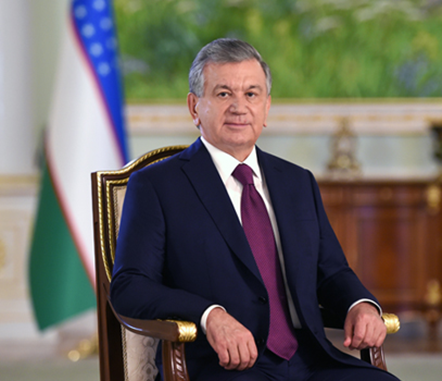
By Shavkat Mirziyoyev
President of the Republic of Uzbekistan
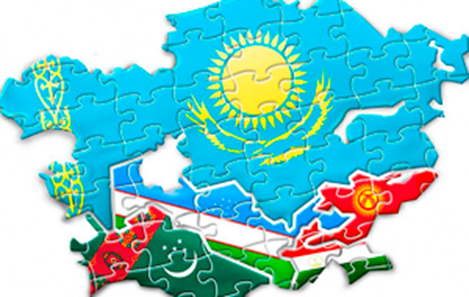
Central Asia is entering a new, historically significant stage of its development. Today, we are moving toward genuine unity. For the first time in many years, an atmosphere of trust, good neighborliness, and mutual respect is taking shape in our region — an atmosphere that serves as a solid foundation for joint progress.
This process is not spontaneous. It is the result of purposeful work and the political will of the leaders of our countries, who have realized their shared destiny and the potential for common development. Its successful advancement also testifies to the broad public demand for regional cooperation, supported by the peoples of Central Asia.
We can see that, at the state level, the necessary conditions have been created to elevate our cooperation to a new stage of regional consolidation. Our strategic task now is to translate the agreements we have reached into tangible results and real benefits for our citizens and businesses.
Central Asia aims to become a unified space of opportunity focused on sustainable development and improving lives. The Consultative Meetings of Heads of State provide a key platform for trust-based dialogue and strategic coordination, with the upcoming Tashkent Summit set to reinforce regional unity, stability and prosperity.
The large-scale transformation of the global order, threats of fragmentation in the world economy, and worsening issues of climate change, food, and energy security have further strengthened our drive for consolidation. All this requires even greater unity and coordinated actions among the countries of Central Asia. Strengthening our cooperation today is therefore not merely a political goal but a strategic necessity.
Central Asia has become a zone of stability and creativity — an example of how broad regional interconnectedness can serve as a solid foundation for sustainable development and security.
The 2017 launch of the Consultative Meetings marked a turning point in Central Asia, establishing regular, trust-based dialogue among regional leaders that resolved longstanding tensions and fostered genuine cooperation.
One of the most important achievements of this new stage has been the final settlement of border issues. What once seemed impossible has become a reality. Borders that once divided us have turned into bridges of friendship and cooperation. A landmark event was the March 2025 signing of the Treaty on the Junction of the Borders of Three States and the Khujand Declaration between Uzbekistan, Kyrgyzstan and Tajikistan — an event that can rightfully be called historic.
For the first time in the entire history of independence, the full perimeter of mutual borders was legally finalized, putting an end to a decadeslong source of tension.
The Fergana Peace Forum held in October became clear evidence of our countries’ mutual aspiration to strengthen peace and harmony in the Fergana Valley — a reflection of the creative processes taking place across Central Asia.
In the water and energy sphere, once a source of sharp disagreements and conflicts, significant positive progress is also underway. A vivid example of fraternal cooperation is the agreement between Uzbekistan, Kazakhstan and Kyrgyzstan on the joint implementation of the Kambarata Hydropower Plant-1 project, opening a new chapter in the shared use of the region’s water and energy resources.
A notable example of reasonable compromise is the agreement between Tashkent and Bishkek on the joint use of the Chashma spring.
Cooperation is progressing on the Yavan and Fandarya HPPs on the Zarafshan River between Uzbekistan and Tajikistan; agreements have been reached among Uzbekistan, Tajikistan and Kazakhstan on a coordinated operational regime of the Bahri Tojik reservoir during the vegetation period.
With Turkmenistan, an intergovernmental agreement was reached on the rational use of the Amudarya’s water resources, improving joint water management and reducing ecological risks.
A new spirit of partnership is emerging in Central Asia, strengthening economic activity and energy security. Uzbekistan and Kyrgyzstan now allow free border crossing with ID cards, while similar agreements with Kazakhstan and Tajikistan are underway. Interregional ties, trade and cultural exchanges are expanding. The 2023 Dushanbe Consultative Meeting was pivotal, establishing a Council of National Coordinators to systematize and ensure continuity in implementing agreements among the states.
Interparliamentary dialogue has also been established, and regular meetings of Security Council Secretaries are being held.
The Treaty of Friendship, Good Neighborliness, and Cooperation for the Development of Central Asia in the 21st Century, signed following the Cholpon-Ata meeting in 2022, further strengthened the legal framework of cooperation. It enshrined the principles of sovereign equality, mutual support and shared responsibility for the future of the region. In 2025, Tajikistan joined the treaty, marking another step toward regional unity. We welcome this decision and look forward to the treaty’s final signing by all states of the region — a move that will consolidate the spirit of trust, good neighborliness and strategic partnership in Central Asia.
In 2022, the heads of state also approved the Concept of Cooperation among Central Asian States in Multilateral Formats, setting coordination principles for the region on international platforms, including the "Central Asia Plus" formats.
Another key document was the "Concept for the Development of Regional Cooperation: Central Asia – 2040," adopted at the Astana Summit in 2024, defining long-term priorities aimed at ensuring regional security and development.
Through these efforts, we have begun forming a new economic reality. Over the past eight years, the combined GDP of Central Asian countries has increased 2.5 times, reaching $520 billion, while foreign trade has more than doubled to $253 billion. Mutual trade has doubled to nearly $11 billion, and mutual investments have grown 5.6 times. For Uzbekistan alone, trade with regional partners has tripled — from $2.4 billion in 2016 to $7.2 billion in 2024 — and the number of joint ventures now exceeds 1,800.
Central Asia’s industrial growth, averaging around 6 percent per year, is twice the global rate. This success is driven by new forms of production cooperation — joint investment funds (Uzbek-Kyrgyz, Uzbek-Tajik and Kazakh-Kyrgyz) and projects in the automotive, electrical, textile and agricultural sectors. The Action Plan for Industrial Cooperation 2025-2027, approved by all regional states, has become a vital tool. Border trade zones and international industrial cooperation centers are actively developing, promoting small and medium-sized businesses.
In the humanitarian sphere, lasting people-to-people ties have been established. The Dialogue of Women Leaders of Central Asia and the Regional Youth Platform have been launched; since 2022, rectors’ and scientists’ forums, cultural years, exhibitions, concerts and sports events have become regular.
Most importantly, our brotherly peoples can feel these positive changes in their daily lives. New border crossings, air, rail and bus routes have multiplied cross-border trips and cultural exchange. The share of intraregional tourism now exceeds 80% of total tourist flows.
What once seemed a dream — free movement, mutual respect, and a sense of closeness and trust — has become a reality.
Central Asia is forging a shared regional identity based on trust, cooperation and mutual benefit, with each state contributing to collective stability and prosperity.
Kazakhstan is developing transport corridors and modernizing border infrastructure. Kyrgyzstan and Tajikistan are collaborating on glacial melt issues and energy modernization. Turkmenistan advances key initiatives to strengthen peace, expand transit potential and promote UN programs on the Aral Sea and climate technologies.
Central Asia’s responsible cooperation is strengthening its unity and establishing it as a confident, peace-focused regional actor with a clear vision for development.
The "Central Asia Plus" formats reflect our region’s growing international legal standing and recognition as a vital center of stability and development. Leading global powers and organizations now engage with Central Asia as a single regional partner, not just bilaterally.
This elevates our voice in the world, making it stronger, more confident, and more influential in attracting investment and deepening cooperation.
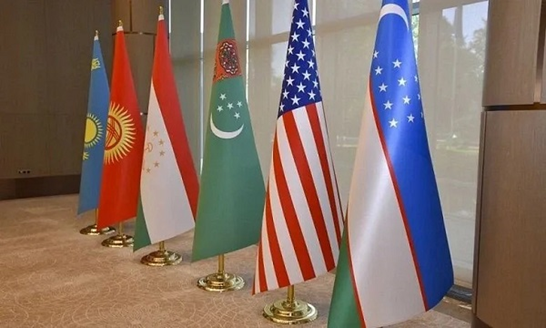
Today, there are over ten "Central Asia Plus" formats, linking our region with leading global states and associations. In this year alone, CA-EU, CA-China, CA-Russia, and CA-US summits have taken place — clear proof of the region’s growing dynamism and strategic importance.
Regional resilience cannot be ensured without addressing Afghanistan. That country is not peripheral but an integral part of our shared region. The peace and stability of all Central Asia depend largely on Afghanistan’s recovery and development.
Central Asia and South Asia emphasize Afghanistan’s meaningful involvement in regional and international processes to support its development and broader stability. The Trans-Afghan Railway — linking Central Asia and South Asia — will boost trade, investment and connectivity while aiding Afghanistan’s economic revival.
Humanitarian, educational, energy and professional training support continues, reinforcing the need for Afghanistan to become part of a shared space of peace and cooperation along Central Asia’s southern borders.
The region is shifting from bilateral problem-solving to jointly tackling major challenges such as climate change, energy transition, water and food security, and the digital economy, guided by shared responsibility and trust.
In this context, a fundamental question arises: How will Central Asia develop in the coming decades?
The region’s population already exceeds 80 million and, according to UN projections, will surpass 100 million by 2050. Central Asia is also one of the youngest regions in the world, with an average age of 29.
Our task is to turn this demographic resource into a powerful driver of progress and innovation — creating conditions for our youth to unlock their talents and potential.
At the same time, our countries adhere to a balanced approach: Development of interaction must rest on sovereignty, equality and non-interference. No one should impose alien models or create supranational structures. Cooperation must remain voluntary, pragmatic and results-oriented, serving the real interests of our peoples. At this stage, our key tasks are
1. Deepen regional cooperation and strengthen institutions.
2. Build collective security with regular high-level coordination.
3. Advance economic integration through trade, investment, streamlined borders and connectivity.
4. Cooperate on climate, water, biodiversity and green energy.
5. Expand humanitarian cooperation in education, culture, tourism and youth exchanges to strengthen regional identity. Coordinate foreign policy and present unified positions in “Central Asia Plus” and global forums, pursuing practical, growth-oriented projects.
For Uzbekistan, developing regional cooperation is not a tactical choice but a strategic course, born of our awareness of shared responsibility for the future of Central Asia.
We are convinced that unity, good neighborliness and collective effort are essential to meet shared security and development challenges. By building trust and partnership, Central Asia is laying an irreversible foundation for a strong, stable and prosperous future based on shared responsibility.
By uniting our strengths and opportunities, we solve common tasks and offer the world our own proven model of peaceful and creative cooperation — based on trust, good neighborliness and mutual support.
Today, more than ever, it is vital to preserve this historic momentum, strengthening what will make Central Asia a single space of peace, well-being and prosperity for all nations and peoples of our vast region.
Views expressed in this article are the author's own. -- Ed.
sanjaykumar@heraldcorp.com



![[Contribution] Central Asia, on threshold of a new era](https://wimg.heraldcorp.com/news/cms/2025/11/16/news-p.v1.20251115.e2da24d2ca524b7eae970f781f1be542_T1.png?type=h&h=240)