How Lee's kabuki epic became Japan's biggest live-action hit in 20 years — and why he's unfazed by questions of identity

"Don't take it so seriously," Lee Sang-il says, waving off questions about what it means for a Zainichi Korean director to have made Japan's biggest film of the year.
The numbers tell one story: "Kokuho" has pulled in over 12 million viewers since June, earning 17 billion yen ($110 million) and becoming 2025's singular phenomenon in Japanese cinema. The film is all but certain to dethrone "Bayside Shakedown 2" (2003) in the coming weeks to become the highest-grossing Japanese live-action film of all time.
Korean media has latched onto another angle — that Lee, a director of Zainichi Korean descent, achieved this feat with a film steeped in kabuki, one of Japan's most tradition-bound art forms.
It's a narrative that crops up time and again whenever a Korean director makes waves abroad. Sitting down Friday afternoon at the distributor's office in Gangnam, Seoul, Lee seemed intent on redirecting the conversation.
"You're born where you're born, and you can't change that. I just happened to be born in Japan, so I grew up immersed in Japanese culture and living among Japanese people," he says. "Being Korean doesn't make any of this special. It's just natural."
The confession carries weight for someone who keeps his Korean name in a country where many Zainichi Koreans adopt Japanese ones. What drew him to kabuki wasn't some outsider's perspective or staking identity politics into the art form, he says. The pull was about something more primal in nature — namely, the fascination with onnagata, male kabuki actors who specialize in female roles.
"There's this enigmatic atmosphere they have that's hard to describe," Lee says. "Not exactly feminine, not masculine either. Something in between, or maybe beyond gender entirely."
"What interested me wasn't just the performances but the people behind them. Kabuki is passed down through bloodlines — father to son, generation after generation. That burden, that pressure also felt like something worth exploring."
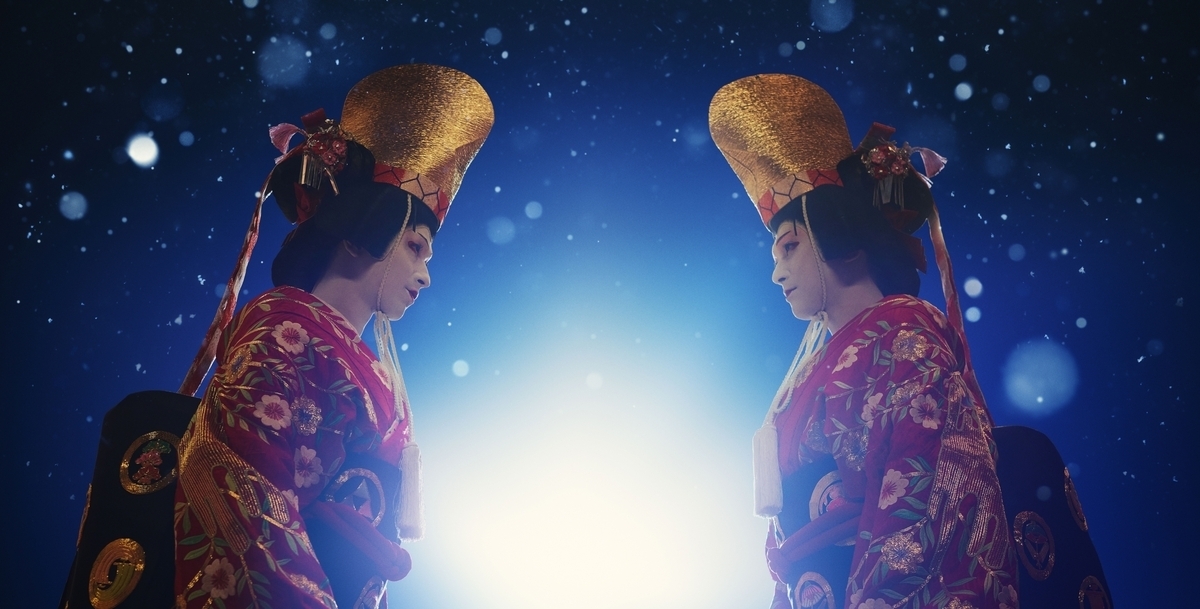
"Kokuho" follows Kikuo (played as a child by Soya Kurokawa and as an adult by Ryo Yoshizawa), who enters the world of Kabuki as an outsider with nothing to lose. He's taken in by a master actor in Osaka and trains alongside Shunsuke (Keitatsu Koshiyama and later Ryusei Yokohama), the heir to an established kabuki house, both training to become onnagatas. Over fifty years, the two push each other toward greatness, their lives consumed by an art form that demands everything.
While authenticity was key, Lee knew from the start he needed film actors instead of professional kabuki performers. "People questioned that choice at first," he says. "But I needed actors who could show what's happening inside these characters. The joy, the pressure, the pain, those are things film actors know how to reveal for the camera."
The kabuki sequences give the otherwise conventional film its pulse. Elaborate, meticulously staged performances shot in extended takes let entire pieces unfold without interruption. Lee approached the filming from three angles: the audience's view for spectacle, the actor's perspective from the stage, and tight closeups to reveal what's churning underneath.
"This isn't just a film about kabuki. It's about the people performing it," he explains. "Their suffering, their ecstasy — everything had to come through."
Research took him backstage repeatedly. What struck him most was how little separation existed between the actors' lives and their art. "The dressing rooms felt like their actual homes. They basically live there and only come out to perform."
At nearly three hours, "Kokuho" is a hard sell in any market. It's an especially steep climb in Korea's sluggish box office, where most live-action films have been falling flat. Lee is aware of the odds.
"I've heard the Korean film industry is struggling right now," he says. "And this is a Japanese film about a Japanese art form that runs three hours. I know that's a lot to ask."
Yet he circles back to what made him brush aside the identity question in the first place: a conviction that the film speaks to something universal. "Artists are people who burn everything to show something beautiful. There's also something grotesque about it. These are people who accomplished what they set out to do, and I believe there's power in that."
"Humans have this instinct to seek out beautiful things. Right now, with all the anxiety in the world — in Korea, in Japan, everywhere — maybe people need that."
"Kokuho" opens in Korean theaters Wednesday.
moonkihoon@heraldcorp.com




![[Exclusive] SK On fast-tracks pilot output in all-solid-state battery race](https://wimg.heraldcorp.com/news/cms/2025/11/18/news-p.v1.20251117.611a51c182b546348b32ccc3233f6193_T1.png?type=h&h=240)