Singapore's Danny Quah urges Seoul to deepen ties with Southeast Asia as global trade shifts toward post-US order
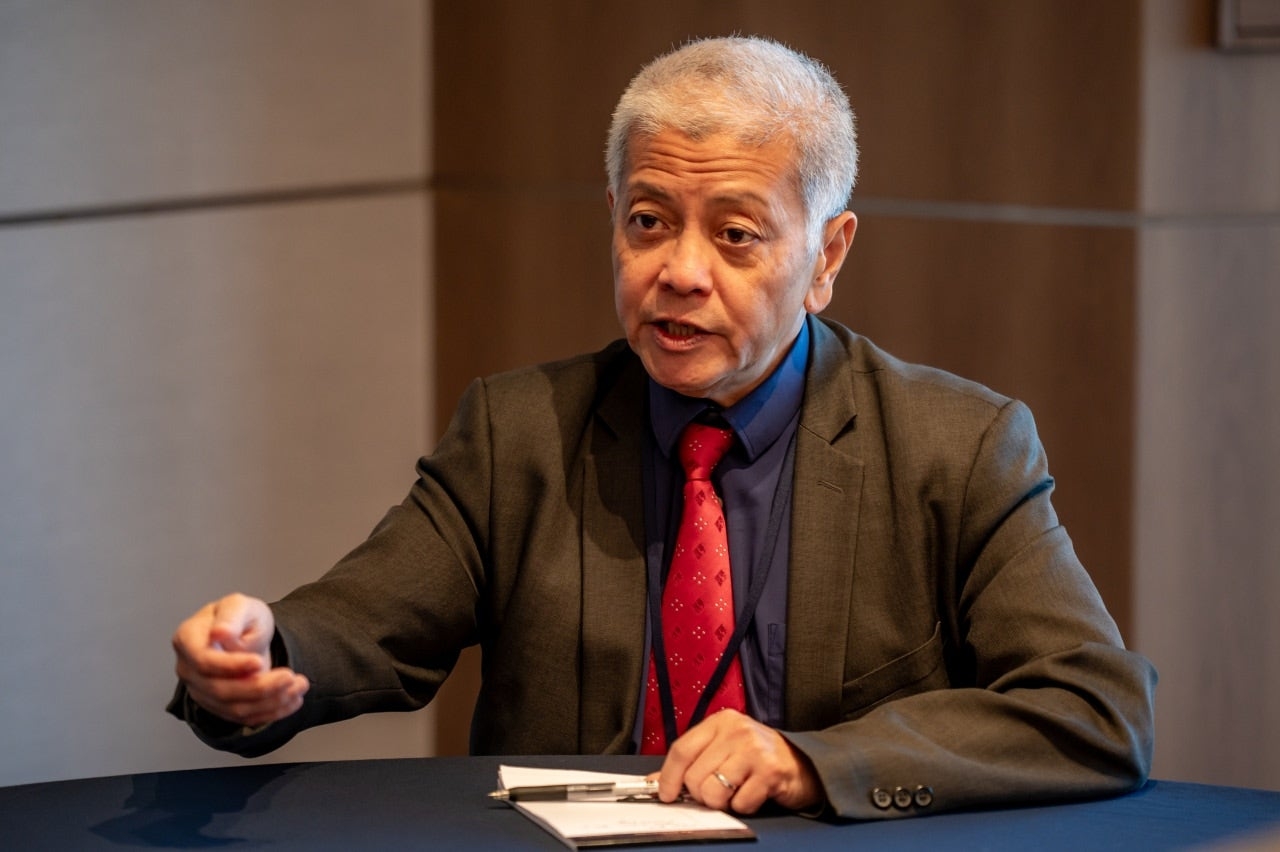
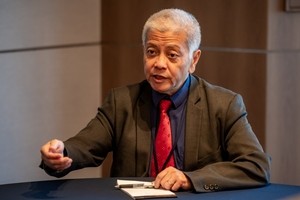
Countries like South Korea should strengthen economic ties with Southeast Asia to prepare for a global trading order that increasingly sidelines the US, according to Danny Quah, professor of economics at the Lee Kuan Yew School of Public Policy.
“Korea has no shortage of countries that want to deal with it on coequal terms,” Quah said in a group interview in Seoul on Monday, during a visit for a joint conference hosted by the KDI School of Public Policy and its Singaporean counterpart.
“Countries like Korea need to develop better economic relations with Southeast Asian nations in order to navigate a world where the US is isolated from world trade.”
Quah pointed to ASEAN as a key platform for Korea to expand economic cooperation, calling it a “concrete and actionable” alternative to relying on the US-centered system.
“We are beginning to build a world where — outside of the US orbit — we engage more with one another. Within ASEAN itself, it is very feasible to strengthen our interactions,” he said.
He also criticized the tendency of countries to act individually rather than collectively, citing ASEAN members’ unilateral responses to US tariffs. As a remedy, he proposed “pathfinder multilateralism” — a model in which a smaller group of willing nations establishes new rules or standards without waiting for universal consensus. The idea, he said, is to create coalitions that are “incentive-compatible,” ensuring cooperation holds because interests align.
Quah added that countries that invested the most effort in negotiating with Washington often fared worse, including Korea, Japan and Vietnam.
“Most of the countries we studied negotiated in good faith. They thought they would gain something, but in the end, they did not,” he said.
As a countermeasure, he suggested that countries divert their trade away from the US, gradually isolating it from the broader system — a scenario he describes as a shift toward a “G-minus” world.
“The world might move more to a ‘G-minus’ world where the US is excluded from the trading world,” he said. “It is a sensible and law-abiding approach.”
He emphasized that Korea’s industrial strategy should reflect this reality.
“If the US makes it more and more costly for Korea to do business with it, where would Korea turn?" he said. "Korea’s industrial policy could be more oriented toward trade with other countries.”
Quah serves on multiple multilateral economic bodies, including the World Bank and the World Economic Forum, and previously taught at MIT and the London School of Economics.
silverstar@heraldcorp.com


![[Exclusive] SK On fast-tracks pilot output in all-solid-state battery race](https://wimg.heraldcorp.com/news/cms/2025/11/18/news-p.v1.20251117.611a51c182b546348b32ccc3233f6193_T1.png?type=h&h=240)