Row resurfaces over conservative-controlled city council's push to scrap student rights ordinance
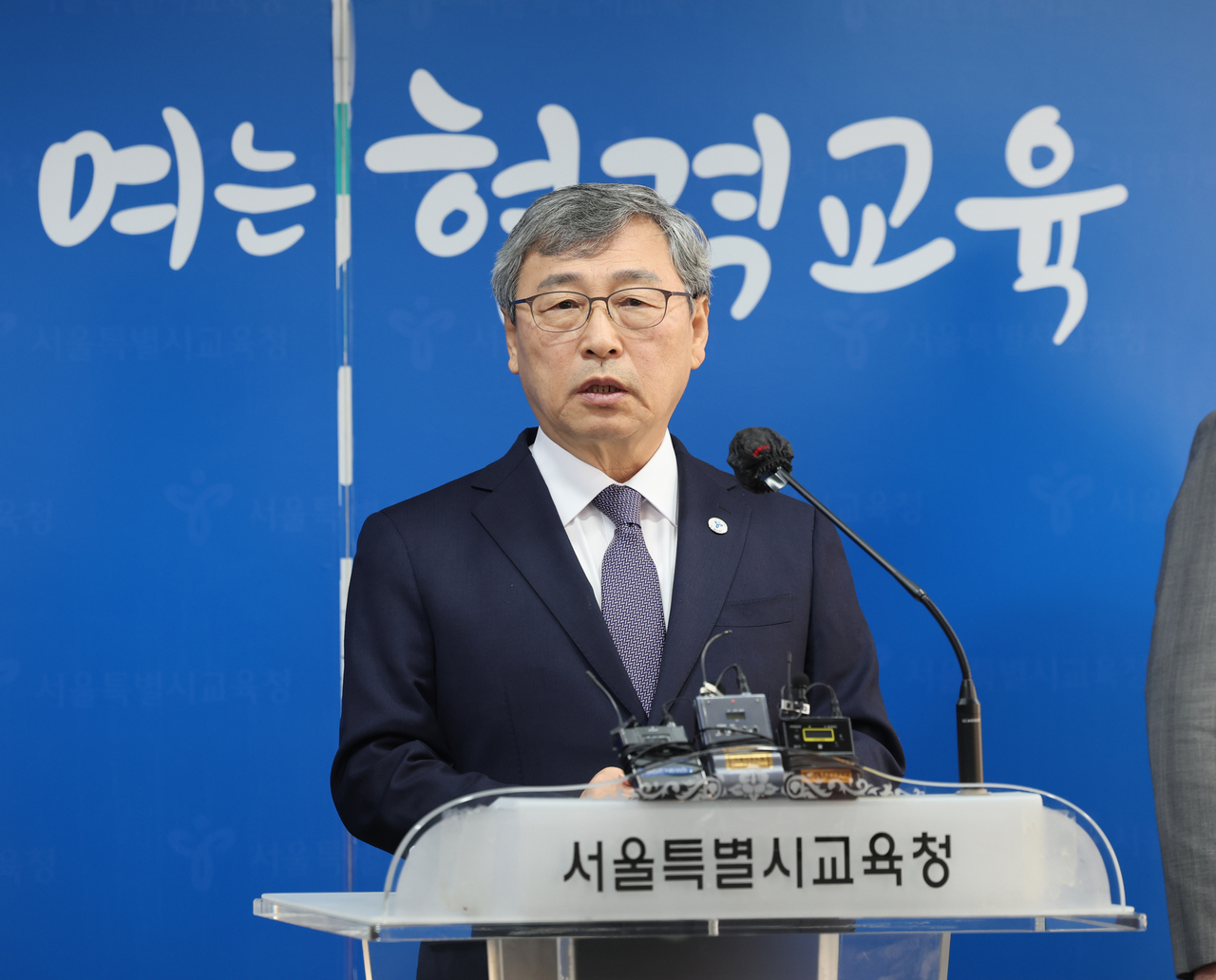
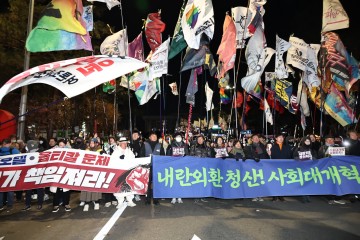
In an abrupt move Monday evening, conservative members of Seoul Metropolitan Council’s Education Committee introduced and passed a motion to abolish the city’s student rights ordinance. A final vote is due at the council’s general assembly Thursday.
This means the ideological clash over student rights in schools is back again — just like last year.
A nearly identical bill was passed in 2024, spearheaded by council members from the conservative People Power Party, which holds a majority on the council. Then-Superintendent of the Seoul Education Office Jo Hee-yeon, a liberal, filed for a temporary injunction to stop the bill’s enforcement, which the Supreme Court upheld. The top court is still deliberating whether that vote was constitutional.
Asked about Monday's bill to abolish the ordinance in question amid the ongoing legal review, Park Sang-hyuk, a conservative council member who chairs the council’s education committee, said the council was obligated to process the motion before the end of the month.
“The reintroduced bill has to be voted on by the 26th this month,” he said.
A motion to scrap the ordinance was introduced as a Municipal Ordinance Requested by Residents — a civilian-initiated bill that must be processed by the council within one year of submission, extendable once for an additional year. It was first proposed in 2023 and secured more than 25,000 signatures from residents.
The center-left Democratic Party of Korea, which has a minority of seats in the council, and Seoul’s liberal superintendent were quick to condemn the move.
Jung Geun-sik, Seoul’s education chief, denounced the council's removal of the ordinance, labeling the law as "the minimum institutional device to protect the rights of students.”
“The city council’s education committee passed the bill (to abolish the ordinance) without any prior notice," he said in an emergency statement Tuesday.
Democratic Party council member Jeon Byung-ju echoed him.
“The students' human rights do not contradict the teachers’ rights. Rather, they must complement each other and both be respected.”
“Repeatedly striking the ordinance ahead of the Supreme Court’s deliberation on the original bill only creates confusion in the education field,” he added.
Why ordinance is so controversial
First introduced in 2012, the Seoul Student Human Rights Ordinance guarantees the dignity, value, freedoms and basic rights of students. Similar ordinances are also in place in Gyeonggi Province, Gwangju, North Jeolla Province, South Chungcheong Province, Incheon and Jeju Island.
Courts have previously recognized the ordinance's legitimacy. In 2018 and 2019, the Seoul District Administrative Court and the Constitutional Court both ruled in favor of retaining the law, acknowledging its role in “limiting discriminatory hate speech, fostering righteous values as a democratic citizen and nurturing human rights perceptions.”
The ordinance, however, has become the focal point of a heated ideological clash, with conservatives claiming it excessively protects students, limits teachers’ authority and supports sexual minorities in schools.
Controversy intensified after the 2023 suicide death of a teacher at Seoul’s Seoi Elementary School ignited calls to better protect teachers, who complained that the ordinance's protections left them open to abuse.
Hagwon operating hours
Tensions have also risen over a separate education bill in Seoul.
In late October, another People Power Party council member introduced an amendment allowing private academies in the capital city to operate until midnight. Current rules allow operation from 5 a.m. to 10 p.m.
“I agree with the idea that we should cut down on private education, but we must give students the freedom of choice,” said Jeong Ji-woong, who authored the bill.
Jeong argued that other cities allow longer hours, putting Seoul students at a disadvantage.
The proposal was met with strong backlash. A coalition of 119 civic groups rallied outside the council building, accusing the People Power Party of “colluding with private education cartels” and urging the council to drop the amendment.
The Ministry of Education also expressed concerns.
“Considering the effects this amendment would have on the right to study, education equity, the bill’s legislative objective to limit study hours and on the private education of Seoul, the 10 p.m. limits should be maintained,” the ministry said.
seungku99@heraldcorp.com