In Korea, biggest shift in opinion over past two decades didn’t exactly follow national debate. It followed news of same-sex marriage becoming legal overseas
South Korea made a quiet but meaningful policy change in October. For the first time, the national census now allows same-sex couples living together to identify each other as “spouse” in official records.
While this adjustment does not confer any legal rights, it marks a symbolic step in recognizing LGBTQ+ households in the state’s demographic data.
But as same-sex couples slowly appear in national statistics, legal marriage still remains out of reach. And public support for it is not growing. In fact, it is recently shrinking.
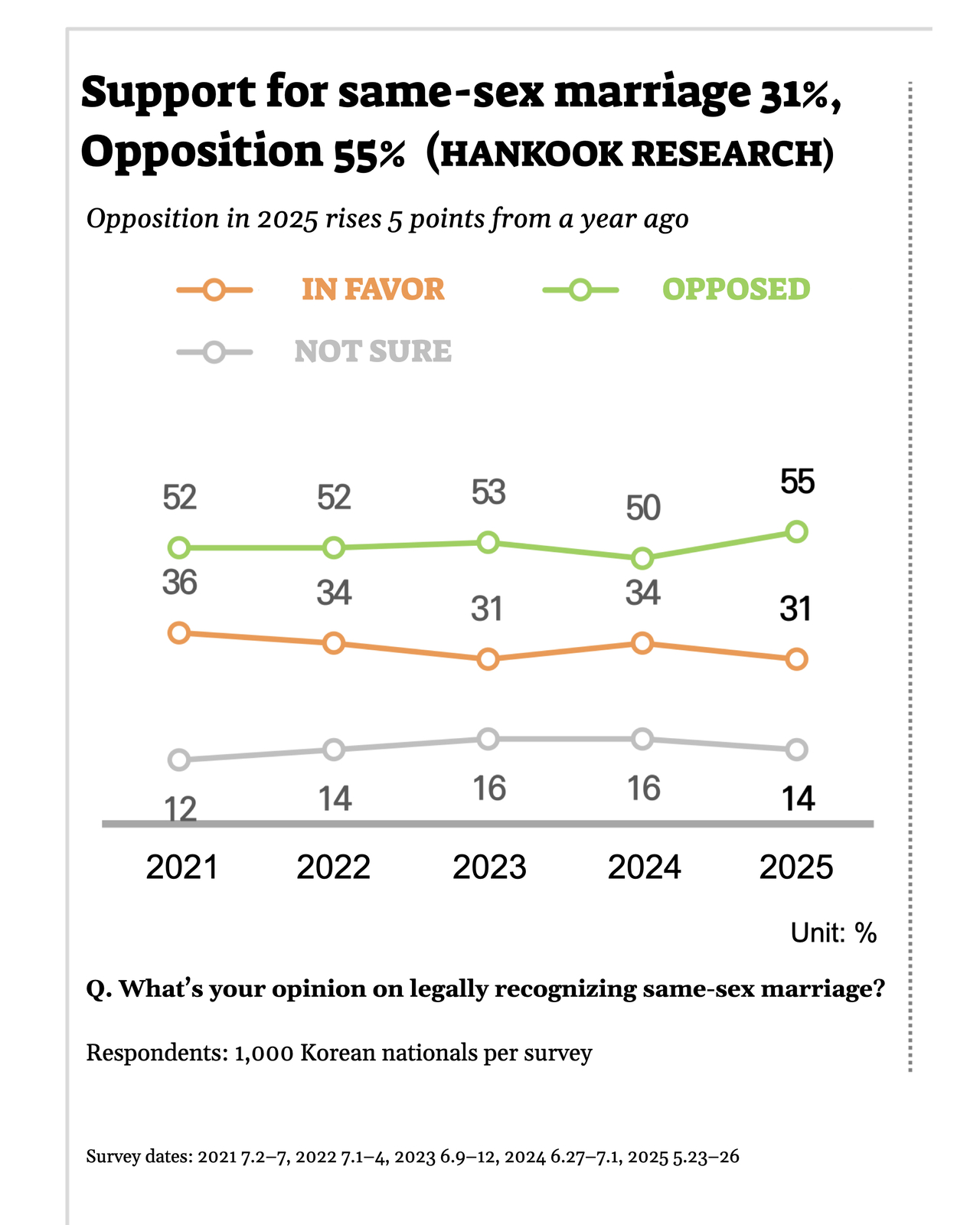
Two major opinion surveys in 2025 have confirmed the trend. In a Hankook Research poll, 31 percent of South Koreans said they supported the legalization of same-sex marriage, down from 36 percent in 2021. In a separate survey by Gallup Korea, 34 percent backed legalization while 58 percent opposed it, a reversal that returns the numbers to where they stood nearly a decade ago.
Although many advocates have long assumed that rising visibility and generational change would drive progress, the latest data presents a different picture. The Korea Herald consulted two advocates who argue that it may be time to ask a different question: Does same-sex marriage need broad public support to move forward, or can the law lead the way?
Public may seem unsure until 'law decides for them'
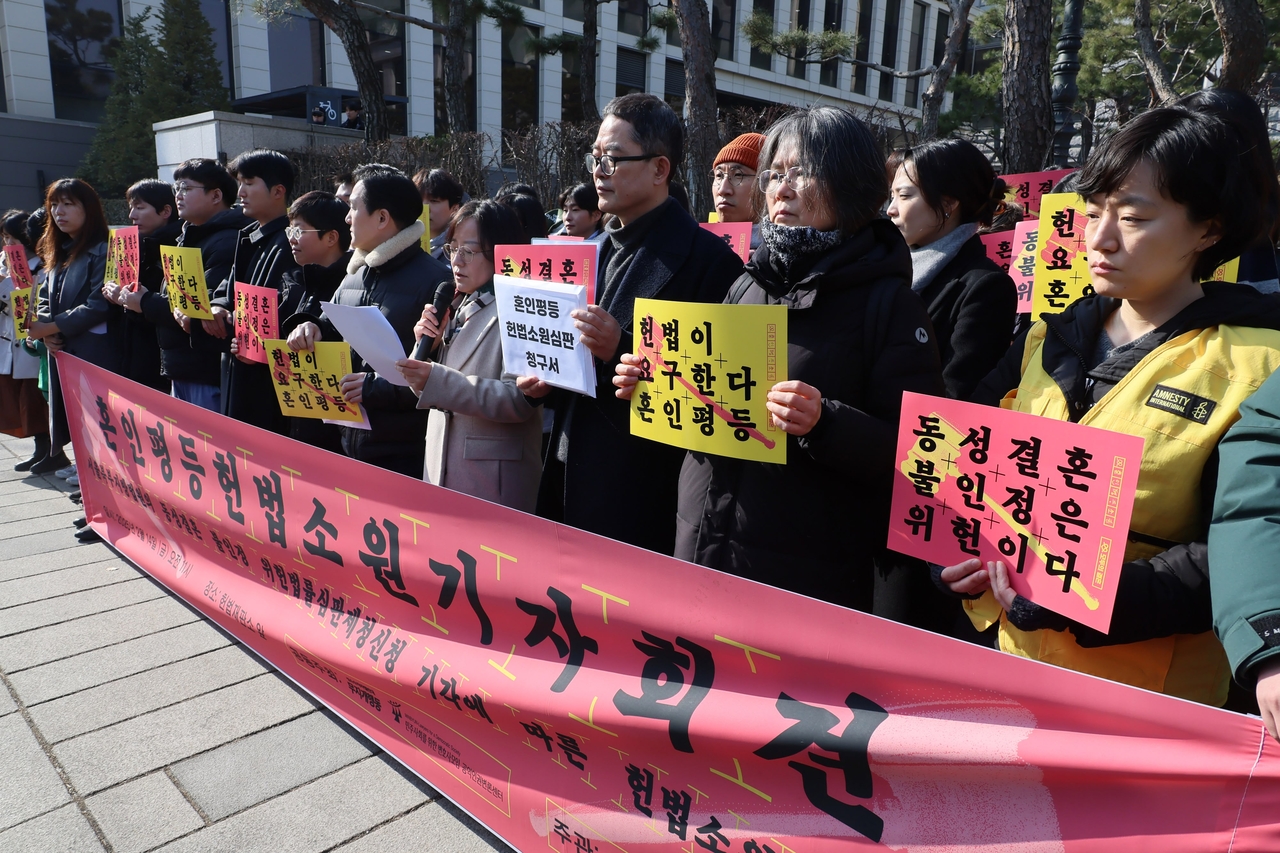
Yi Ho-rim, executive director of Marriage for All Korea, a leading local LGBTQ+ advocacy group, sees this moment as a reminder that legal change is not always a popularity contest. “The support for legalization has declined somewhat, but that doesn’t mean the conversation is stagnant,” Yi said.
“In fact, we see the current moment as a result of political polarization, not public apathy.”
Yi links the decline to the broader social climate. “Far-right mobilization earlier this year, combined with heightened political tension and increased online radicalization among young men, likely influenced the shift,” she noted. “When public discourse is overwhelmed by noise and fear, minority issues like same-sex marriage naturally become sidelined.”
Yi has argued that laws can reshape public perception. “In Taiwan, support for same-sex marriage was limited before legalization in 2019. But once the law passed, social attitudes evolved quickly. That pattern is not unique to Taiwan. We’ve seen similar changes in many countries.”
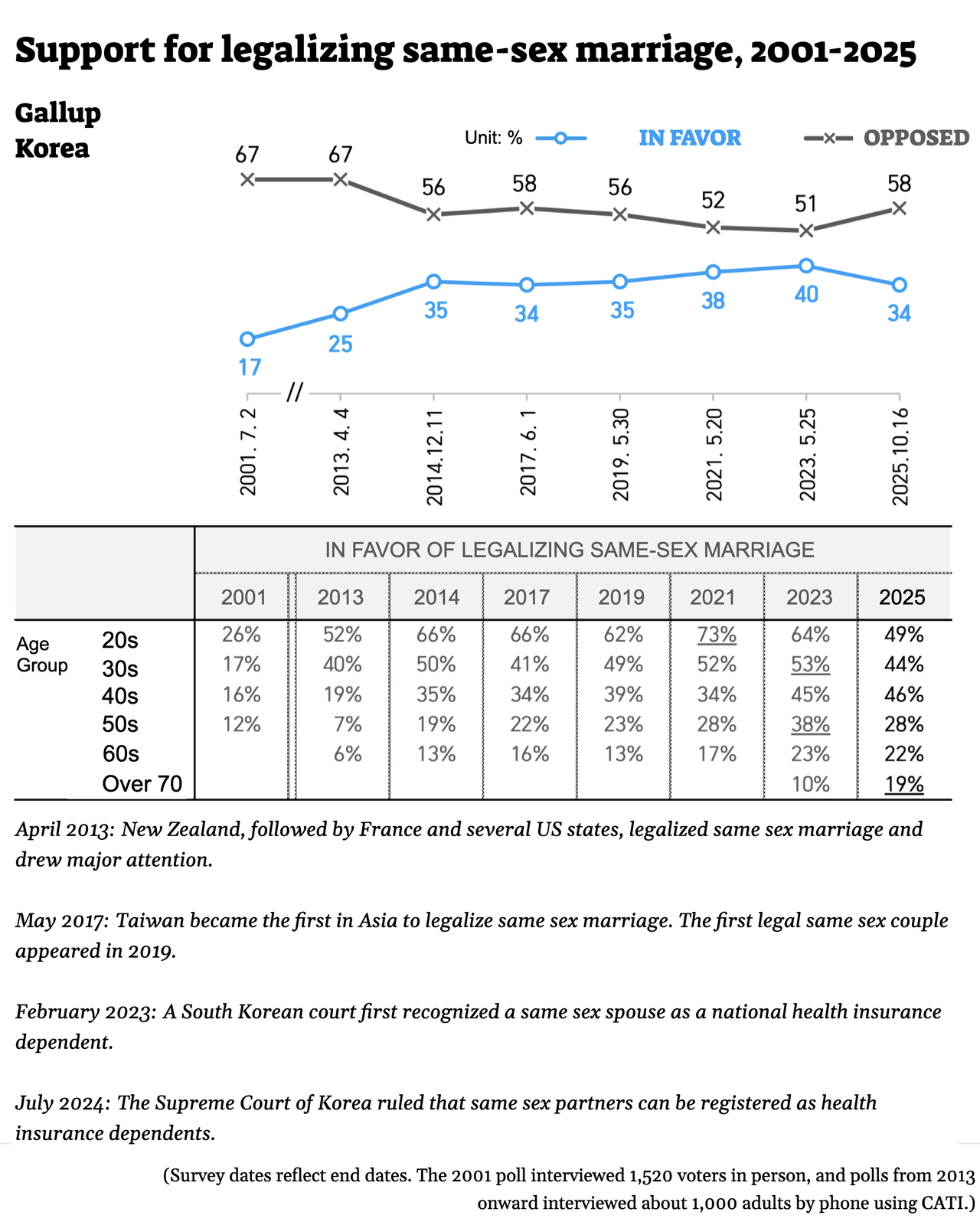
This pattern is not just anecdotal. Yi points to a notable case in South Korea’s own polling history. “There’s no way to prove causality,” she said, “but it’s hard to see it as a coincidence that Gallup Korea’s support numbers jumped by 10 percentage points between 2013 and 2014, exactly when countries like New Zealand, France and several US states made headlines by legalizing same-sex marriage.”
Park Dae-seung, a political philosopher at Seoul National University and director of the Institute for Inequality and Citizenship in Seoul, agrees. “Constitutional democracies are designed to protect minority rights, even when those rights are unpopular,” Park said.
“Laws that affirm dignity and equality are rarely embraced by a majority at first. But they send a powerful social signal. They tell people what is ‘normal’. In other words, it’s the law that decides for them what’s acceptable.”
"Korean politicians routinely cite 'lack of public consensus' as a reason to delay bills like the Life Partnership Act or Marriage Equality Act, both of which remain stalled in the National Assembly for years," he added. "But it's an excuse."
While younger South Koreans have historically been more supportive of LGBTQ+ rights, the generational divide is showing unexpected shifts. The latest Gallup Korea poll revealed that support for same-sex marriage among people in their 20s dropped by 15 percentage points between 2023 and 2025. At the same time, support among those over 70 nearly doubled, from 10 percent to 19 percent.
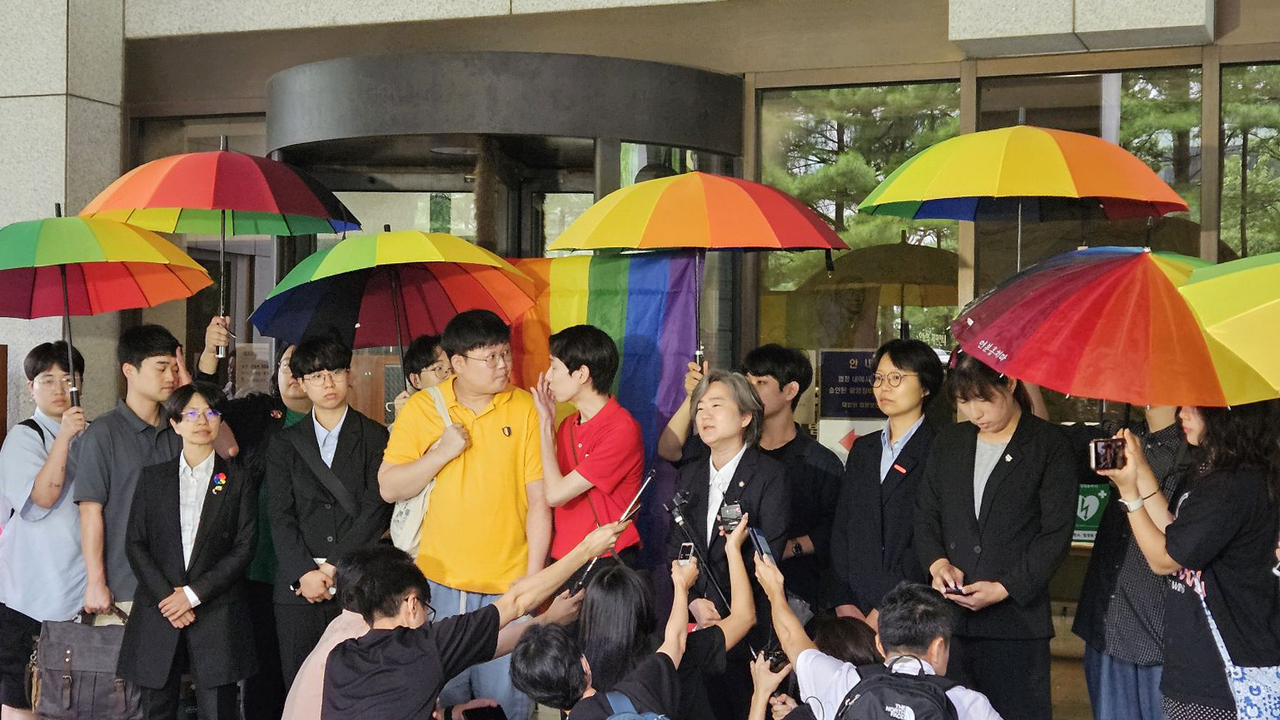
Yi sees this as a sign that older generations are not immovable. “These are people who still get most of their information from legacy media. When the 2024 Supreme Court ruling recognized same-sex cohabiting partners as eligible for health insurance benefits, it was widely reported. That may have helped normalize the issue.”
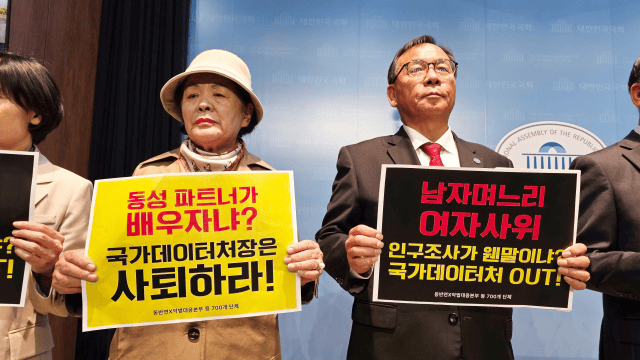
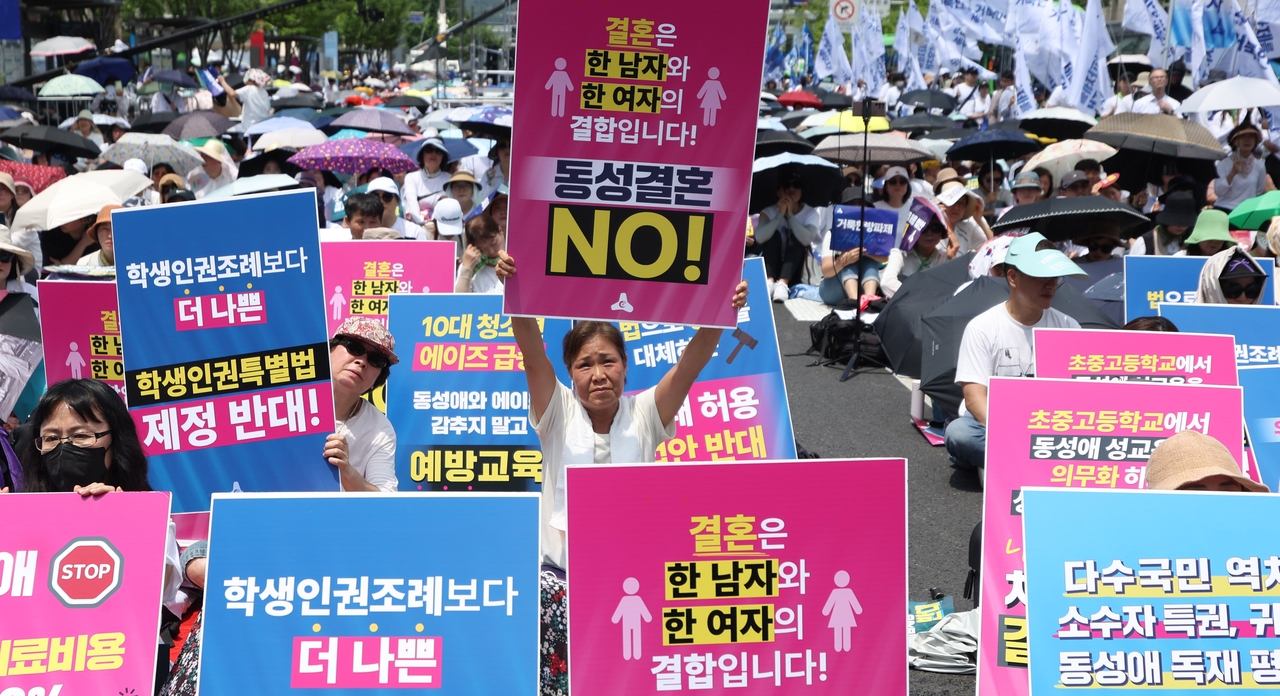
Groups like the Coalition Against Homosexuality and Same-Sex Marriage, backed by conservative Christian organizations, have actively resisted even symbolic shifts. In October, the group filed a criminal complaint against government officials who authorized same-sex partner recognition in the 2025 census. They claimed it violated the law by creating “false public records” and warned of a wider moral collapse.
Yi has contended that public discomfort should not be used to delay basic rights. “Many of these objections rely on the idea that LGBTQ+ people do not value love, care or long-term commitment,” she said.
“But that is only because most people have never met a same-sex couple in their daily lives. We are still largely invisible, and the numbers show it. In the 2025 Hankook Research survey, people who personally know an LGBTQ+ person were nearly twice as likely to support same-sex marriage. Visibility alone makes a real difference.”
mjh@heraldcorp.com