Soaring demand for dollars from US stock craze is eroding won’s strength despite booming exports
As the Korean won struggles to gain ground against the US dollar despite a record trade surplus and strong foreign buying of local equities, attention is turning to an unlikely culprit: Korean retail investors piling into US stocks.
Strong fundamentals, weakening won
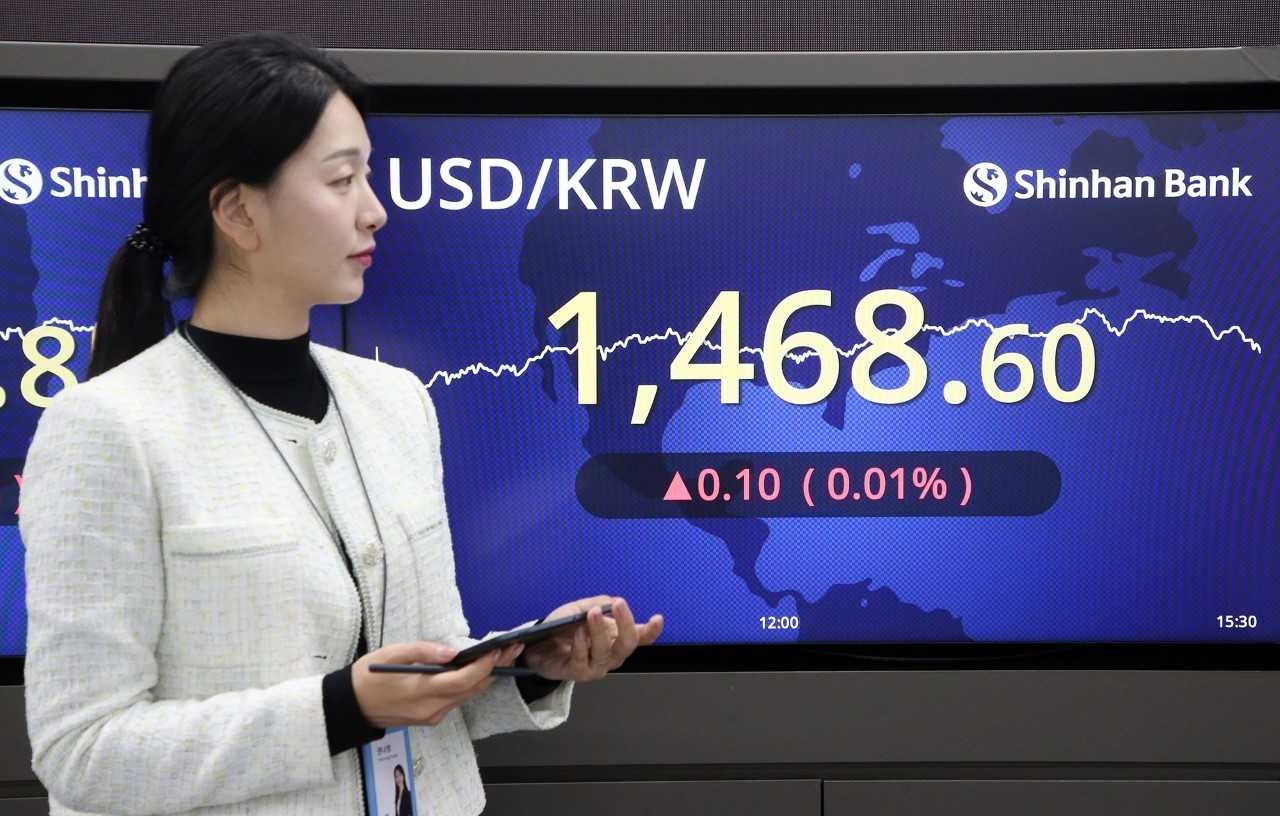
The won has been sliding since July, losing nearly 100 won per dollar over four months. On Nov. 13, it briefly touched 1,475.4 won per dollar, its weakest point in seven months, before verbal intervention from authorities nudged it back toward the 1,450 range. Still, it has hovered stubbornly around the 1,460 mark.
For Korea, the depreciation is counterintuitive. A current account surplus normally strengthens the currency by increasing the supply of foreign capital. Korea is also benefiting from robust foreign inflows into the Kospi, which should boost demand for the won as global investors convert dollars to buy Korean stocks.
Yet the won keeps weakening.
US stock craze and outflow effect
Authorities say the missing piece of the puzzle is the surging appetite Korean retail investors have for US equities. As mom-and-pop investors convert won into dollars to buy stocks such as Nvidia, Tesla and Apple, they are effectively draining won liquidity and fueling dollar demand.
“The expansion of overseas investments by local residents is heightening uncertainty in the forex market,” Finance Minister Koo Yun-cheol warned on Nov. 14.
“If these outflows persist, expectations of a weaker won could become entrenched.”
The scale of these outflows is striking.
Korean nationals invested $99.85 billion in overseas securities from January to September, 3.4 times more than foreign investors’ purchases of Korean securities over the same period.
Outbound investments exceeded Korea’s current account surplus of $82.77 billion during the period.
In October alone, domestic investors bought a record 10.08 trillion won ($7.4 billion) of US stocks, more than double foreign investors’ purchases of Korean stocks that month.
The trend accelerated in November. Foreign investors dumped 9.3 trillion won of Korean stocks in the first two weeks of the month, while Korean individuals bought 5.3 trillion won in US equities during the same period.
“Retail investors are heavily investing in US equities. With sustained dollar demand, the won is bound to stay weak,” said Lee Hyo-seob of the Korea Capital Market Institute.
“Even a small trigger could push it below 1,500.”
NPS outflows, exporters add pressure
Retail investors aren’t the only force driving dollar demand.
The state-run National Pension Service, one of the world’s largest pension funds, is steadily increasing its allocation to overseas equities. As of June, the NPS held 446 trillion won in foreign stocks, more than double its domestic holdings.
The fund’s rising outbound investment adds a structural layer of dollar demand, amplifying the downward pressure on the won.
Exporters, too, are contributing — albeit indirectly. Traditionally, a trade surplus would strengthen the won as companies convert their dollar earnings into local currency. But with expectations of a stronger dollar, many exporters are holding onto their dollar proceeds, limiting the supply of dollars in the market.
Korea’s financial chiefs have acknowledged the problem and are exploring measures to stabilize the currency, singling out the NPS and large exporters as factors to be considered.
But as long as Korean investors continue to seek higher returns in US markets — and the Federal Reserve’s policy outlook keeps the dollar strong — the won may remain under depreciation pressure regardless of Korea’s trade balance or foreign equity inflows.
silverstar@heraldcorp.com