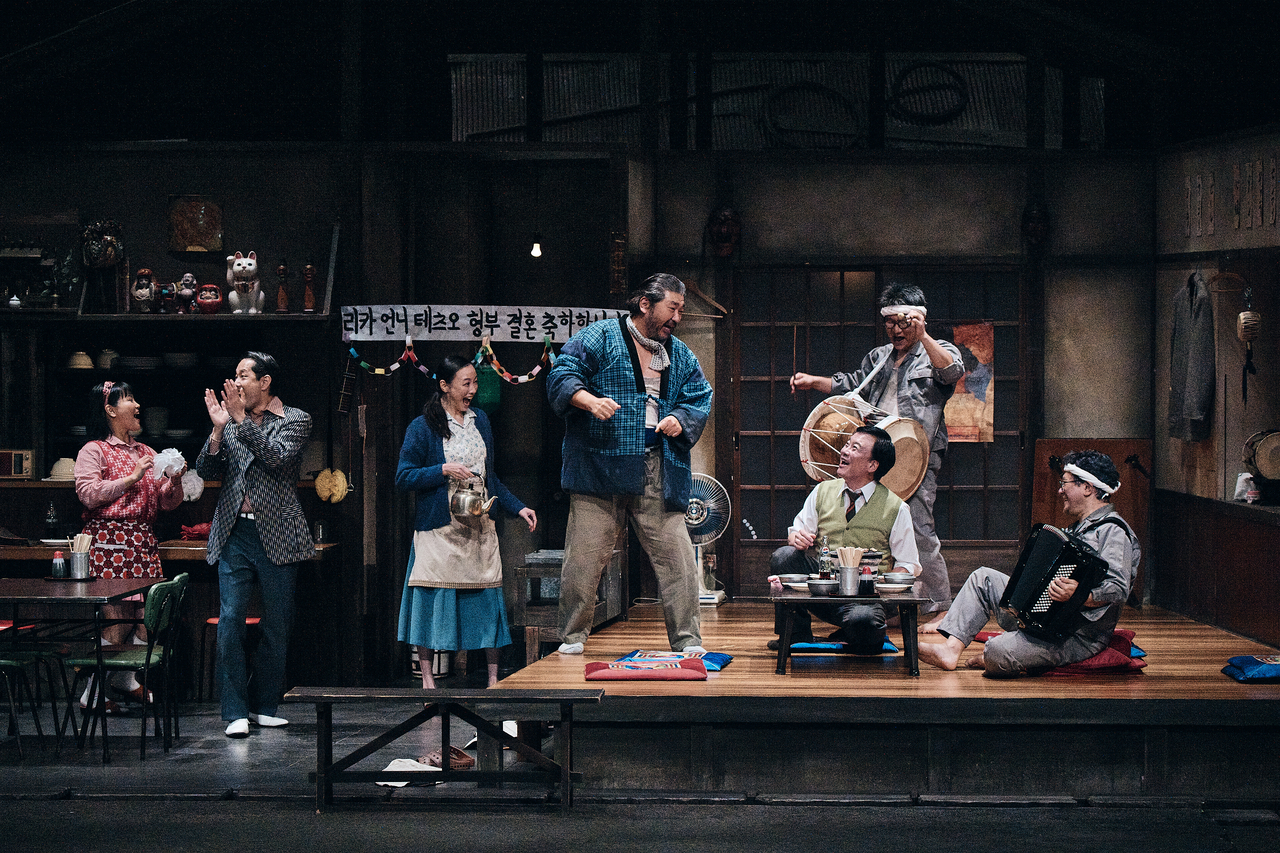
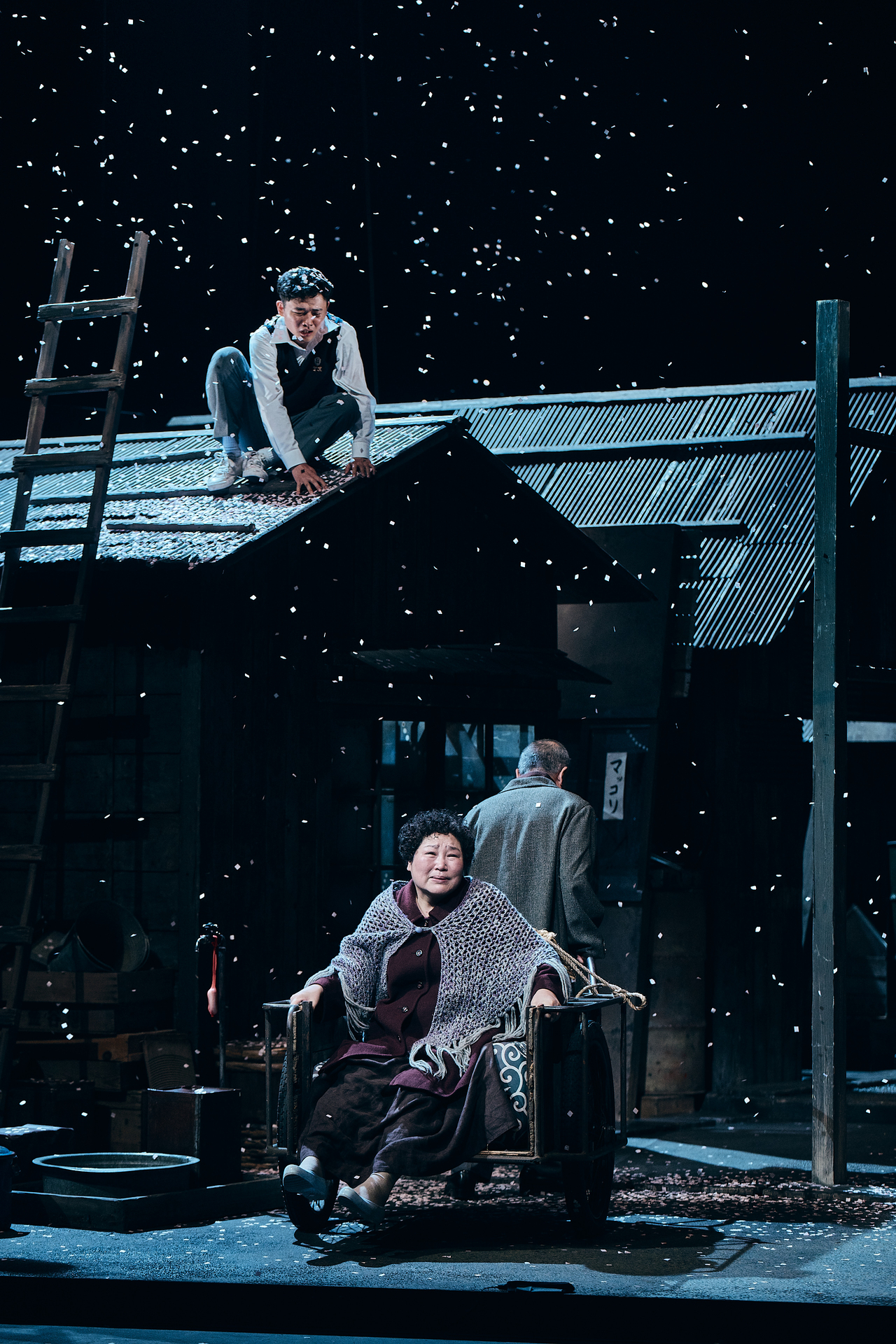
Set in a shantytown along the railway tracks of Japan’s Kansai region in the 1970s, “Yakiniku Dragon” centers on the family of Kim Yong-gil, a Zainichi Korean who lost his left arm in the Pacific War and his first wife in the 1950-53 Korean War.
Zainichi refers to Koreans and their descendants who have lived in Japan for generations, many of whom arrived — either voluntarily or by force — during Japan’s colonial rule of Korea. With no home left to return to, Yon-gil's life is shaped by displacement and the long shadow of history.
The Zainichi Korean runs a small yakiniku restaurant with his second wife and their children. Yakiniku — “grilled meat” in Japanese — is both their livelihood and a lens into the prejudice and poverty the family confronts daily.
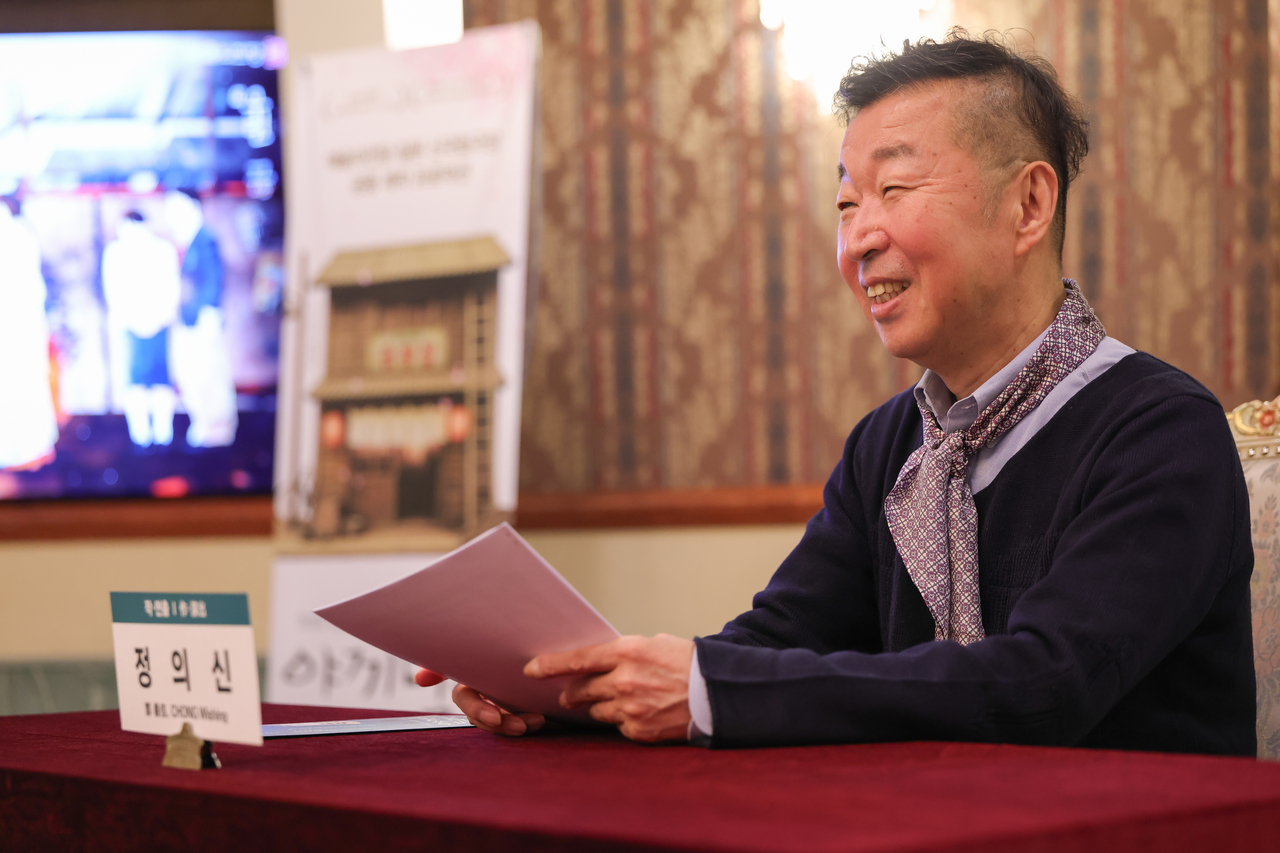
“Today, many Japanese people enjoy yakiniku,” said Chong Wishing, the Korean Japanese playwright and director behind the work. “But back then, it was seen as a place for poor laborers or Zainichi Koreans.”
“I wanted to record the lives of Zainichi Koreans before they disappear,” Chong said in a November meeting with Korean reporters. “A yakiniku restaurant, usually run by Koreans, has long been a symbolic space for our community.”
The play premiered in 2008 as a joint production of the Seoul Arts Center and Japan’s New National Theatre, earning major theater awards in both countries. After a 2011 revival, it returned this year to mark the 60th anniversary of Korea-Japan diplomatic relations, following runs in Tokyo in October and in Seoul in November.
Yong-gil is not only a struggling father, but a survivor of Korea’s modern upheavals — its wars, its division and the Jeju Uprising, which left his hometown in ashes. With no village left standing, he becomes, as Chong puts it, a man “forced to stay,” his fate determined by forces far beyond his control.
Although the characters are fictional, the play draws heavily on Chong’s own memories. Many of Yong-gil’s lines, he said, came directly from his father.
“The neighborhood in the play is the one I grew up in,” he said. “There’s a line: ‘We packed everything to go back to Korea, but (my daughter) caught a cold and we couldn’t get on the boat.’ That really happened. Much of Yong-gil’s dialogue comes from things my father actually said.”
Fourteen years after its premiere, Chong believes the hardships facing Zainichi Koreans have changed little.
“Cultural exchanges between Korea and Japan have increased, but the history and struggles of Zainichi Koreans feel increasingly forgotten,” he said. “This play comes from a desire to bring that unseen history to light.”
One distinctive feature of the production is a lively preshow staged before the curtain and during intermission. Actors and musicians move through the aisles performing janggu and accordion as the smell of sizzling meat fills the theater.
“Theater, to me, is like a ritual,” Chong said. “I remember my mother preparing dishes from dawn on the day of family ancestral rites. I wanted to share that same sense of care, of welcoming the audience with music, food and a shared moment.”
What makes “Yakiniku Dragon” linger is its clear-eyed view of life in both its warmth and its sorrow.
“Life runs on two rails, one comic, one tragic, and they’re constantly switching. That’s what I try to capture on stage.”
hwangdh@heraldcorp.com