International Booker-shortlisted author of 'Cursed Bunny' blends horror with social insight
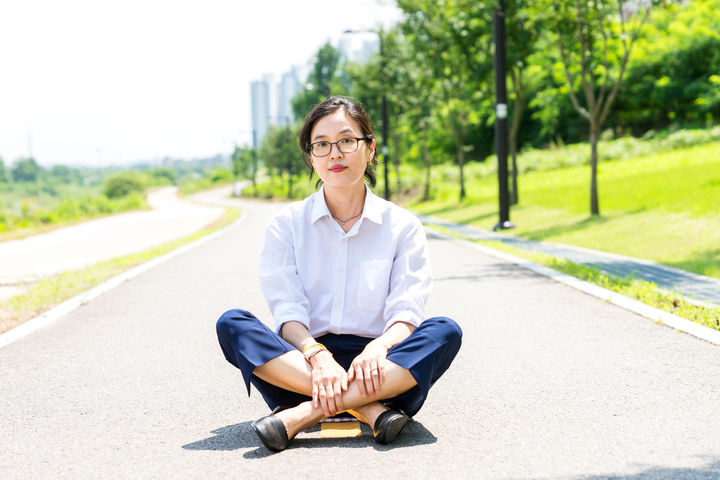
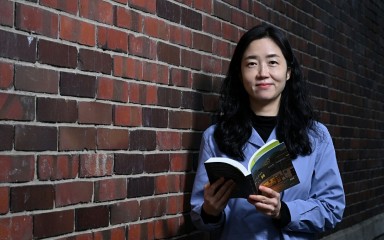
Bora Chung, whose “Cursed Bunny” became an international sensation after landing on the International Booker shortlist, is ready to give readers another fright with a new collection of ghost stories.
While the 2022 Booker spotlight led to a flurry of renewed interest in her earlier work, Chung’s latest collection, “Midnight Timetable,” offers entirely new stories. Published in Korean shortly after the nomination, the book has now been released in the US, UK and Australia, with rights sold to more than 10 other countries, including France and Poland. The English edition is translated by Anton Hur, who also brought “Cursed Bunny,” “Your Utopia” and “The Red Sword.”
A self-professed horror fan, Chung likened writing “Midnight Timetable” to spending a day at an amusement park — all thrills, no deadlines, just the joy of making up ghost stories.
“From a writer’s perspective, ghosts can appear anywhere, at any moment and in any form. Anything is possible,” she said in an interview with The Korea Herald. “They can show up as only a body part, float in the air, appear upside down. Their versatility is incredible.”
And because ghost stories exist in nearly every culture, she added, readers already understand the rules.
“That’s also what makes creating something truly new so difficult. The work becomes less about scaring myself and more like directing a film — constantly considering timing and placement, experimenting to find new ways to unsettle readers.”
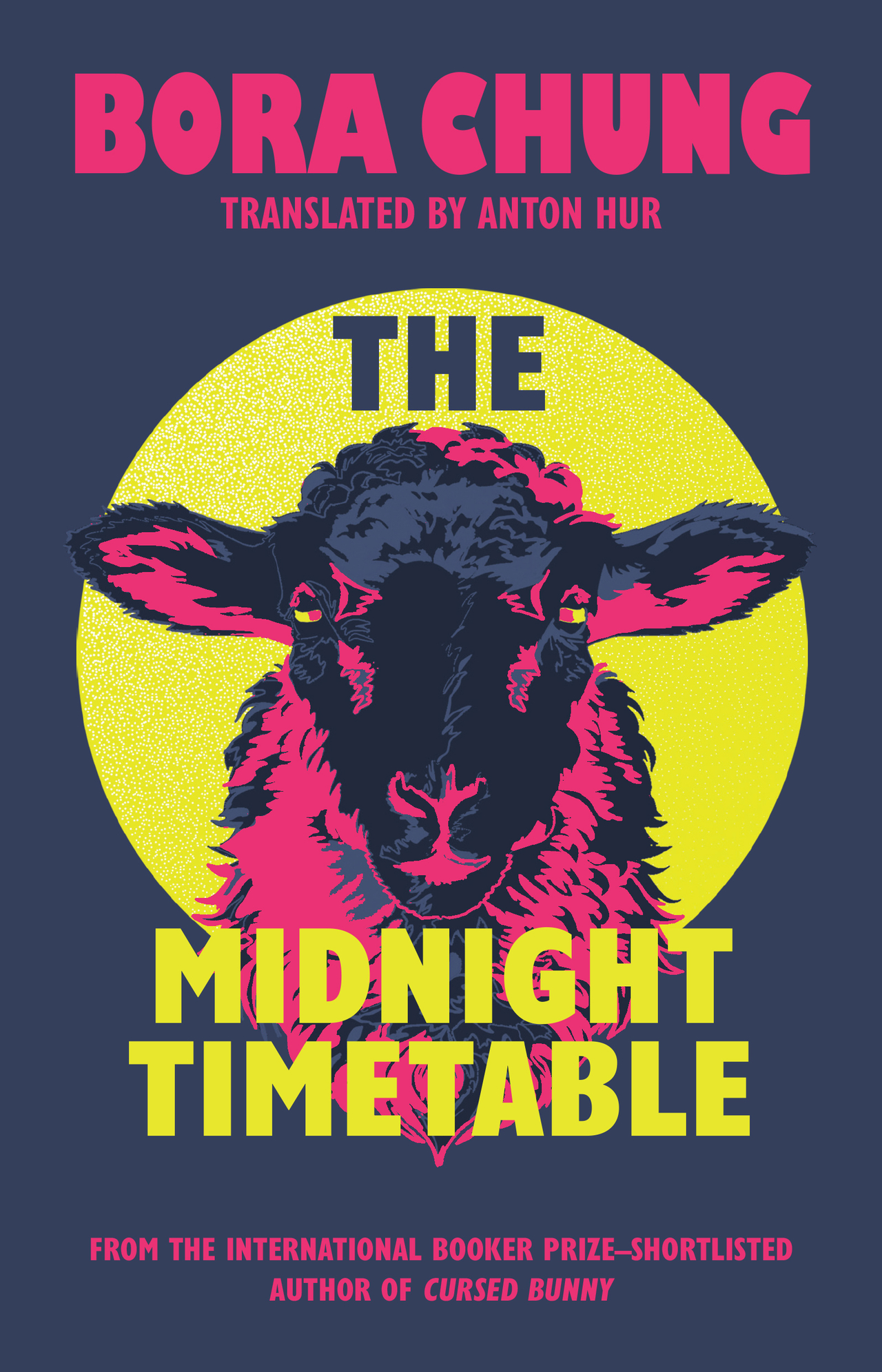
“Midnight Timetable” comprises seven interconnected stories centered on a shadowy research facility that stores cursed or inexplicable objects: from a handkerchief and a pair of sneakers to a “cursed sheep” and other items inhabited by mysterious presences. Hallways and staircases appear and vanish at will, while ghosts whisper from the darkness. The primary narrators — a night-shift security guard and a more experienced senior colleague — guide readers through the institute, revealing the eerie incidents tied to its “residents” as they patrol according to the building’s midnight schedule.
Chung hopes readers will experience each tale as if “visiting a different lab room in the Institute.”
“Familiar spaces like schools or offices feel strangely different at night when no one is around,” she said. “I chose a research institute because I spent many years as a university lecturer. It was the most ordinary setting in my life.”
But during the COVID-19 pandemic, that sense of familiarity took on an uncanny edge. And that’s when “Midnight Timetable” first started to haunt her imagination.
“Classes went online, but I still went to campus for meetings and preparation,” she recalled. “Seeing the entire building empty was terrifying. During holidays, an empty campus feels leisurely, relaxed. But the pandemic was different. I worried about whether students were safe, whether colleagues were sick, when any of it would end. That anxiety felt thick in the empty hallways. The classrooms were all vacant, but I kept imagining something hiding there.”
Though wrapped in horror, the collection continues Chung’s signature blend of the macabre and social commentary, this time focusing especially on marginalized communities. Just as “Cursed Bunny” used a cursed rabbit lamp to expose corporate greed and corruption, “Midnight Timetable” channels surreal ghosts to tell stories of those pushed to society’s edges: a worker disabled in an industrial accident, a woman sexually exploited and a queer individual haunted by prejudice. Their grief and unresolved anger propel the narratives.
Almost all of the book’s material, she said, came from stories she heard from family and friends, as well as experiences she encountered while participating in various protests. Because the project began during the pandemic, it also absorbed issues that intensified under social isolation: rising domestic violence and a growing number of people pushed into homelessness and cut off from support.
“It might sound grand to call it ‘social commentary,’ but these are really stories that real people live through every day. That’s what makes them so horrifying.”
In her author’s note, Chung writes that Korean folk ghost stories, particularly the vengeful maiden ghost, often center on “han,” an unrelieved sorrow or resentment. Growing up with these tales, she wondered why victims must wander endlessly as ghosts while perpetrators go free. She imagined a world in which “the guilty fall into ruin and the victims find peace,” but resisted turning her own stories into tidy moral lessons.
“I didn’t want to impose easy judgments on experiences I haven’t lived, or force a happily-ever-after,” she said. “Still, because the characters suffer so deeply, I found myself hoping they might find some measure of happiness. I wrote with that tension in mind.”
In this series, The Korea Herald introduces Korean literature through translated works, offering interviews with authors or translators as well as reviews, inviting readers to explore the vibrant literary landscape of Korea. -- Ed.
hwangdh@heraldcorp.com
![[Eye Interview] Charting remarkable year, Anton Hur‘s journey in literature continues](https://wimg.heraldcorp.com/content/default/2024/10/22/20241022050866_0.jpg?type=h&h=240)