Lenient EV rules, rising middle class, tough competition turning India into make-or-break market for Korean auto giant
Hyundai Motor Co. is deepening its localization efforts in India, expanding production capacity and appointing the first Indian chief executive of its 29-year-old local unit, as competition intensifies in the world’s third-largest car market.
Analysts say the automaker must now accelerate local integration — from model development to production strategy — to sustain its long-running success in a market where demand and rivalries are rising simultaneously.
A recent report from the Korea Automotive Technology Institute highlighted India as one of the world’s most promising auto markets, powered by a rapidly growing middle class and a steady shift from two- and three-wheeled vehicles to passenger cars.
The institute noted that India’s relatively lenient electric vehicle regulations give foreign automakers a window to establish an early foothold in electrification while continuing to utilize their strengths in internal combustion engines. India’s profile as an export hub for countries with similar EV adoption patterns also elevates its strategic importance.
Hyundai has long been one of India’s most successful foreign brands. It ranked fourth with an 11.7 percent share in October, supported by models tailored to local driving conditions. Its affiliate Kia posted a 5.9 percent share, making Hyundai Motor Group the second-largest player there, behind market leader Maruti Suzuki, in which Suzuki of Japan holds a 58 percent stake.
“Limited competition from global automakers has also benefited Hyundai,” said Lee Hang-gu, senior researcher at the institute. “US automakers lack competitive small-car lineups, most Japanese companies remain focused on Southeast Asia and Chinese brands face geopolitical restrictions in India.”
To prepare for future growth, Hyundai is accelerating its local manufacturing push. The company aims to increase annual capacity from 840,000 vehicles to 1.1 million by 2028 and began operating its newly acquired Talegaon plant in the state of Maharashtra in October, after purchasing the site from General Motors.
Hyundai has also strengthened ties with India’s engineering community, forming a technical partnership this year with the Indian Institute of Technology, the country’s top network of engineering institutes. The company recently launched a fully revamped version of the Venue SUV to cater more closely to local preferences.
But Hyundai is facing rising pressure from both domestic and foreign rivals.
Data from India's Federation of Automobile Dealers Associations shows that Hyundai's market share has slipped from around 17 percent in the early 2020s to roughly 12 percent between January and October this year, while Indian automakers Tata Motors and Mahindra & Mahindra have climbed to nearly 13 percent each.
Production utilization has also tightened. Although Hyundai’s Indian factories still produce more than double the volume of any of its other overseas plants, utilization dropped from 98 percent in 2023 to 92.9 percent in the third quarter of this year.
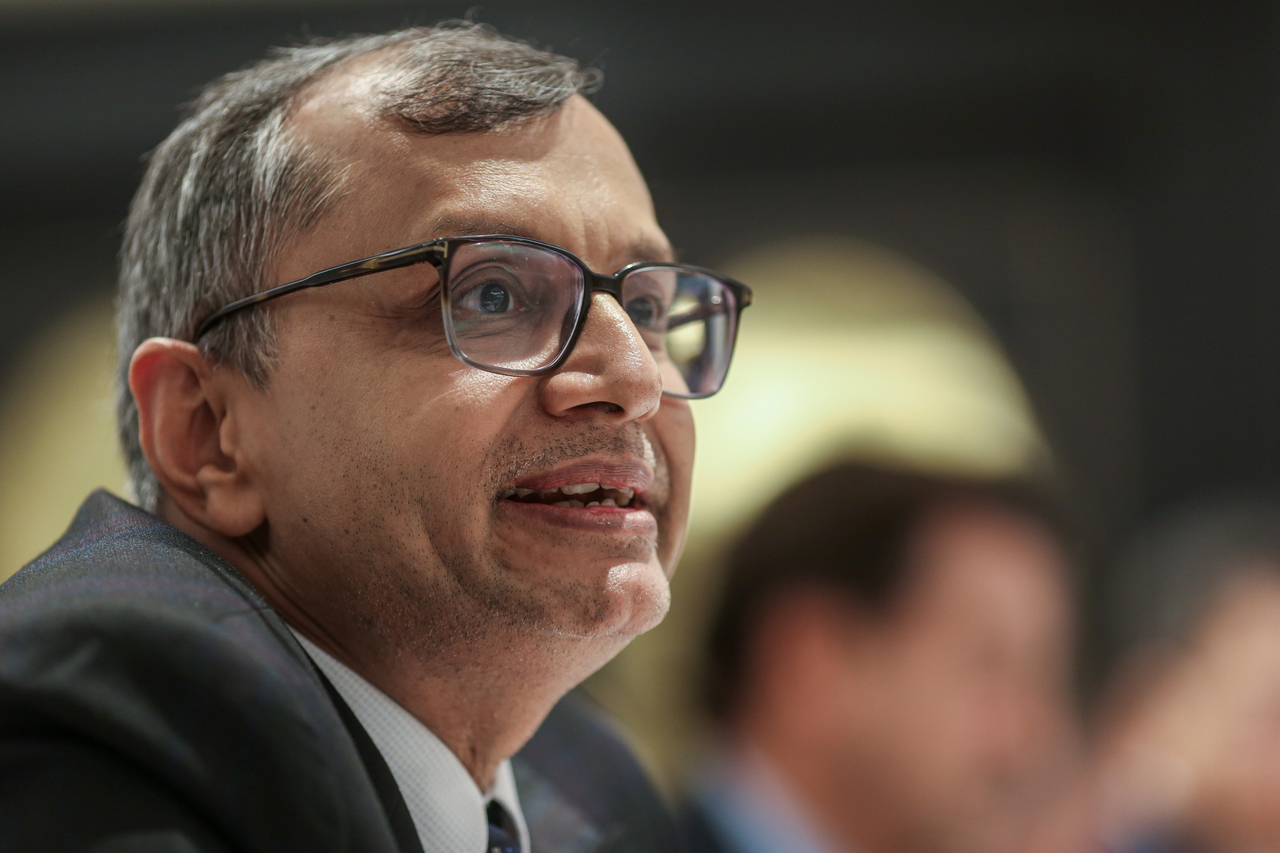
In response, the company has appointed Tarun Garg — currently the unit’s chief operating officer — as CEO beginning in January, making him the first Indian to lead Hyundai Motor India since the automaker entered the market in 1996.
Hyundai also announced in October that it will invest $5 billion in local production and development and launch 26 models in India by 2030, ranging from premium Genesis offerings to electric vehicles.
“We are set to become one of the very few mass-market OEMs in India to offer a comprehensive range of powertrain options, spanning internal combustion engine, compressed natural gas, EV and hybrid technologies,” Garg said.
Competition is expected to heat up further as Japanese automakers expand their local footprints and global EV makers such as BYD and Tesla move toward full-scale entry into India. Seeking a workaround for the 15 percent tariff on Japanese vehicles in the US, Toyota and Suzuki plan to invest $11 billion to strengthen manufacturing and export capacity in India, according to Reuters.
“In India, small cars dominate sales, so the market alone is not highly profitable,” Lee said. “But the country’s wide wealth gap creates strong potential for higher-end models, and Hyundai plans to diversify its lineup accordingly.”
“Hyundai still holds advantages over Japanese automakers in EVs, while Chinese brands face geopolitical uncertainty. At the same time, Hyundai will need to work closely with the Indian government, which is keen on developing its domestic auto industry.”
forestjs@heraldcorp.com