아래 글은 일본토익강사가 한국에서 토익시험을 보고 비교한 내용이 담겨있다. 필자가 일본에서 20회 이상 시험보기로는 한일 토익 난이도는 같고 리스닝 속도도 같다. 그러나 아래 글에는 당사자의 첫 한국 토익시험에 대한 솔직한 판단이 들어가 있다. 원문 그대로 실으니 참고하기 바란다.
Koji Hayakawa’s TOEIC Trip to Korea — A Comparison of TOEIC in Korea and Japan
Koji Hayakawa (Jay)
With the support of Mr. Kim Daekyun, I had the opportunity to take the TOEIC test in Korea in October 2025. In this short essay, I would like to share the key differences I noticed between the tests in Korea and Japan, the gap in average scores, and a few features of prep textbooks in both countries.
1. Differences Between the TOEIC in Japan and Korea
I was surprised even before the test began. In Japan, test takers keep their smartphones in their bags after turning them off. In Korea, however, we must submit our phones and put them into designated collection bags.
Another striking difference is the rule about writing in the test book. In Japan, any marking—notes, lines, or underlining—is strictly prohibited. If a proctor notices writing, the test taker receives an immediate warning card. Because I was used to that rule, it felt unusual to see many people freely writing in their booklets in Korea.
As for difficulty, I cannot generalize after taking the Korean test only once. Still, the Japanese test felt slightly harder to me. That does not mean Korea is an easier place to score high. In fact, I sensed that reaching the same score (for example, 900) might require more correct answers in Korea. Parts 3 and 4 in Korea seemed more straightforward, while the answer choices tended to be longer. I also expected many Korean names, but interestingly, I heard more Japanese ones.
Near the end of the test, Korean proctors announce the remaining time, while Japanese proctors do not. The collection process was different too: in Korea, people in the back row gather materials from their line, whereas in Japan, proctors collect them one by one.
2. The Gap in Average Scores
The TOEIC serves similar purposes in both countries: university students often take it for job hunting, and employees use it for promotions, transfers, or career moves. In October, average scores differed notably.
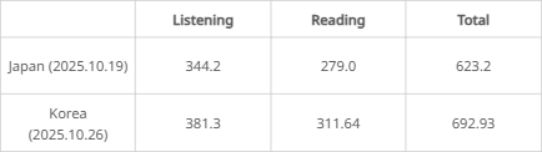
The total gap is almost 70 points. This may reflect higher overall proficiency in Korea, but it may also come from differences in test-taker demographics and motivation. In Korea, TOEIC scores are tightly connected to hiring, promotion, and overseas assignments, which creates strong pressure to study intensively. In Japan, many people take the test for immediate career needs, but a sizable number also take it for learning, self-assessment, or personal progress.
Score requirements differ as well. In Japan, many companies set minimum targets around 600, and even higher requirements usually stay near 800. Organizations demanding 900 or TOEIC Speaking scores are rare. In Korea, higher benchmarks are more common, leading to more rigorous preparation.
3. Preparation and Textbooks
In Japan, real test books based on past forms are not available. Because some items are reused in future tests, ETS does not allow the Japanese administration to publish actual test forms. Official ETS books exist, but they are not built from real exams. Each one contains only two mock tests and costs about 3,500 JPY.
Korean textbooks, by contrast, are large, thick, and packed with far more questions. They also tend to be more colorful and design-heavy, while Japanese books are smaller and simpler. For that reason, some Japanese learners buy Korean TOEIC books online to access higher-volume practice. Given the difference in questions per book, Korean learners may naturally spend more time practicing.
Overall, it was a great TOEIC trip to Korea, and observing these differences firsthand was fascinating. I earned a 985 (missing one vocabulary question in Part 5), and I plan to take the test in Korea again to aim for a perfect score.
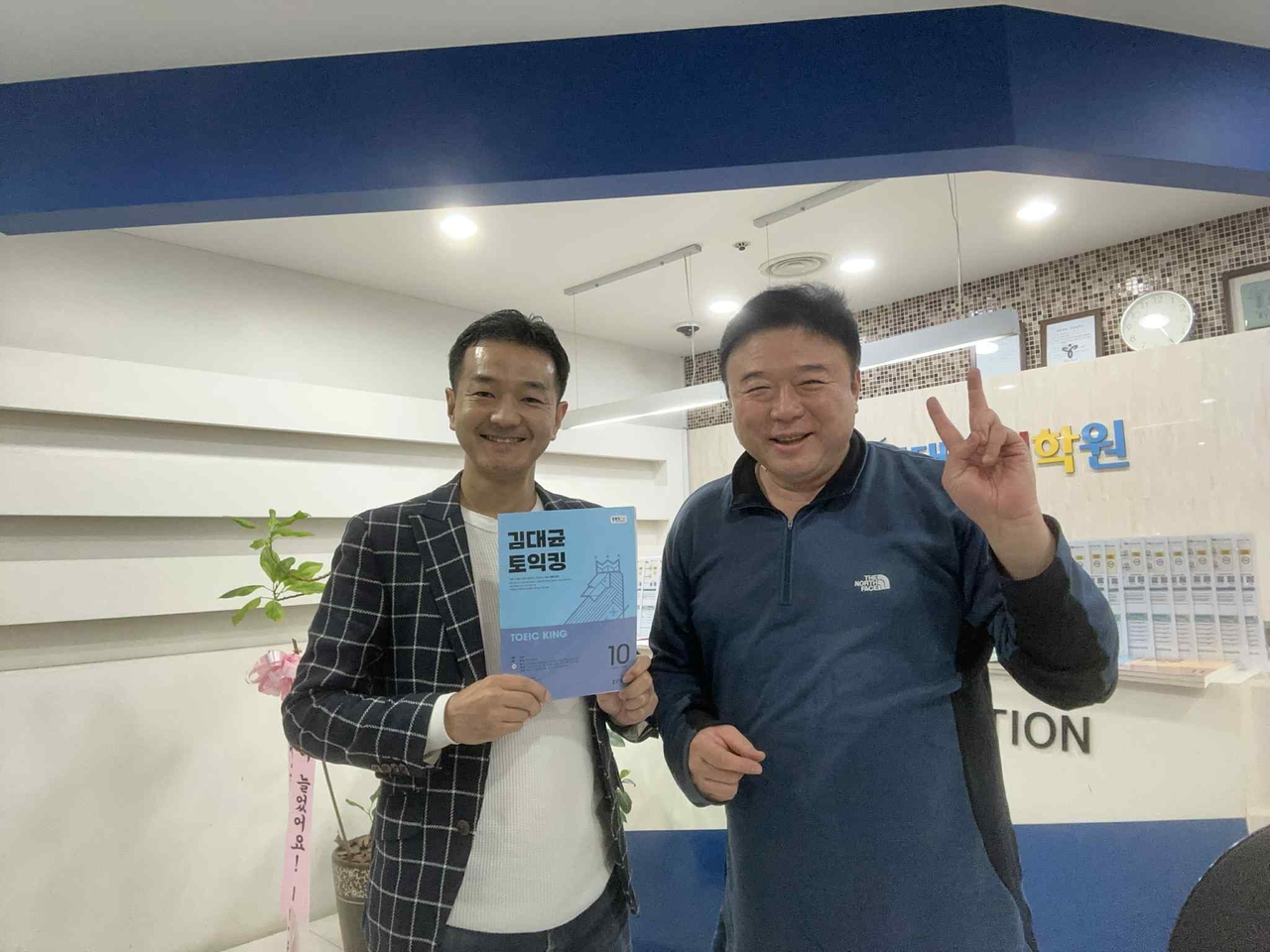
필자의 친구 일본 토익 강사 Koji Hayakawa의 한국 토익시험 체험기 – 한국·일본 토익 비교
Koji Hayakawa (Jay)
김대균 선생님의 도움으로 2025년 10월 한국에서 TOEIC을 볼 기회를 얻었다. 이번 글에서는 한국과 일본 시험에서 느낀 차이, 양국 평균 점수 격차, 그리고 준비 교재의 특징을 간단히 정리해 보고자 한다.
1. 한국과 일본 TOEIC의 차이
한국 시험장은 시작 전부터 놀라웠다. 일본에서는 휴대폰을 끄고 가방에 넣어두기만 하면 되지만, 한국에서는 휴대폰을 반드시 제출해 수거 봉투에 넣는다.
또 일본은 시험지에 어떤 표시도 하면 안 된다. 감독관이 필기를 발견하면 즉시 경고 카드를 보여 줄 정도로 엄격하다. 그래서 한국에서 많은 응시자가 시험지에 자연스럽게 메모하는 모습을 보고 의외였다.
난이도는 한국 시험을 한 번만 본 탓에 단정할 수는 없지만, 체감상 일본이 약간 더 어렵게 느껴졌다. 다만 한국이 더 쉽게 고득점이 나오는 시험이라는 뜻은 아니다. 같은 900점을 받기 위해 한국에서 더 많은 정답이 필요하다는 인상이 있었다. 한국 Part 3·4 지문은 비교적 직선적이었지만, 보기 문장은 일본보다 길었다. 이름은 한국식보다 일본식이 더 많이 등장했다.
마지막으로, 한국은 시험 막바지에 남은 시간을 안내하지만 일본은 그런 방송이 없다. 시험지 회수도 한국은 뒤쪽 응시자들이 줄 단위로 모아 전달하고, 일본은 감독관이 한 명씩 직접 회수한다.
2. 평균 점수 격차
10월 평균 점수는 다음과 같다.

총점에서 약 70점 차이가 난다. 한국은 취업·승진·해외 파견 등 실질적 목적과 점수 요구가 강해 고득점 동기가 크다. 반면 일본은 실제 커리어 목적 외에도 학습·실력 점검 차원에서 응시하는 비중이 상대적으로 크다.
기업 요구 점수도 차이가 크다. 일본은 보통 600~800점 수준에서 기준이 형성되며 900점이나 Speaking을 요구하는 곳은 드물다. 한국은 더 높은 점수를 요구하는 경우가 많아 준비 강도도 자연히 세진다.
3. 준비 교재의 차이
일본에서는 실제 기출 기반 공식 문제집이 거의 없다. ETS가 일부 문항 재사용 문제 때문에 일본 내 실전 형태 출판을 허용하지 않기 때문이다. 일본 ETS 공식서는 모의고사 2회분에 약 3,500엔으로, 분량 대비 가격이 높은 편이다.
반면 한국 교재는 크고 두꺼우며 문제 수가 압도적으로 많다. 그래서 일부 일본 학습자들이 한국 교재를 온라인으로 구매하기도 한다. 문제량 차이를 고려하면 한국 수험생이 더 많은 연습을 할 수 있는 구조일 가능성이 있다.
한국에서의 첫 TOEIC은 매우 흥미로운 경험이었다. 985점을 받았고(Part 5 어휘 1문항 실수), 다음에는 만점을 목표로 다시 한국에서 시험을 볼 생각이다.
Vocabulary
test taker: 응시자
submit smartphones: 휴대폰을 제출하다
proctor: 시험 감독관
strictly prohibited: 엄격히 금지된
warning card: 경고 카드
test difficulty: 시험 난이도
impression: 인상, 체감
straightforward: 직선적인, 이해하기 쉬운
answer choices: 선택지
average scores: 평균 점수
score gap: 점수 격차
be linked to ~: ~와 직접 연결되다
minimum requirement: 최소 요구 점수
rigorous preparation: 강도 높은 준비
mock test: 모의고사
real test book / actual form: 실전(기출) 기반 교재
khnews@heraldcorp.com