German industrial group bets on Korea’s shift to smart manufacturing, EV components, sustainable technologies

Hamburg-headquartered industrial solutions provider Rieckermann has been a quiet but consequential player in Korea’s industrial development for more than seven decades.
Founded in 1892, the privately owned German group has grown into a global organization with over 750 employees across 26 offices in 18 countries. Its Seoul branch, established in 1953, is one of its earliest and longest-running Asian operations.
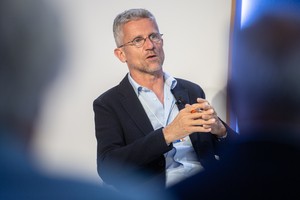
“There is a long tradition of cooperation between Korea and Germany, and I believe this relationship remains truly extraordinary,” said Michael Hennig, CEO of Rieckermann Korea, during an interview with The Korea Herald on Nov. 5.
Looking back at Korea’s industrial transformation — and Rieckermann’s evolving role within it — Hennig said future growth would hinge on high-value projects, including smart factory upgrades, sustainable energy infrastructure, and next-generation mobility components.
From postwar imports to high-tech industrial solutions
Rieckermann Korea began operating in the post-Korean War years by bringing advanced European machinery into local industries.
“From day one, we were importing mostly German machinery, and some from elsewhere in Europe,” Hennig said. “German machinery was highly sought after at the time. It was a very strong period for business.”
Today, Rieckermann Korea supplies industrial solutions across several key sectors. Its largest segment is metal processing and machine tooling, a reflection of Korea’s strong manufacturing base.
“Our biggest sector so far has been the automotive industry,” Hennig said. “Korea’s automotive sector is well established, and we’ve had the honor of supplying many of the machines that keep it running.”
The company also hosts a Low Carbon Technologies Seminar, underscoring its focus on sustainable industrial upgrades.
Hennig highlighted pharmaceuticals and food production as rising strategic priorities — fields closely aligned with Korea’s expanding capabilities and international recognition.
“Korea’s pharmaceutical sector has grown remarkably,” he said. “It demands the highest standards in precision, compliance and quality. We deliver a full product portfolio for pharmaceutical solids production to support that. The same goes for food, where global interest in Korean cuisine continues to rise.”
Business culture built on trust
Hennig said that one of the distinctive advantages of doing business in Korea is the country’s culture of reliability.
“Mutual respect among business partners is key. We’ve never had issues with open payments in Korea,” he said. “You send an invoice after the job is done, exactly as agreed, and it is always settled.”
Reflecting on his 16 years living in Korea since first arriving in 2003, Hennig described the country’s sense of responsibility and trust as an ideal foundation for long-term partnerships.
His engagement with the local community was recognized in 2008, when he was granted honorary citizenship for supporting educational environments for children of foreign residents in Seoul.

Hennig noted that the company’s journey in Korea mirrors the broader historical connection between the two nations, which share parallel experiences of division and reconstruction. He also pointed to the generations of Korean miners, nurses and workers who supported Germany’s postwar rebuilding — a legacy that continues to shape bilateral ties.
“Both South Korea and Germany are advanced manufacturing economies confronting global uncertainty, supply chain restructuring, and transitions into high-tech areas like semiconductors, EV batteries, AI and renewable energy,” he said. “That creates natural alignment.”
Preparing for Korea’s next industrial leap
Rieckermann Korea’s next chapter will be closely tied to the country’s industrial trajectory and its deepening partnership with Germany.
The company plans to expand further into EV components, smart manufacturing systems, and sustainable industrial technologies, leveraging its global network and German engineering know-how.
“As the two nations collaborate more deeply, we expect to play an even more integral role in supporting Korea’s next era of industrial innovation,” Hennig said.
With more than 70 years of continuous presence in Korea, Rieckermann Korea sees itself as positioned at the intersection of German precision and Korea’s dynamic industrial culture.
Hennig noted that he is constantly scanning the market for new technologies suited to Korean needs. His most recent discovery — an infrared heating system — is one he personally championed.
“I’ve always felt that conventional warm-air heating carries risks, like spreading germs or causing dry skin,” he said. “So I introduced a product that provides heat without those drawbacks.”
From major industrial projects to practical solutions for everyday life, Hennig said Rieckermann Korea will continue working as a trusted bridge between German engineering excellence and Korea’s ambitions for the future.
hykim@heraldcorp.com

![[Exclusive] SK On fast-tracks pilot output in all-solid-state battery race](https://wimg.heraldcorp.com/news/cms/2025/11/18/news-p.v1.20251117.611a51c182b546348b32ccc3233f6193_T1.png?type=h&h=240)