As trade risks grow, Korea seeks to export digital customs model while deepening ties with partners across Asia, Africa, Latin America
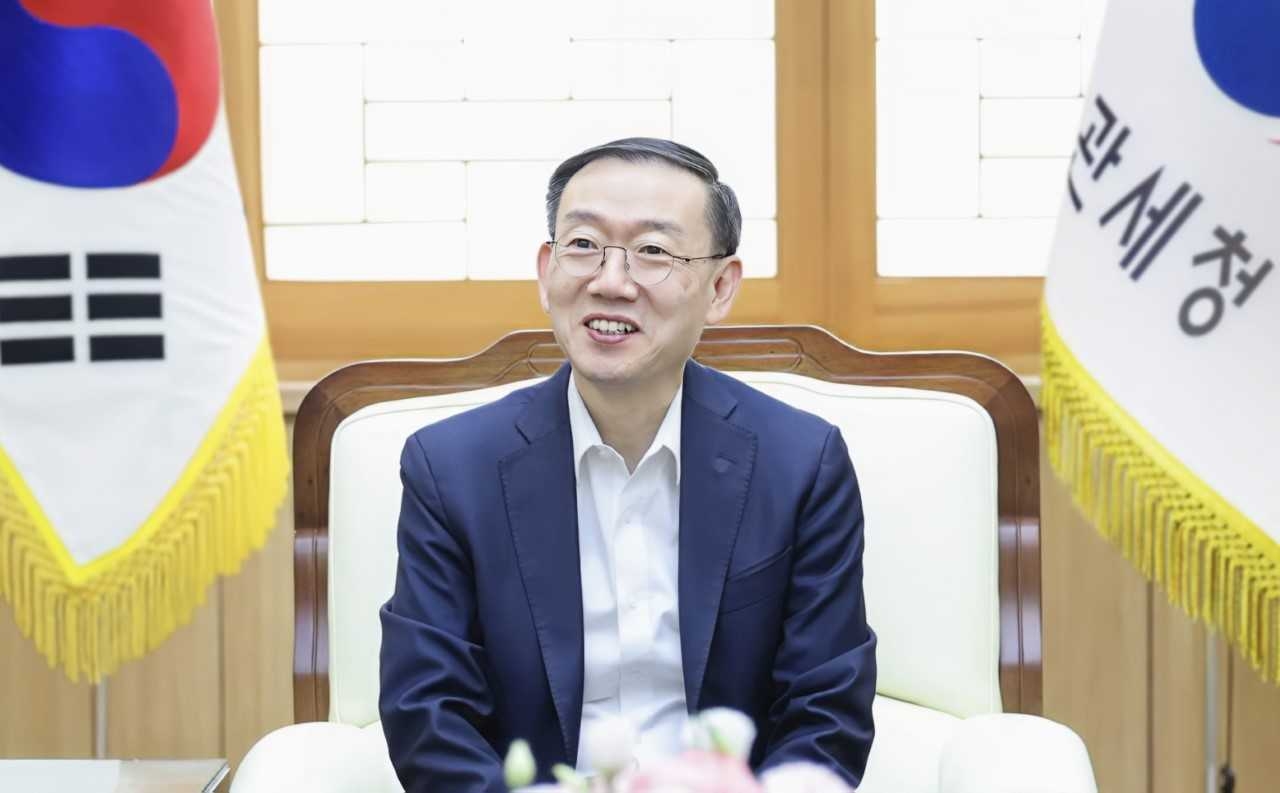
South Korea’s customs chief has pledged to use artificial intelligence and digital tools to strengthen fair growth at home while deepening cooperation with developing countries, positioning the Korea Customs Service as a “border guardian” for both trade and national security.
In a recent interview with The Korea Herald, the KCS head said the agency is moving beyond its traditional image as a tax collector to become a strategic actor in trade security, digitalization and global standard-setting.
“Over the past decades, Korea has grown into a key player in the global economy through industrialization, democratization, digitalization and the spread of K-culture,” the customs chief said. “Customs administration must match that role. Our vision is to lead fair growth with AI-powered customs and to act as a guardian of trade and public safety at the border.”
He noted that customs has three core functions: blocking threats to public safety, collecting customs and value-added taxes — about 20 percent of annual national tax revenue — and upholding a fair trade order by cracking down on smuggling, illegal foreign exchange dealings and trade-based financial crimes.
“Today’s complex trade environment, from supply chain shifts to changing US tariff policies and intensifying technology competition, shows that customs must be more than a tax agency. It has to be a ‘gatekeeper’ for economic security,” he added.
Exporting UNI-PASS to 16 countries
At the heart of Korea’s digital transformation in customs is UNI-PASS, the electronic clearance system that handles virtually all customs procedures without paper or in-person visits.
“UNI-PASS is our flagship innovation,” the chief said. “It digitizes customs processes from end to end — declarations, risk management, audits, investigations, FTA administration, big data and more — and connects with other government bodies to offer one-stop, real-time trade information.”
The system, built as a modular platform of 48 components, has been designed to meet World Customs Organization and UN standards, making it deployable in any country. Unlike many off-the-shelf solutions, it can be tailored and even delivered with source code where appropriate, he noted.
Korea has exported UNI-PASS and related systems to 16 countries across Asia, Africa, Latin America and Europe, in projects worth about $330 million. Beneficiary countries include Mongolia, Nepal, Uzbekistan, Tanzania, Ghana, Algeria, Ethiopia, the Dominican Republic, Ecuador, Paraguay and North Macedonia, among others.
“For Korea, exporting UNI-PASS supports our IT (small and medium-sized enterprises) going overseas and has created close to 3,900 jobs in the ICT sector,” he said. “For partner countries, it means faster clearance, higher revenue and more transparent administration.”
He pointed to Ghana and Tanzania as examples. After UNI-PASS-based systems went live, customs revenues rose by around 24 percent in Ghana and 29 percent in Tanzania over several years, while average clearance times dropped by four days and 15 days, respectively.
“These are countries where non-tariff barriers were high and trade environments underdeveloped. By introducing a modern, transparent electronic system, we help build predictable conditions for trade and investment,” he said.
Looking ahead, Korea plans to keep expanding UNI-PASS exports, especially in Africa, and to upgrade existing systems with AI for data warehousing, risk management and origin control. Consulting projects are already underway for Morocco and Mauritius, and discussions are in progress with Egypt and other countries.
Digitizing origin: EODES and OOMS
As Korea’s free trade agreement network has expanded to 22 FTAs with 59 countries, including an upcoming FTA with the United Arab Emirates, rules of origin have become both a key opportunity and a potential bottleneck.
“FTAs are powerful tools for competitiveness, but complicated procedures and paper-based origin certificates can turn them into non-tariff barriers,” the customs chief said. “We need to make it easier and more trustworthy to use them.”
To that end, the KCS has developed EODES, or Electronic Origin Data Exchange System, which allows customs authorities in partner countries to exchange origin certificate data electronically and in real time.
“When EODES is in place, companies no longer need to submit original paper certificates to receive preferential tariffs,” he explained. “This simplifies procedures, cuts administrative costs and reduces delays caused by doubts over authenticity.”
Korea currently runs EODES with major trading partners such as China, Indonesia, Vietnam and India. Since its launch with China in 2016, FTA-related clearance issues have dropped sharply from 80 cases in 2016 to just a handful in recent years.
Building on EODES, Korea is now rolling out OOMS or One-stop Origin Management System, a patented platform that integrates everything from corporate origin management to certificate application, issuance and cross-border data exchange within a single system.
“OOMS is not only for Korean companies,” he said. “We are using ODA resources to help developing countries build their own origin management systems, so they can actually benefit from FTAs instead of being left behind.”
This year, Korea began ODA-based OOMS projects in Tunisia and Tanzania — three-year programs totaling about 11.3 billion won ($7.7 million) — to help modernize their customs and FTA utilization capacity.
Strengthening global networks and fighting cross-border crime
On the multilateral front, the KCS works with the World Customs Organization, World Trade Organization, Asia-Pacific Economic Cooperation, ASEAN and other bodies to help shape international standards. Recent achievements include proposing new customs declaration requirements for cross-border e-commerce postal items to be applied in 192 countries and leading work on global guidelines for electronic origin data exchange.
The agency currently posts 11 customs attaches and four seconded officials in key locations, including the US, China, the EU, Japan, Thailand, Vietnam, Indonesia, India and WCO offices in Belgium and Thailand. Their roles range from monitoring regulatory changes to resolving clearance disputes and coordinating joint operations.
“Trade disputes and clearance issues facing Korean exporters have been rising, so we are expanding our presence in major markets like Mexico, India, China and Vietnam,” the chief said. “We want our companies to have a reliable partner on the ground.”
A particular focus is on transnational crime, especially narcotics, illicit firearms and dangerous counterfeit goods.
“Korea participates actively in the government-wide task force against transnational crimes that harm people’s livelihoods,” he said. “We are targeting criminal funds, drugs, weapons and unsafe products at the border.”
The agency has set up a dedicated task force to tackle transnational crime, is intensifying analysis of suspicious financial flows in cooperation with the Financial Intelligence Unit, and is expanding safety testing of imported goods. It is also leading joint anti-drug operations with customs authorities in Thailand, Vietnam, Malaysia, the US and Germany, the Netherlands and others, while working with WCO on regional crackdowns.
“We will also seek new joint operations with countries such as Cambodia, Laos and Canada, and take part in UN-led campaigns to cut off drug flows before they reach Korea,” he said.
Pivot to the Global South and managing trade risks
With Korean exports to the US facing growing uncertainty, the KCS sees diversification toward Global South markets as a national priority.
“Major Global South economies have huge population and resource bases and account for a significant share of world (gross domestic product) and trade,” the chief said. “They are essential partners if we want to broaden our trade territory.”
Customs attaches are already posted in India, Thailand, Indonesia and Vietnam to monitor trade trends and identify new cooperation opportunities. Future plans include more personnel, expanding EODES and AEO mutual recognition agreements with countries such as Thailand and Brazil, and tailoring UNI-PASS, OOMS and training projects for Global South partners.
In September, the KCS invited senior customs officials from 10 Global South countries, including India, Thailand, Indonesia, Brazil, Vietnam and Mexico, to Korea for a trade facilitation policy forum focused on digital customs and smoother trade flows.
At the same time, the agency is stepping up support for Korean companies facing new tariffs and customs policies overseas. It holds regular briefings and one-on-one consultations with exporters in cooperation with industry associations, KOTRA and Korean missions abroad, and uses customs attaches and local support teams to resolve disputes quickly on the ground.
“When working-level channels are not enough, we escalate issues to commissioner-level meetings,” he said, noting that Korea recently secured a favorable decision at the WCO on a major tariff classification dispute affecting Korean exporters.
The KCS is now preparing the 18th Korea-US Customs Commissioners’ Meeting, which will focus on sharing information on US tariff policies, establishing dedicated channels to resolve Korean companies’ clearance problems, and strengthening cooperation against drug trafficking and circumvention of trade measures.
‘AI-led fair growth’ as a guiding vision
Looking forward, the customs chief framed the agency’s new vision — “Leading fair growth with AI-powered customs” — as a response to both domestic and global challenges.
“AI is a fundamental driver that will change how we work,” he said. “As trade structures diversify and direct-to-consumer cross-border shopping becomes common, we need AI to radically innovate our systems, processes and working methods.”
The goal, he added, is to create “AX customs,” or AI-transformed customs administration, that delivers smarter services for citizens, supports corporate competitiveness and contributes to new growth industries by opening up trade data in AI-ready formats.
“Fair growth means sustainable prosperity shared by the state and its people,” he said. “To achieve real growth, capital markets, foreign exchange markets and the trade order must operate fairly — and customs has a central role in monitoring and enforcing that fairness.”
The customs chief pledged to continue strengthening investigations into trade-based crimes, including money laundering using virtual assets and practices that distort trade and financial markets, while enhancing the accuracy and equity of tax collection and preemptively blocking threats to public safety at the border.
“Customs will protect trade security with a focus on the national interest and use our expertise to navigate an increasingly complex trade environment,” he said. “We will do our best to be a true sentry for both the Korean economy and the safety of our people.”
kwonhl@heraldcorp.com


![[Exclusive] SK On fast-tracks pilot output in all-solid-state battery race](https://wimg.heraldcorp.com/news/cms/2025/11/18/news-p.v1.20251117.611a51c182b546348b32ccc3233f6193_T1.png?type=h&h=240)