Fewer South Korean vocational high school graduates are heading straight into the workforce, as more turn to college in hopes of improving their long-term job prospects.
According to a national survey released Tuesday by the Ministry of Education and the Korean Educational Development Institute, a record 49.2 percent of vocational high school graduates went on to tertiary education, continuing a five-year rise from 45 percent in 2021.
Of those who did not pursue further studies and sought employment, 55.2 percent were employed as of April 1, the lowest since 2021. However, the decline is only slight, as the 2021 rate was 55.4 percent.
The employment rate is calculated only among graduates who are not enrolled in school, enlisted in the military, or otherwise unavailable for work, such as for caregiving or health reasons.
The trend of vocational school graduates pursuing tertiary education is seen as a response to labor market pressures, where university degrees remain favored and career advancement is often limited for high school graduates.
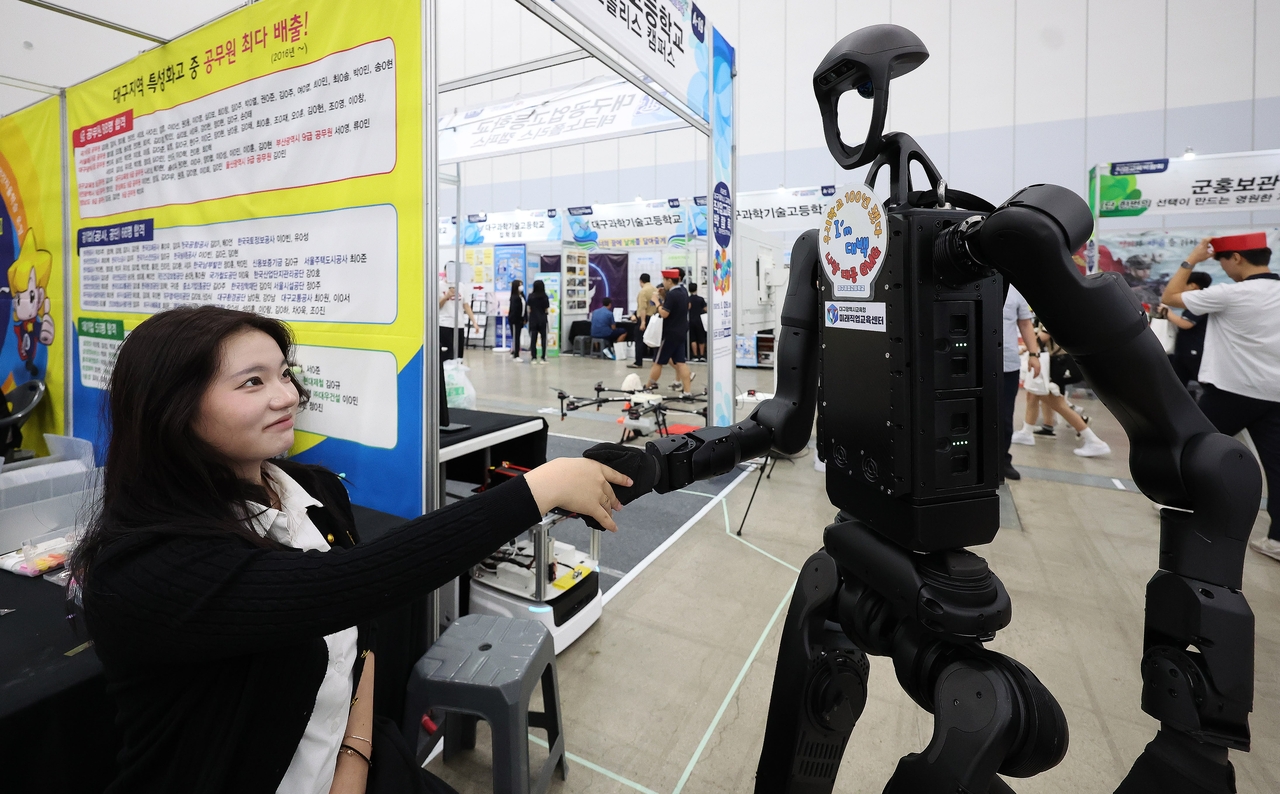
South Korea’s vocational high schools come in three main types. Industry-linked "meister high schools" are government-supported and typically offer specialized tracks tied to advanced manufacturing or tech industries. More common are “specialized vocational high schools,” which train students in fields such as mechanics, design or business.
Finally, some general high schools offer separate vocational tracks with lighter job training components.
Employment outcomes vary sharply by school type. Graduates from meister schools had the highest employment rate (73.1 percent), far ahead of specialized schools (52.4 percent) and vocational-track students at general high schools (38.2 percent). Job retention followed a similar pattern. One year after graduation, 71.5 percent of meister school hires remained employed, compared to 67.4 percent from specialized schools and 64.4 percent from general high schools.
Of all the vocational graduates confirmed to be employed, 98.9 percent were enrolled in national health or employment insurance programs, indicating stable, formal jobs. Among these employed graduates, 36.3 percent worked at companies with over 300 employees — up from 22.5 percent in 2021 — which the ministry cited as a sign of gradually improving job quality.
Vice Minister of Education Choi Eun-ok said in the press release of this survey that the government will continue expanding partnerships with high-tech industries and support job-linked vocational programs. “We will strengthen training aligned with hiring pipelines and identify more high-quality employment opportunities for high school graduates,” she said.
mjh@heraldcorp.com