Half of men in their 20s and 30s show elevated uric acid levels, KMI says
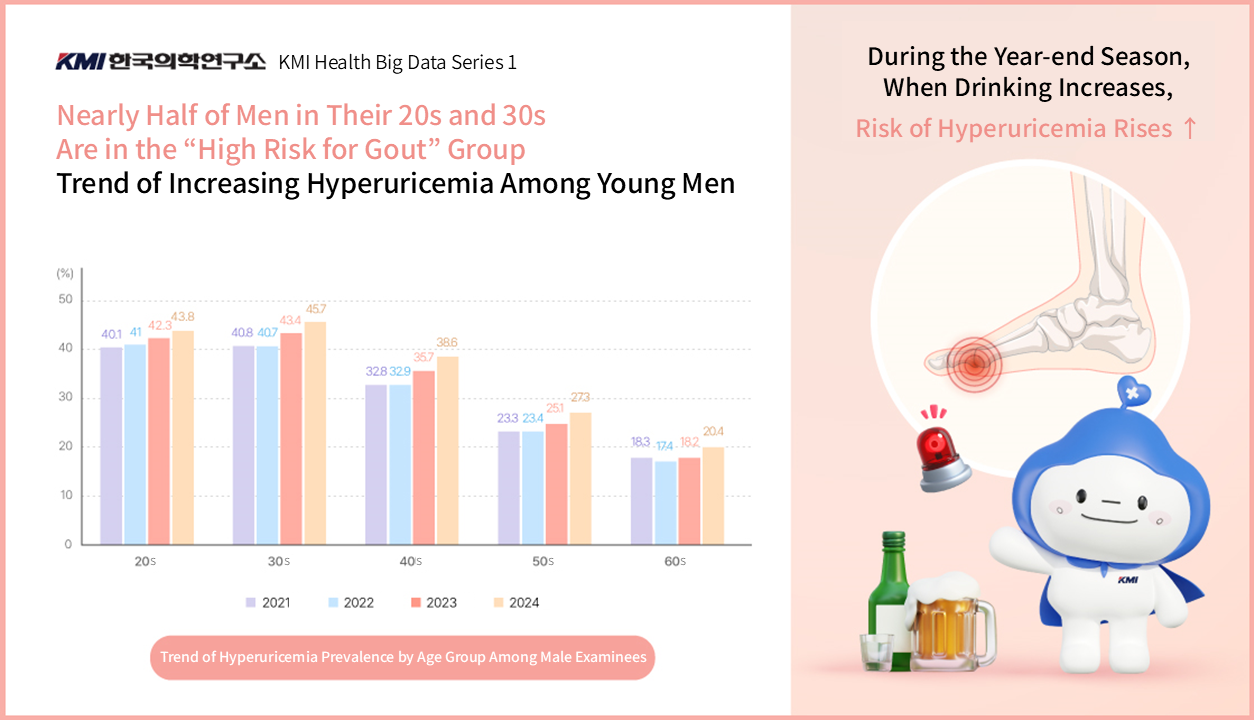
The prevalence of hyperuricemia, the primary cause of gout, has risen sharply in South Korea over the past four years, with the steepest increases seen among younger men, according to a new analysis released Thursday by the Korea Medical Institute.
The findings, the first in KMI’s newly launched “Health Big Data Series,” are based on 2 million medical check-up records from adults aged 19 and older who visited the institute’s eight centers nationwide between 2021 and 2024.
Hyperuricemia occurs when uric acid levels exceed the normal range and, if untreated, may progress to gout. Elevated uric acid is also associated with hypertension, diabetes and kidney disease.
Sharp rise among young men
The overall prevalence of hyperuricemia increased from 23.9 percent in 2021 to 26.7 percent in 2024. Average uric acid levels also edged up to 5.81 milligrams per deciliter from 5.72 mg/dL over the same period.
Younger men recorded the highest rates, with 43.8 percent of men in their 20s and 45.7 percent of men in their 30s affected last year — meaning nearly half fall into the hyperuricemia category.
Men in their 40s saw the largest jump, rising 5.8 percentage points over four years.
Among women, prevalence remained lower at 11.1 percent overall, though rates increased most notably among those in their 50s, likely due to reduced uric acid excretion after menopause.
Alcohol consumption and lifestyle patterns
The analysis showed a strong link between drinking frequency and elevated uric acid. Hyperuricemia affected 16.8 percent of non-drinkers but 32.3 percent of people who consumed alcohol five or more times per week.
Beer drinkers showed the highest prevalence at 30.9 percent, followed by those who consumed makgeolli (28.8 percent), soju (22.5 percent), distilled spirits (18.7 percent) and wine (17.1 percent). Beer and makgeolli contain higher levels of purines, which contribute to uric acid production.
Smoking and lack of exercise were also associated with a higher risk — 33.8 percent among smokers and the same rate among those who did not engage in regular physical activity.
Higher risk when combined with chronic conditions
Hyperuricemia was significantly more common among people with obesity or metabolic disorders.
Those with Class 3 obesity (BMI ≥ 35) recorded a prevalence of 56 percent.
People with hypertension showed a rate of 38.6 percent, compared with 17.8 percent among those with normal blood pressure.
Individuals with metabolic syndrome recorded a prevalence of 41.8 percent, 20 percentage points higher than those without.
Experts warn of rising risks among younger adults
“The rapid increase among young men is particularly concerning,” said Ahn Ji-hyun, senior research fellow at the KMI Research Institute and a specialist in internal medicine.
“Hyperuricemia is not only a precursor to gout but also an early warning sign for cardiovascular and metabolic diseases. Early detection through regular check-ups and lifestyle changes is essential.”
About the analysis
The findings are based on anonymized check-up data from visitors to KMI centers and may not fully reflect national health statistics. More details are available on the KMI website under Research Activities Newsletter.
Founded in 1985, KMI operates eight medical check-up centers nationwide: three in Seoul, including Gwanghwamun, Yeouido and Gangnam, and five in Daegu, Busan, Gwangju, Jeju Island and Suwon, Gyeonggi Province.
hnpark@heraldcorp.com