The past twenty years have seen a boom in people learning Korean. Hallyu and K-pop have put South Korean pop culture on the map, particularly in the evolving global Generation Z culture. Other factors, many of which have received little attention, have contributed to the boom.
The first, and perhaps most important, is the expanding interaction with South Korea, which deepens contact with Koreans and inspires people to learn the language. Interaction with Koreans has expanded, both in South Korea and around the world, as investment and tourism have grown.
Vietnam is a good example. In 2024, Vietnam was South Korea’s third-largest trading partner, having bumped Japan out of the number three spot in 2022. In the first half of 2025, South Korea was the second largest foreign investor in Vietnam, after Singapore, accounting for 14.3 percent of total investment.
The growth in trade and investment has increased interaction between South Koreans and Vietnamese. Recognizing the importance of language in such interactions, Vietnam has actively promoted Korean language education in schools. In 2021, it designated Korean as a “first foreign language,” which allowed it to be taught in elementary schools. In 2025, 48 universities across Vietnam have Korean language or Korean studies departments, with about 27,000 students enrolled. And, in 2025, the number of Vietnamese students studying in South Korean universities reached 100,000, passing the number of Chinese students for the first time. The number of Vietnamese students taking the Test of Proficiency in Korean has grown rapidly and now accounts for 36 percent of test takers.
An interesting micro-example of Korean language education is the Sejong Academy, a Korean immersion public charter school in a suburb of St. Paul, Minnesota, in the US. The school was founded in 2014 with the idea that it would help Korean adoptees and immigrants learn about their Korean heritage. From the start, however, the majority of students were from the Karen refugee community that fled Myanmar. The Karen are speakers of Karenic languages who live in southern Myanmar along the border with Thailand and have long faced persecution in Myanmar. The small size and community feeling at the school appeal to many Karen students. The school has developed a blend of Korean and Karen culture. In 2022, it was accredited as a full Pre-K-12 Korean immersion charter school, the first such school in the US.
The second factor behind the boom is increased government and institutional support for Korean language education. With support from the Ministry of Education, the South Jeolla provincial government is expanding Korean language education programs as part of its Global Talent Hub Center project, designed to attract more international students to the province. It hopes that improved language proficiency will encourage them to settle permanently in the province after graduation. This represents an expansion of local government initiatives in Korean language education that have traditionally focused on the needs of “multicultural families” in which one spouse, usually the mother, is a migrant from abroad. The Ministry of Education is planning to launch similar programs in other provinces.
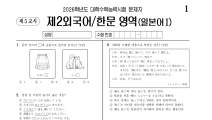
The boom in Korean language education has also created controversies and stress points. One example is the group of Korean language educators who are protesting against a proposal to effectively privatize the TOPIK. Currently, the National Institute for International Education, which is under the Ministry of Education, develops and administers the exam, but proposed changes would outsource the exam to a consortium of private companies. The educators argue that the plan could lead to higher exam fees, which would burden exam takers, and reduce the quality of the exam and its administration. The controversy raises questions about the durability of the government’s investment in Korean language education.
And then there is the issue of low salaries for Korean instructors in South Korea. An article in the Hankook Ilbo on November 2, 2025, stated that the average salary for a Korean language instructor was only 13.57 million won a year ($9,300), according to a 2021 survey by the National Institute of the Korean Language. Most instructors work as short-term workers on one-year contracts with no benefits, and 90 percent are women.
Language learning booms usually follow one of two paths. The first is slowing growth, with interest and investment remaining high. The second is decline, a bursting of the bubble, followed by dwindling relevance. Continued government support, particularly for the woefully underpaid instructors, is necessary for Korean language education to remain vital and relevant.
Robert J. Fouser
Robert J. Fouser, a former associate professor of Korean language education at Seoul National University, writes on Korea from Providence, Rhode Island. He can be reached at robertjfouser@gmail.com. The views expressed here are the writer’s own. -- Ed.
khnews@heraldcorp.com