
GWANGJU — The southern city long celebrated for its bold flavors is inviting travelers to experience kimchi as more than a side dish — as culture, history and even performance. On Dec. 5, Gwangju will launch “Gwangju: Where Kimchi Becomes Art,” a new one-night, two-day culinary tourism program developed as part of the national K-gastronomic Belt initiative.
The program follows the success of a day-trip version introduced in October. With strong demand from visitors, the city expanded the program into a full overnight itinerary that deepens hands-on kimchi experiences and adds more time for storytelling, education and exploration.
Yangnim-dong, where history becomes theater
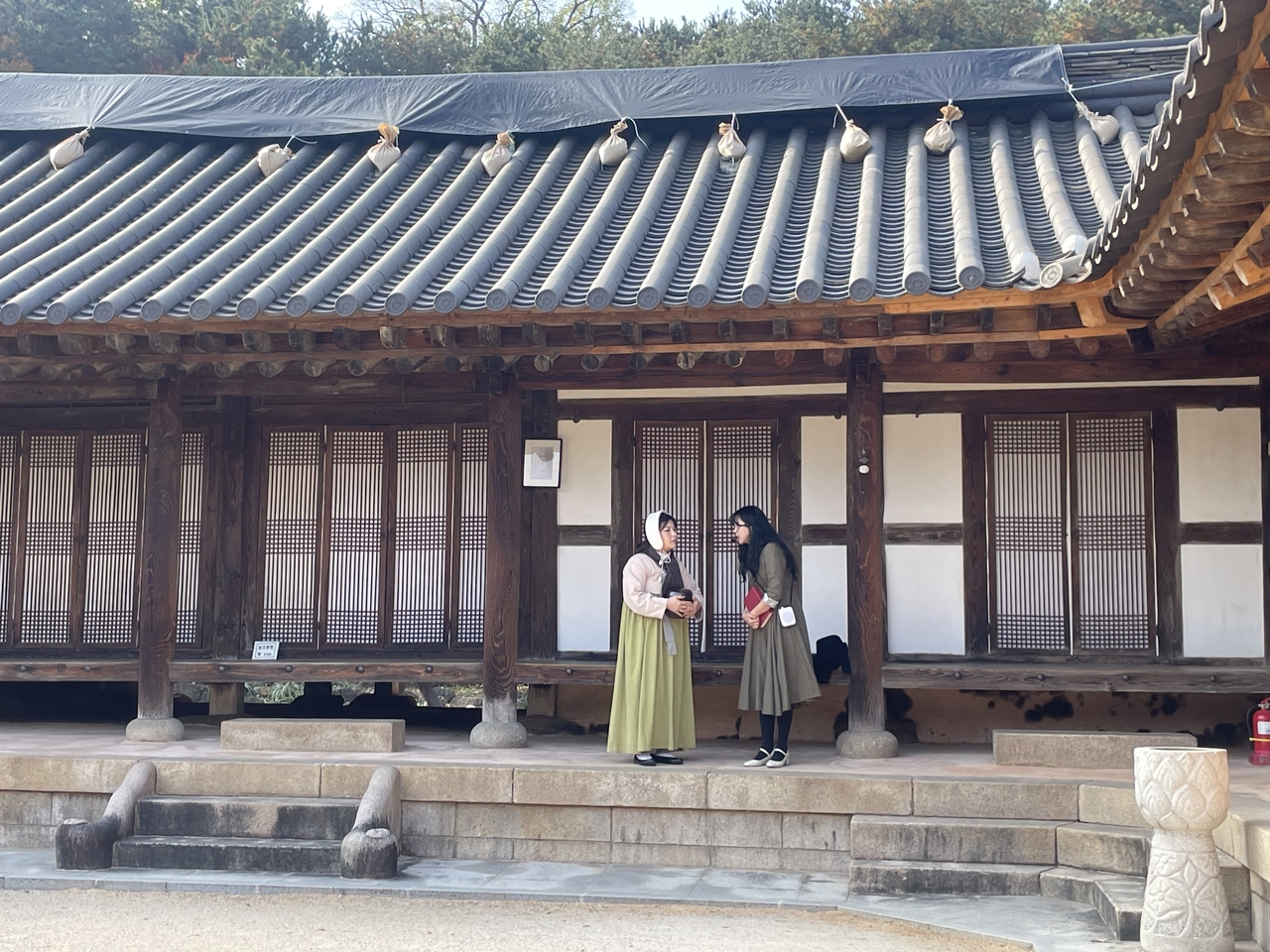
The journey begins at Yangnim-dong, a neighborhood where Western missionaries first settled more than a century ago. The walking tour here is not a standard historical stroll — it is performed as a live play.
Led by local theater artist Shin Hye-eun, the tour moves through seven stops, with actors appearing at each point to reenact scenes drawn from early encounters between Koreans and missionaries.
The story follows newcomers who feel homesick in a foreign land but eventually befriend local residents preparing kimjang. Visitors meet characters who share kimchi with missionaries, discuss the introduction of Hangul lessons and reflect on the cultural exchanges shaping the neighborhood.
Highlights include Missionary Wilson’s House, the oldest Western-style building in Gwangju, built in 1920. Known by his Korean name, Woo Il-seon, Wilson used the home as a shelter for war orphans. Another stop, Lee Jang-woo’s House -- designated Gwangju’s first Folk Material -- showcases the Jeolla region’s architectural heritage and even served as a filming location for the movie “Meet the In-Laws.”
Yang-dong Market, the living kitchen of Gwangju
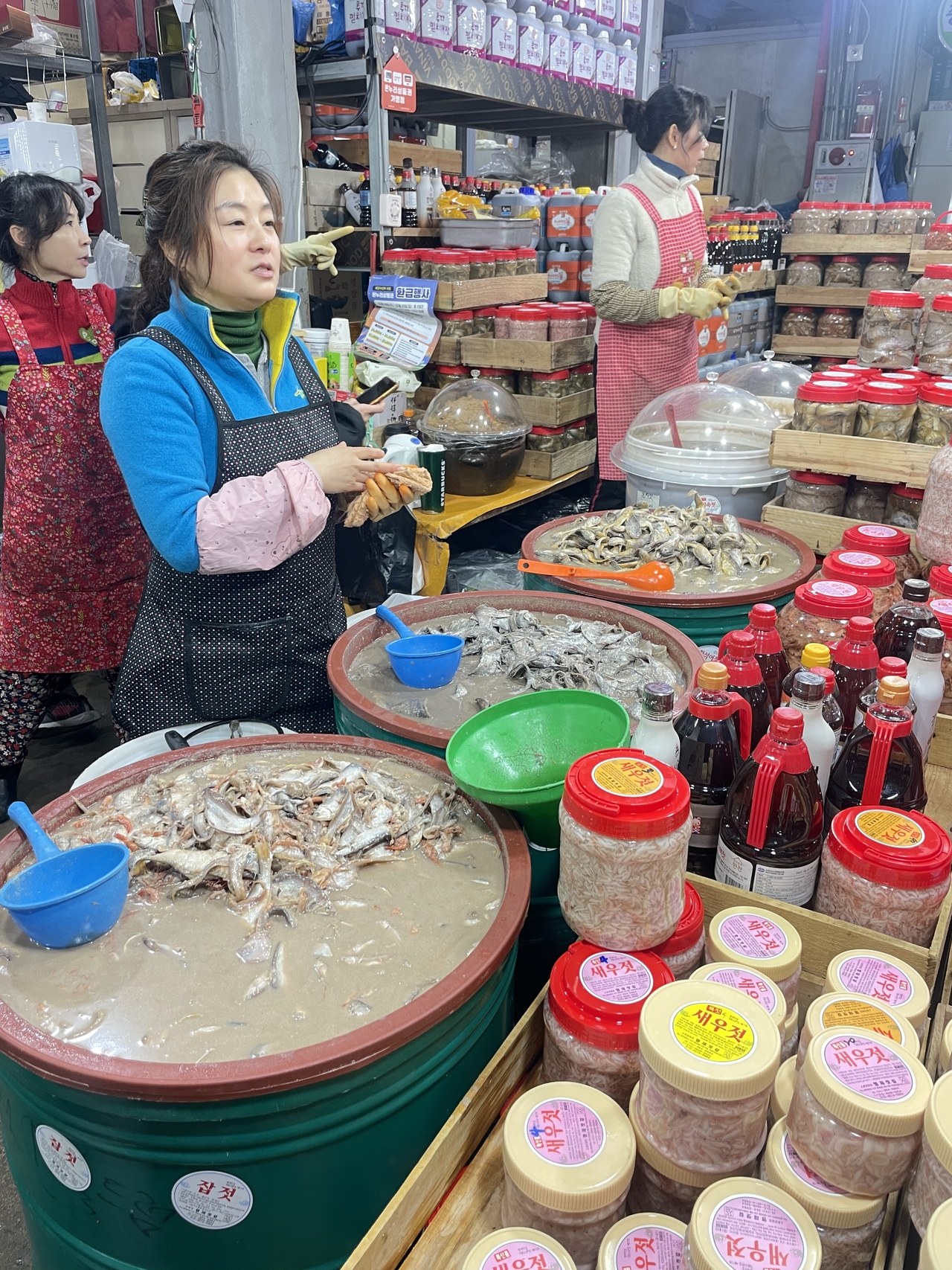
A short walk from the city center, Yang-dong Market remains the beating heart of Gwangju home cooking. The smell of dried fish, the sting of fermented jeotgal and the crackle of fresh vegetables spill from its narrow alleys.
Local vendor Kim Jin-hyeon, who runs a jeotgal shop with her mother, explains the region’s distinctive flavors. “People from the neighborhood come during kimjang season to buy a lot,” she said. “Tourists often order by delivery. Our salted shrimp — chujeot, ojeot and yukjeot — is especially popular. Yukjeot is the plumpest and best.”
She notes changing trends. “In the past, people used a lot of shrimp and anchovy jeotgal. Now they also use ones made with eel, hairtail and yellow corvine. Hairtail jeotgal has such deep umami you don’t need extra seasoning.”
Southern Korean kimchi is famed for its thick, flavorful seasoning, often built from multiple types of jeotgal. “Using three or four kinds is basic,” she said.
Learning by tasting, smelling and touching
The last stop is at Gwangju Kimchi Town, a cultural complex preserving the history and science of Korea’s most iconic dish. The Kimchi Museum walks visitors through the origins of kimchi, regional variations and the evolution of fermentation.
Docent Oh Deok-mi shares stories behind those traditions, explaining that the earliest records date to the Goryeo era (918-1392). “Our ancestors enjoyed radish kimchi,” she said. “Cabbage kimchi only appeared in the early Joseon period, and it was after the Japanese colonial era that cabbage seeds were introduced. Thanks to Dr. Woo Jang-chun, cabbage began to be cultivated widely in the 1950s.”
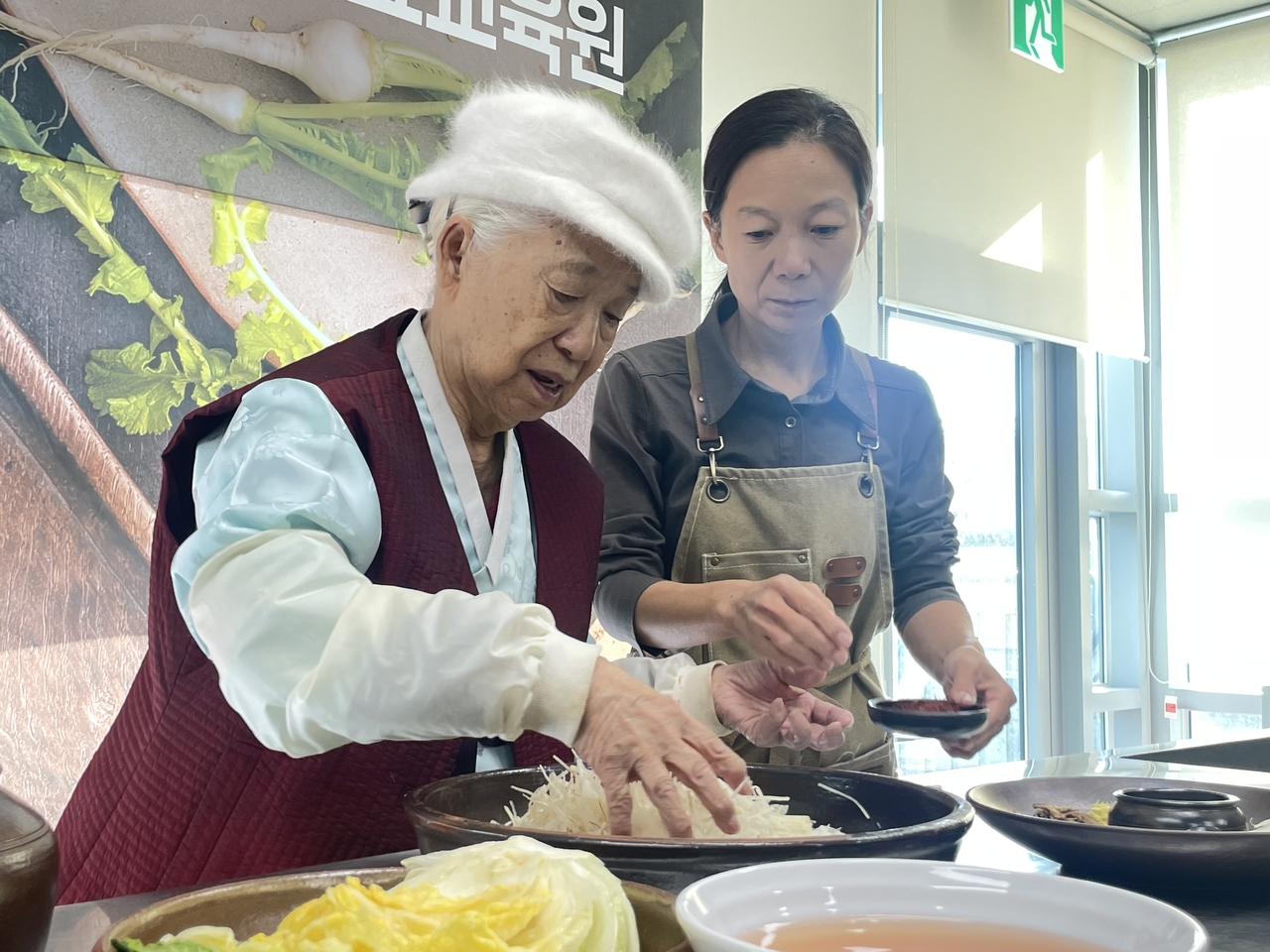
Visitors then join a kimchi-making session led by Oh Suk-ja, a certified master artisan known for her exquisite banji kimchi. Designated Korean Food Master No. 76 in 2018, Oh Suk-ja teaches the delicate handling, stuffing and binding techniques of this rare kimchi.
“Banji was not a traditional kimchi for the general public,” she said. “It was a family recipe passed down. I learned from my grandmother after my mother passed away early. My hometown is Naju.”
Her daughter and designated successor Yoon Da-seul explains how banji kimchi is prepared. “We make it once before Seollal and eat it during the holiday. It isn’t a side dish — it’s served in the sarangchae (a room where traditionally the host welcomes guests) along with tea. Each cabbage leaf is filled carefully, then tied with straw used for making doenjang, so fermentation happens properly.”
Ingredients include mustard greens, dried persimmon, mushrooms, octopus, shrimp, beef brisket, herbs and winter shrimp jeotgal. After kimchi is salted for 8 to 10 hours, broth is added “just enough to cover the cabbage,” she said. “It’s not salty or spicy. Even children and elders enjoy it.”
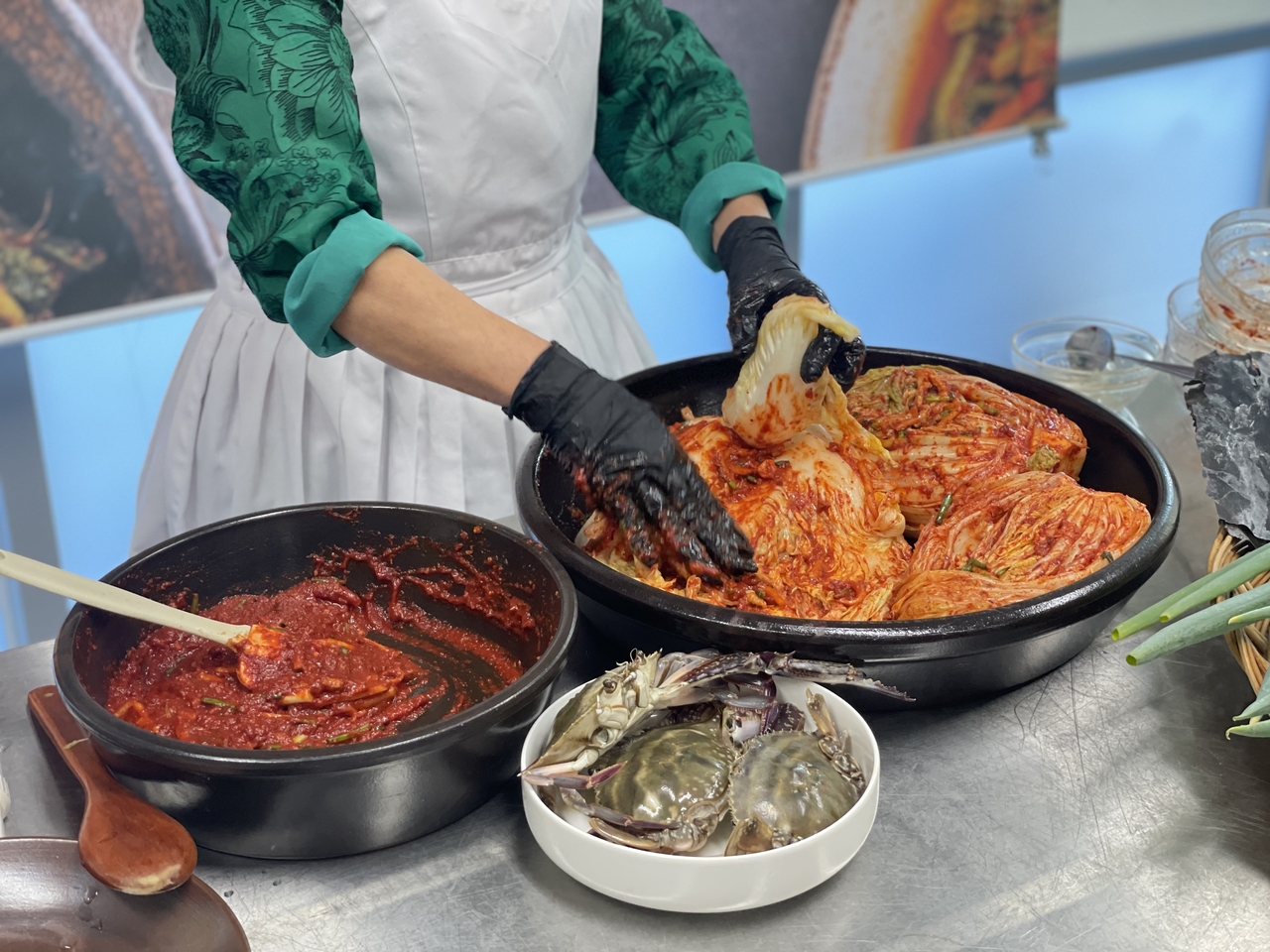
The program also features a second master class by Kimchi Master Park Ki-soon, winner of the Presidential Award at the 2010 Gwangju Kimchi Festival for her blue crab kimchi.
Park emphasizes the richness of Jeolla kimchi. “Korean kimchi has at least 11 ingredients — that’s why it gives 22 kinds of health benefits,” she said. She demonstrates how to season blue crab with ginger, yuja and a touch of fish sauce, noting, “If you want kimchi to taste refreshing, add more shrimp jeotgal. If you want depth, use other jeotgal. In the past, seafood was widely used in kimchi. That’s why I use raw blue crab.”
Participants make their own small batch using her blue crab kimchi filling, which they can take home.
With the combination of master artisans, bustling market, historical storytelling and hands-on practice, Gwangju’s new one-night, two-day tour offers travelers a rare chance to taste kimchi not only with their palate but with insight into the people and culture that shaped it.
The package is available through December and can be booked via Romancetour (www.romancetour.co.kr) and Hongik Travel (www.ktxtour.co.kr).
yoohong@heraldcorp.com