Acting US Ambassador Kim underscores USFK’s enduring presence and US extended deterrence as key to countering North Korean threats
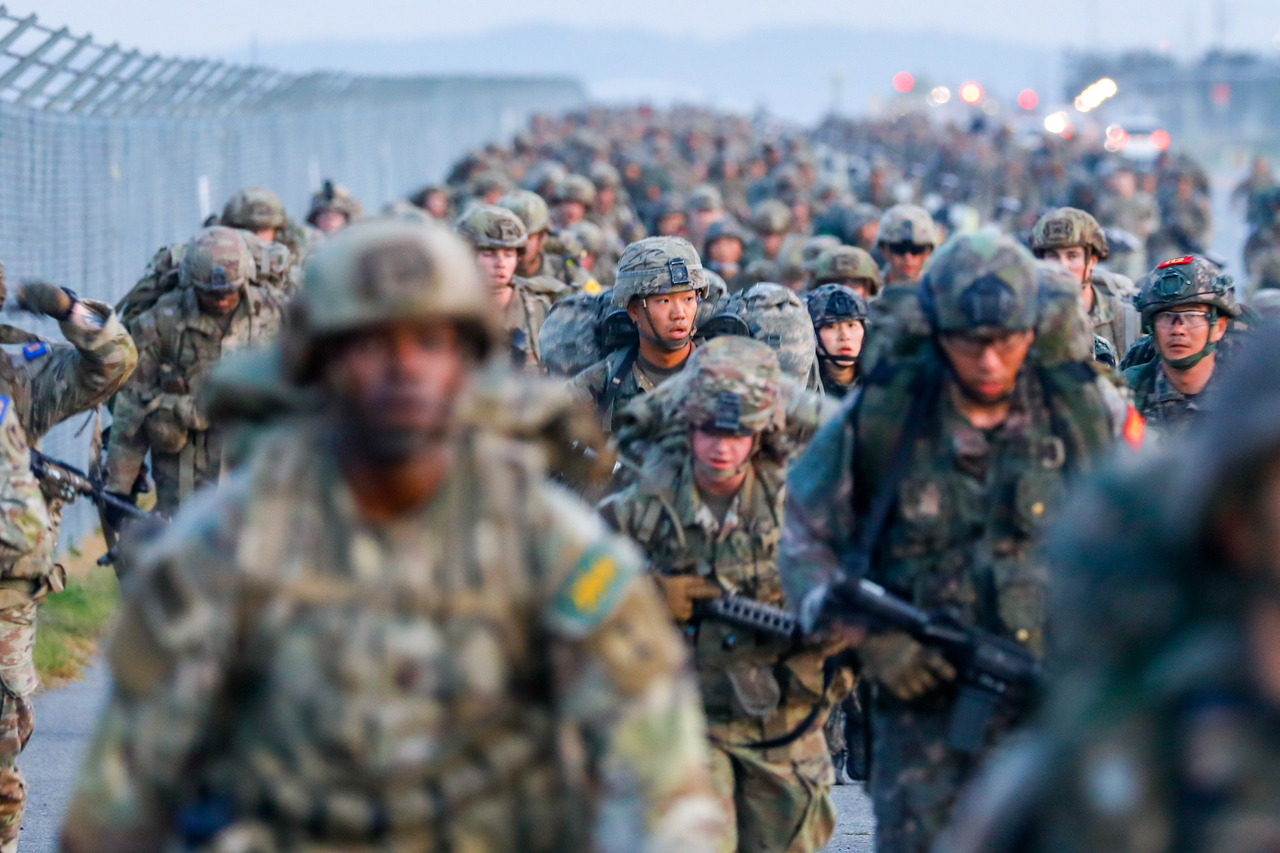
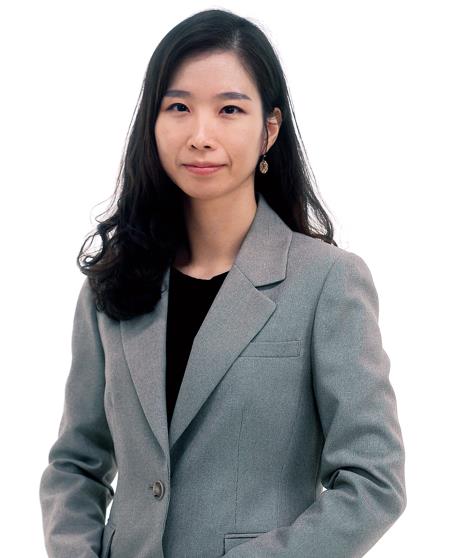
The modernization of the South Korea–US alliance is aimed at strengthening deterrence not only on the Korean Peninsula but across the broader Indo-Pacific region, Acting US Ambassador to South Korea Kevin Kim said Friday.
Kim said the alliance’s role on the security front has evolved beyond the Peninsula, noting that regional challenges require the two countries to evaluate threats jointly and respond with a wider deterrence posture.
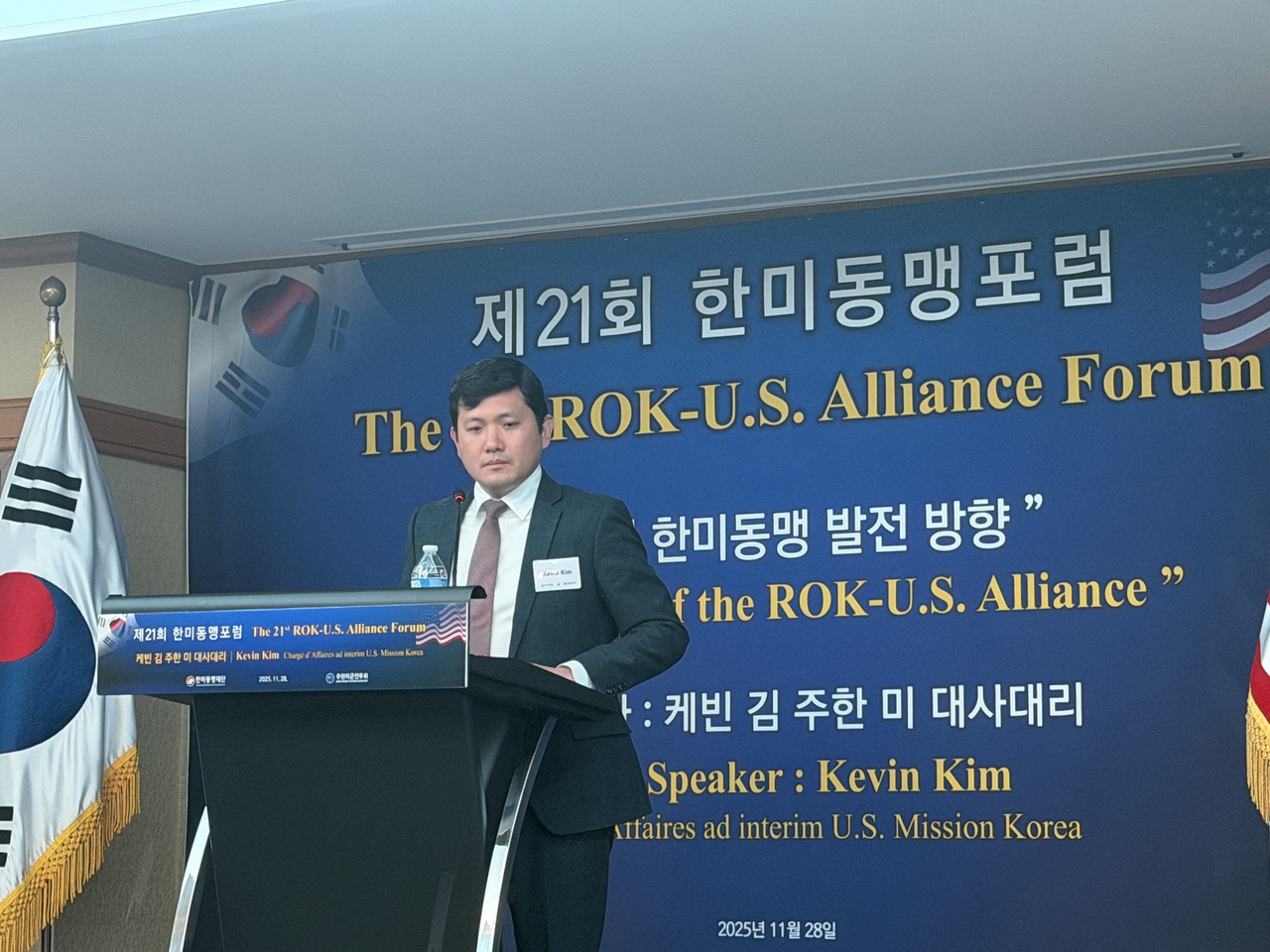
"First and foremost, addressing the common challenges on the Korean Peninsula, as well as the Indo-Pacific region, starts with having a shared assessment of the threats that we face," Kim said during the forum titled the “Future of the Republic of Korea-US Alliance" held at the US’ Dragon Hill Lodge military resort in Yongsan. The Republic of Korea is South Korea's official name.
"Based on that combined assessment, which we all share between the United States and Korea, we will address that moving forward, and ultimately what matters is that we strengthen deterrence on the Korean Peninsula and the Indo-Pacific region," Kim added.
Kim’s answer was in response to a question about "how the allies should cooperate on security issues of particular sensitivity for South Korea," including alliance modernization, the transition of wartime operational control to South Korea, and South Korea’s acquisition of nuclear-powered submarines.
Seoul and Washington have been in the process of modernizing the alliance, which the two allies have described as being carried out "in a mutually beneficial manner in the face of an evolving regional security environment."
The allies also agreed on specific measures to that end in the joint fact sheet, including South Korea’s plan to increase its defense spending to 3.5 percent of gross domestic product and its commitment to spend $25 billion on US military equipment by 2030. The fact sheet was released on Nov. 14 following the Gyeongju summit between South Korean President Lee Jae Myung and US President Donald Trump on Oct. 29.
Kim also highlighted the joint fact sheet’s significance amid the evolving security dynamics in the Indo-Pacific region and its reflection of the alliance’s evolving character.
"It is a document that touches on every facet of our relationship — trade, economic, defense, diplomatic — the vision of our combined future in not just the Korean Peninsula but across the Indo-Pacific region," Kim said during the forum co-hosted by the Korea-US Alliance Foundation and Korea Defense Veterans Association.
"There is not one element that stands above others — the whole is important because that’s the nature of our relationship today. The nature of our relationship has evolved in the last seventy years, and the comprehensive nature of what the US-ROK joint fact sheet produced is a testament to that relationship."
US Forces Korea to stay put
When asked whether South Korea should develop its own nuclear weapons in response to the existential threat posed by North Korea’s advancing nuclear capabilities, Kim highlighted the significance of alliance modernization and the presence of US Forces Korea.
"That’s why, at the core, our presence here continues as an enduring commitment and physical presence of what the United States is committed to provide to the ROK based on our mutual defense treaty," Kim said, indirectly rejecting the notion of South Korea acquiring its own nuclear weapons.
"With respect to specific capabilities, the United States will continue to provide extended deterrence, and that is our policy going forward."
At the same time, Kim elucidated that "our alliance stands united in deterring aggression, supporting engagement and diplomacy and working toward complete denuclearization of North Korea."
With regard to how to resolve the North Korean nuclear issue, Kim said Trump "can take approaches that have not been tried before," suggesting that there are no limits to the possible approaches.
"So in the first administration, the President engaged, for the first time ever, a leader-level summit with the North Korean leadership with Chairman Kim Jong-un. So, I never want to take any option off the table for President Trump," Kim said.
"Our job as his staff working for him is to increase the number of options for the President to choose from, but he is the decider, so I never want to say ‘never’ about any possible options of moving forward."
Kim, then, underscored that "What’s important is that the President is interested in pursuing peace throughout the entire world."
Kim cited Trump’s role in brokering ceasefires and agreements involving Armenia and Azerbaijan, the Democratic Republic of the Congo and Rwanda, Thailand and Cambodia, as well as Israel and Hamas, as evidence of his broader push for global peace.
"That is at the core of the Trump agenda. It is to pursue peace throughout the whole world, but that peace obviously is also dependent on ensuring robust and lasting security," Kim said. "So on the Korean Peninsula, whichever path that is taken will be based on ensuring the security of the Korean Peninsula."
dagyumji@heraldcorp.com