
After 'The Ugly' defied expectations with a 50-fold return, the 'Train to Busan' filmmaker is betting on a stripped-down production model again

Yeon Sang-ho, the director behind the zombie blockbuster "Train to Busan" and Netflix's "Hellbound," is returning to micro-budget filmmaking with "Paradise Lost" (working title, translated from Korean), his second ultra-low-cost project in as many months.
CJ ENM announced Thursday that the mystery thriller has locked in its cast and will begin shooting in December. Kim Hyun-joo, who has starred in several of Yeon's previous works, including "Hellbound" and "Jung_E," will lead the film alongside newcomer Bae Hyun-sung.
The project follows a mother whose son went missing nine years earlier. When the son returns, now grown, dark secrets begin to surface.
The budget reportedly stands at around 500 million won ($340,000), a fraction of the 3 billion won considered the baseline for commercial films locally. Yeon's production company, Wowpoint, is handling the project.
It is rare for a director of Yeon's stature to pursue low-budget works back-to-back. But his previous project, "The Ugly," proved the model could deliver results that big-budget tentpoles have lately failed to match.
With the Korean box office still reeling from the post-pandemic slump and shifting viewer habits, industry watchers are asking whether this approach might offer a viable new path forward.
Released in September, "The Ugly" was made for just 200 million won. Its skeleton crew of 20 shot the film in three weeks across 13 shooting days. Cast and crew reportedly accepted minimum wages in exchange for profit-sharing agreements tied to box office performance.
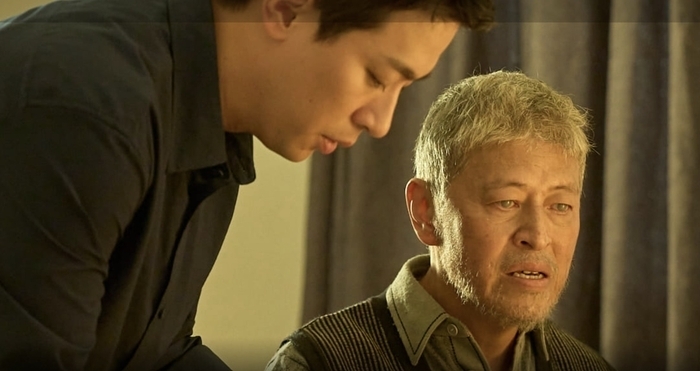
The bet paid off. According to the Korean Film Council's box office tracker, "The Ugly" crossed 1 million admissions in its second week of release and grossed approximately 11 billion won, more than 50 times its production cost.
At a press conference for the film in September, Yeon said he hoped to turn the experiment into something more permanent. "I want to systematize this approach rather than let it end as a one-time experiment," he said.
"Making the film, I realized we need at least 2 billion won to do it properly. I'm thinking about how to establish a structure where films can be made at that level."
Industry observers are watching closely to see whether this stripped-down model can serve as an alternative in a market where investment is drying up and big-budget blockbusters are tanking one after another.
"Omniscient Reader," an adaptation of a popular web novel starring Ahn Hyo-seop and Lee Min-ho, offered a cautionary tale when it opened in July. Despite a hefty 30 billion won price tag that required at least 6 million admissions to break even, the film barely crossed 1 million.
As losses mount, signs suggest distributors are already pivoting toward leaner projects. In September, major local distributor Showbox and KT Studio Genie announced a partnership to co-produce 10 mid-to-low-budget films over the next three years. KT plans to deploy artificial intelligence in pre-visualization to cut costs further, the company said.
CJ ENM, the entertainment giant behind major works like "Parasite" and "I, the Executioner," appears to be the latest to embrace that shift with Yeon's new venture. Its film division has posted losses for three consecutive years, with high-profile releases like the "Alienoid" series underperforming both critically and commercially. Between 2022 and 2024, only two of its releases reached the break-even point.
"The era when tentpoles were a guaranteed success is over," a film industry official said. "We're at a point where creativity and efficiency matter more than scale. The industry needs to find new ways to take risks without betting the house."
moonkihoon@heraldcorp.com