Most foreign-owned homes located in Greater Seoul, near industrial complexes
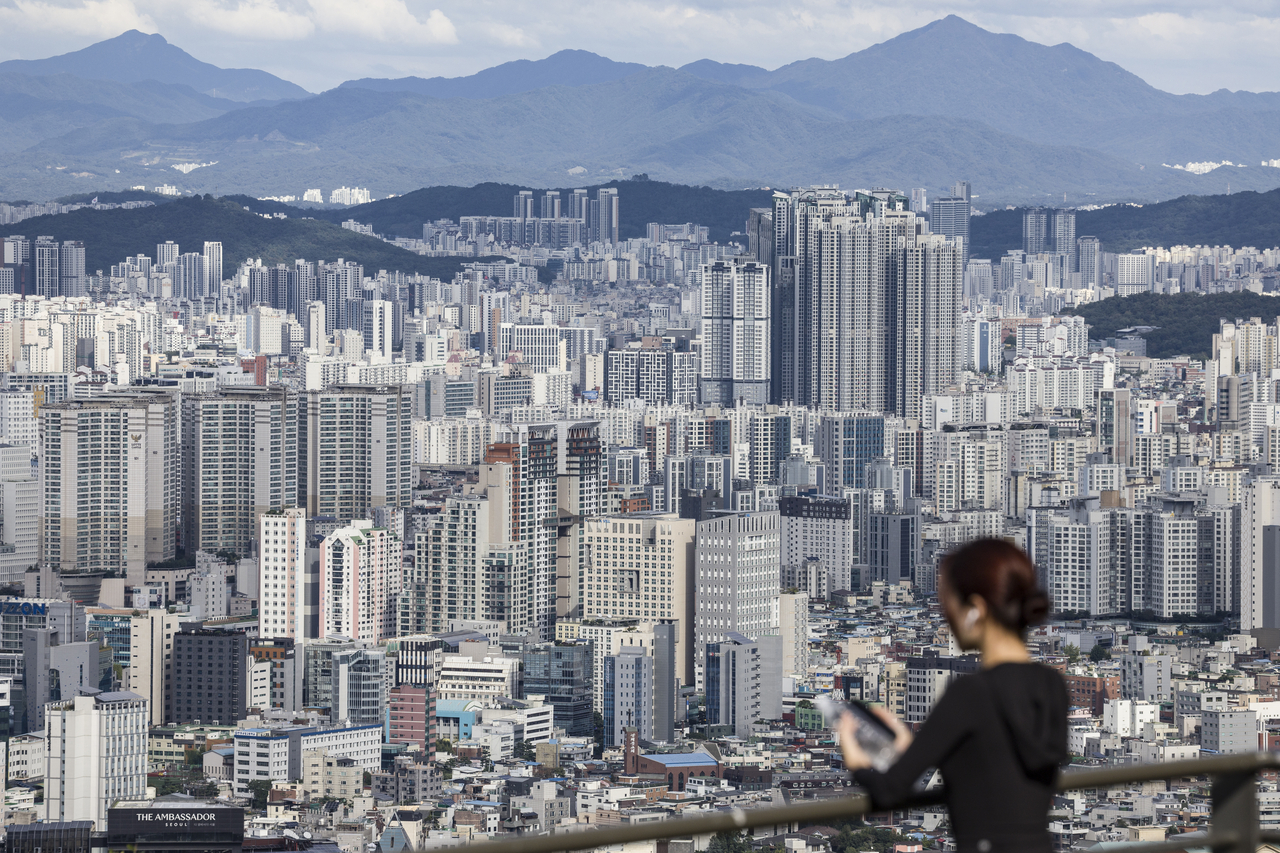
Foreign nationals own more than 104,000 homes in Korea and nearly 270 million square meters of South Korean land as of the end of June this year, government data showed Friday. Over half of those homes were owned by Chinese nationals, while the majority of the land was owned by US citizens.
The Ministry of Land, Infrastructure and Transport released a report on foreign-owned domestic real estate, which showed that foreign ownership of housing and land continues to increase.
Foreign nationals held 104,065 homes in South Korea as of June, up 3.8 percent from 100,000 at the end of December. This accounts for 0.53 percent of the nation’s total housing stock of 19.65 million.
Chinese nationals held the largest share with 58,896 homes, or 56.6 percent, followed by Americans with 22,455 homes (21.6 percent) and Canadians with 6,433 homes (6.2 percent).
The bulk of foreign-owned housing — 72.5 percent, or 75,484 units — was concentrated in Greater Seoul, which includes Gyeonggi Province and Incheon. Gyeonggi Province led with 40,794 units, accounting for 39.2 percent, followed by Seoul with 24,186 units (23.2 percent) and Incheon with 10,504 units (10.1 percent). Foreign-owned homes in Greater Seoul were also concentrated around industrial complexes in Bucheon, Ansan, Suwon and other nearby cities.
Outside the capital area, South Chungcheong Province recorded 6,455 foreign-owned units and Busan recorded 3,160. Most owners — 93.4 percent, or 95,717 people — held only one property.
The report also revealed that foreign-owned land reached 268,299,000 square meters, up 0.15 percent from six months ago and accounting for 0.27 percent of South Korea’s total land area.
United States citizens held the largest share of foreign-owned land at 53.3 percent, followed by Chinese nationals at 8.0 percent and Europeans at 7.1 percent.
Regionally, holdings were concentrated in Gyeonggi Province at 18.5 percent, South Jeolla Province at 14.7 percent and North Gyeongsang Province at 13.5 percent.
However, the overall pace of growth slowed, falling 0.7 percentage points from the 0.85 percent increase recorded in the previous half-year.
The Korean government expects the growth rate of foreign ownership to slow further after designating all of Seoul, 23 areas in Gyeonggi Province and eight districts in Incheon as land transaction permit zones for foreign nationals on August 21.
andreahaneu@heraldcorp.com