German life science giant deepens collaboration with Korean labs as AI reshapes research priorities

Basic science is regarded as the starting point for numerous industries as it is essential not only to discovering new drugs but also to advancing cutting-edge technologies such as semiconductors and secondary batteries. With a portfolio of about 300,000 reagents and chemicals, Merck, which has been practically “everywhere,” looks to further bolster its presence in Korea.
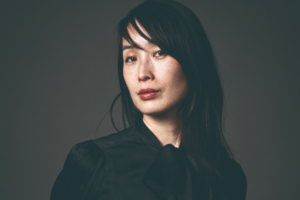
“Our biggest distinction is that we are capable of offering a broad selection of consumables ranging from chemistry to biology,” said Chung Ji-young, Korean country head of Merck’s Science and Lab Solutions, in an interview with The Korea Herald in Seoul on Nov. 25.
“Merck’s products are indispensable at laboratories and R&D institutes … Recently, demand for special gases such as helium has been rising in the quantum computing sector, and this is an area where many of Merck’s products can be utilized.”
As the Korean government cut its R&D budget last year, labs across the country struggled due to a lack of financing. Although Merck consequently took a hit, the global life science firm swiftly responded by concentrating on priority areas and expanding client reach.
“Despite the cut in the research budget, Korea maintained its R&D investment at about 5 percent of its GDP, the second highest in the world behind Israel,” said Chung.
“Merck quickly figured out the major research areas that the country was focusing on and chose a strategy of offering customized solutions aligned with (Korea's) direction.”
For instance, developing new drugs using artificial intelligence has come into the spotlight with the emphasis on reducing new drug development time and improving the chances of commercialization. To this end, Korea has increased its investment in AI for new drug development, and Merck has been working to expand cooperation with Korean partners.
“KAIST Professor Kim Woo-youn’s research team secured a national AI project to develop ‘K-Fold’ by improving on the shortcomings of (Google’s) AlphaFold,” she said, referring to the next-generation bio AI model initiative for innovative new drug development.
“Merck established a partnership (with Kim’s team) to seek ways to apply K-Fold in the global market based on its digital platform, as we have already been offering AI-based digital chemistry solutions that can improve the screening time for organic synthesis and new drug development with AI and deep learning.”
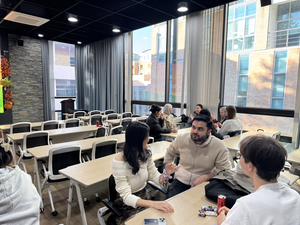
In Korea, Merck serves 3,000 university labs, 3,000 pharmaceutical companies and 1,000 research institutes. Given that individual labs at universities have been and will remain important clients, the Korea head of Merck SLS pointed out that the company turned to virtual lab meetings and livestreaming this year in order to reach more customers.
“Offline seminars, which require (physical attendance) at a specific time and place, pose a bigger psychological burden on professors. As professors became familiar with Zoom or (Microsoft) Teams during the COVID-19 pandemic, they now have almost no reluctance to joining an online conversation for an hour,” she said.
“In fact, the frequency of virtual lab meetings increased a lot more than that of offline seminars. Through this, we were able to understand the needs of our customers, and it led to an increase in sales.”
In the early phase of YouTube live streaming, Chung noted that there were doubts about whether specialized products, which were not everyday consumables, could benefit from online commercial activities.
However, researchers and lab members were of a generation already familiar with such platforms. They posted comments on Merck’s videos and communicated with each other, proving that digital platforms can have an impact on not only daily consumables but also lab-bound products.
“Merck can play the role of a ‘scientific hub’ that covers schools, public institutes and companies now that most highly advanced material research is done at universities and public institutes and commercializing such efforts has become a national task,” she said.
“Because Merck can provide end-to-end solutions, we are unrivaled. We can supply almost any material or solution for any type of research.”
Chung also reflected upon the importance of Sigma-Aldrich, which was acquired by Merck for $17 billion in 2015, and how it has been vital to labs everywhere.
“Professors and heads of research centers say it would be nearly impossible to run a lab if Sigma-Aldrich were closed for even one day,” she said.
“Its products have secured an absolutely crucial position for researchers, which makes Sigma-Aldrich’s 50th anniversary more meaningful. Merck takes pride in having made great contributions to the advancement of Korean science over the past 50 years, and we hope to grow together with the country’s science ecosystem as a partner for the next 50 years as well.”
hwkan@heraldcorp.com



![[Exclusive] SK On fast-tracks pilot output in all-solid-state battery race](https://wimg.heraldcorp.com/news/cms/2025/11/18/news-p.v1.20251117.611a51c182b546348b32ccc3233f6193_T1.png?type=h&h=240)