Authorities cite pension fund's growing overseas investments as key driver of strain, move to reinforce tools to reduce market dollar buying
Foreign exchange authorities said Monday they have begun talks with the National Pension Service to extend a currency-swap arrangement set to lapse at the end of the year, as policymakers roll out measures to counter the won’s persistent slide.
The move was announced after a Sunday meeting convened by Finance Minister and Vice Prime Minister Koo Yun-cheol, bringing together senior officials from the Bank of Korea, the NPS, the Welfare Ministry, the Industry Ministry and other financial regulators to assess market conditions.
“We reviewed the structural conditions of the foreign-exchange market and agreed to swiftly pursue measures to stabilize FX supply and demand,” a Finance Ministry official said. “As part of this, we have begun detailed consultations on extending the FX swap agreement with the NPS.”
The won has hovered at nearly 1,500 to the dollar in recent weeks, despite repeated government efforts. Regulators have pointed to structural features of the market as a major factor behind the currency’s weakness and have increasingly highlighted the pension fund’s increased foreign-investment needs as a significant source of dollar demand.
With the NPS investing over half of its 1,300 trillion won ($884 billion) fund in overseas assets, its sway over the FX market is considerable. To cushion that impact, the BOK maintains a direct swap line that allows the NPS to secure dollars at a prearranged rate instead of buying in the market. The government raised the cap on the facility from $50 billion to $65 billion last year, with the arrangement set to run through the end of this month.
Monday’s statement marks the first concrete step on NPS-related policy measures since the Finance Ministry launched a four-way consultative body last week with the fund, its supervisory Welfare Ministry and the central bank, creating a standing channel to coordinate moves to manage the fund’s influence on the currency.
Authorities also said Sunday that discussions under the new platform would begin on a “new framework” designed to balance the NPS’ investment returns with stability in the FX market, while reflecting shifts in the pension fund’s circumstances, including its parametric reforms.
With rising overseas equity trading by retail investors also cited as a source of dollar demand, regulators said they would tighten monitoring of financial institutions. They agreed Sunday to conduct a two-month review of firms, including securities companies, to assess the adequacy of their investor disclosures and protection practices related to offshore investments.
They also agreed to step up review of FX supply and demand among exporters, committing to regularly monitor their currency conversions and overseas investment flows, and to explore ways to link those findings to corporate-support tools such as policy financing.
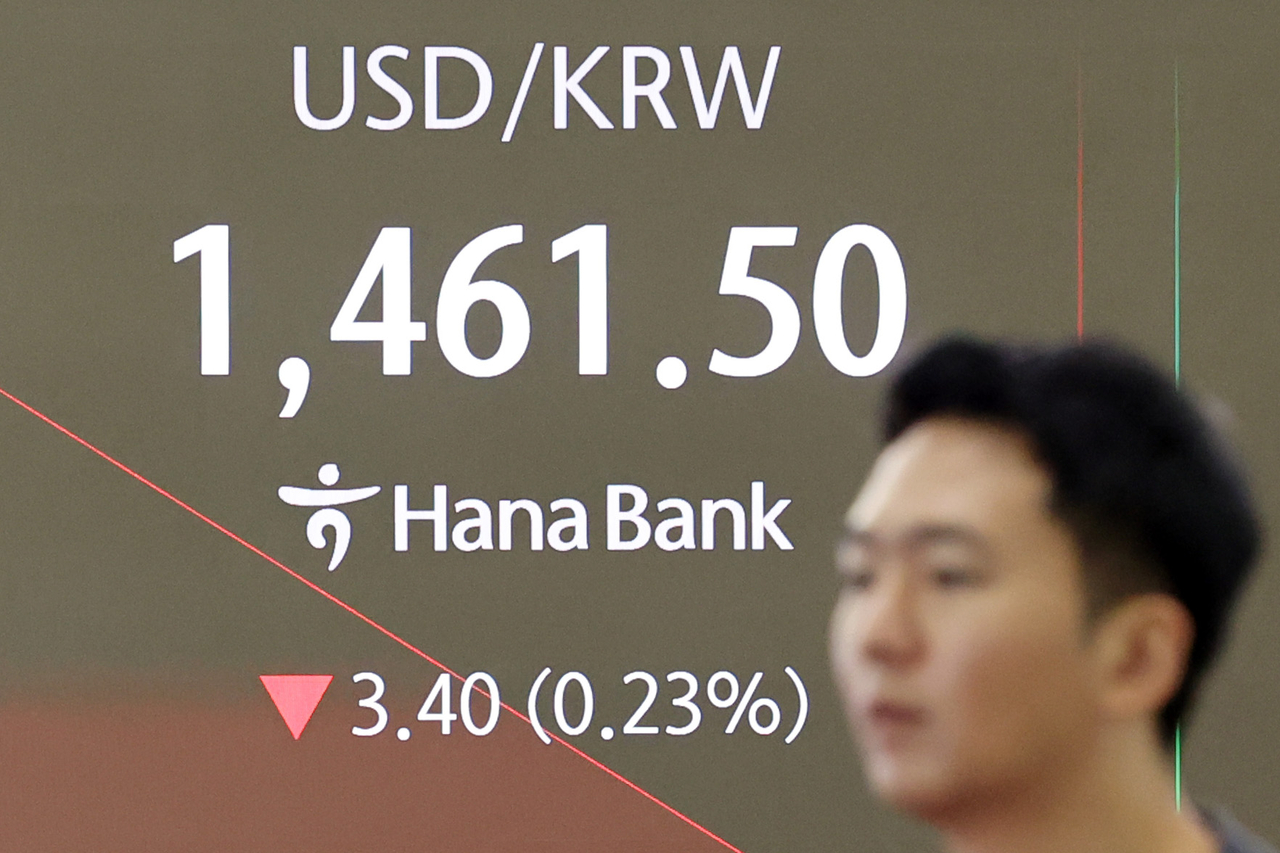
As of noon Monday, the won was trading at around 1,470 against the greenback, weakening from its opening level of 1,464.84.
An International Monetary Fund report released Sunday said the won averaged 1,418 per dollar in the January–November period, about 4 percent weaker than the 1,364 level recorded a year earlier. The report added the depreciation has weighed on Korea's headline economic figures, with nominal gross domestic product shrinking 0.9 percent from 2024 to $1.86 trillion when converted to US dollars.
jwc@heraldcorp.com